Log Seventy Five – The Queensland Walkabout Continues …

8 June 2021

We have left Winton and its agricultural show that included pet dogs dressed up as fairies running through tunnels and jumping hurdles. I can only wonder what the working dogs that were being judged on Sunday thought of their contemporaries dressed up with wings. Maybe those hard working dogs that manage flocks of sheep and help with mustering cattle don’t recognise the pet dogs with wings as fair dinkum dogs. Could it be like country folk relating to latte sipping office workers from the cities.

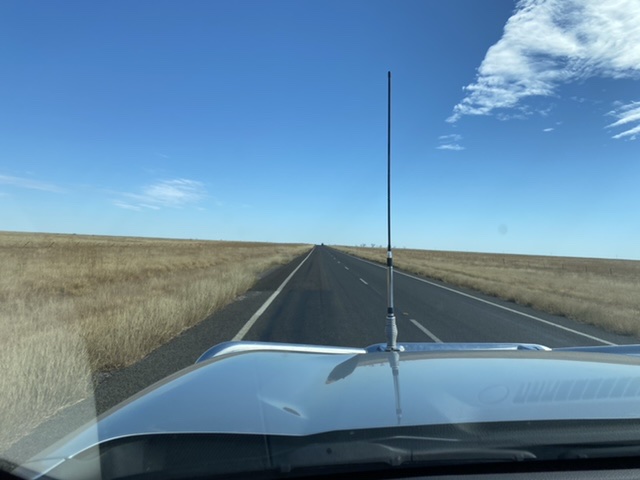
We headed across the empty plains to Hughenden again with more dinosaurs on offer. After a good wet season season the Mitchell grass looks to be at its best. In Hughenden I learned that if they get a small amount of rain it will critically spoil the grass. If it’s going to rain they need 20 mls at least to ensure the grass responds as grass should. I was advised by the local that no rain is the best thing for the country at the moment. The things you learn.

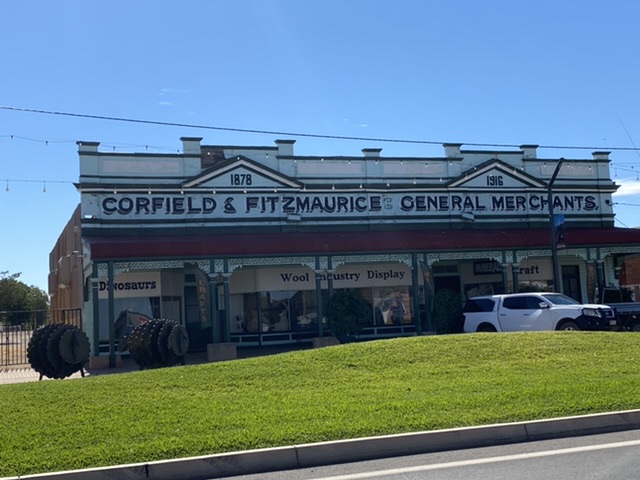
On our way to Hughenden we passed through a spot on the map called Corfield. Although Corfield is really no more than 2 two houses it does host the Corfield races every year and yes there is a Corfield Cup. This is not be confused with the $5 million Caulfield Cup that is run in Melbourne every October.

Excitement on the Road

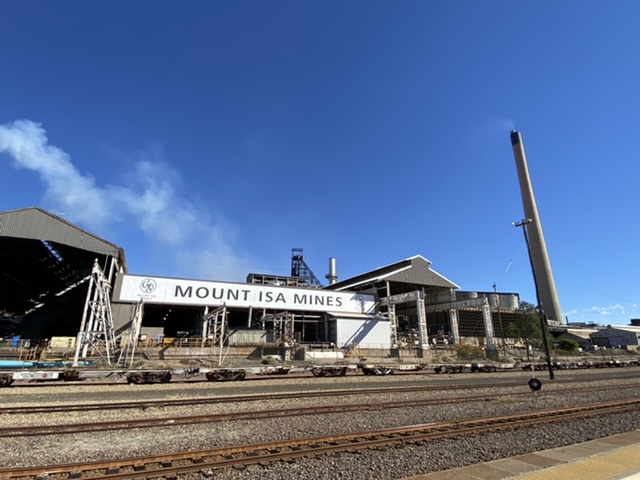
Running parallel to the highway is a well used railway line. Unlike some of the old lines in the area that no longer operate this line carries huge train loads of lead and silver ore to the port of Townsville. It turns out the biggest underground lead and silver mine in the world is just down the road. This country is not so empty after all, it’s just underground.

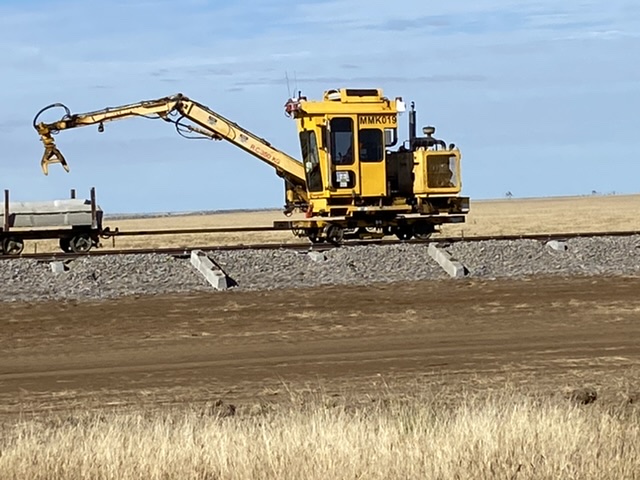
As we drove along we were entertained by the railway technology removing old sleepers and forcing the new sleepers under the rails. Trust me this is exciting stuff in this largely empty country.

Food in the Outback

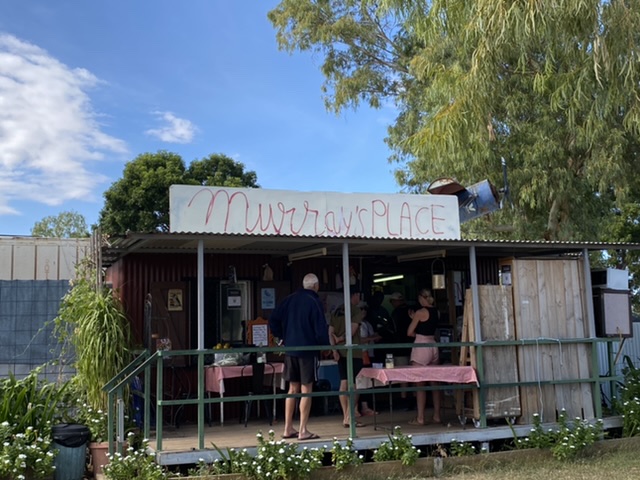
You may not always find the food brands you might enjoy at home, nor might the range of choice mirror what you expect at home. You can however always find what you need, maybe not what you want.

You can be assured however that if you are carnivore your needs will be well met. It seems the further north you go the better the meat. I am regularly informed that the steaks come from a local property and that maybe the bacon is cured by a business just down the road. It’s all very local and it’s all very good.

More on the Rhythms of Life

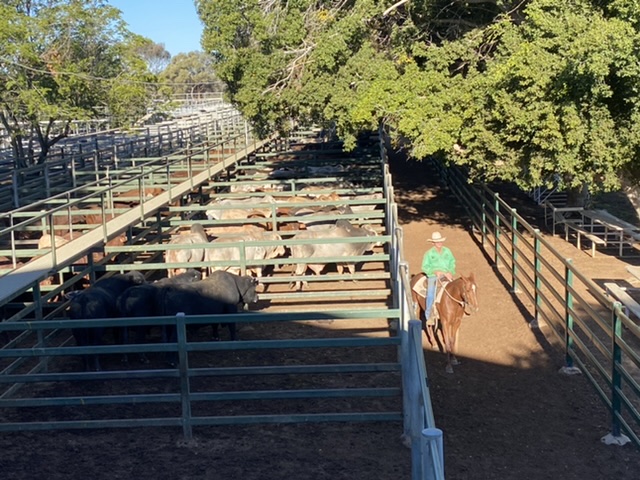
We have discovered that up here in the warmer parts the cattle stay put during the day. This is probably a behaviour that is about avoiding the heat of the day. During daylight hours cattle can be found laying down in large numbers, ruminating and just chilling out around water holes and dams.

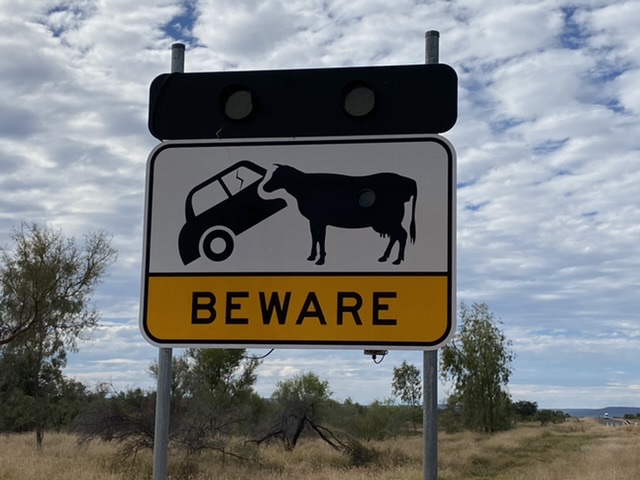
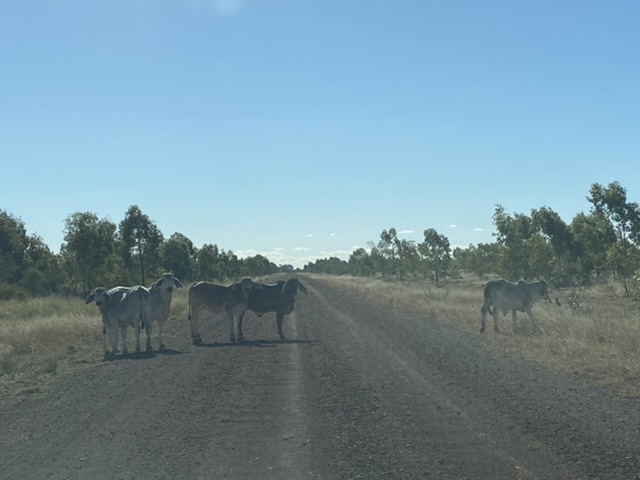
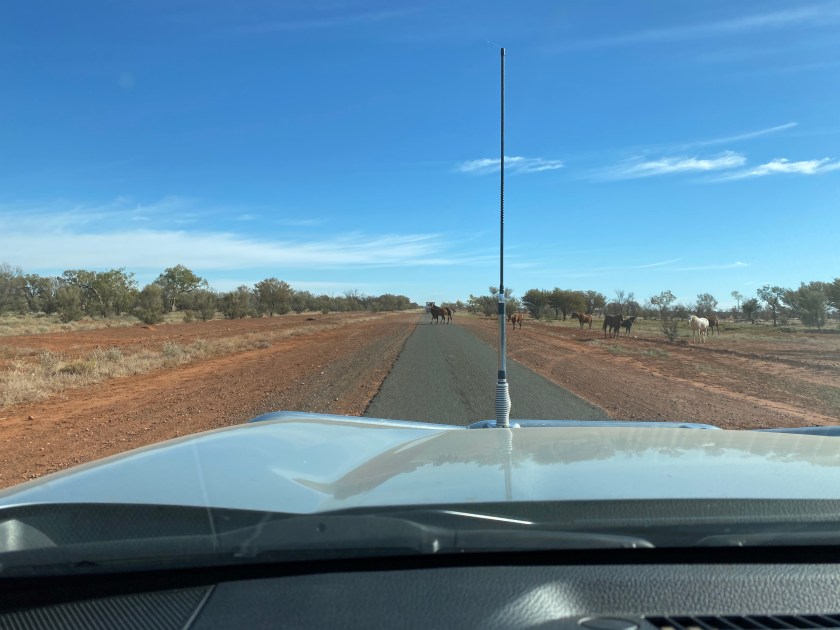
However, come sundown they are up and on the move. Now they don’t move fast like kangaroos but they move in large numbers and unlike kangaroos they might just stay in the middle of the road and stare you down. In the context of no fences a drive at sunset and beyond is not a time to relax.

In contrast to the movement of cattle, the people travelling with their vans and RVs commonly referred to as grey nomads (we are not them) tend to settle down for the evening when the sun sets and get back on the move with sunrise.

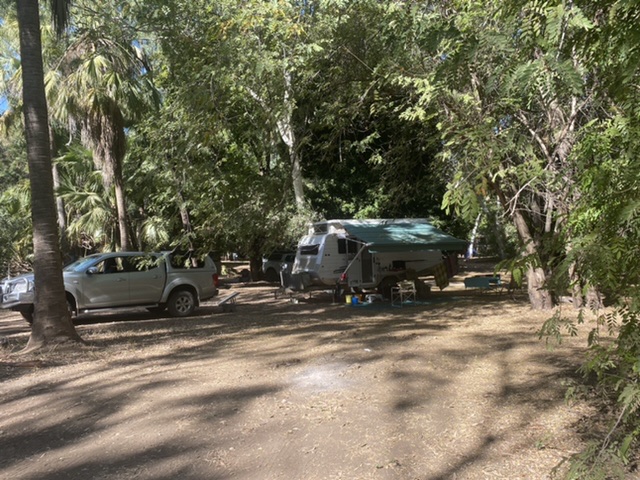
Like the cattle, the touring population heads out to all points of the compass. Their primary driving force is to be settled into the next camping spot by early afternoon in time for happy hour and to avoid those roaming cattle.

And so the rhythm of the grey nomads (not us) and the cattle represent the yin and yang of the touring season in outback Australia; cattle at night, caravans during the day.

On to Longreach …

Log Seventy Four – Dinosaurs and Local Agricultural Shows

5 June 2021

We have reached the tropics and have set down in the town of Winton for a few days. It’s always nice to get off the road for a couple of days so you get a chance to explore the local town and what it has to offer. In Winton its dinosaurs and the annual Show.

Dinosaurs

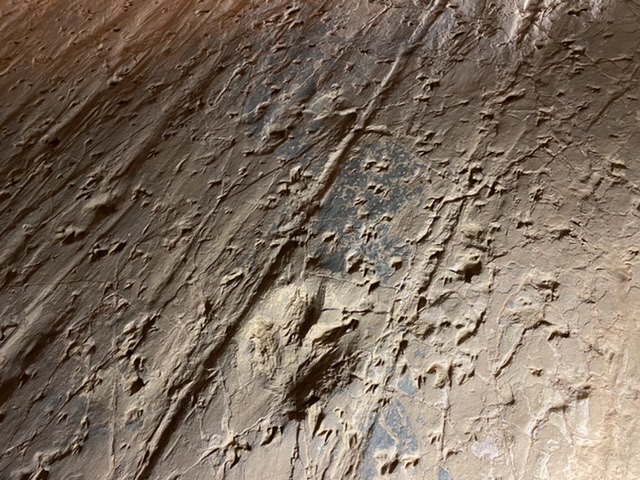
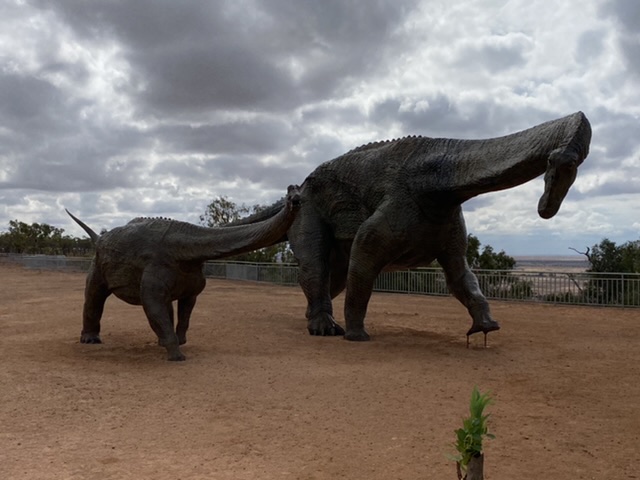
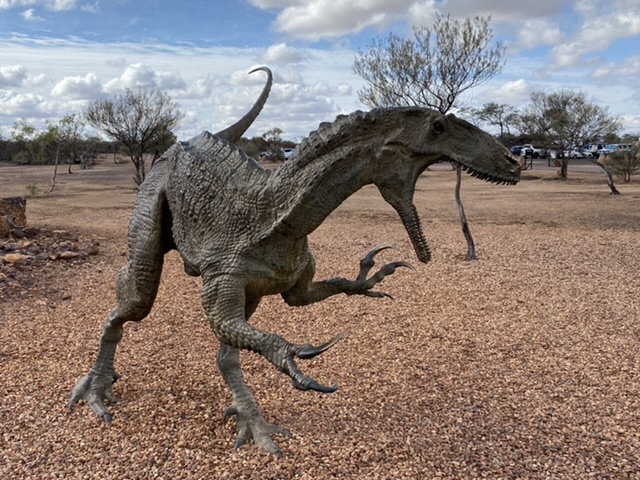
We have discovered that 95 million years ago the place was crawling with huge beasties that were either herbivores or carnivores. The herbivores were enormous and the carnivores were also of a size that would have been terrifying if caught in your headlights on a dark night.

The fossilised bones and trackways left by these giant lizards is something to behold. What’s more the local graziers are kicking up more bones every year. The dinosaur museum has a 40 year backlog for conserving and preparing the bones currently dug up. And still they come!

The scientists tell us that until the mid 1970’s Australia was never thought of as a place to find dinosaurs. This perception has been clearly corrected in recent years. Of course we all know if the scientists had asked any 5 year old they would have told you of course there were dinosaurs in Australia.

The Winton Show

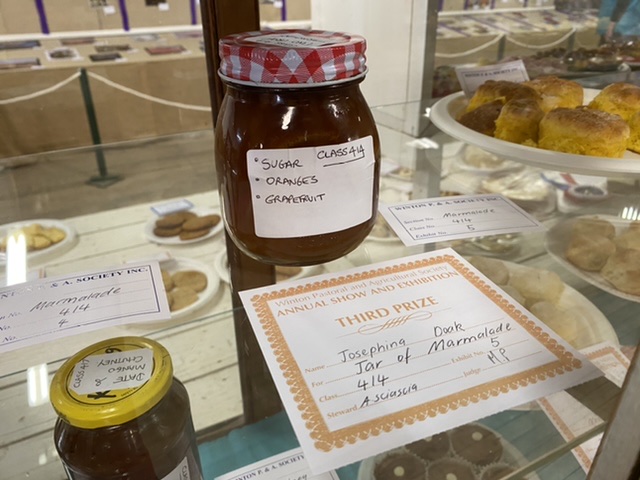
It seems every country town has its own agricultural show. It’s a place for local farmers to have their cattle and sheep judged not to mention chickens and other farm animals. It’s also a place for the local kids to have their cake baking skills judged and displayed. There was also the obligatory reptile show with all sorts of venomous snakes and the petting zoo with baby farm animals for the little kids.

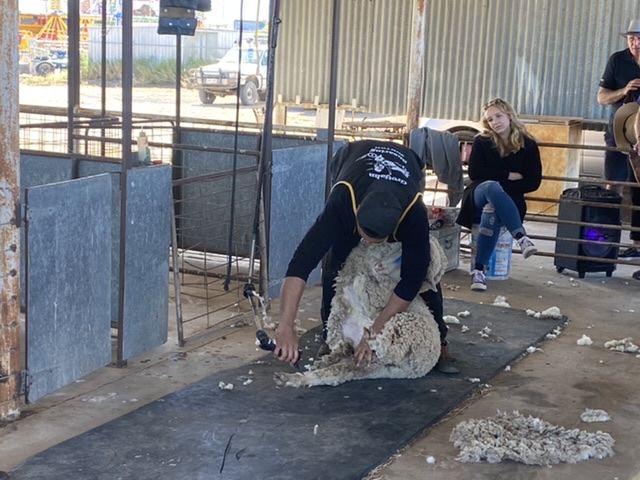
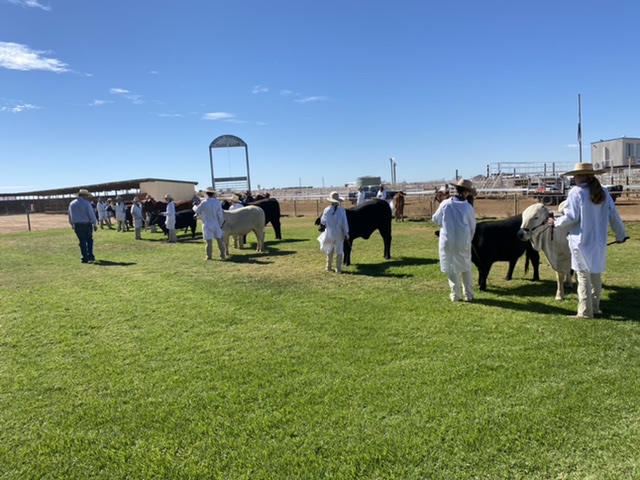
We enjoyed watching the cattle judging and the sheep shearing demonstration. Did you know a shearer earns about $3.25 per sheep and depending on the type of sheep they might shear 200 in a day. My haircuts cost about $30 but I don’t relish the idea of being thrown down between the legs of a shearer and twisted around as I am stripped of my hair even if was to cost less than a cup of coffee.

In Thargomindah a new world record was achieved when a sheep was shorn in less that 30 seconds. I am guessing that’s a speed that could not be maintained all day.

Did you also know that in Italy they shear the sheep in the paddocks, in the open. In the USA they shear straight through an 8 hour day without stops. In Australia they shear in a shearing shed in four, two hour blocks. This is the stuff you learn at the Winton Show.

We didn’t buy any show bags but we did get free handouts from the Queensland Ambulance Service and the Winton Community Support group. I now get excited about a free thumb drive, a flash light and hand sanitiser. Comics, chocolates, liquorice and samples of Heinz products no longer catch my attention.

And so the journey continues…..

Log Seventy Three – The Mitchell Grass Plains and the Art of the Soft Sell

3 June 2021

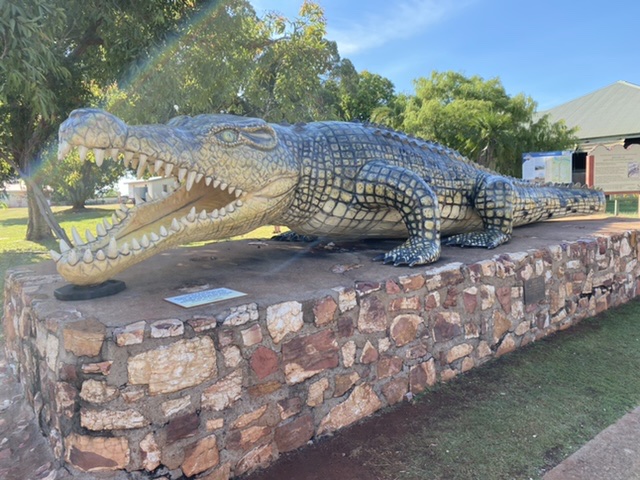
It seems every little town out here has developed a hook to try to catch the travelling public. The reward might be campers staying at local campsites and spending a few dollars along the way or maybe just a coffee and fuel stop in town. I thought I would report on a few of the more creative ‘hooks’ we have enjoyed.

Cunnamulla

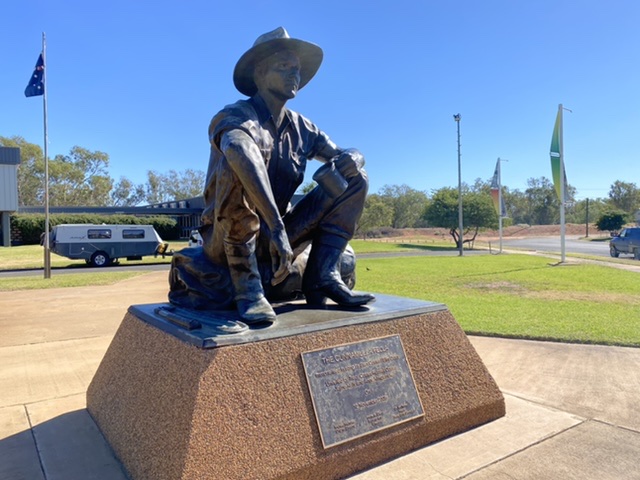
This town boasts a bronze statue of the Cunnamulla Fella who is a character in a Slim Dusty song. No, I didn’t know that either until I arrived in Cunnamulla.

Cunnamulla Fella

Augathella

This town deserves an award for creative effort. All through the town there are references to the 1950’s Australian movie Smiley. So I asked, was the movie filmed here, no was the reply. Oh, so some of the cast came from Augathella, no not even the extras. The movie was written in Augathella, no. So what was the connection? The response was the character Smiley was roughly based on a boy who once lived in Augathella! The wry grin from the local summed it up.

Thargomindah

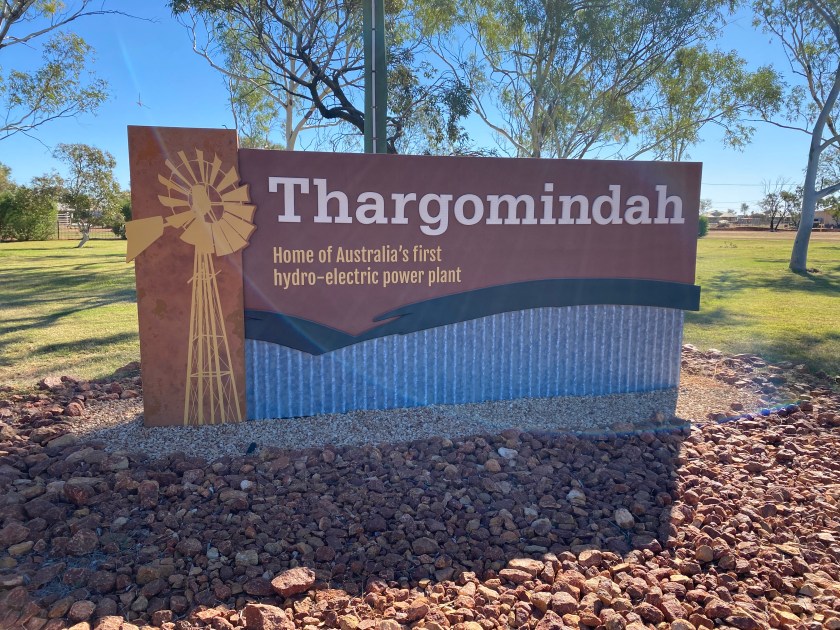
This town has the oldest, working hydro electricity plant in Queensland, maybe Australia and maybe the world. This is pretty amazing considering it is installed on a flat, featureless, dry plain. The water driving the plant is coming up from an artesian bore under high pressure.

Muttaburrasaurus

Barcaldine

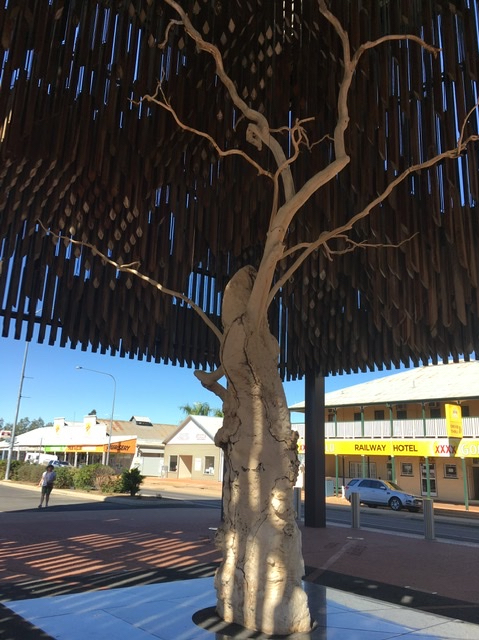
This town is where the beginnings of the Australian Labor party can be traced. The first meeting of striking shearers was under a tree in the main street. The tree that was poisoned some years ago has been immortalised as a sculpture outside the train station.

Tree of Life

Eromanga and Muttaburra

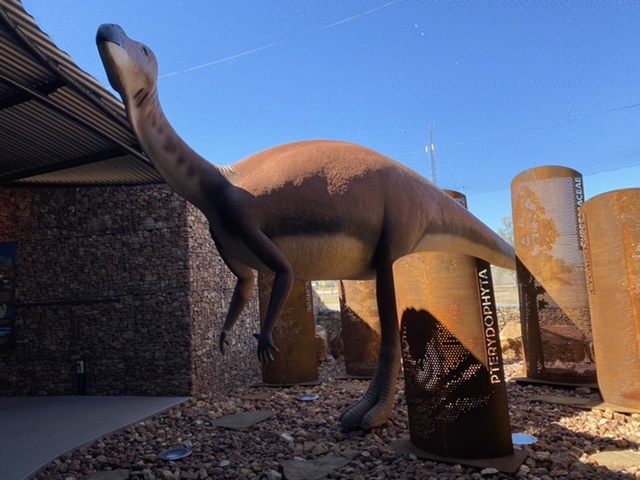
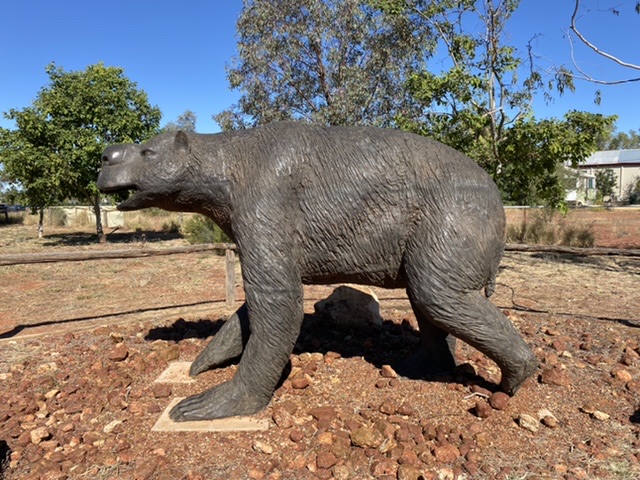
Dinosaurs are everywhere out here and many towns have their own museum or interpretation centre just for ‘their’ dinosaur. Muttaburra even had their dinosaur named after the town, it’s the Muttaburrasaurus!

Aramac

Aramac sports one fuel station, a library, a shop and not much more. You can’t get a coffee in Aramac. It is however the location of the great Harry Redford theft of some 600 head of cattle which were driven from around these parts all the way to Adelaide. Amongst the herd was one imported white bull. Harry got away with the deed.

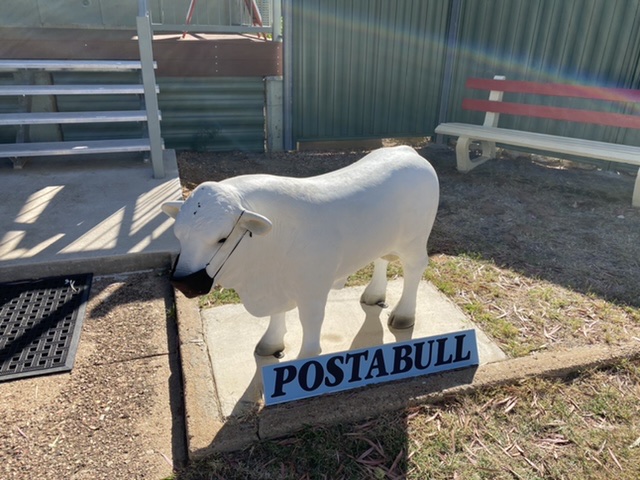
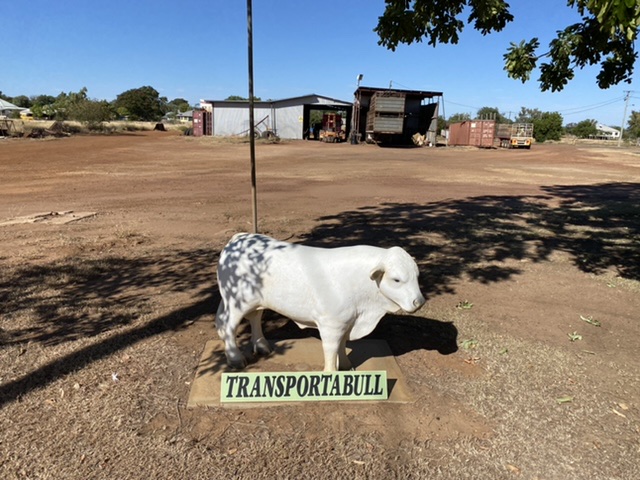
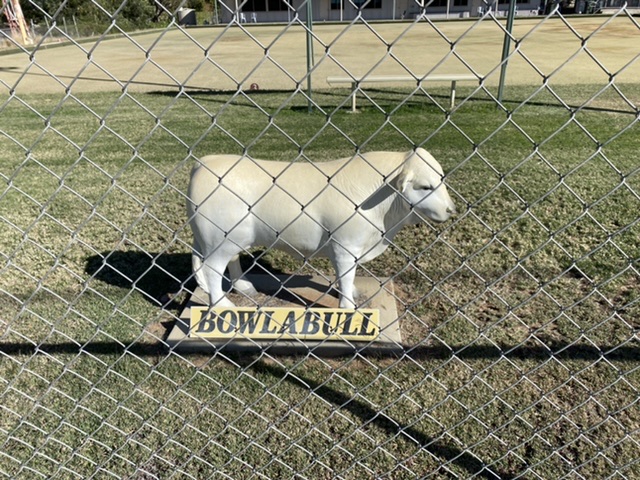
Harry’s efforts are celebrated throughout Aramac with small white bull statues with names like Shopabull at the shop, Bowlabull at the lawn bowls club, Transpostabull at the trucking sheds and of course Postabull at the Post Office.

Lake Dunn

This is maybe the piece de resistance for soft sell in terms of effort, numbers and geographic spread.

Aramac Ski Club

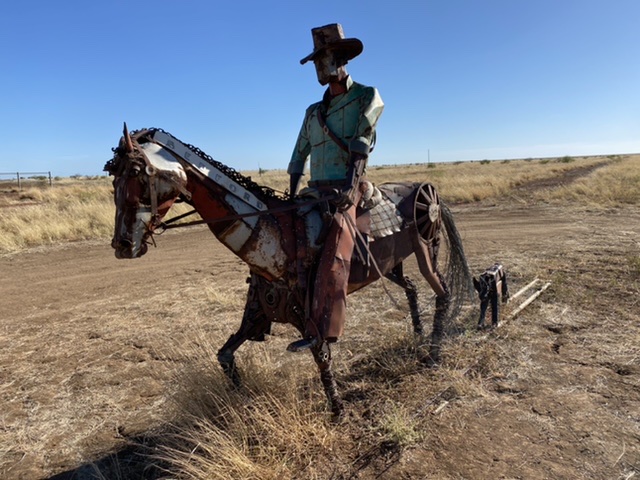
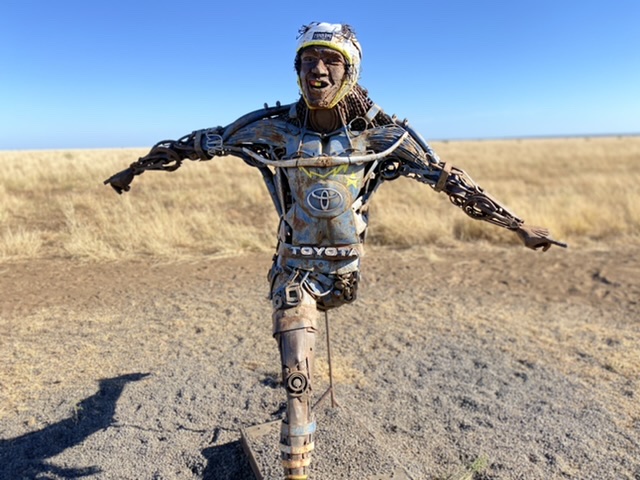
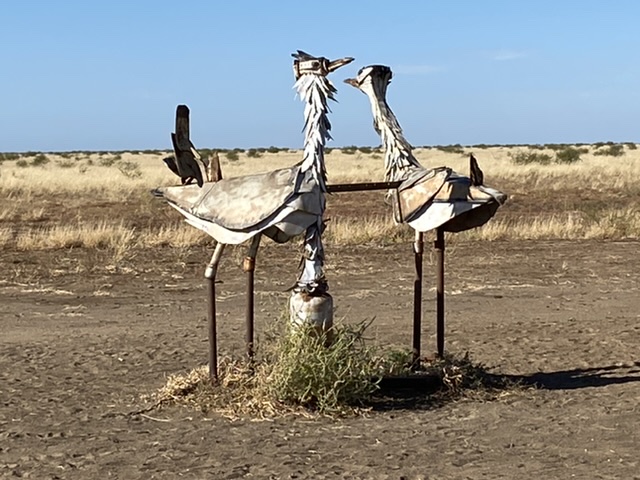
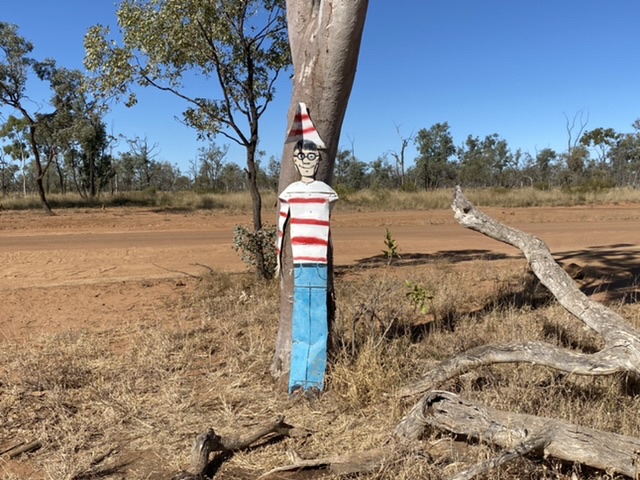
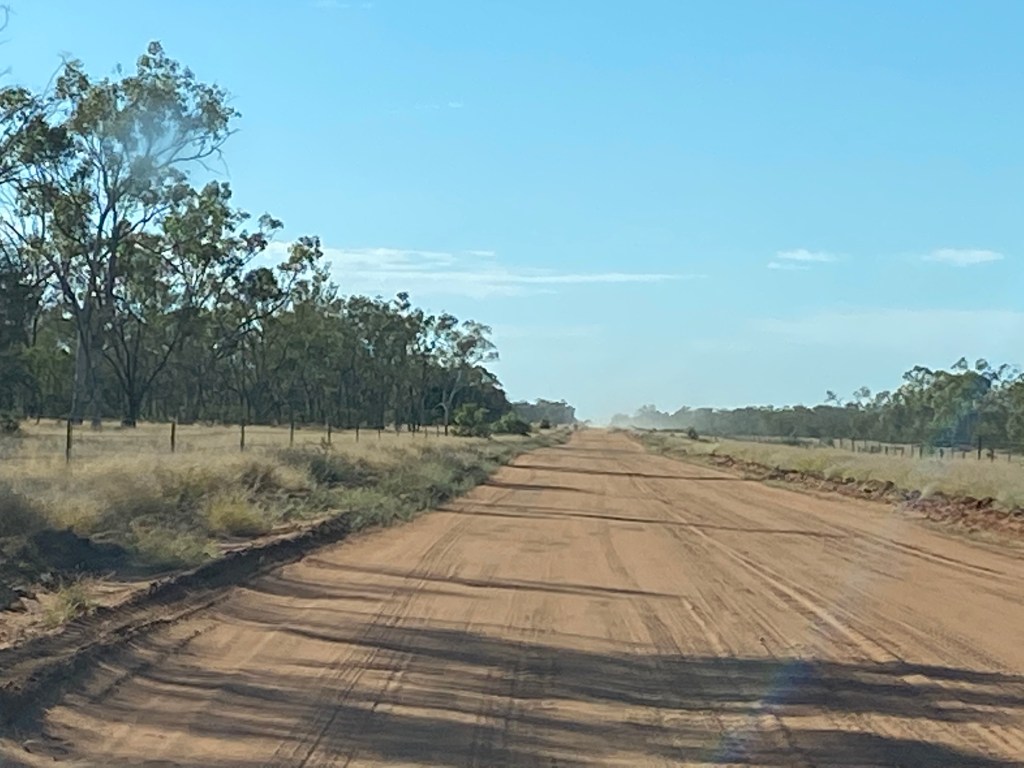
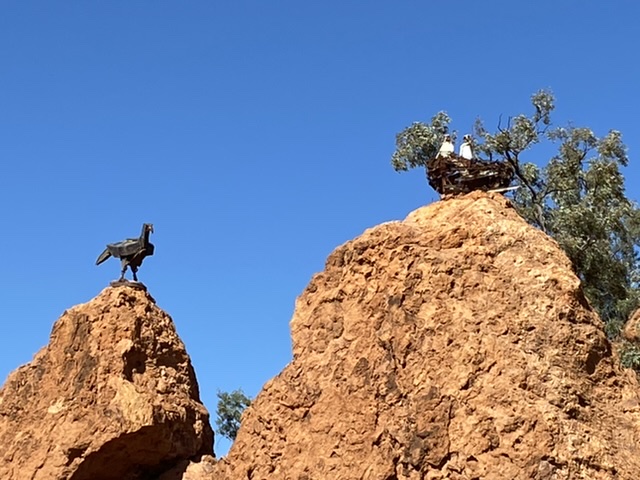
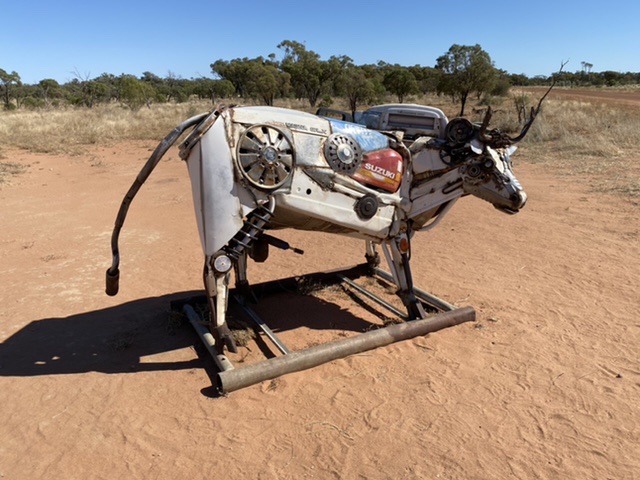
A local artist has created a sculpture trail that is about 200 km long with some 40 sculptures all made from scrap metal. The sculptures included Wally from Where’s Wally fame along with lots of Australian animals and characters. The trail included about 100 kms of dirt road which added to the whole experience.

Current Maintenance Status

A new deep cycle battery has been purchased and installed. A new, operational battery is a wonderful thing.

The stone guard is with Shorty the local welder for some minor repair. Shorty is the only TIG welder in town and the job should be done by Friday.

Log Seventy Two – Queensland Walkabout and Beyond the Black Stump

27 May 2021

As our travels continue and we settle into the slower pace of life it becomes apparent that there is a rhythm to daily life on the road.

The Rhythm of Life

Packing up camp has become an almost automatic process. Little is said as we work inside and outside the van putting things away, winding things up, folding things, sweeping things and finally hitching to the car. The more times its done the quicker we are.

At the other end of the day comes the unhitching, rolling out, setting up and turning on. This process is followed by the official opening of the beverage.

I have left out the reversing on to your site. This is a fraught process and is best enjoyed as a spectator sport.

Conversations with fellow travellers also follow a rhythm. There are standard questions that must be asked; where are you from; where are you headed; what’s the roads like out there. Answers to these questions then open up a plethora of questions like where did you get fuel; are there many vans down that way; you’re going home why. The more current conversations involve comments that we have had our COVID vaccination and are planning on where we can get our second shot.

Arriving in town also follows a pattern. There is the glance at the SatNav to see how far you have to go that day and then a check on your range. Then it’s the question; do I need fuel or will I make it to the next town; is there a baker and a coffee shop in town; is it time for a coffee. As you might appreciate this is the tough part of the day.

SatNav in the Distant Parts

We have achieved the situation where the SatNav system knows where we are and recognises our destination. It just can’t find the road that joins the two points. I would add we are driving on a perfectly formed, sealed road. It’s gratifying to know the AI doesn’t know everything.

Your friendly message at least once a day is ‘turn around when safe’ and ‘route recalculation’. These messages induce a response by me as I talk to the technology in a raised voice explaining it’s wrong and it doesn’t know what it’s talking about. I worry that the technology is listening and will respond at some undisclosed time in an unhelpful way.

The People Out Here

Everyone it seems has a story to tell and the time to tell it. There was the young man who had scored a job in Normanton. He was driving from Melbourne to Normanton a distance of 2800 kms where he was to meet his new employer for a 1.5 hour drive further on to the property. He was doing this trek on his own but with strict instructions from his mother including that he call her every evening.
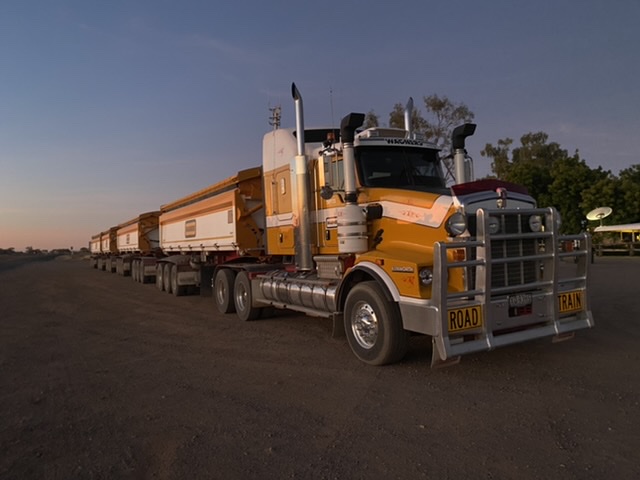
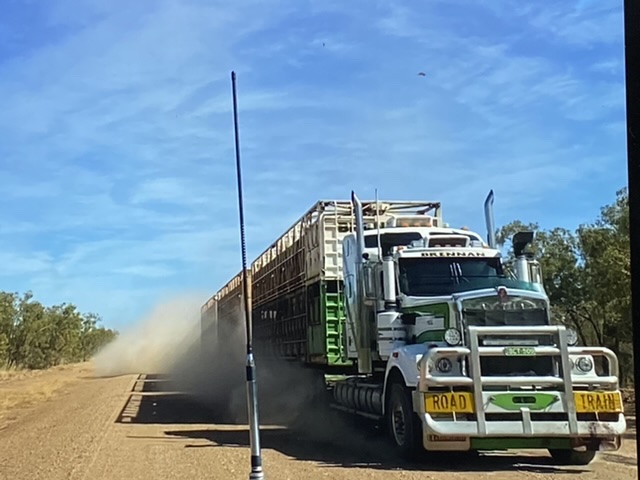
There was the truck driver who was in command of a three trailer road train with a Kenworth prime mover. He had started in Longreach and was headed to Roma with 300 head of cattle on board. A seven hour trip which for him was a short day.

The retired crop duster pilot had crashed 8 times in his career. He assured me he wasn’t very high up as crop dusters work close to the ground. Regardless, it seems like a risky business. He had landed a plane on a highway when he ran out fuel and had ferried a plane from Victoria to Kununurra which involved refuelling stops on some remote cattle stations.

There are so many more stories out here.

The Artesian Basin

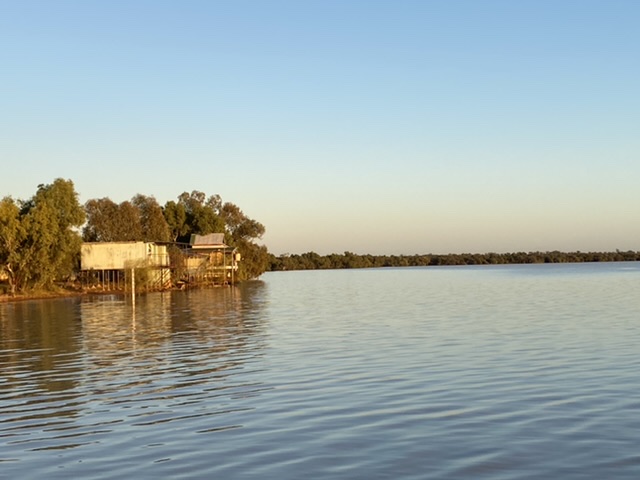
We continue to enjoy soaking in hot baths, spas and pools, some Olympic in size. These experiences are all compliments of the Great Artesian Basin. It’s very relaxing soaking in a steaming hot pool as you chat with fellow travellers or maybe a local.

Other Challenges

Two weeks ago our one set back was our mirror being blown off by a passing road train. That was easily remedied with a sprint back down the road before someone ran over the mirror. This time however it looks like one of my batteries has given up the ghost. There is a Plan B in place and when we arrive in a bigger town a new deep cycle battery will be installed.

Tomorrow we are off to follow a sculpture trail with a destination at Lake Dunn, that’s north of Aramac for those with a map.

Log Seventy One – Back on the Road Again

Friday 21 May 2021

After a hiatus of nearly a year and a half we are back on the road. Unfortunately COVID has meant our plans for travel to exotic overseas locations have been shelved for the foreseeable future. Our only option is for travel around Australia, staying home after the lock downs of 2020 is not an option.
Our plan is to travel through western Queensland, north to the gulf country and back via the Great Barrier Reef coast.

We started with a short 2 hour drive from home. We needed to get back into the swing of travel and camping. After that night the distances have been longer and the roads more empty. The country also became more remote, empty and generally very flat.

Our observations so far:

Where We are Headed

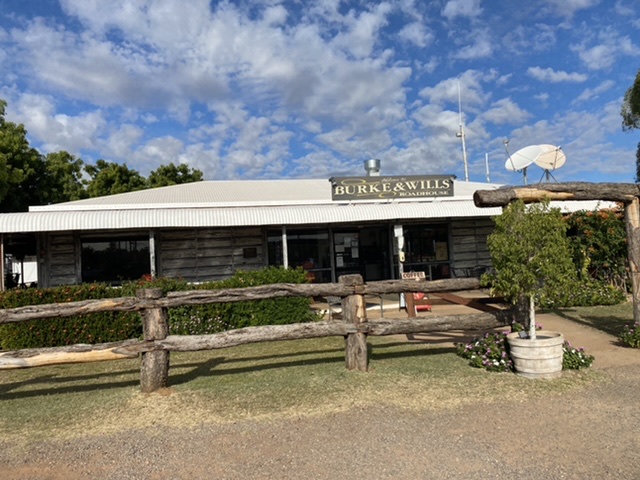
For those with a geographic bent, we have travelled to southern Queensland and west to the Burke and Wills Dig tree. We are now in Charleville before we start our move north. It seems everyone that might have been travelling down the Danube on a 5 star river cruise is now on the road towing a caravan and stopping wherever there is a bakery and coffee.

Our Stowaway

A Stow Away

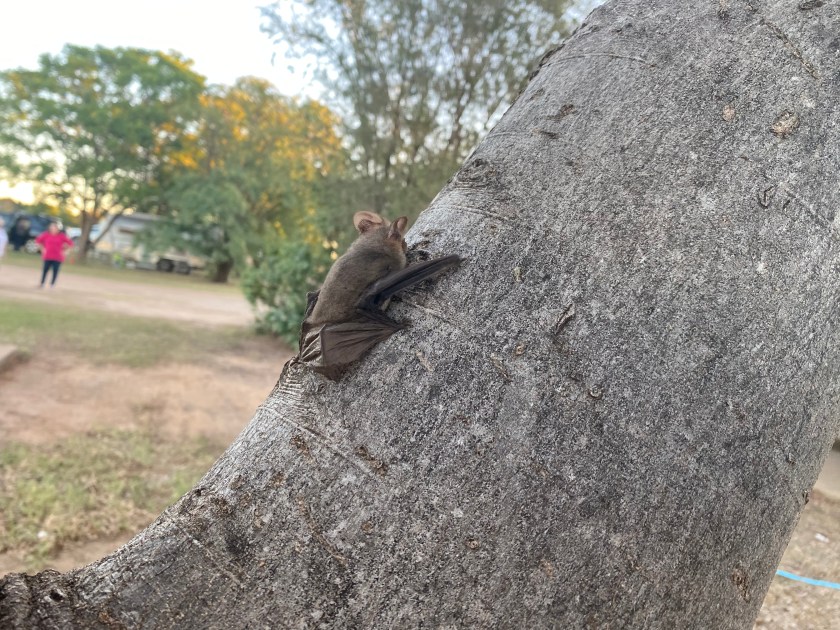
On opening one of our camp chairs I discovered a stowaway. A micro bat (essentially a mouse with wings) had thought sleeping through winter in our garage in a camp chair would be a good idea. Unfortunately his plans came unstuck about 1,000 kms from home. A quick call to the local vet and we were informed we could let him go, just don’t handle him and don’t get bitten. After all the COVID stories about bats we were never about to pick him up. We just hope he found other batty friends in his new neighbourhood.
Entertainment on the Road

Out here FM radio stations are a non event so it’s AM. The challenge is most of the radio station advertisers are located a good three days drive away. The services and products they offer are just geographically impossible. The TV stations also include ads for companies in Alice Springs. Getting there would require a serious week of remote 4WD travel. The music is western or straight from the 70s and 80s, perfect. Forget connecting to the internet, there is also no mobile coverage, except in the towns.

Remote Country Towns

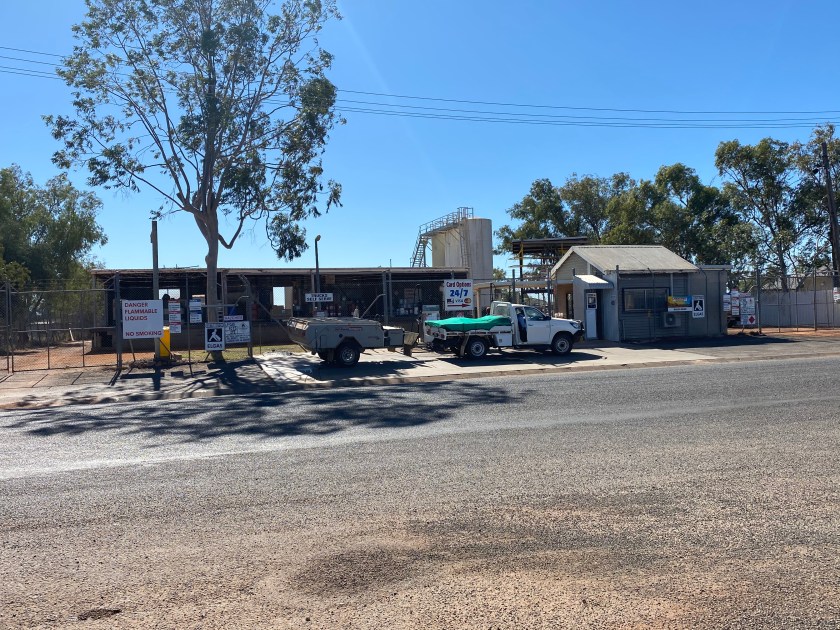
Your first priority when you arrive in these small towns is the search for fuel. Fuel stations can be identified by the queue of caravans waiting to fill up or alternatively they might be located in some obscure section in the industrial part of town. There always seems to be a fuel station or two without fuel.

Price is irrelevant, competition is unlikely.

The Country

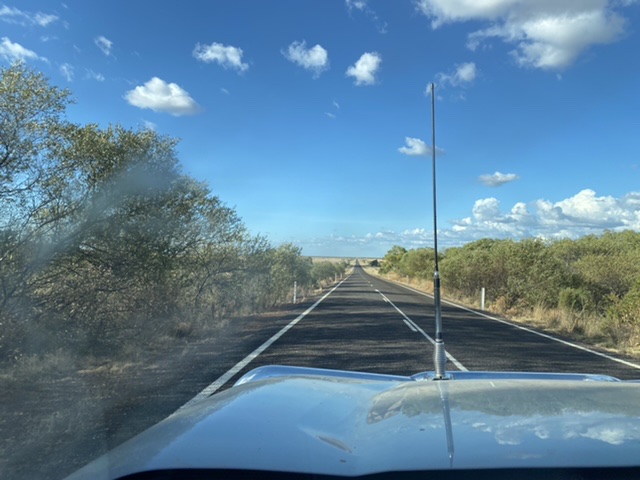
It’s flat, wide open and empty. On some days we have left town and its been three hours before we have seen a building. There is the odd gas refinery and widely dispersed oil wells.

The road and horses

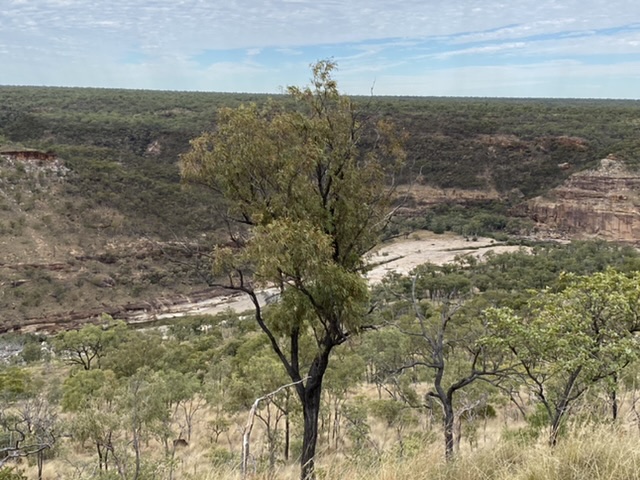
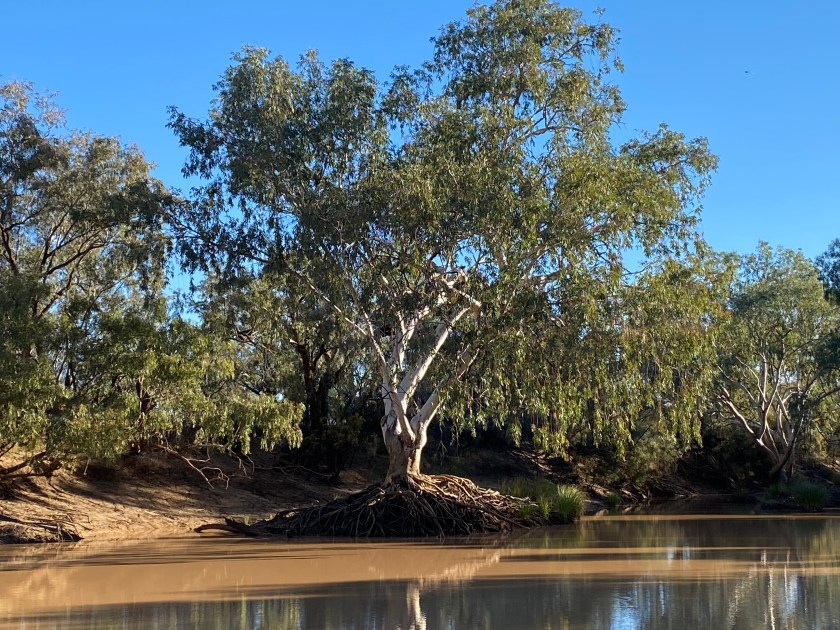
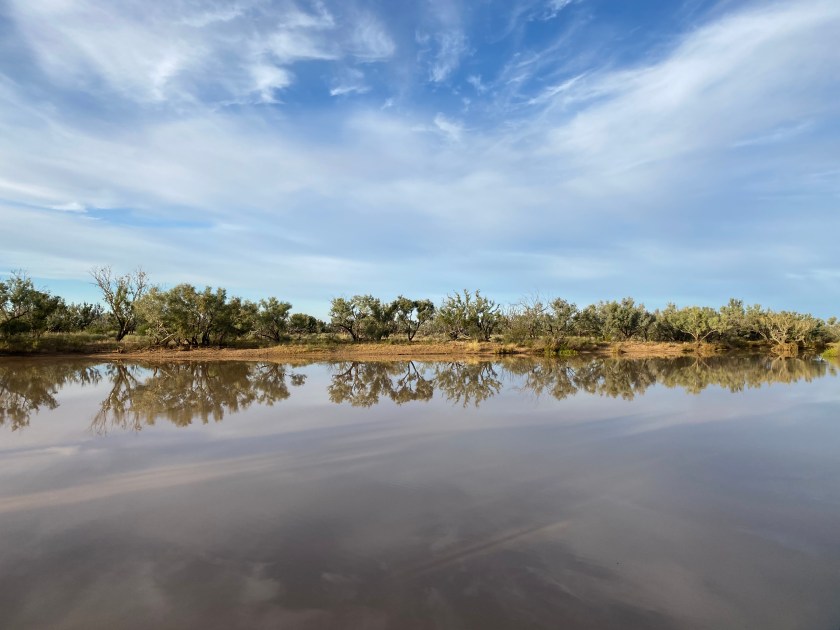
After years of drought the country is green, well relatively. We are not talking the green of England but it is green. The creeks have water and rivers are a series of water holes. Even the swamps are wet.

We have discovered electronic barriers on the roads. Instead of cattle grates between properties they have installed electronic sensors that trigger a high pitched alarm. These are little disconcerting when they first go off and you think something has happened to your vehicle. We are guessing they are designed to stop cattle wandering. There are few fences out here and the properties are vast.

The Locals

Everyone in these remote towns seems to have a story including the lady at the bakery whose 84 year old dad was out the back. He was the baker and was preparing laminations while we were there. We got the sense that when dad falls off his perch the business will fold.

The guy out the front of the super market told us all about shearing in 50c degree temperatures and hauling fuel to Birdsville. That’s a 1200 km return trip and they do it every week.

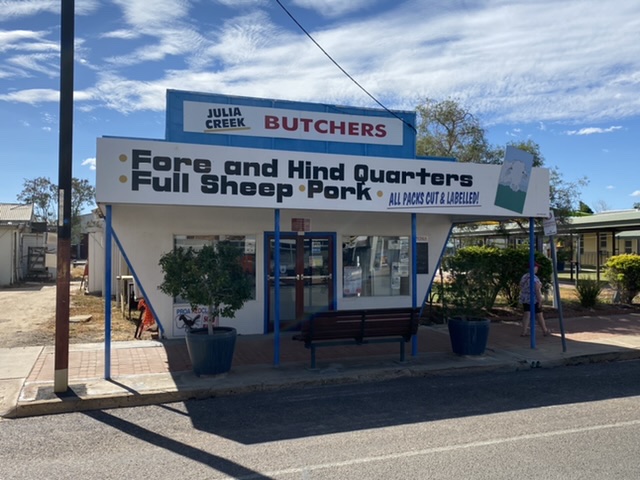
Everybody told us about the butcher in Quilpie. It seems he is the best butcher in all Queensland and we can attest to the quality of his steaks.

The Roads

The roads have been very good and mostly sealed with the exception of 15kms to the dig tree. The width of the sealed road however varies from two cars wide to just one.

On the narrow sections of road the approved etiquette is to move out of the way of anything bigger than you. Road train avoidance is a must. These three trailer behemoths are to be given respect in all circumstances. Move out of their way and stop if you want to avoid a broken windscreen. Never argue with a road train.

The Great Artesian Basin

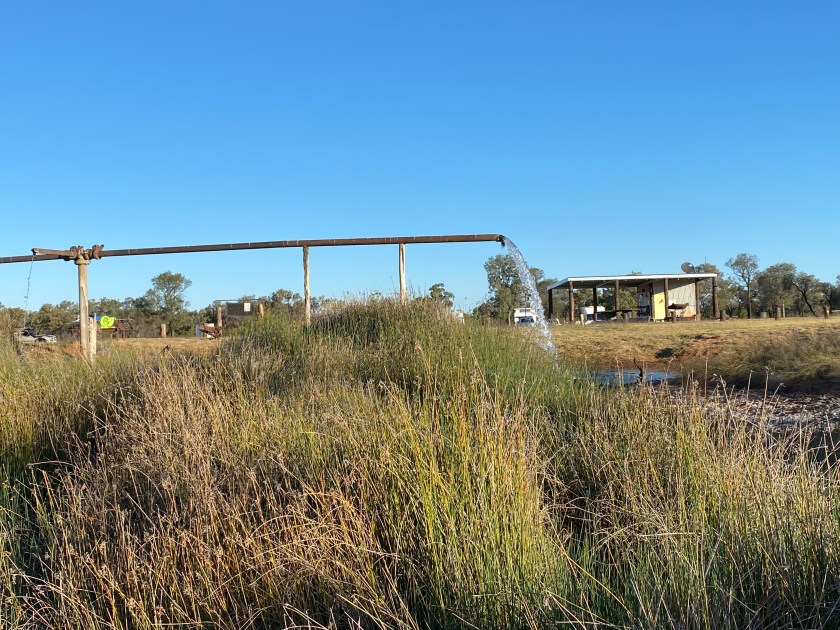
Everywhere out here the water supply is from the great artesian basin which covers one fifth of the Australian continent and is the largest underground water resource in the world. Unfortunately some of the artesian bores have been flowing freely for over 100 years and one day this amazing resource will dry up.

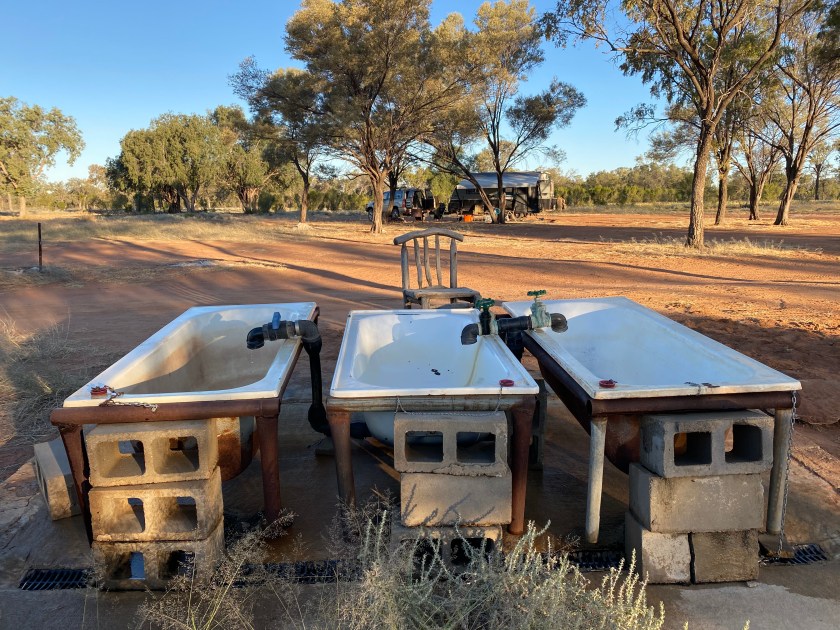
The up side of the artesian basin is sitting in an old bath tub filled with steaming hot water at 3.00am looking up at the stars. Ah the serenity.

The downside is your shower comes with a slight hint of sulphur. All part of the experience. Oh, and soap lathers perfectly well.

Wildlife Along the Way

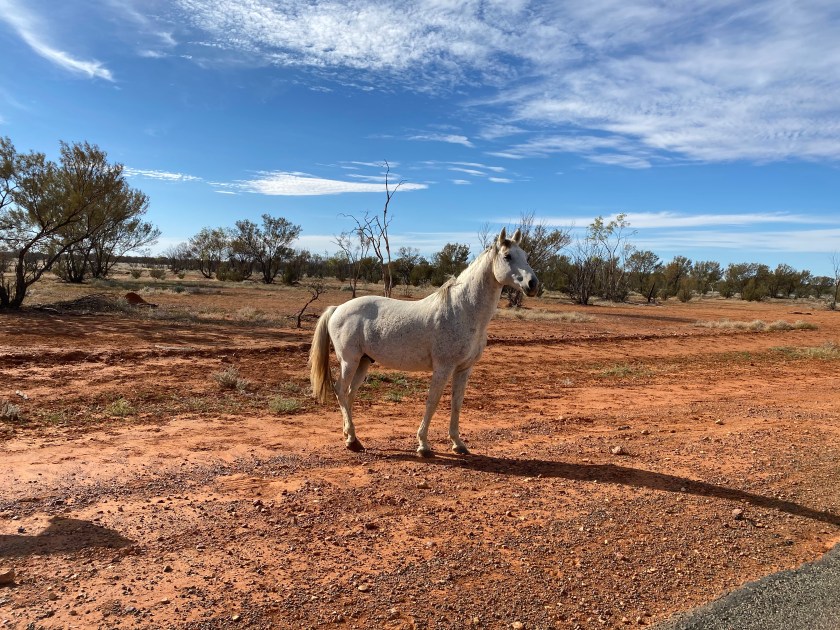
The country is so empty that on some days seeing a cow is a reason for excitement. Goats, wild horses and sheep are also present.

The native wildlife includes emus, kangaroos, brolgas, turtles and wedge tail eagles. In the water holes, creeks and rivers there are blue claw (yabbies) and yellow belly (fish)!

More to come as we continue our travels over the next couple of months….

Log Seventy – Epilogue to South America

17 December 2019

The South American adventure has come to an end and now some reflection.  These thoughts were to be published at the end of the trip however there were many impediments to my good intentions.  Thirty three hours of travel from Rio to home messes up your head and body.  After almost getting through that I spent many hours in a fire truck patrolling a bush fire.  All this left me without the motivation to finish this series of logs.

All that is done so no more excuses.  Here are my thoughts:

Highlight of the Trip

This is a tough one as everywhere we went had something special to offer.  From ancient Inca ruins through to stunning landscapes and everything in between, South American has it by the truck load.

However, if pushed I would have to say the Atacama Desert would get my vote.  The incredible expanse of the Atacama along with the surrounding dormant volcanoes makes for an awe inspiring experience.

After the Atacama Desert it would be Inca ruins and Inca stone work including Machu Picchu followed by the Andes and seeing Aconcagua.

Disappointments:

I didn’t see a toucan.

We didn’t get to Bolivia, social upheaval and maybe another revolution got in the way.

I didn’t get to try guinea pig.

One of our fellow travellers was ripped off by bad guys in the foyer of our hotel.

Quality of Accommodation:

Five star and beyond pretty much everywhere we stayed.  The catering on the 10 hour train ride was comfortably five star.

Quality of Food:

As might be expected the food varied with each country and was always good.  The traditional Brazilian barbecue restaurants are a very different experience with a never ending range of meats being carved right at your table.  Brazilian and Argentinian meals include lots of meat and it’s all very good.  In Chile it’s more about fish and in Peru, fish and vegetables.  Conger eel in Chile is well worth trying.

Continue reading “Log Seventy – Epilogue to South America”

Log Sixty Nine – Iguazú falls and Rio

1 December 2019

It’s hard to look at Iguazú Falls and appreciate all that water when the east coast of Australia is in the grip of drought.  Niagara Falls might have the most water going over the edge and Victoria Falls might be the highest but these are the widest and they are spectacular.

Iguazú  falls are 2.7 km across (1.7 miles) and they include some 270 separate cascades.  About 1740 cubic metres of water go over the falls every second.  I can’t imagine what we could do with that amount of water in Australia.  They get 20 metres of rain every year in Iguazú!

As with other marvels like the Grand Canyon, photographs of the falls never seem to do it justice.  Every new trail around the falls reveals a new vista.  The walkways across the top of the falls provide a view over the edge which is literally breath taking.

The tourists haven’t swamped this place yet but they are coming.  In 15 years the tourist traffic to Iguazu Falls has increased from about 300,000 pa to 2 million this year and there is no sign of this growth slowing.   We ventured on the trails around the falls early in the morning to avoid the heat and humidity, and people.

Apart from the falls the Great Dusky Swift is also pretty spectacular.  These birds seem to fly straight through the water to get to their nests which are behind the falls.

Sitting in a roof top bar drinking cocktails and overlooking Copacabana beach at night invoked an urge to break into Barry Manilow impressions.  We strenuously resisted the urge.

Rio de Janeiro is set amid a panorama of amazing granite monoliths.  On the top of one is the statue Chris the Redeemer and you can travel to another, Sugar Loaf,  via two breath taking cable car rides; not something for the faint hearted.   Between these monoliths are the suburbs and favelas that make up this city of 7.5 million people.

While I am talking numbers, Brazil has a population of about 240 million in an area slightly bigger than Australia.  We have just 23 million.  Of those 240 million in Brazil we are told only 50% have access to sewage systems.  Pollution is everywhere to be seen in Rio, be it litter in the streets or the bays for which swimming is to be avoided.

I mentioned  the two passions of Chile, Peru and Argentina.  Brazil has four.  Catholicism, soccer, carnival and corruption.  In regards to corruption, the last four governors of Rio are all in gaol for corruption.   They do it so well down here.


I cannot go without commenting on Copacabana beach.  If you walk along the beach in shorts and shirt you will quickly realise you are so over dressed.  Exposed flesh is everywhere and I have to say it would be better for all if some was less visible.  Of course there is much to be admired on the beach and not just the beautiful bodies.  Soccer games are everywhere along with a form of volley ball that is also a variant of soccer.  Soccer is everywhere in this country.  It’s no wonder they win World Cups.

We are almost done…..

Log Sixty Eight – Argentina Wine and Beef

1 December 2019

It’s been a while since I last posted and our travels are starting to get away from me.  I will attempt to bring you up to date with our adventures in the next few articles.

Peru, Chile and Argentina were all colonised by the Spanish and all speak Spanish.  They were liberated by the same chap, Santa Martin, but that’s where the similarities end. As an aside he was a pretty amazing character who took an entire army over the Andes before there were roads, tunnels and immigration officers.

Peru is a mountainous country boasting both Lake Titicaca and Machu Picchu.  It’s a country of vegetable farms, potatoes and the delightful pisco sour.  Chile is a shoe string shaped country that is again mountainous and fish seem to be the regular item on every menu.  From what we have seen Argentina is largely flat and perfect for growing steak and the perfect accompaniment to steak, red wine, Malbec to be precise. Argentina stretches from the cold climate of Patagonia to the lush rain forests of the Iguazú falls region.

I realise this is an incredible shallow comparison between these three countries but trust me they are very distinctive cultures and people.  There are however two passions where these countries are in sync.  They are all predominantly Roman Catholic and their second religion is soccer.   Whilst Catholicism might bring them together, soccer and competition on the field drives them apart.

Back to Argentina.  Until now my closest experience with the Pampas was all the pampas grass growing in Australia. Used extensively in the 1970’s as a garden feature it is now a weed. I am now in the Argentinian Pampas and there it is and where it should be, pampas grass. There are also magnificent eucalyptus trees as we have seen in Chile and Peru.

The Pampas is a huge area. It’s flat and incredibly green. The people who work these farms or ranches or the gauchos, maintain their traditions in terms of dress and their work with horses. Ok, so I was on a ranch dedicated to the tourist industry but I did not see a motor bike anywhere. The work was all done on horseback, and no helicopters to be seen to round up the cattle.

It seems Argentina is not a vegan based culture. We enjoyed a lunch under the enormous oaks and eucalyptus trees on the ranch. The lunch comprised some salad and then came the meats. There was chicken and pork and then beef. We had reached our consumption limits when more trays of perfectly cooked steak were offered. We were uncomfortable both with the amount that had been consumed so far and with the fact we had to say ‘no more’. The consumption of the beef was assisted with a good supply of Malbec.   We were to discover there was more meat coming over the next few days.

Buenos Aires is a huge sprawling city of 13 million people. The inner city streets are narrow, cobblestone and very similar to the cities of Europe.  This comparison includes the architecture, the streets and the graffiti.   The city is surrounded by freeways and tunnels designed to shift the traffic quickly but not necessarily successfully. Parts of the city are very modern with new 40 storey apartment buildings dotting the landscape.


Log Sixty Seven – Crossing the Andes and Argentinian Wine

23 November 2019

This was a section of our travels I was looking forward to.  I had no idea of what this road might be like but crossing the Andes sounded like a very special experience and I was not disappointed.

It seemed like the moment we left Santiago we were climbing.  We started at about 900 metres and we’re heading for 3800 metres.  Back to gasping for breath altitudes!

It’s hard to describe the experience and maybe the photos won’t do this journey justice.  Every bend, twist and turn revealed a new vista more stunning than the last.  You cannot but take lots of photos hoping you have captured what you are seeing.

The high mountains, rocky cliffs and deep gorges seemed to go for ever.

We stopped at a section of about 20 switchback bends.  Actually we stopped at no. 17 for photographs.  We were all soaking up that view when there they were; condors!  Probably six condors soaring above a ridge immediately in front of us.  My major regret at this time was that I had decided not to bring my telephoto lens.  A mistake.  We were all in awe watching these huge birds effortlessly glide on the thermals.  These are one of the few birds that can fly at over 5,000 metres.  I did take pictures however I regret to say the condors take up about a pixel on the screen.  They can be mistaken for dust.  I also now realise why they fly in circles.  They are not catching thermals, they are blacking out due to a lack of a oxygen.

We passed through Chilean immigration and then a few kilometres on, Argentinian immigration. We were now in a new country and on the ‘other’ side of the Andes.  The border is at the highest part of the mountains dividing Chile and Argentina.  The actual border is in the middle of a long tunnel.

A little further on and there it was, another surprise.  Aconcagua, the highest mountain outside of Asia was suddenly visible in bright sunshine.  This was a mountain I had read about in my school days but never thought I would see it.  On this day it was so clear without a cloud in the sky, the mountain shining in the bright sun.  Another wow moment.  

What I found really amazing was how different the Andes are on the west versus the east side.  On the west the views of are rocky peaks, cliffs and deep gorges.  In contrast, on the eastern side the mountains have massive scree slopes from almost the tops of the peaks down into the valleys.  The rivers on the Argentina side run through deep sediments in wide alluvial valleys.  The contrast is quite amazing.

We drove on to Mendoza, a city of wineries and beautiful sycamore lined avenues.  This is a city oasis in the middle of a dry scrubby landscape.  The sycamore and lush garden are all the result of irrigation channels running beside the city streets.  Where the irrigation system stops the dry desert starts.

Winery’s are every where in this region and the Malbecs are certainly worth the investment in time. A lunch of 7 courses with matching wines will go down as one of the highlights of the whole South American adventure.

Next the city of Buenos Aires.

Log Sixty Six – Santiago and the Journey So far

22 November 2019

I thought at this stage I would reflect on some thoughts of the trip so far.  Here are a few random thoughts:

Our guides have all been highly educated with multiple degrees and are multi lingual.  Our guide for the whole trip has a PhD and all of our local guides have travelled the world. Our current Chilean guide climbed Everest in his younger days.  He holds a masters from a Chicago university.  Our guide in San Pedro was a robotics engineer.

It’s clear working in the travel industry is a highly skilled profession.  Our guides perform the roles of educators, project managers, counsellors, mediators and foreign exchange experts.  This is not a job I would ever have the patience for and I am in awe of their ability to manage such disparate groups.

Peru and Chile both do a good mountain.  The Andes are spectacular and ever changing.  At 25 to 50 million years old they are the new kids on the block.  In comparison parts central Australia are 1.8 billion years old.

While we might complain about our own local politics, South America takes politics to a whole new level.  Their recent history includes coups, revolutions, foreign interference, independence from foreign colonial powers and regular social discontent along with the odd riot.  Long term stability would make such a difference to these countries.

The coffee has been excellent everywhere we have been.  The ceviches, raw fish marinated in citrus juice, is always good and the range of potatoes in Peru is impressive.   The conger eel in Chile was something I wouldn’t see on the menu in Australia and  it was good.  We haven’t been disappointed by the wine and the pisco sours in Peru are worth the 20 hour flight.

I am little over dimly lit hotel rooms.  They seem to be a universal feature of hotel design.  The light switches in South America make more sense than they did in China but I would like to see what I am doing and the contents of my suitcase.

Back to the last few days:

The book and movie Alive closely depicted our situation on the road returning from Valparaiso heading to Santiago.  Ok, we weren’t a soccer team and we weren’t marooned on top of the Andes for 72 days.  However our bus had broken down near the Andes and we were marooned for about an hour and there was no food.  It was touch and go for a while until a replacement bus arrived.

Chile and in particular Santiago has been on the news lately for reasons of civil unrest.  Many buildings remain boarded up in case of fresh riots.  The city is however very safe too wander around.  Many of the protest groups which are generally young people, are still on the streets and are only too willing to talk about their issues.  There is also the  opportunity to meet up with older people who will also gladly express their opinion on what is happening to Chile.

Valparaiso was in its prime before the Panama Canal opened and when nitrates were shipped from the port.  Since those heady times it has been locked in time.  Today it’s trying to lift itself out of years of neglect while retaining the look and feel of the unique architecture and streetscapes that define Valparaiso.

And now across the Andes and Argentina …