Log Nine – SE Asia Post Peregrination

20 September 2015

Greetings to any new addressees to this email travel log.  This is number nine in the series and the first to come from SE Asia.  I had intended completing this piece while travelling but that didn’t happen so here it is, a little late.

Aircraft Travel:

  • After spending lots of time in airports especially in queues and suffering the interruptions caused by other people I have concluded airport design needs to be re-thought.  There are great similarities between airports and farms and my thinking is based on the Australian sheep farm or maybe a train shunting yard. What I envisage is each passenger wearing a bar code, similar to the ear tag worn by cattle.  As you move through the airport the bar code would be scanned and barriers and gates would open and close, rise and fall, quietly directing you to your departure gate without you (the sheep) having to read a sign.  This would be efficient and would reinforce the whole airport experience of processing fresh meat.
  • My second design concept is moving walkways as you approach the immigration and security gates.  The moving walkway would avoid the frustration caused by people not moving according to my expectations and allowing large gaps to develop between them and the next group.  Everyone would move forward and be processed at the right speed.
  • During the flight I have discovered that dark energy and dark noise exist within the plane fuselage.  These dark forces, like the universe make up 90% of your experience on the plane but they have never been truly identified or measured.
  • At takeoff dark noise might sound like a small person screaming ‘I want a window seat, I want a window seat, I want a window seat.’  During descent and landing dark noise is like a lot of screaming similar to the noise left over after the Big Bang.
  • Dark energy is again unseen but is more focussed.  Typically it comes in the form of sudden flexing and pressure in the lower part of your backrest.  It’s not dissimilar to a small person kicking the back of your seat.  I use that example purely for illustration purposes, no child under the supervision of their parent would ever do that – it’s dark energy.  Dark energy also causes the seat in front of you to come crashing down just as you are eating your meal.  These are very dark forces and yet to be adequately explained.
  • Dark energy and dark noise have mass and are affected by the velocity of the aircraft   How do I know this you ask? I realised these two forces are only found at the rear of the aircraft.  In the front of the fuselage they are only in small amounts and hardly noticeable.

Vietnam and Cambodia.

Traffic:

  • Did you know there are five sides of the road on which to drive?
    • Drive a right hand drive vehicle on the left side of the road (Australia)
    • Drive a left hand drive vehicle on the right side of the road (USA)
    • Drive a right hand drive vehicle on the right side of the road (UK vehicle in Europe)
    • Drive a left hand drive vehicle on the left side of the road (European car in the UK)
    • Its discretionary; anywhere you like (Vietnam and Cambodia)
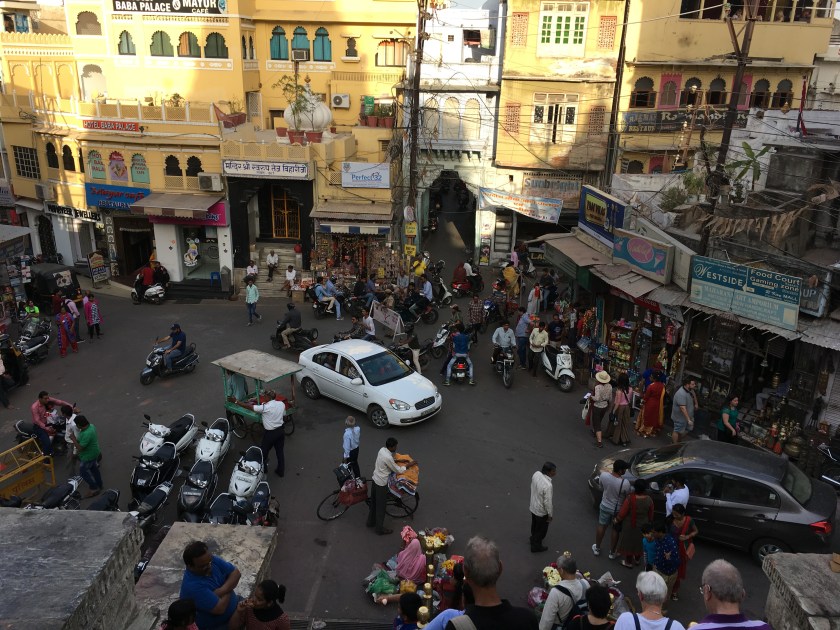
  • The best way to describe traffic in Vietnam and Cambodia is to compare it to blood flow or fluid dynamics.  Motor bikes are like red blood cells carrying the oxygen and nutrition (people and goods) the city needs to operate.  The motor bikes flow down arteries and veins in a fluid motion, only occasionally slowing at stop signs and flowing around intersections filling the entire space available including both sides of the road and the footpath.
  • To cross these roads you have to understand you are part of a flow, nothing will stop for you, it will simply flow around you. This includes the time you are riding a motorbike (as a passenger) and a bus wants to cross the road right where you are.  There is no road rage just thousands of people on motor bikes trying to get to their destinations.  9 million people in Saigon and 6 million motor bikes!

History:

  • Helipads from the Australian army base of the Vietnam war era are now soccer fields and the runway at Nui Dat is now a country road.  There is a kindergarten built by Aussie Vietnam veterans.  The field where concerts were performed for the troops is now an open field at a cross road of two minor country roads. What was so important 40 years ago is now quietly reverting into the local landscape.
  • History in this part of the world can be very confronting, be it the Vietnam war (known as the American war in Vietnam) or the times of Pol Pot in Cambodia.  And yet regardless of the history and the traumas experienced the people just get on with life and the challenges of living in a developing country.  The past is the past.
  • While Pol Pot was not held to account for his crimes there is a view that he will get his in his next life.  It’s all about karma and his next incarnation many believe will be as some low life, maybe a cockroach.  This attitude allows the people of Cambodia to move and not be dragged down by its past.  This is quite different from other cultures that continue to passionately celebrate battles from 300 years ago!

The People:

  • When asked about politics in Vietnam the response was we have two systems; the government is communist and the economy capitalist.
  • The Cambodians have a wonderful saying: We smile to change the world and don’t let the world change our smile.
  • A description by a Cambodian of their neighbours and their attitude to life:
    • Vietnamese they are running
    • Cambodians they are walking
    • People from Laos, they are sleeping
  • We visited the largest Buddhist monastery in Cambodia and received a blessing.  At lunch time we were looking into a large pavilion that had a large number of lay monks preparing for lunch.  In the front of the room close to the alter with the Buddha was a lay monk chanting. I think he was chanting something along the lines of whether people  wanted the banquet for lunch or whether they wanted to order off the menu.  The response, in chant, was they wanted the banquet or wanted to order on their own and then there was the one guy who didn’t want chillies. This goes on for some time until they all agree on the banquet.  At this time the bell is rung.  The bell is a brake drum from a truck and it has perfect tone.  The monk rings the bell and has a wink and a wicked smile.  He either knows it’s a truck part he is ringing or he is pleased they have agreed on the banquet.  At that time the monks, in saffron robes walk in procession from the pagoda to the pavilion where lunch is served.  They are very quiet and solemn, clearly wondering what they are getting for lunch today.
  • The Cambodians have their own form of Vietnamese boat people – who would have thought!  The Vietnamese came to Cambodia in 1979 and since the Cambodian government won’t give them identity papers they live in floating villages on lagoons just off the Mekong river.
  • The flooding season comes every year and people just move themselves and some of their livestock to higher ground.  There is no panic, no 24 hour news reporting, no scenes of sand bagging they just move on and are happy with a new layer of silt in their rice paddies.

Wildlife in Cambodia:

  • There is none, it was eaten.  Time were tough under Pol Pot and the Vietnamese so all the wildlife was eaten.  Cambodians will eat anything with four legs except a table and anything that flies except an aircraft. Tarantulas, crickets and cockroaches are all up for consumption.

Tourism

  • The wet season is great; the tourists avoid the place.  It is however very hot in the morning and wet for about an hour in the afternoon.
  • Narcissism rocks.  All of your photographs must now be of you and all your friend’s photos will be of them.  No longer is it sufficient to photograph a 1000 year old temple.  You must photograph yourself with a 1000 year old temple in the background or maybe you with a stone causeway in the background, or you with an ancient moat in the background.  All pictures must be of you striking a pose similar to the cover of Vogue. I’ll say no more.
  • In Vietnam everyone is a millionaire; they must be a round of drinks costs VND240,000 and a massage VND1,320,000.

The Future:

  • Cambodia and Vietnam are developing as fast as they can.  Cambodian GDP growth is about 7% pa, up there with China.
  • In Saigon they are building an underground rail network.  In years to come the motorbikes will be vastly reduced and maybe you will see pigs on trains.
  • New buildings and multi storey office blocks are going up. The people of Saigon are very proud of the European labels that are available in their city; Louis Vuitton, Gucci, Prada, Chanel etc.  Of course the tourists come to see the old French colonial architecture and the chaos of a developing country.    In 10 years the place will be very different – go now.

That’s it, I’ve said enough.  As always, if you don’t want these emails just drop me a note and you will be off the list.   For the new readers, previous emails have covered travel to Queensland, New York, England, Scotland and SA.  The next stream of consciousness is likely to occur in four weeks and will align with a family reunion; I’ll say no more.

Log Eight – Shiraz and Salt Bush Tour cont…

13 August 2015

The return home:

We spent our time wandering along the Murray River and into SA, the Flinders Ranges and the Clare Valley.  The car, filled with cartoons of wine and the credit card feeling a little overworked; we agreed it was time to go home.

This has been another adventure that has been based on very broad ideas like lets go somewhere along the Murray River and beyond that it’s just evolved as we have travelled.  We are not good at detailed planning, it happens as we travel and as opportunities arise.  The best example of this organic style of travel is after a excellent dinner at Rawnsley Park in the Flinders Ranges and a bottle of Seven Hills Shiraz we decided that Clare Valley was a place we needed to go since that was where the wine came from.  We now have a dozen bottles of their wine on board.

The final observations for this trip:

  • We cleaned up the mandarins expecting to go through another fruit inspection station but that didn’t happen and so we planned to get more fruit down the road and guess what, we had left the citrus country and therefore no fruit stands on the side of the road.  We are now in the country where fruit comes from supermarkets.  The lesson for all; never assume mandarins will always be there and grab opportunities when they arise.
  • We travelled across the famous Hay Plains on our return.  We have heard much about the Hay Plains but had never experienced them.  We have been told they are flat and boring.  How wrong can they be, there were several highlights for us on this section of the road.  There was a hill, two curves in the road and a tree.  The hill and the tree were in the same place so that was very exciting and when I say hill what I mean is a slight rise.  I could see a truck that had past us for about another hour, at that time it was just a tiny black square on the horizon, just a pixel on a very flat landscape.  This section of road was over 110kms (70 miles) so it was pretty exciting.
  • We did see a cow.  She was about 2 kms or  maybe a mile from other cows which suggests she slept in that morning or was the type of cow that just didn’t need the company of others.
  • The Hay Plains are so flat you could use a sextant and a good time piece to calculate your position.  The horizon is visible in all directions.  If you were away from the road it would be very easy to get lost since there are no landmarks not even farm buildings!
  • You get a sense of how hot it gets out here in the summer with property names like Hells Gate.  It is believed Hells Gate property is the reference in Banjo Patterson’s poem Hay, Hell and Booligal, an Australia classic.
  • I mentioned this country is flat and dry.  Flat is good for agriculture but how is it we grow so much rice in such dry country.  All through this area are vast rice farms.  What isn’t under rice is dedicated to cotton, again a heavy user of water.  We could not see these fields since they were well away from the road, closer to the river and irrigated water.
  • You know its cotton country by all the cotton on the side of the road.  At first I thought it was litter but there was just too much even for the grubby individuals in this country who think chucking stuff out the window is ok.  For miles and miles cotton decorated the side of the road – may be they could harvest the cotton fluff on the side of the road and avoid having to grow it.
  • The country towns out here have that look about them that says their best days were in the past.  Boarded up and empty shops are everywhere.  Farms have gotten bigger and people are able to drive great distances to buy their supplies. However what remains in these town is that country pace to life where everyone has time to chat, no one is in a hurry.  You can park your truck, leave the motor running and walk into the bakery to buy several pies and sausage rolls (obviously for your mates); where people drop into the store grabs six loaves of bread and call out to shop assistant to put it on the account as they leave the shop.  That would never happen in the bigger towns and cities.
  • We visited Lake Mungo, which although described as a lake and it was for about 40,000 years has in fact been dry for 18,000 years.  Is calling it a lake overstating the congeniality of the area just to attract more tourism, I wonder?  Let me say don’t take your ski boat to Lake Mungo there are no launching ramps.  Regardless, it is in this area that they found the remains of a woman and man.  She died 41,000 years ago and he somewhere between 40,000 and 60,000 years ago (his dates are still being debated).  There have also been footprints found that are 20,000 years old.  This is a very long time ago when you compare it to the 227  years since Capt Phil turned up in Sydney cove with a bunch of convicts.
  • Imagine for a moment Mungo Woman and Mungo Man finishing a meal of mussels, fish and some left over giant kangaroo, maybe the last of giant macropods.  As the sun sets over the lake, Mungo Man suggests a good coffee would finish off their dinner.  She replies, “Mate, it’ll be 40,000 years before they’ll get a decent barista out here”.  And she would be right, because now in the middle of nowhere you can get an excellent coffee at the four star Lake Mungo Lodge.
  • Final comment about footprints.  Whilst the evidence of modern man is seen in all the campgrounds you can still see evidence of Cobb and Co coaches (stagecoaches) near the lake.  These tracks are over a 150 years old.  Cobb and Co coach routes covered all of outback Queensland, NSW and Victoria.  In its heyday they would on an average day have 6,000 horses in harness or about 1500 coaches on the road.  Imagine the blacksmiths, harness makers, stables, and stock feed suppliers required to maintain such an organisation. No wonder there were so many small towns.  And all of this was achieved without an Excel spreadsheet or TripAdvisor.com.au!

Log Seven – Salt Bush and Shiraz Tours

5 August 2015

After a hiatus of 10 months I decided it’s time to put finger to key board and to tap out a new travel log.  We are not travelling through any exotic foreign setting rather we are travelling through the southern parts of Australia along the Murray River and then on to South Australia, the Flinders Ranges and the Clare Valley wine region.  Of course for the foreign readers of this log these locations would be very exotic – it’s all in the eyes of the beholder.

I have found trying to view my own country through fresh eyes is a challenge, it’s not like driving through the wilds of Scotland and seeing everything for the first time.  Maybe that’s why it’s taken me a while to get inspired to write and to appreciate what is quirky and different about this place. So on a cold and rainy day a number of observations come to mind.

  • In his book Guns, Germs and Steel Jared Diamond described  Australia as the oldest, flattest, driest and most infertile continent of all the continents.   Clearly he wasn’t here when mandarins were on sale from road side stalls for $3 for a huge bag.  The tricky bit is the Quarantine stations are down the road from where you bought the fruit and you  now have two days to gorge on mandarins.  Once you cross into the next Quarantine zone you get to buy a fresh bag of mandarins. Maybe this is just a very clever marketing strategy.
  • Beyond the irrigated citrus groves the country is flat, rocky and covered in salt bush.  Only good for sheep, roos and emus.
  • Jared Diamond was on the mark about FLAT.  We started this trip at the Murray river for a four day trip on a houseboat with two other couples.  This is a trip we have done before and we are getting better at manoeuvring this floating two storey apartment complete with four bathrooms, spa, five flat screen TVs and a barbeque.  It handles like a brick and there is an art in navigating it around the many meanderings of the river.   Back to FLAT.  We call it the Murray River however in a little over 1700 river kms (1061 miles) the river drops just 96 metres (315 feet) that means it falls 1metre in every 17 kms (approx 3 feet every 11 miles).  So maybe it should be described as a really long and skinny lake rather than a river, after all in most years it doesn’t even break through to the ocean.
  • From Lake Murray we drove into the Flinders Ranges.  The rocks that make up the ranges are about 650 million years old.  That’s well before the Vikings invaded the UK and a few years before Mungo woman died in southern NSW.  Her skeleton indicated she died 41,000 years ago and foot prints near Lake Mungo are about 40,000 years old.  Unfortunately someone walking the tracks we covered in the Flinders felt the ‘millions’ was inaccurate and removed the word from all the information boards, suggesting the rocks were 650 years old.  I don’t mind creationists believing what they believe, I do object to them vandalising informative panels in a national park. And are they suggesting these rocks are younger than the pyramids?
  • Since we are not travelling in traditional holiday periods ie summer or the school holidays, means we are surrounded by people who like us are not locked into work or school timetables.  This means we see ourselves everywhere we go, in bakeries, at the camp grounds, in the stores, at the petrol stations.  When I say we see ourselves I mean people of our age demographic.  That’s ok, what gets weird is when you are in a camp kitchen and you find all these older people on their smart phones, tablets and laptops because this is the only place in the camp where you can get the internet and mobile coverage.  Gone are the days when it would have been masses of 13 year old boys on their hand held Gameboys.  Now its older people checking their emails, downloading photos to Facebook, Skyping grandchildren and arguing with their partner about what app they can’t download.  How times have changed.  Have you noticed the voice grandparents use when talking to their grandchildren over the phone or via Skype?  Its kinda high pitched with a rising inflection and used exclusively for grandchildren.  It’s so hard to have a private conversation in a large room with 20 other people!
  • Emus and non traditional families.  We have seen many emu mobs of 20 to 30 birds and were curious about these large gatherings.  It turns out after the eggs are laid dad emu incubates the eggs.  He then looks after the hatchlings for the next 2 years while mum has cleared off to follow her own pursuits.  Now if there is a dad who decides child care is not his thing he hands over his brood to another dad who seems to be doing the job.  In this way it is common to observe one dad emu looking after 20 to 30 young birds who are almost as big as he is.  After a couple of years the chicks are independent and I guess he goes looking for another female to start the process all over again.  Is this why the emu is on the Australian Coat of Arms?  Are we recognising his perseverance, willingness to forgo hanging out with his emu mates and being a good dad?
  • Speaking of our national symbols; a couple of nights ago we enjoyed dinner at a very remote pub in the middle of nowhere.  The proprietor challenged me on this observation commenting the pub was equal distant from Oodnadatta,  Broken Hill and Adelaide and was therefore in the centre of everything.  For the USA based readers see if you can find these locations on Google maps or Google earth.  Back to the national symbols; for dinner we enjoyed emu, kangaroo, camel and wallaby.  Two of these meat sources make up the Australian coat of arms.  Isn’t it great that we can enjoy our national symbols with a nice shiraz.  I am not sure US citizens are ready to eat bald eagle but maybe the turkey could be your national bird.
  • We are now in wine country and today we sampled wines from a Jesuit run winery.  Being a church they pay no taxes on their wine which I am sure is appreciated by their local competitors.  And even though they pay no taxes their wine is no less expensive. I have to say their wine has been one of the highlights of the trip.
  • Final comment.  On this trip we are enjoying our new truck which has now received its first chipped windscreen and rock damage on one of the doors from a passing vehicle.  Don’t have to worry about keeping it pristine any more.

That’s it for the moment.  As always if you would prefer to be removed from this email list just drop me a note no offence will be taken.

Log Six – Reflections on UK

26 September 2014

This is the last for this trip.  We are safely ensconced in the Admiral Club at Heathrow having gone through the new security regime.  I am glad we got here very early and I would not like to be going through that process when the hordes descend.  No upgrade this time.

I have been asked to provide some ideas on where one might go if travelling to the UK.  So here are some of my random thoughts based on the experience of this trip.

  • First consider what it is you want to see.  We decided that for this trip our attention would be given to the countryside, places off the normal tourist route, to stay in places for several days to get the feel of the area and an avoidance of the big cities like London.
  • Our approach on this trip was to spread our time in four areas, spending about a week in each.  The places we visited were Derbyshire and the Peak District, the Scottish highlands and specifically the western islands, the York district and finally Gloucestershire and the Cotswold area.
  • Next time we would probably visit the Lakes District, Cornwall, the northern parts of Scotland and maybe the Portsmouth area.
  • I would also repeat our approach of staying in self catering cottages preferably within walking distance of a village (pub) and for the time when you are travelling distances, B&Bs.
  • Rent a 4 cylinder, diesel, compact car with a manual transmission.  Driving those country lanes is a lot of fun.
  • Bring your unlocked iPad and buy a data only SIM.  Great for research, bookings and navigation.
  • Chat with the locals.  Our most memorable conversations were with the maintenance guy at York Minster (he’d been there for 40 years and had all the stories), two chaps who were doing a 100 mile walk in the Hadrian wall area; one argued that Durham Minster was the best and the other argued for York, so we had to visit both; the guy in the coffee shop out of Mallaig was very articulate about the vote for independence, as was the guy walking his dog in the Forest of Dean.  Of course Eddie Groves, our host at Riber must be included in this list.  Eddie is a sculptor, biologist and a man who has travelled all over Britain.     These conversations made the trip and provided us with lots of material for the where to next Things we didn’t see but should be on the list:
    • Governor Lachlan Macquarie, the first  governor of NSW and maybe the father of Australia is buried on the island of Mull.  His mausoleum is maintained by both the Scottish and Australian governments.  We drove past the sign but didn’t have time to stop, ferry timetables and all that.
    • Check out the island of Gigha.  It’s just off  Kintyre and is described as the Bahamas of Scotland.  Seems it has palm trees and sandy beaches, something to do with gulf streams.  Of course the Scots are prone to exaggeration and regardless of the comparison I would not trust the water temperature.
    • Check out Whitby, lots of Jimmy Cook stuff here.
  • Some random thoughts on the places we saw and would recommend and other just random thoughts:
    • Visit the Peak District and for your walks start at Fox House, where all the best walks start.  Also check out the industrial revolution history in the area.
    • Go to Bakewell on a Monday  (its market day) and visit the cattle auction, full of characters who speak in strange grunts and inflections.  Try a Bakewell pudding (it’s better than the tart)  but be sure to go to the bakery next to NatWest bank.  Park outside of the village because in the village parking is impossible.
    • The Scottish highlands are amazing.  Be prepared to walk and maybe invest in trekking poles – they help the knees and back.
    • Nothing like a Minster to get you questioning what you forgot from history lessons at high school.
    • Visit in September – the kids are back in school and the weather is at its best.
    • We thought joining the National Trust would be the go, free entry and all that.  Seems there are two organisations in town  The National Trust and British Heritage.  After we bought National Trust membership all the sites we wanted to visit were British Heritage!
    • Remember to pace yourself, the distances may not look far in Australian terms but driving in the UK is different.
    • Read the websites closely.  If you are allergic to cats read the detail about the B&B, the owner might be cat crazy.  I’ve said enough.
    • Over 60s get at least £1.00 off entry, everywhere!
    • If you a railway buff this is the place for you.
  • Be prepared to be surprised, the British are exceptionally intuitive.  To my amazement I could walk into a pub, order a pint and the bar man or woman would say, What part of Oz are you from?  How do they know that?  It’s got to be intuition, ESP or maybe it’s the fairies that tell them.
  • When driving through the western islands of Scotland it’s important to have the right music.  We found the soundtrack to the Shipping News worked as did the music to Braveheart.  The music needs to match to landscape.  Australian country and western or any C&W would not work.  BBC2 Radio has great interviews but listening to Jimmy Hendrix this morning didn’t match the Gloucestershire scenery.
  • Do not get drawn into the badger issue its more controversial that Scottish independence.
  • Remember the mantra of all visitors / travellers you can’t see it all.  This can be difficult to accept but it is reality.  The more you uncover the more there will be to explore and even if you lived there you won’t see it all in a lifetime.

That’s it.  I hope you have enjoyed these ramblings.  I am now looking forward to 26 hours of flying (not) and then dealing with 6 weeks of mail (not) but seeing Jess and Emily will be something to look forward to.

Log Five – More Scotland and England

24 September 2014

This will be the penultimate tale before we end these travels and head home.  If time permits there may be a final rant at the airport, the airport is such a rich environment for spleen venting.

Scotland

  • The Scottish have voted and independence is off the agenda but now everyone is arguing about devolution of law making to not only the Scots but also the English.  This referendum hasn’t resolved anything just made the question more complicated.  The way they are heading they will end up with four States and one federal government – don’t do it.

History

  • We are now in the Forest of Dean, in Gloucestershire near the Welsh border.  We visited an iron ore mine that dates back before the Romans and into the iron age.  Here 9 year olds worked 10 hour days hauling 60kg loads of ore.  They started the working day in the dark, worked underground all day and finished after the sun had set.  They worked by the light of a candle held between their teeth.  Ah, the good old days.
  • History has a very different context here in the UK.  You can be on one site that includes iron age, Roman, Norman, Saxon and medieval remains; it’s quite overwhelming.  In Durham Minster there is tomb that may hold the Venerable Bede’s remains.  Now this guy dies in 735AD;  400 years later his remains are moved to Durham where they have been these past 900 years.  Australia as a westernised country has existed but for about 225 years.  Compare our timeframe with that of the history of the Venerable Bede.
  • The Roman ruins at Vindolanda are really interesting and you can see the roads and various buildings.  You can walk around these ruins and think well that’s it.  A quick chat with the archaeologists and you discover this site goes for another mile to the north that is still cow paddocks, that it was occupied for 400 years (see comment re Australia) and that in excess of 6000 people lived here.  He went on to say there is 250 years of archaeology work to be done.  At this point my brain is full.

Roads and Navigation

  • We continue to enjoy these narrows roads.  The Forest of Dean is punctuated by substantial villages in almost every valley. You can be driving through sheep and cattle farms and then around the corner come across a village of several hundred houses and as you approach the village be prepared for a double-decker bus coming toward you on that same narrow road.  Nothing like the Australian bush.
  • When I asked for directions to the local village I got the classic, ‘turn left where mill race used to be’ (this needs to be said with a broad southern English accent).  I followed the directions through a cow paddock and followed the brook.  I proceeded down a footpath that seemed to be within someone’s backyard to emerge on the main road.  On my return I discovered the house beside the footpath was the Mill House so maybe I did follow where the mill race used to be.  These directions remind me of Wamboin directions to turn right where the shop used to be or in Queanbeyan where the Post Office used to be.
  • I would add the paddock I had to walk through was full of some very bad cows.  Everyone of them had an electronic tracking bracelet on their leg so I am assuming they have been bad and had to remain in that paddock.  One large group congregated right where I had to walk; it was a direct challenge but I pressed on and got a lot of very serious cow stares.
  • I have gone on about the narrow roads but I thought I would explain how close the houses are to the road.  In some villages the front door opens onto the road.  For some houses you could fit a lawn chair at the front of your house but it couldn’t be a recliner, your feet would be scraping the sides of passing traffic.  Think I am joking?
  • In the UK events and places sometimes get quite grand names.  In Scotland a local map recorded an area that was tidal, it was called The Great Muck.  There is regular reference to a major storm back in 2005, it is referred to as The Great Storm and motorway signs for south or north describe The North or The South.  Maps even record the name of a wood which for us would be a couple of acres of trees, but no in the UK its Smith Woods.  The farms are also listed by name such as Browns Farm.  If you had a sign just outside Canberra that said The West you right assume the road took you to Perth.  Of course in the US a sign that said The South would have political and historic implications that we aren’t forgetting!

People

  • I know stereotypes are never accurate and can be dangerous but here goes; the UK local on a summer day is:
    • Eating an ice cream
    • Has a least one dog on the leash
    • Is probably smoking (difficult I know with the dog and ice cream)
    • If in a couple may well be holding hands (even more difficult with the dog, ice cream and cigarette)
    • Is not wearing a hat.  Hardly anyone here wears a hat, not even the school kiddies.  Might have something to do with the weather.
  • In any earlier tale I mentioned the cattle auctions in Bakewell.  What I didn’t mention was that just about all the farmers looked and sounded like characters from Thomas Hardy’s book Far From the Madding Crowd – see the 1960s version.  The auction also caused me to think about the Roma Queensland cattle auctions where 7000 cattle were auctioned in a day versus 700 in Bakewell.  In Roma it was an outside affair, dusty and hot, in Bakewell it was in a very comfortable inside arena where 2 or 3 cows are auctioned at a time and driven away in trucks appropriate for that number of cows.  In Roma it was B Doubles and road trains.  Farming here is very different, more intense and in country that has been farmed for thousands of years.

Sunshine in general

  • The camp grounds here  generally are just an open field, not a tree in sight.  No shade anywhere.  Wouldn’t work in Australia.  And in Scotland a campsite was called a pitch.  Maybe that’s where we get cricket pitch.
  • No one chases the shady carpark so your car isn’t too hot when you come back to it.  Don’t they know how important it is to get the best shady carpark; better than everyone else.

Food and drink

  • If you ask for a beer in an English pub you will be asked; an ale or a lager?  What no one asks that in Australia, so be prepared.  Ales tend to be heavier and less aerated.  The ales and lagers here are amazing and there seems to different ones on offer in every pub.  Some many pubs and so little time!
  • Pub food is often fish and chips, steak and ale pies, roast beef, pork or lamb and lots of other stuff.  You can guess my focus.
  • For breakfast you can get courageous and try black pudding (one try was enough for me), maybe kippers (smoked herrings) which were pretty good, or in Scotland smoked haddock and egg or haggis.  I never tried the haggis.  Of course in Scotland porridge is also offered.
  • Eating time is also such a fun time to observe the table and eating habits of other cultures.  No judgement just observation, although I do have my mother’s voice in my head telling how to eat properly when I see some more of the more unusual approaches.  Doesn’t everyone eat like I was taught; don’t they know what’s right and what’s wrong.   You don’t lick your knife and you don’t put the cereal bowl to your mouth to drain the last bit of milk, I mean geez!

That’s it for the moment.  Today will be one last jaunt and then the packing thing – remember the reference to black holes.

Log Four – Follow Your Nose Tours

19 September 2014

Time for the latest stream of consciousness from ‘Follow Your Nose Tours’ also known as ‘Where  are we Sleeping Tonight Travels’.

We started out with a very limited plan which was based around a week in Derbyshire and then maybe Scotland.  The trip has now evolved into a week in Derbyshire, a week in the Scottish highlands and now a week in the north of England to include Hadrian’s Wall and York and finally a week in Gloucestershire.  Our travels have been somewhat unplanned but that has given us the opportunity to pursue new destinations as locals tells about the local sights and places not to be missed.

I should also warn the reader that my use of the term UK may be redundant by the time you read this.  Today the Scots vote on independence.

  • Luxury is a white line
    • After four days of driving on roads the width of one car I can safely say luxury is a white line and a road wide enough for two.  These one-lane roads carry semi trailers, caravans, cars, tour buses, motorbikes and cyclists.  No one goes particularly slow, averaging around 40 mph or 60kph.  Added to the narrow roads is the spectacular scenery, and it’s a rich environment for the regular  OSM.  An OSM is of course an Oh Shit Moment.
    • The driver must be always on the lookout for the Passing Places which are sections of extra width in the road where  you can pull over to let the car coming toward you get past.  The protocol for who stops is not always clear.
    • If travelling on one of these narrow roads try to join a line of cars, oncoming traffic will generally get out of the way of a convoy.  However you will quickly realise the guy in front will pullover to let you in front – no one wants to be the lead car, all will want to follow some other turkey who will enjoy the OSMs.
  • Some Favourite road signs:
    • Blind Summit, which means you have no idea what’s coming toward you and cannot see far enough ahead to be prepared.
    • Oncoming traffic in Middle of the Road.  What, why can’t they be on their side of the road and what am I supposed to do with this piece of information, I can’t move over; there is nowhere to go!
    • Weak Road – you should not find a truck on this road
    • Traffic Calming – not designed to avoid road rage, its warning you that there are speed humps ahead.
    • Do Not Follow Satnav on This Road – we decided to turn around when we saw this sign.
    • Road Not Suitable for Motors – and this is the road you are on!
  • Signage in General:
    • Every road sign in the UK has a tree growing over at least part of the sign.  I am not talking about all the signs on the Motorways but certainly every sign on the lesser roads.
    • You may find the village or town you are looking for listed on a road sign.  You think – I am on the right track.  At the next intersection your destination is not listed but there is a whole range of other destinations none of which are on your map.  You make a choice.  Ten miles later you realise – I should have taken that turn.  You then have to make a 3 point turn in a one lane road!
    • When  asking for directions you will often get a confused explanation of which roads to take and when to turn, often with comments like ‘at Brown’s Farm’!  The concluding comment will often be ‘its easier when you’re a local cos you just know where to go’.  Of course the point is if I was a local I wouldn’t be asking. (This occurs particularly at information centres.)
    • There are no straight roads in the UK except where the Romans were 2000 years ago.
    • The above comments make me realise that when people have said ‘you can’t get there from here’ or ‘to get there I wouldn’t start from here’ were being perfectly reasonable and weren’t trying to be humorous.
  • Coping with change and travel
    • When you arrive in a new country you are faced with all sorts of new challenges; it’s all about coping with change.  Some of this change is at the large scale like language, road rules, legal structures and all of these challenges are readily expected and understood.
    • The next level of change is at the intermediate level like congestion on the road, how you cross a road and whether the traffic will stop for you.  This stuff is interesting and generally enjoyed in a public space
    • The real change occurs in the shower.  You are standing there stark naked ready to hop into a shower and you have no idea how this bloody shower works, how do I get hot water and how do I get water out of the shower head and not the taps (faucets).  This is where the excitement that is travel kicks in.  But I have to ask, how many ways are there to design a shower system?
  • Directions sought by people lost.
    • Why do tourists ask other tourists for directions.  We have been asked for directions to the Metro in Paris by Italian tourists (we were able to assist), for directions in Sydney (no help at all from me), in London and New York.  Why do they think visitors can help?
    • Whilst going for a walk in Matlock, Derbyshire I was asked for directions to the castle by people from either Poland or another eastern European country (I was able to help) and then by a local who just wanted to get back to Matlock and wasn’t sure of how to get back to the main road.   I was also able to assist but when I commented that I was also lost the driver just left me standing on the side of the road, standing there with my flawed map.
    • This phenomenon reached new heights when I was asked in the very old part of Durham ‘was this the way to turn off the water?’  The enquiry came from a man down on his knees in the middle of the pavement in the very old part of Durham outside what I presume to be his restaurant. The building was Tudor.   I did in fact advise that what he was doing was correct and that he should now go inside turn on a tap and see if the water stopped running.  He didn’t seem at all bothered by the fact the advice was coming from someone who was clearly not of Durham nor the wider UK in fact.  Amazing.
  • Black Holes
    • Have you noticed that when travelling your whole world can fit into one or two suitcases.  However when you settle into your room, cottage or house your possessions expand to fill every room.  They are in the bathroom, the bedroom, the kitchen, everywhere.  How can all this stuff fit back into those small suitcase but it does.  I think this is how Black Holes work; everything is packed into suitcases that get progressively smaller and heavier.
  • OLYMPUS DIGITAL CAMERA

    Final Comment

    • In Australia we are very familiar with the term ‘no worries’.  It is also well used in the UK.  We found the following writ large over the bar in a restaurant in Fionnphort on Mull;  Nullus Anxietas.  I think this is Latin for no worries.  Maybe St Columba said it on Iona in 595 AD, just over the water from the restaurant.

That’s it from the UK as we once knew it.  I have more insights fermenting so as always if you would like to be removed from the distribution list just say so and it will be.

Log Three – The UK

8 September 2014

It’s been a couple of weeks since I last wrote and having had a week in the UK it seems a good time to record my latest observations so here goes.

Before the UK stream of consciousness begins I thought I would round out our US trip:

  • After many years of visiting the US I have only recently discovered ‘salt raising bread’.  Now don’t be confused, the reference to salt raising does not mean there is a lot of salt in this bread, in fact it probably has less than normal bread; the name is a mystery.  The bread starter comes from corn flour rather than wheat flour and I am guessing uses wild yeast rather than bread yeast, not unlike sour dour bread.  Salt raising bread can only be found in western New York and parts of Pennsylvania.  It is the best particularly when toasted.  A word of warning, it contains no preservative and goes off very quickly if not used.  A very yummy bread!
  • The word for all shoppers BOGO.  I thought it was a brand name that was on sale in a shoe store.  Maybe an inexpensive shoe.  I then discovered another BOGO sale, in another mall in another town.  It turns out BOGO stands for Buy One Get One free. Who would have thought.   Actually it makes more sense than EOFYS!  A challenge for the American readers – do you know what EOFYS means?
  • The Upgrade:  Yes, we got another variant on our eight hour flight from Chicago to London.  Actually we were given the crews seats since the flight was over booked.  The seats had their own space and they reclined a lot.  Unfortunately the crew were left to sit on boxes when they needed to rest.

And to UK:

  • We are now in the land of toilets not bathrooms or rest rooms.  None of those ‘Gents’ and ‘Ladies’ here its gentlemen and ladies.  Love it, it’s so genteel.  Of course you still come across the WC which reminds me of the Australian ‘Comfort Station’.  There aren’t many Comfort Stations left. The only one I can recall is in Frankston, Victoria.
  • I always thought the beeping noise at pedestrian crossings was to assist the vision impaired to know when to cross the road; how wrong I was.  It turns out the beeper is to assist smart phone users so they don’t have to lift their eyes from the screen when the light turns green and it’s safe to cross the road.
  • Road signs in the US are big, plentiful and in your face; very easy for the unfamiliar driver.  In contrast the road signs in the UK are small, discrete, low and often hidden by the flora.  It takes some time to develop the skills of ‘finding the road sign’.  If you have downloaded the Interpretive Language app into your head you may be able to decipher the road signs with only minimal letters visible.
  • Added to the road sign challenge, the country lanes are narrow and picturesque.  Around every corner is a new vista of a stone cottage or ancient farmhouse.
  • Your attention is focused when rounding a bend you come across a pair of horses being ridden side by side on your side of the road, with a truck coming toward you.    Of course it is important to remember that the road is sufficiently narrow that you need to be side swiping the hedge row for the car coming toward to you to get by.  It seems to work but if you come to the UK do not rent a big car.
  • Everything is built from stone.  The town planning regulations must be pretty amazing since they assiduously retain the look and feel of the old villages.  In our local village even the car wash and petrol station is built from stone!  Yep, here it’s a petrol station not a gas station – I feel like I am home.
  • In Australia we walk on footpaths, in the US it’s the sidewalk and in the UK it’s the pavement.  However there are also footpaths in the UK.  These are ancient path ways that cross farmland and villages without impediment.  Everyone has the right to walk the footpaths and it’s a wonderful experience as you walk through the countryside crossing through farmer’s fields, checking to make sure the cattle are cows or steers and not a territorial bull with his nostrils flared.  These pathways are a wonderful way to explore the countryside.
  • Along your footpath you will come across squeezers.  They may be a Derbyshire institution and they are truly new to me.  Squeezers are two or three large stones in the stone fence designed to allow walkers to get through but not stock.  You can plot your course across unmarked fields by looking for the next squeezer across the field.
  • Warm beer – need I say more.
  • We have now arrived in Scotland and the accent is so broad it’s almost a new language.  Today we head for the island of Arran and then Kintyre, Mull and Skye.  The countryside is more open and less populated.  Fewer trees and vast landscapes.

That’s it for now or this will get too long.

Log Two – New Travels

OLYMPUS DIGITAL CAMERA23 August 2014

I thought I might regale you with my latest insights gained from travel to the northern hemisphere, specifically to western New York.

We have again left winter and moved to warmer climes, however let me say at the beginning, this is not central Queensland or western NSW; there are no road trains, the country is lush and green and there is a town or village every few miles, no emus, kangaroos or cockatoos.

The Flight:

  • Life is all about the upgrade.  I probably wouldn’t pay for business class but to get an upgrade using frequent flyer points is the best.  Sleeping flat in your own bed in your Qantas pjs at 36,000 feet is a great way to travel.  However, a note for the eager traveller, don’t be fooled into accepting the cognac with dessert, it doesn’t work on a long flight.
  • Getting off the plane first means you scream through Immigration and Customs.  Moving quickly through these gates always adds to your travelling experience.  Of course seeing your bags at the carousal is always an opportunity to give out a sigh of relief – they made it.
  • Thirty hours from door to door is always a tough ask but it can be done as long as you have that hotel room booked at the end and it’s not far from the airport.  Drugs also help at this stage.

Arriving:

  • As I mentioned before, summer in western New York is green, lush, expansive lawns, beautiful trees and forests of maple, oak, spruce and others, and flowing streams and rivers.  You couldn’t get a bushfire going no matter how much fuel you used.   It’s such a change from an Australian summer.  Winter in western New York is a different proposition, its bitter cold with icy roads and frozen landscapes and that is a different travelling experience.

Supermarkets and Shopping:

  • Automatic bottle and can return machines are a great advance on recycling.  You turn up at your supermarket with all your cans and bottles feed them into their respective machines and get 5 cents (a nickel) for each.  You take your slip to the cashier and get the credit applied to your groceries.  We had to wait for the guy in front who had a shopping trolley full of Budweiser cans!
  • Shopping trolleys over here are immensely more controllable than Australian shopping trolleys.  The rear wheels on US trolley are fixed and the front swivel –they are so easy to mange.  Coles and Woolworths get them in your stores!
  • If anyone offers you wine from the Finger lake Region of NY, I suggest you politely answer you don’t drink.  If you enjoy sweet then maybe you might enjoy this wine.  However let me say as diplomatically as possible Finger Lake wine is an acquired taste – one that I haven’t acquired.
  • USA beer has made amazing leap in quality over the past 20 years.  The number of craft beers available at the supermarket is inspiring and a bit overwhelming.   They even produce specific beer for the season; winter spring, summer and fall beers.

OLYMPUS DIGITAL CAMERA

Family Events:

  • When having a family barbeque / reunion and four sisters get into conversation do not try to keep track of the four or five conversations that will be going at one time; do not try to break in to the conversation, you won’t be able to keep up; just nod wisely when asked for your contribution.  When all six siblings and their cousins get together and start to talk about high school days and gossip from 40-50 years ago then find a quiet corner and enjoy your beer.

Driving:

  • The roads here are of a consistently high standard, unlike our much beloved Sutton Road for readers from the Wamboin locale.  Pot holes are extremely rare and the road surface consistently smooth.  The builders of roads in Australia take note. Maybe they need such good roads for the snow ploughs to work in winter.
  • Whilst I have over many years developed the skills and awareness to drive on the ‘other‘ side of the road roundabouts freak me out.  It’s something about driving anti-clock wise that’s just wrong.  Turning right on red I get but roundabouts nah.
  • The roads are never too busy and no one is in too much of a hurry – that’s western New York not the big cities.

Technology:

  • Everybody now seems reliant on their GPS.  No local knowledge seems to apply or past experience in how to get somewhere.  No one uses a map.  The choice of a restaurant similarly relies on one’s use of technology to Google reviews and recommendations.
  • When asking the hotel receptionist for directions to the nearest shopping mall where one can buy a SIM for your phone the offer is I can Goggle that for you.  Doesn’t anyone just know how to get there!

Town and Villages

  • The architecture of the small towns and villages is always a delight.  The street scapes green and lush with tall trees and soft shadows.  The gardens well kept and houses well maintained.  The newer houses tend to blend with the old and it’s more difficult to state with any confidence the decade in which a house was built.

That’s it for the moment.  Next week it’s the UK and back to driving on the ‘right’ side of the road.


Log One – Travels through Central NSW and Queensland

29 July 2014

Greetings from the Tropics.

I thought I would get this email while we are still in warm latitudes and before we left Queensland for more southern climes.  Tomorrow its Brisbane and then northern NSW.

It’s been a great trip so far and it has given us more motivation for the next on-road adventure.  Our observations and insights of this trip so far are as follows:

  • ABC AM radio is a wonderful way to hear about what’s happening in the bush.  We have heard about the 7000 head of cattle offered for sale at the Roma sales.  Seems Roma is the biggest sale yards in the State.  Who would have thought.  We have heard about live cattle, fat cattle, store cattle, weaners, and so on.  I just thought cattle were cattle.  We also heard about coal mining, the opening of new mines, the closure of existing mines and the demand for coal by China.  We heard about the forthcoming drought and how dry it is already.  Of course linked to drought is the discussion about how much the government needs to do.  We also heard some wonderful interviews on AM radio of authors and other interesting people.  Maybe these interviews are always there we just don’t listen to them when we are at home.
  • If camping at Lightening Ridge and you are in a tent be sure to ask for the electric drill at reception so you can drill holes in the ground for your tent pegs.  They even have an extension cord for this purpose.  Yep the ground is that hard.  The artesian swimming pool is a wonderful way to get warm in winter.  The water is always 40c.
  • If you understand the game of ‘zip white horse’ you will appreciate the game of ‘zip emu’.  Barb won 13 to 7.  I am not sure there wasn’t double counting and there is no trust when are playing zip emu.  In the game of ‘hey cow’ I won 8 to 0.
  • The grey dollar is supreme up here.  There are caravans everywhere and lots of grey haired retired people. Any little rinky dink country town with a half decent coffee shop and public toilets had a crowd of vans parked and rafts of grey hairs enjoying their cappuccinos.   Van parks up here are at a premium.  I think there is a business opportunity up here – they need more parks.  Even the free parks and National Park campgrounds are booked out.  There are more caravanners than there are camp sites.
  • It doesn’t matter where you go or where you camp the guy next door is from your home town.  For example the couple next door to us tonight stores his van at our neighbours in Gallagher Place, Wamboin!  Under these circumstances you must be very careful who you get ticked off with for their poor driving or  when they get in your way – you probably know them.
  • The mining industry up here is in wind back.  The rush and excitement is over and people are focussed on keeping their job as things slow down.  That said the mines are huge, the coal trains are massive and the engineering infrastructure is impressive.
  • There seems to be two types of people on the road.  (Consultants will always tell you there are two types of people!)  We have met those who tour, they are on the road for months and are covering huge distances across the outback and coast, north to south.  They are found at coffee shops, camp grounds, on the side of the road, everywhere.  Then there are those who book the same site at a park every year and have been coming to the same place for 10 maybe 20 years.  They don’t tour and they seem to be very comfortable in their own quasi suburban village in the caravan park.  For these people the primary motivator is the migration north to avoid winter.  The stayers predominantly come from Victoria and South Australia.
  • I am suffering serious caravan envy.  Our van is about 18’ long which is quite inferior to the monster 26’ vans that seem to predominate.  Of course ours is 1.7 tonne, the big ones are at least 3 tonnes and bigger.  How much room do two people need?

That’s enough of my ramblings I need some sunshine and vitamin D before we return to winter.  I will send this and we will see many of you in the next few weeks.

Regards from Rainbow Beach Queensland, Australia.

Kevin and Barb