After a brief hiatus between trips we are on the road again or maybe that should be in the air. We have arrived in Johannesburg for a two week adventure that will include time in Kruger National Park and travelling down through South Africa finishing in Cape Town.
Today was Day 1 and an opportunity to get over the 15 hour flight from Sydney and any jet lag. We were up at 6:00am on Tuesday and arrived at our hotel in Johannesburg at 2:30am the next day.
It hasn’t been a particularly adventurous day although we did manage to get lost in the shopping mall bedside our hotel. After being surprised to find ourselves right back where we started we decided to pause and rethink our landmarks. We did manage to get back to our hotel without incident and after an excellent coffee.
Nelson Mandela (Click on image for an enlarged pic.)
Our discovery today was that shopping malls the world over are pretty much the same. The same stores, the same number of coffee shops and the same wide, tiled concourse. The big difference in Sandton Mall however is the number of diamond outlets, many with their own security guard at the entrance to the store. There were diamond sellers and fine jewellery shops everywhere. We were also surprised to see many security guards armed with assault weapons.
Needless to say the African faces are a pretty good indicator you are not in Australia anymore.
We have been on the road for 53 days and have covered 10,000 kms or over 6,000 miles to Western Australia and back. Yes, too much country covered, too quickly. Even then we have only explored the very southern regions of WA. It’s always a challenge to slow down and take more time.
This trip has caused me to again reflect on the emptiness and vast landscapes of this country. Heading home however means less emptiness and more about coping with trafficlights, more people and not having to call up a truck on the UHF radio when they want to pass. There is also that list of things that have to be done after you have been away for nearly 2 months.
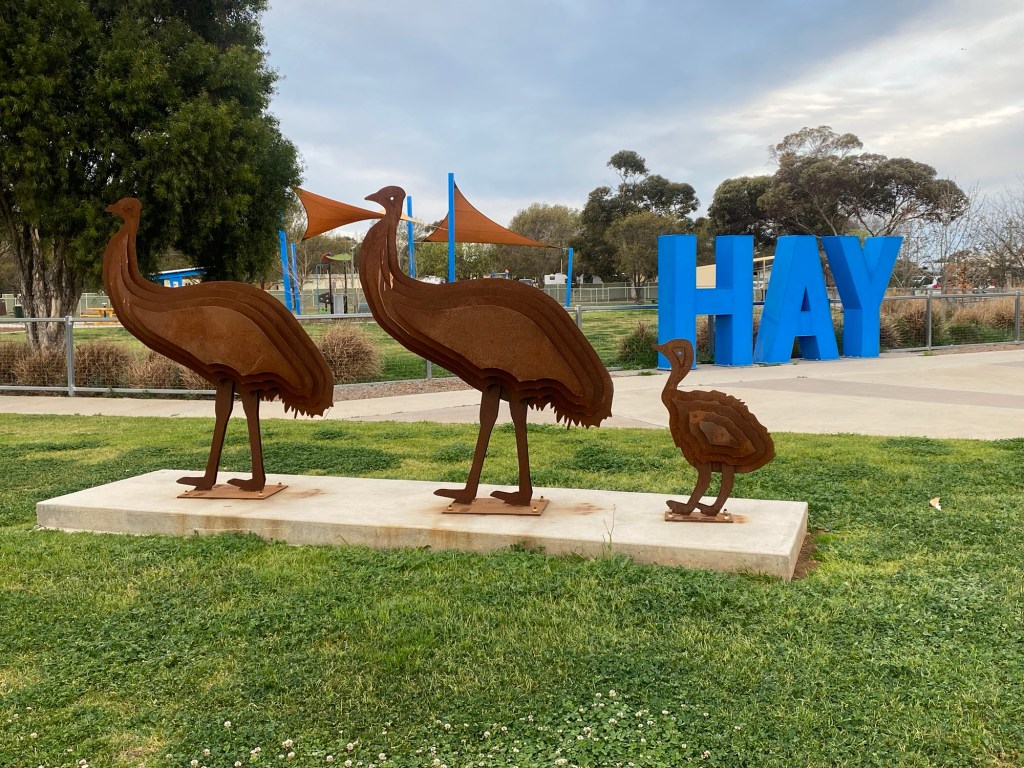
Hay
The last few days have been a good time to think about the next trip, where we will go and how long we will be on the road. It’s also been a time to reflect on what we have discovered and enjoyed about these past 7 weeks. One thing that is obvious is the distances are vast and we need to take more time.
Here are some of the high points for these past few weeks:
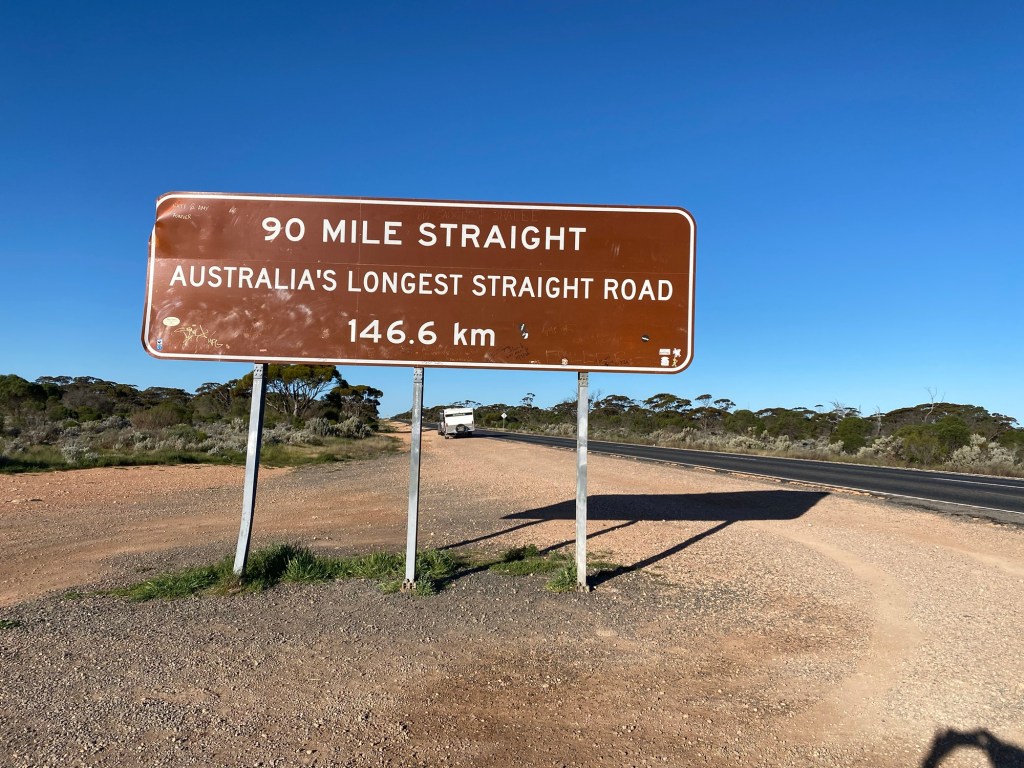
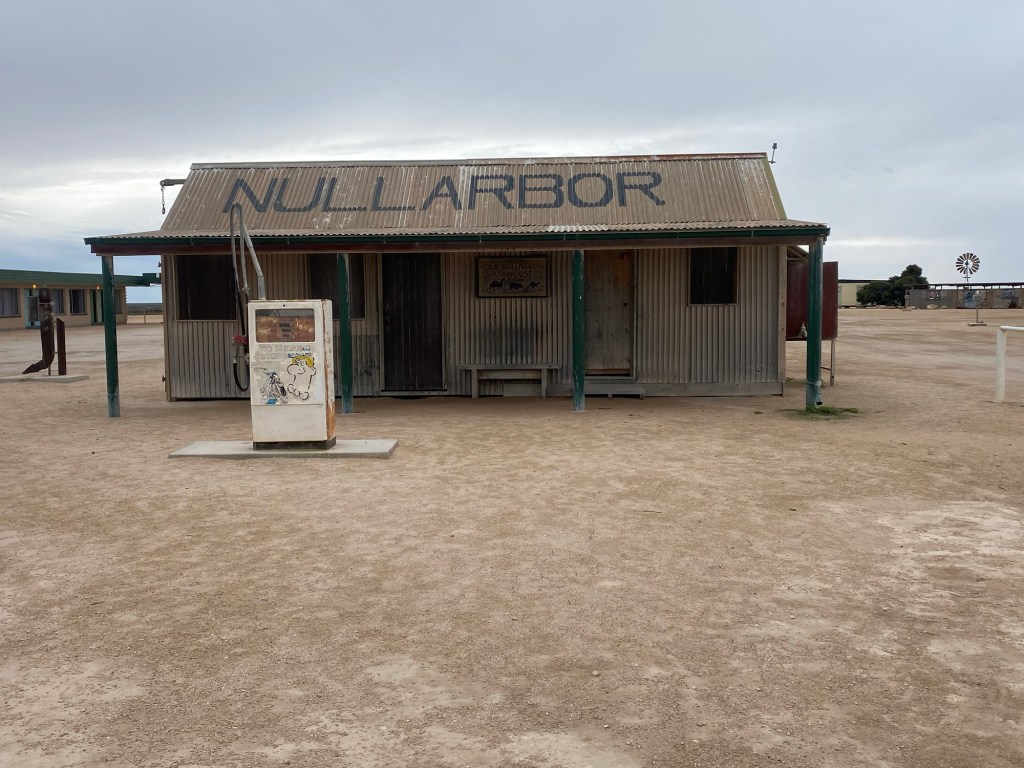
Four days to drive across the Nullarbor and the need to pay attention to the fuel in your tank.
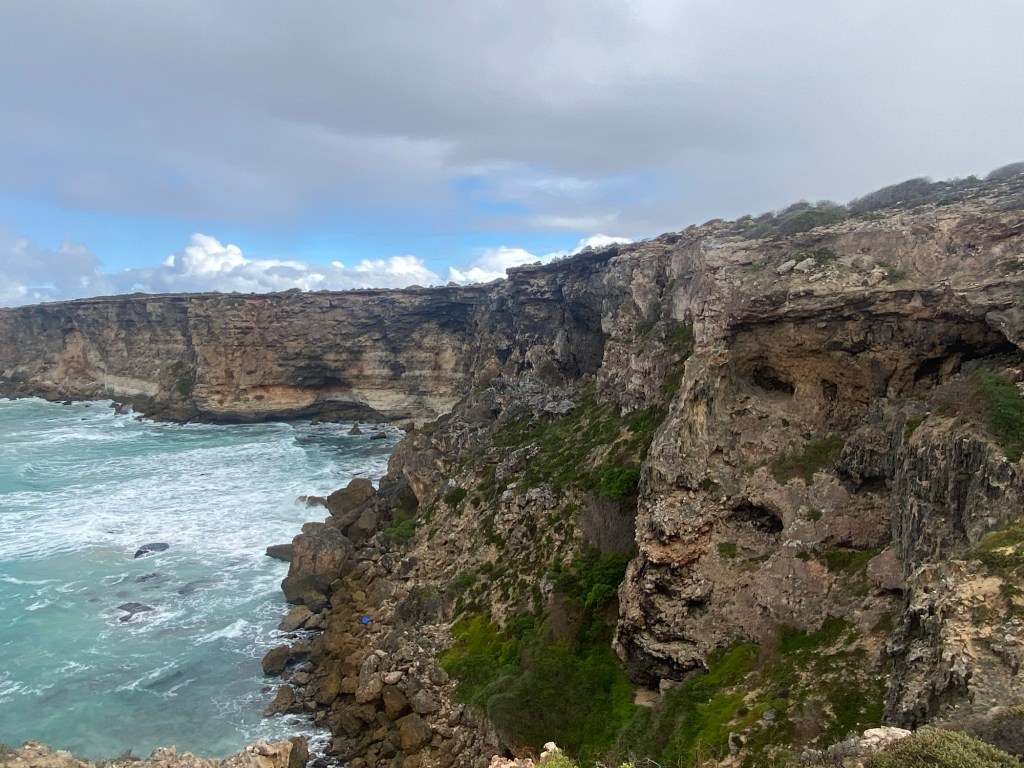
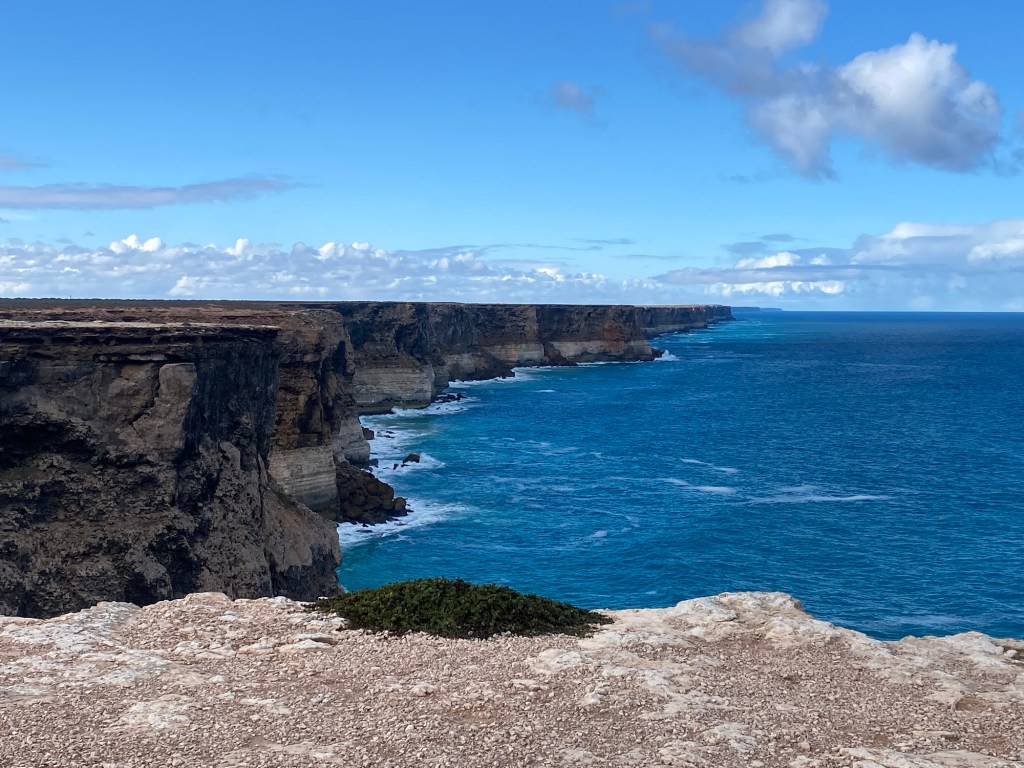
The Great Australian Bight
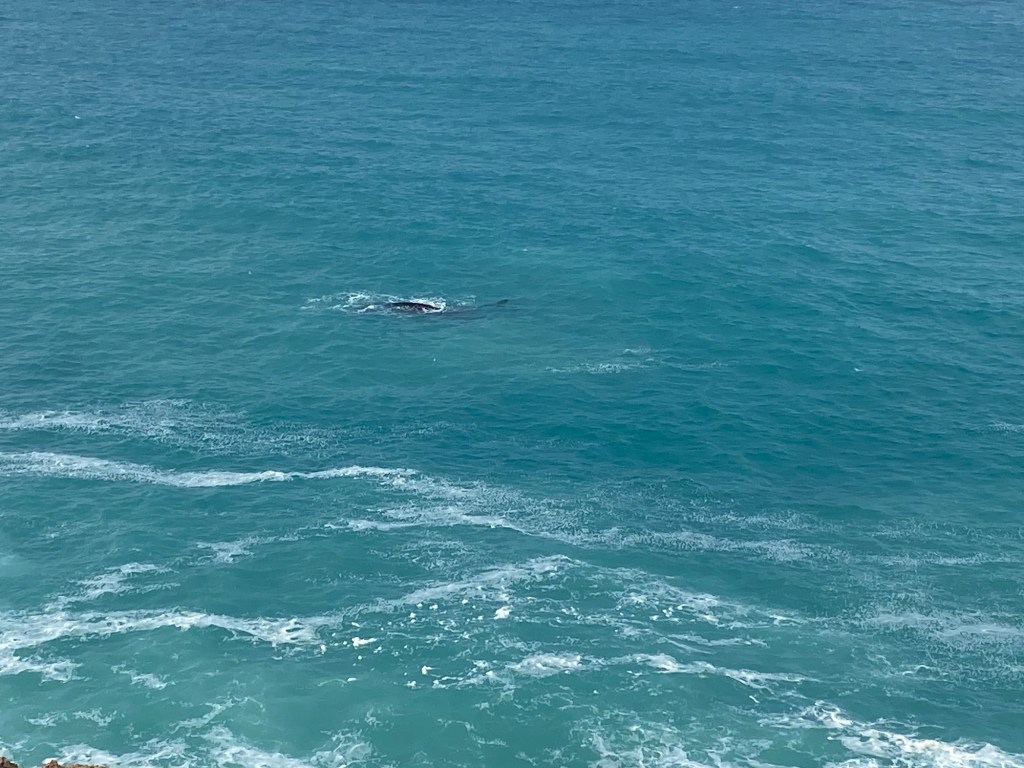
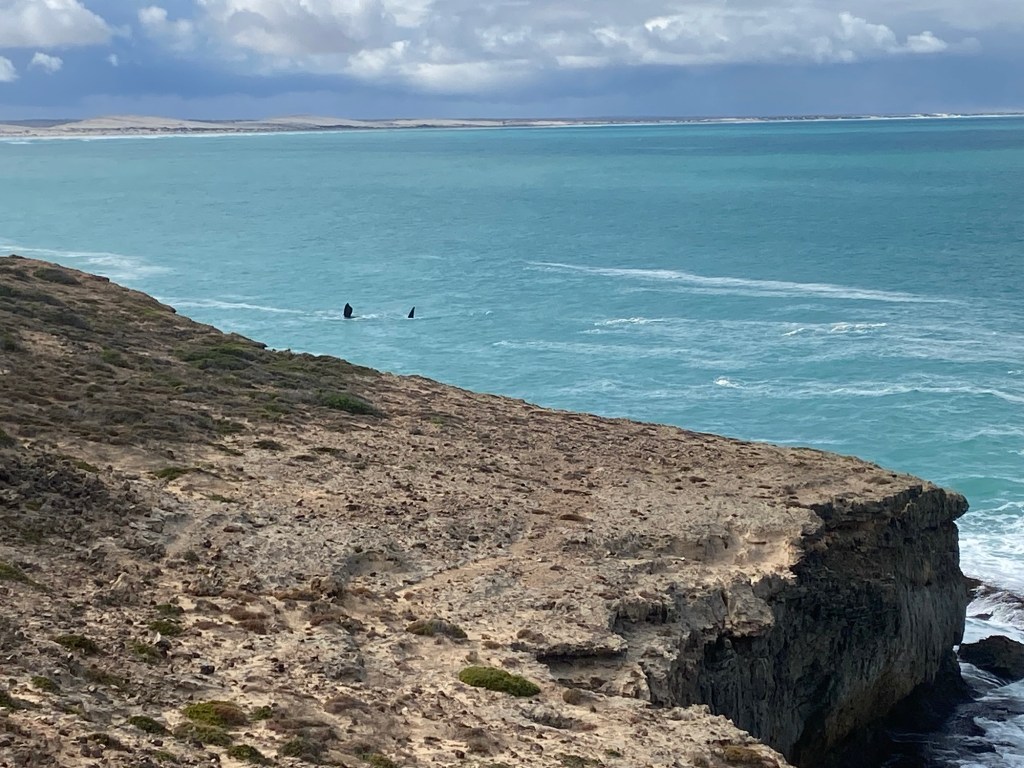
Whales at the foot of the cliffs of the Great Australian Bight.
There are Southern Right Whales if you look closely.
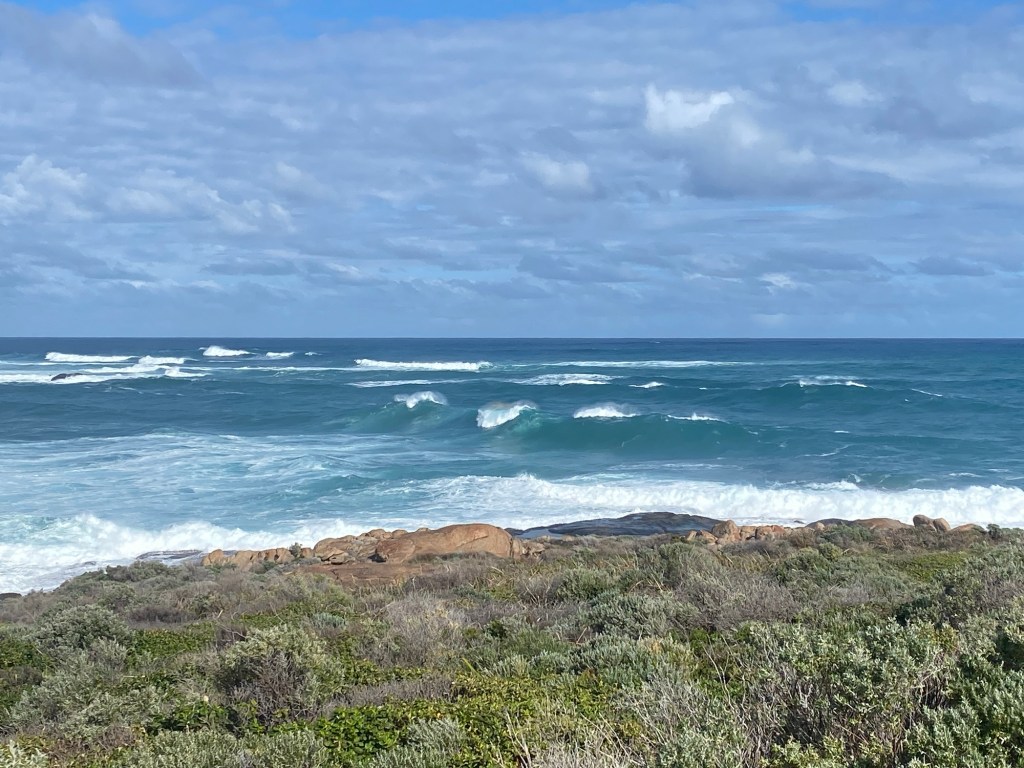
The surf coast around Margaret River and the coastline where the Indian Ocean meets the Southern Ocean.
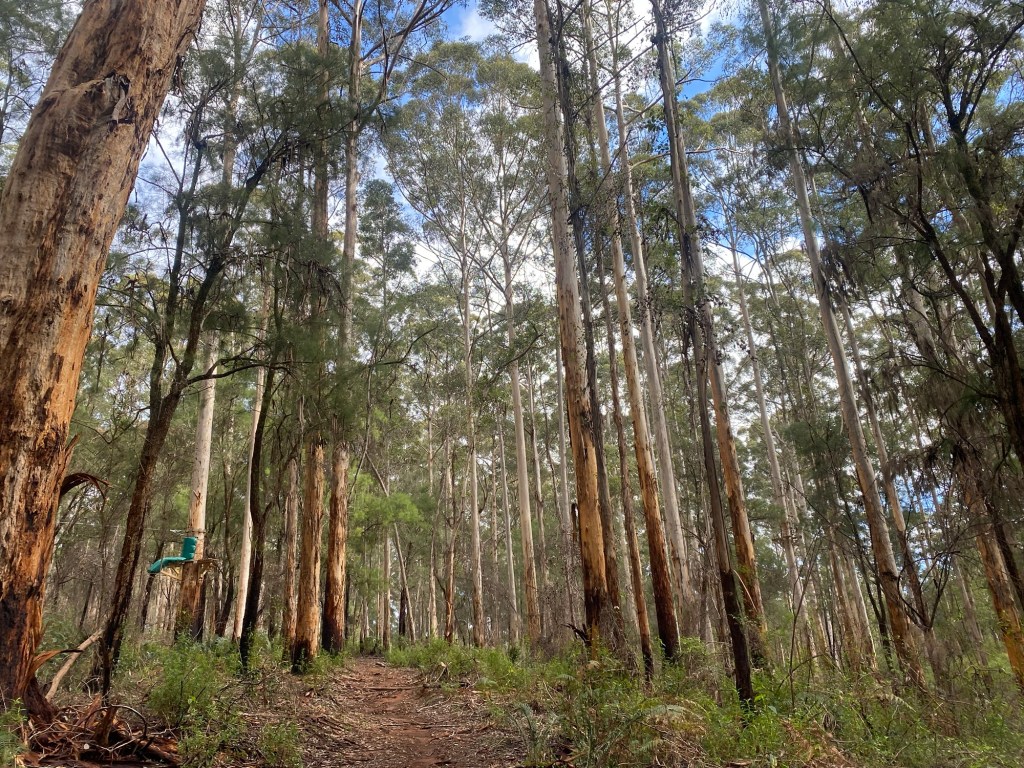
The forest of WA in contrast to salt bush country of the Nullarbor.
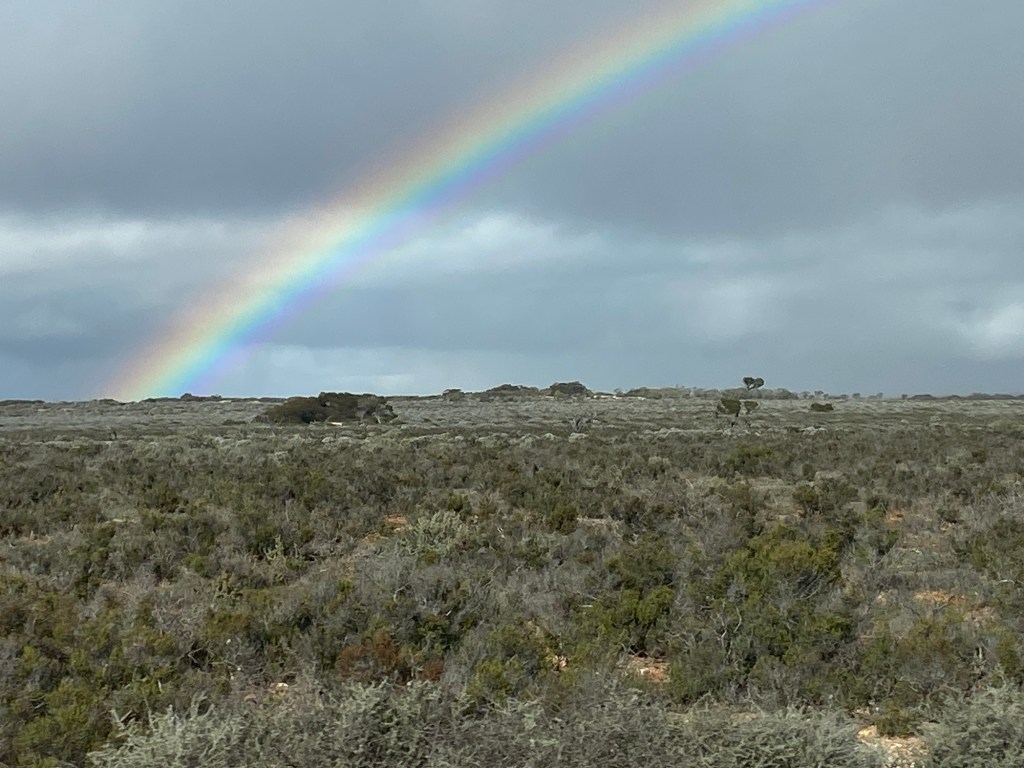
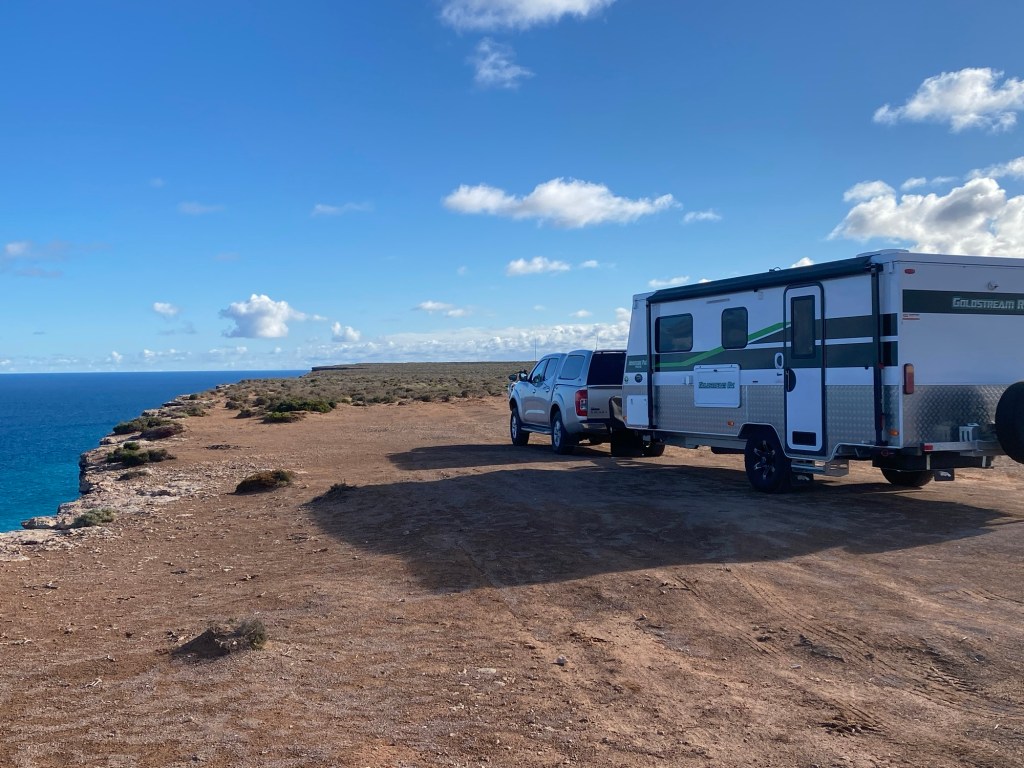
Karri ForestRainbow over the NullarborOur Home on Wheels
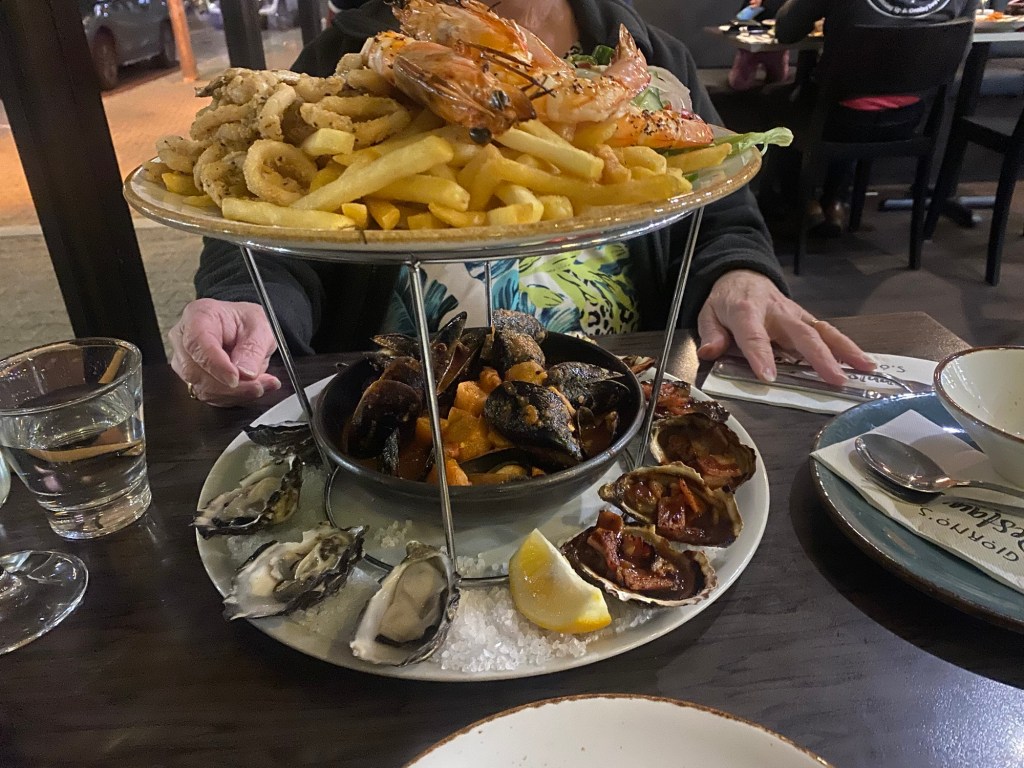
The seafood and especially the oysters of south west South Australia.
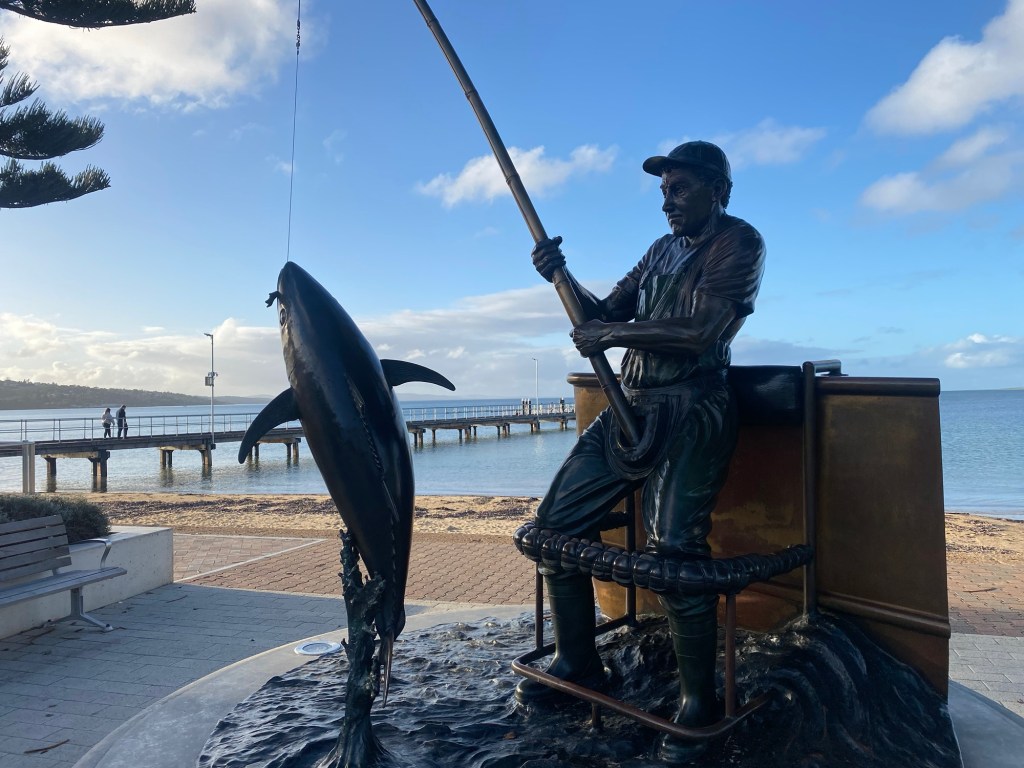
Memorial to Tuna Fishermen Lost at SeaDinner
The views.
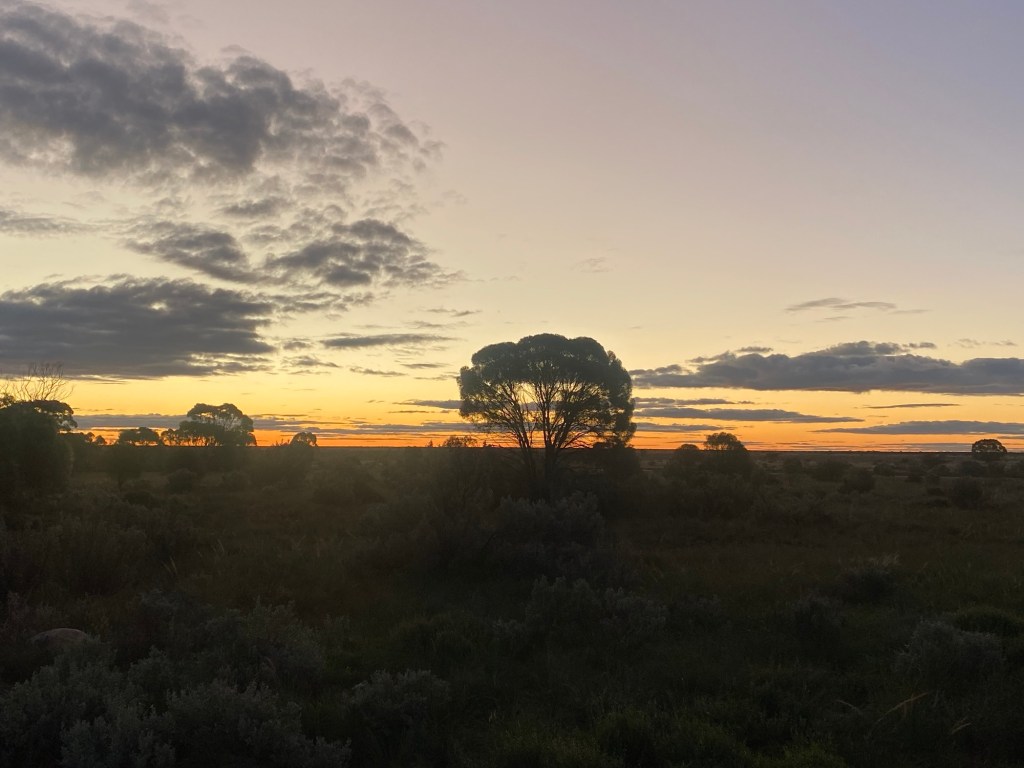
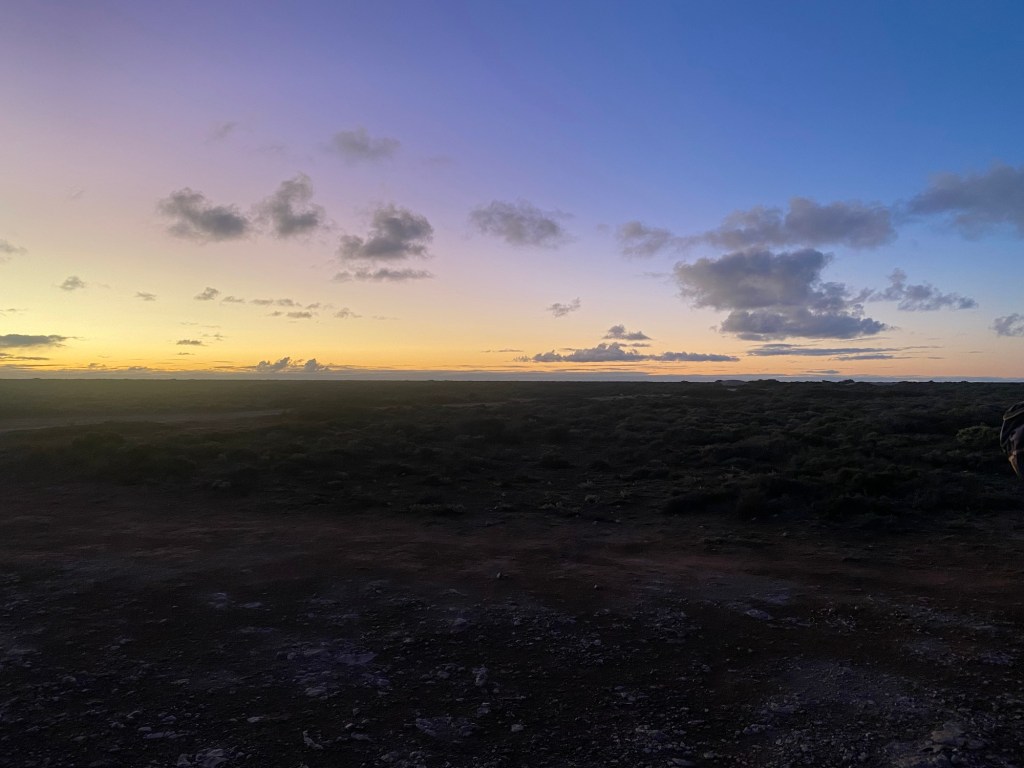
Sunset on the Nullarbor, a Runway on the Highway and a Big Hole
So now it’s time to go home, wash the caravan and car, do the laundry and get back to the regular stuff…..
If the answer is blowing in the wind as Bob Dylan tells us then South Australia holds the solutions to all questions. Does it ever not blow in South Australia? Fortunately the wind was blowing on our back and so our fuel consumption has been greatly improved. Bob Dylan never mentioned that in his song.
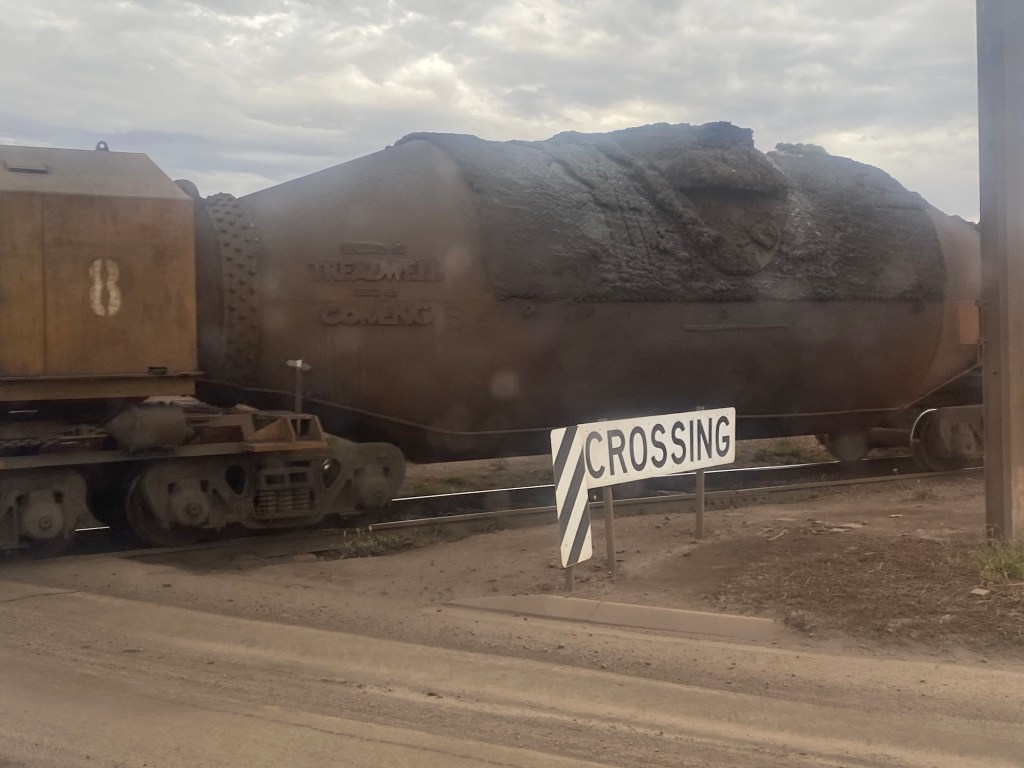
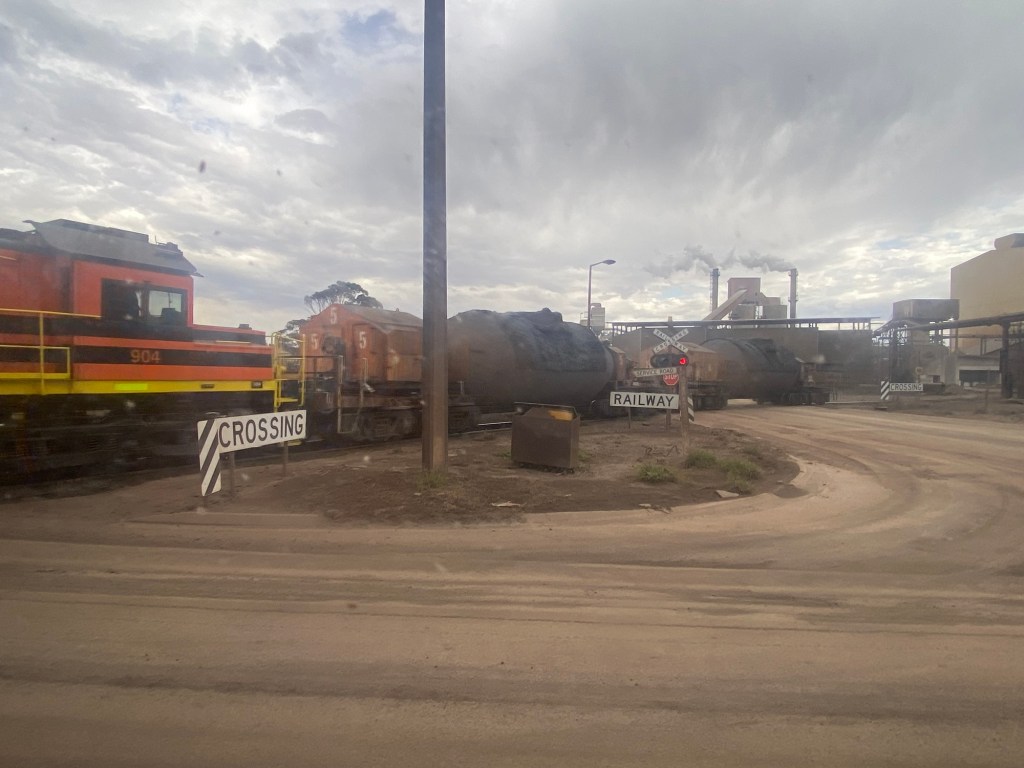
Carriages Containing 200 tonnes of Molten Iron
The car is fixed and we are back on the road. They fixed the car and gave it a wash. It was probably the most expensive car wash it has ever had. Not to worry we are back and with a clean car.
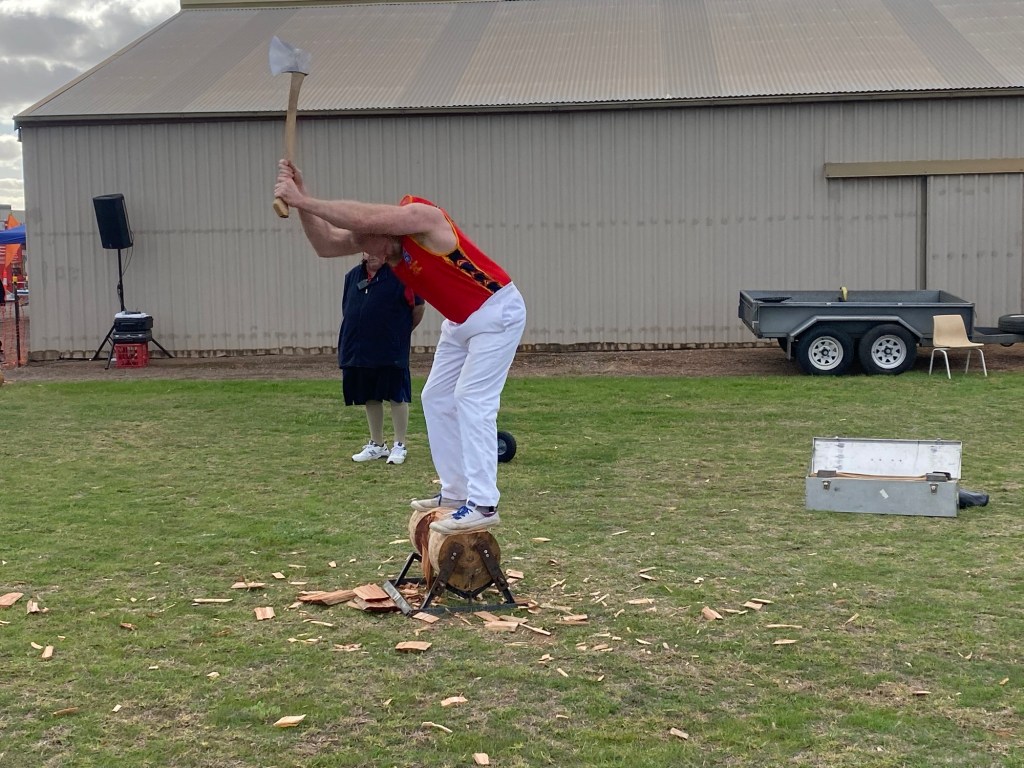
Wood Chop Demonstration
We visited the Whyalla Show and were impressed by a clever couple making 3D printed dragons, cuttlefish and hermit crabs. We also discovered South Australia is going to use excess renewable energy to generate hydrogen which will be used to generate power when the wind don’t blow and the sun don’t shine. They should have no concerns about the wind because that never stops. We did enjoy sausages cooked on a hydrogen powered barbecue. That would suggest change is happening.
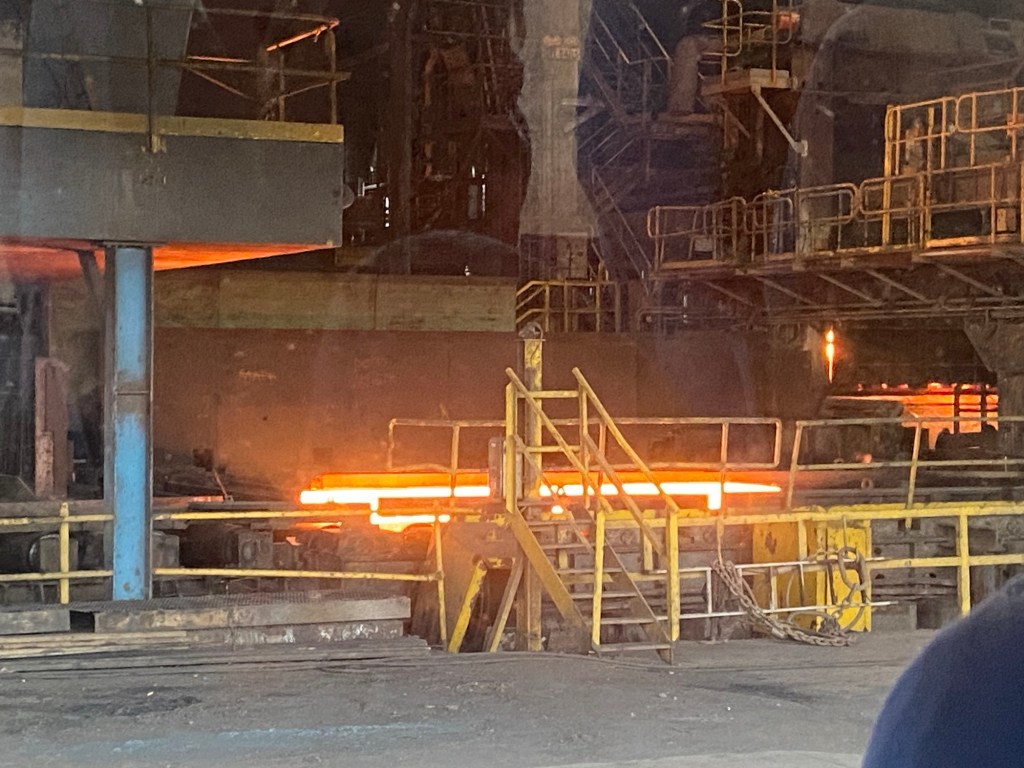
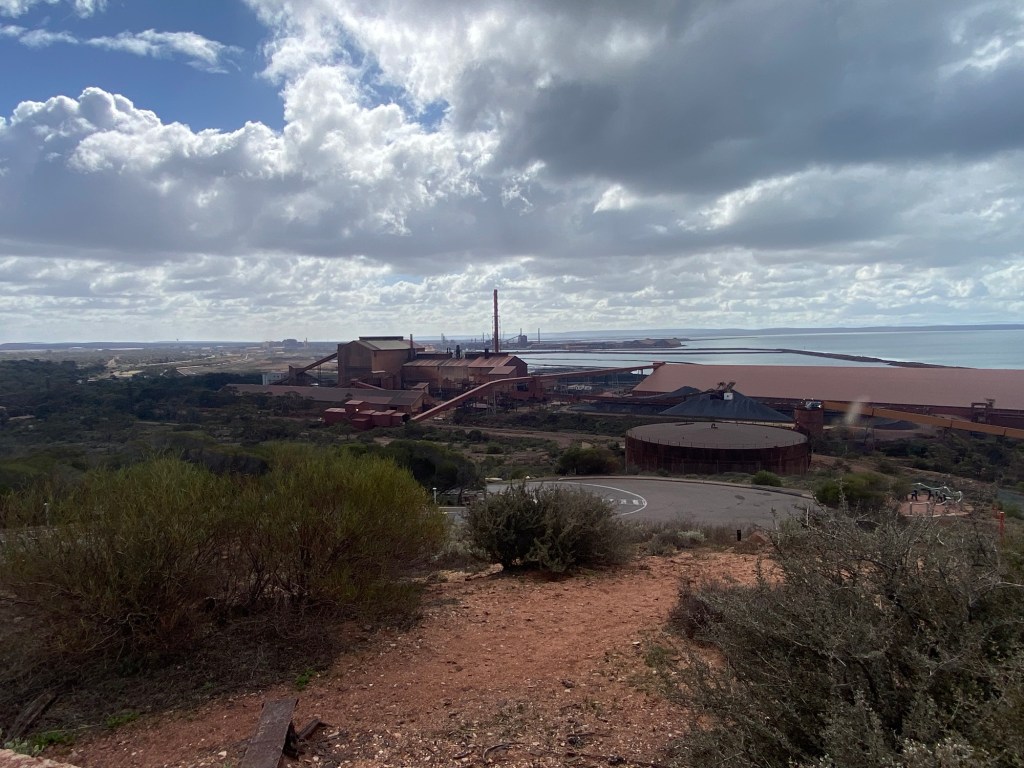
The Whyalla Steel Works
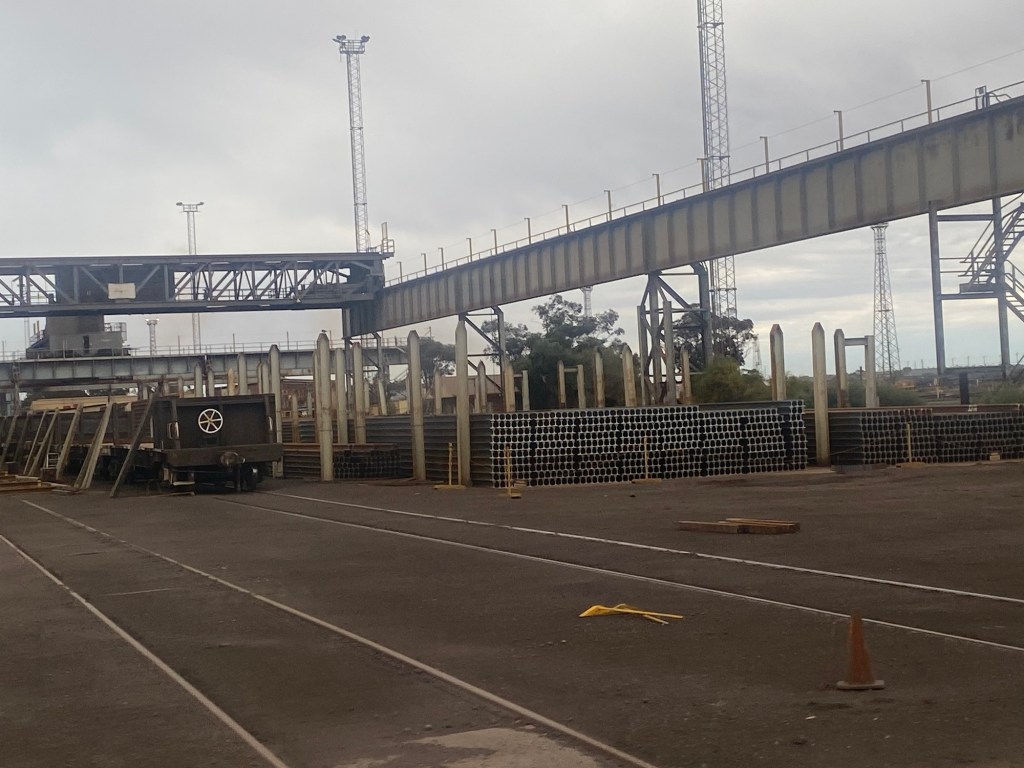
We toured the steel works and saw all the new rail line stacked up. Steel making looks like a pretty grubby industry but it is good to see Australia is making something rather than just digging it out of the ground and sending it overseas. The iron ore used in the blast furnace is mined at a number of mines. The mines come with some catchy names such as, Iron Monarch, Iron Knob, Iron Duke, Iron Knight, Iron Duchess, Iron Chieftain and Iron Magnet.
Stacks of New Rail Line
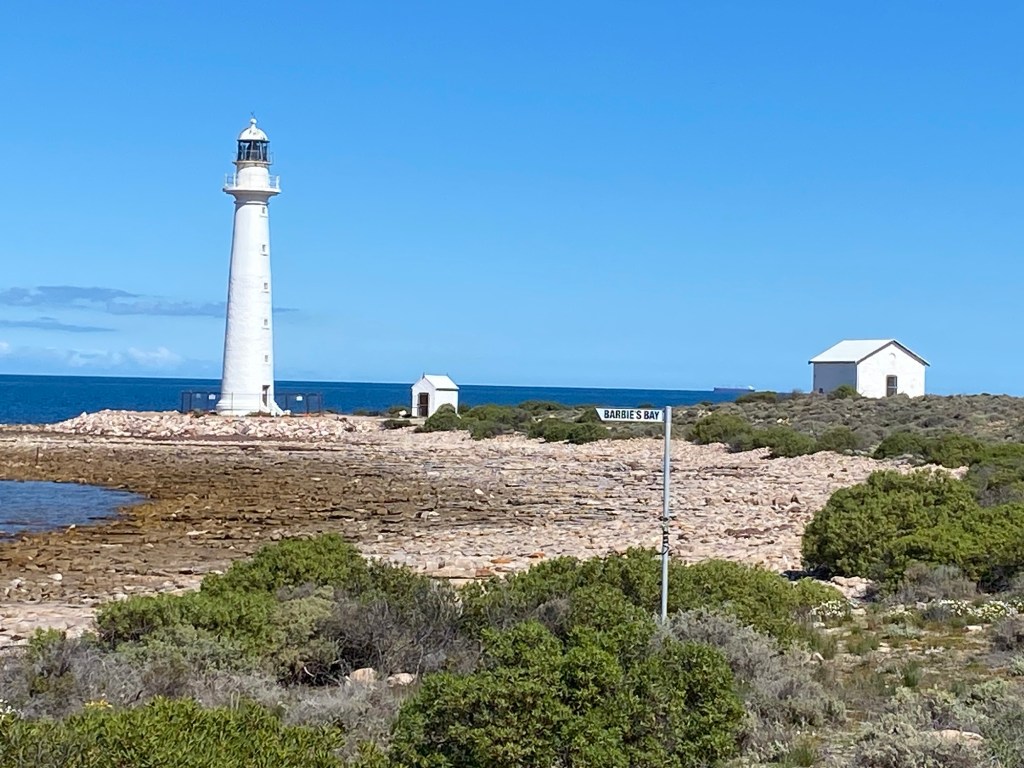
For future reference we have also explored where the cuttlefish turn up every year. Maybe one year we will bring our wet suits and snorkel with the giant cuttlefish, or not.
Point Lowly Where Cuttlefish Turn Up
Something to be aware of, if you live in South Australia now is the time to get your dog registered. There are signs everywhere telling even the disinterested that August is the month to register your dog.
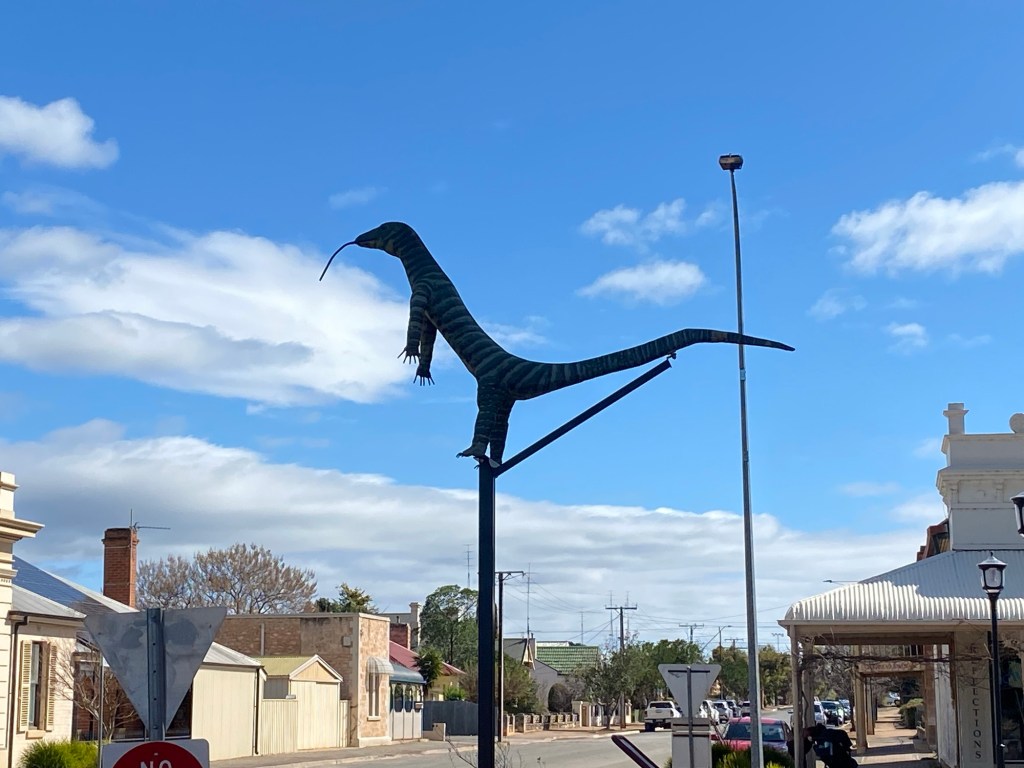
The Big Goanna
After a long day of driving today I managed a 5km run along the Murray River, yes in the wind. My other run after a day of driving was on the Nullarbor Plain. So I guess I have run across the Nullarbor, not all of it just 6 kms but it was still on the Nullarbor.
Final observation. Last Log I mentioned ‘those campers’. Well we have reached a new standard of behaviour by ‘those campers’. A chap towing a caravan pulled off the road just in front of us. He proceeded to get back on the road and pass us. It seems while pulled over he had opened his grey water waste tank and as he drove past us he sprayed our car with his waste water. I guess our car did need a wash after all.
Tomorrow we continue eastward and maybe the upcoming Log 108 will be the last for this adventure.
The last four days have been spent crossing the Nullarbor. About 500kms each day and with a tail wind the fuel consumption is pretty good. Not to mention a whole lot less buffeting when travelling east. Everyone says a West – East crossing is easier and our experience confirms that advice.
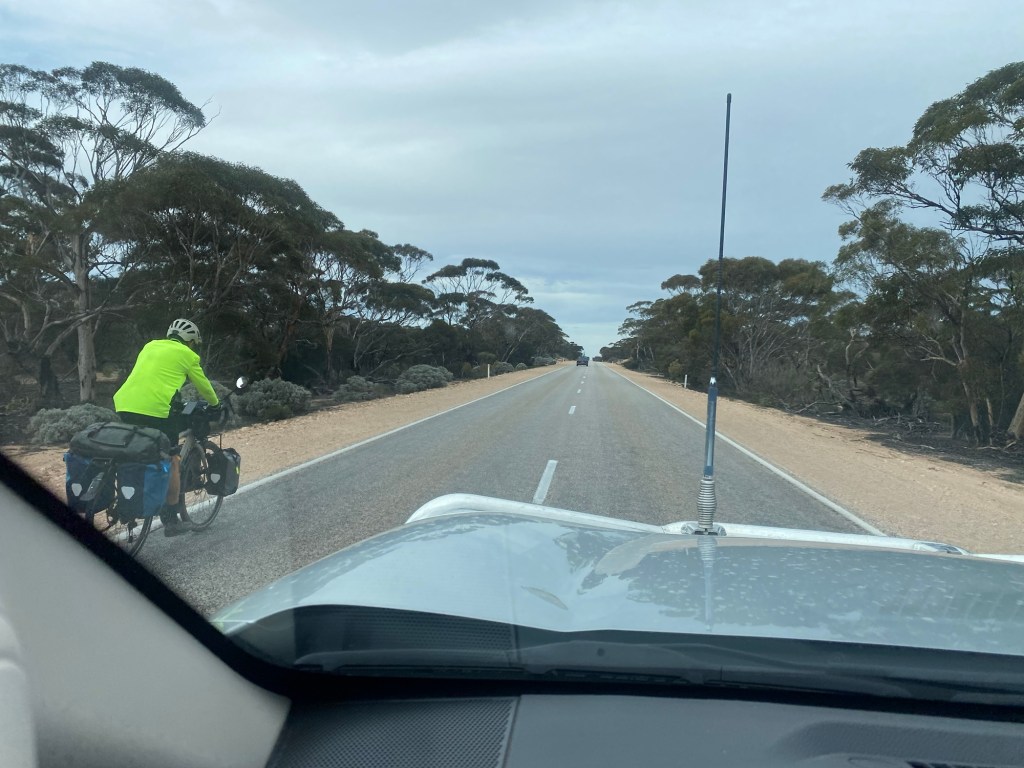
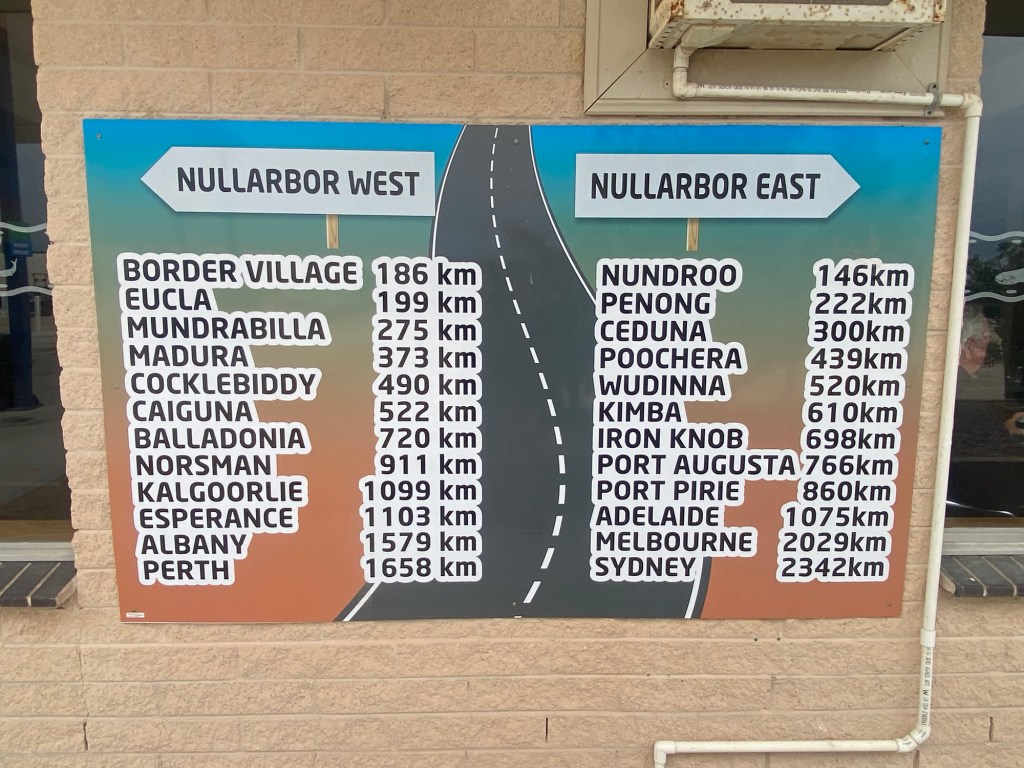
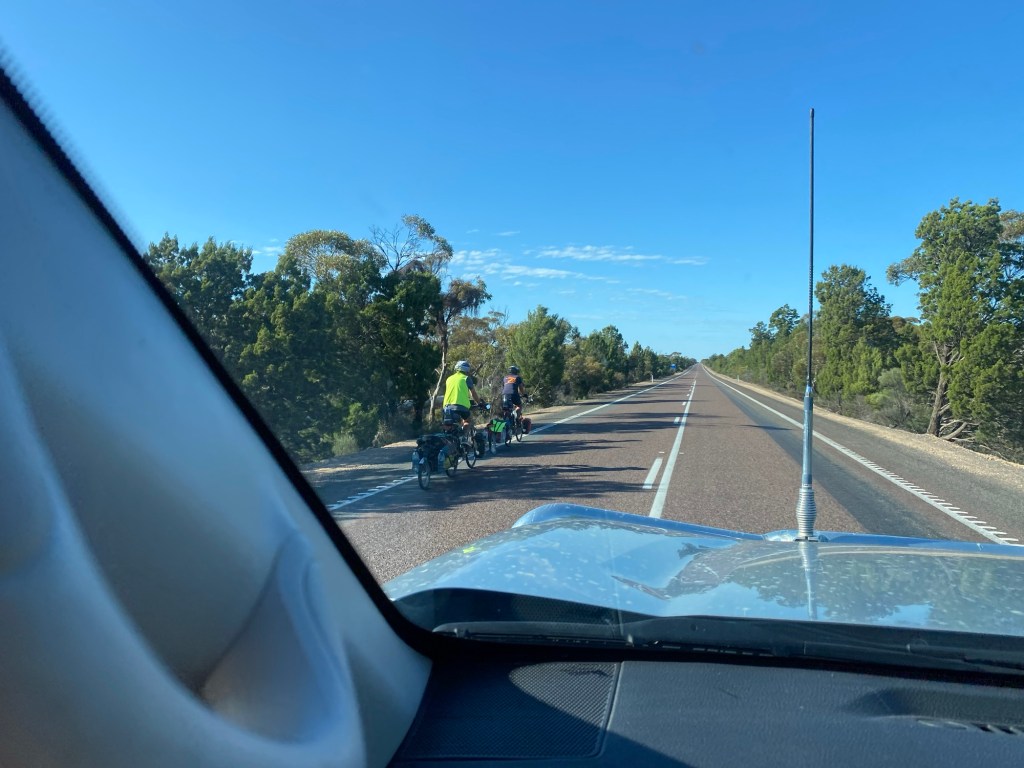
Cycling across the Nullarbor Distances to Somewhere Else More heroic cyclists
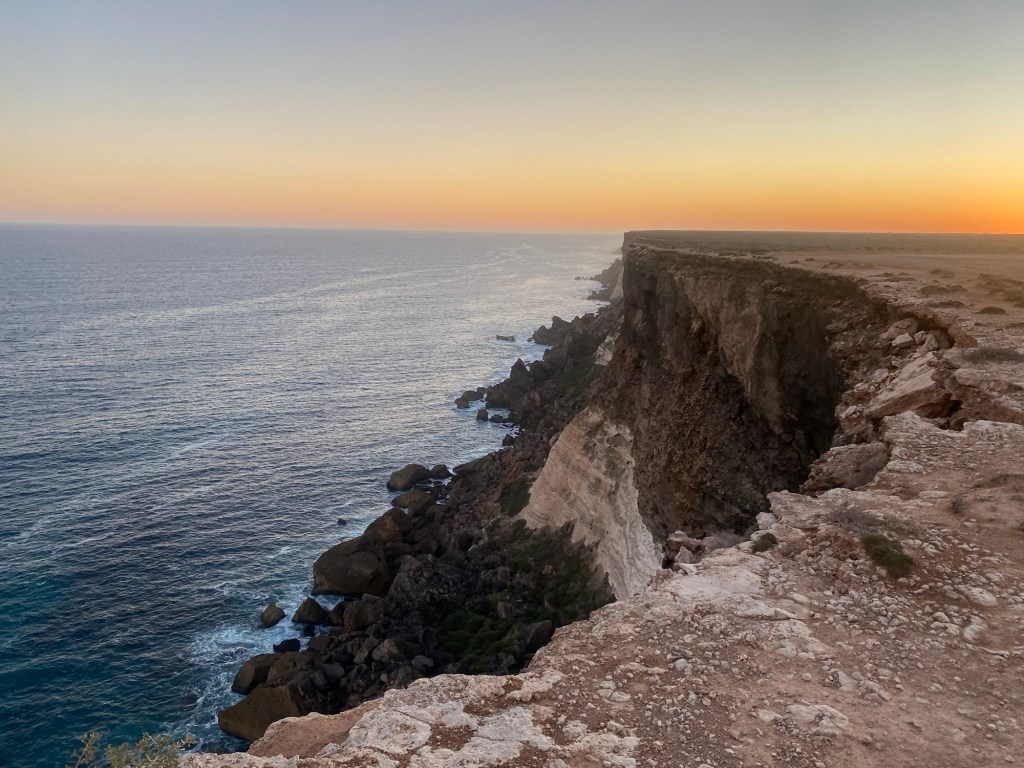
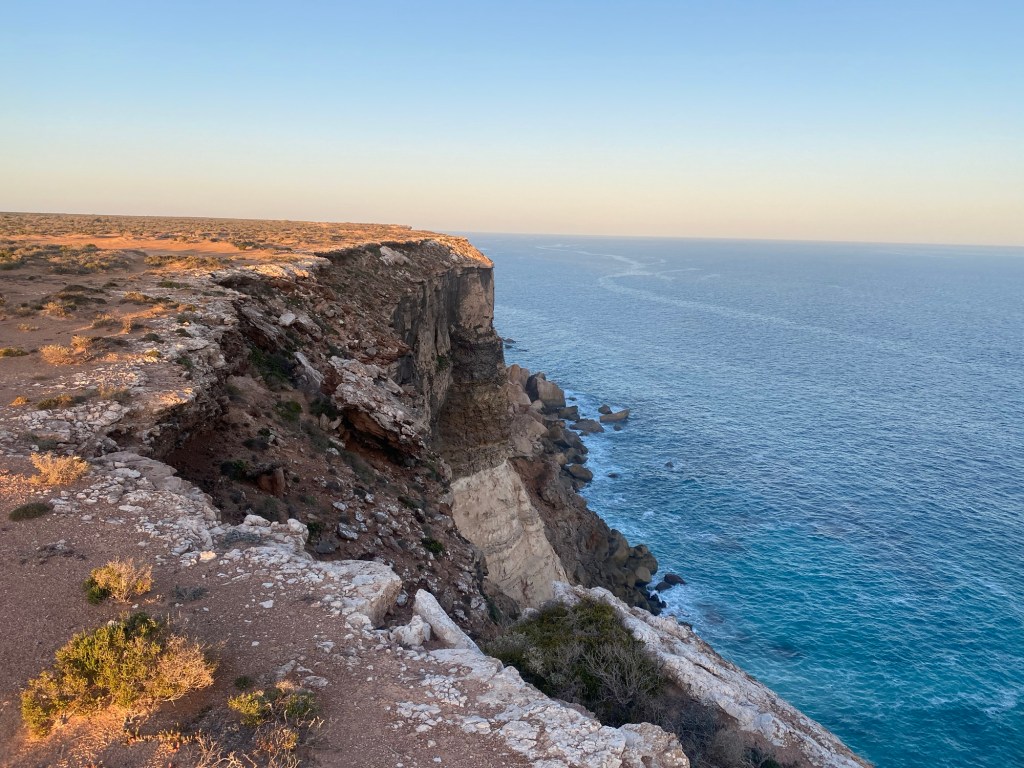
We camped above the Great Australian Bight and encountered ‘those’ campers. You know the ones that regardless of how deserted the place is and how much space there is they have to camp beside you. To make things worse our neighbours decided the remote ambience would benefit from the background noise of their generator. Ahhhhhhh!
The cliff above the BightThe NullarborMore Cliffs
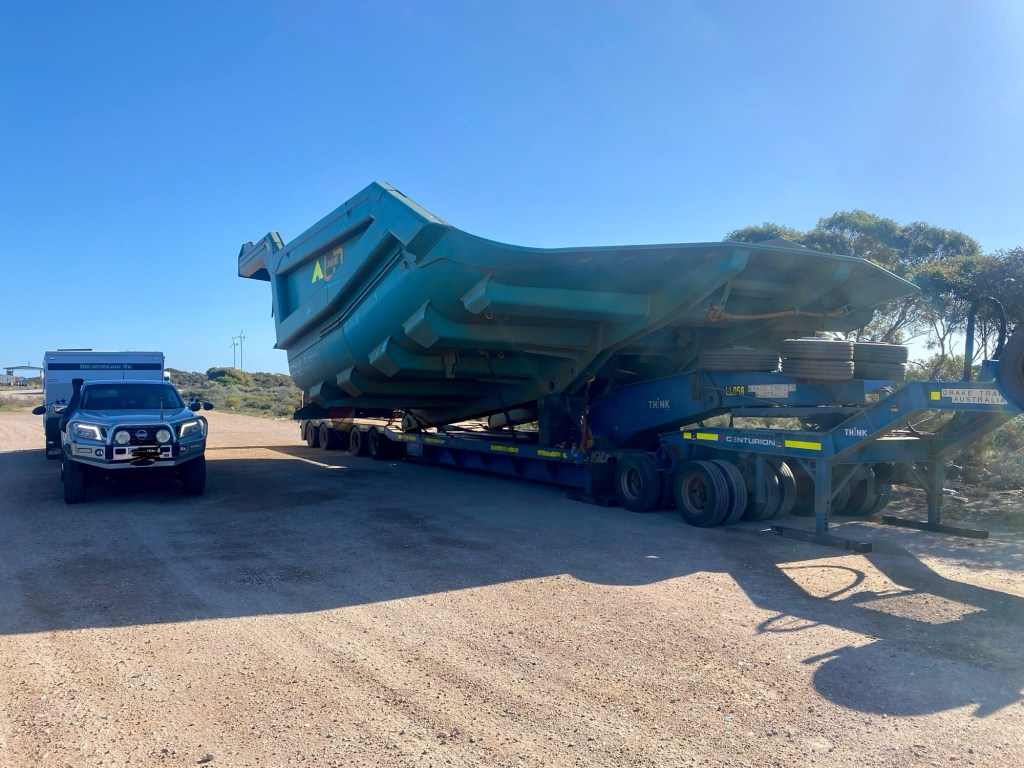
I am probably repeating myself when I say, in this country you need a UHF radio. It’s so valuable to talk to the driver of the roadtrain that is coming up behind you or to hear from the escort vehicle as you pull off to the side of the road. Without these conversations you are somewhat blind in this country.
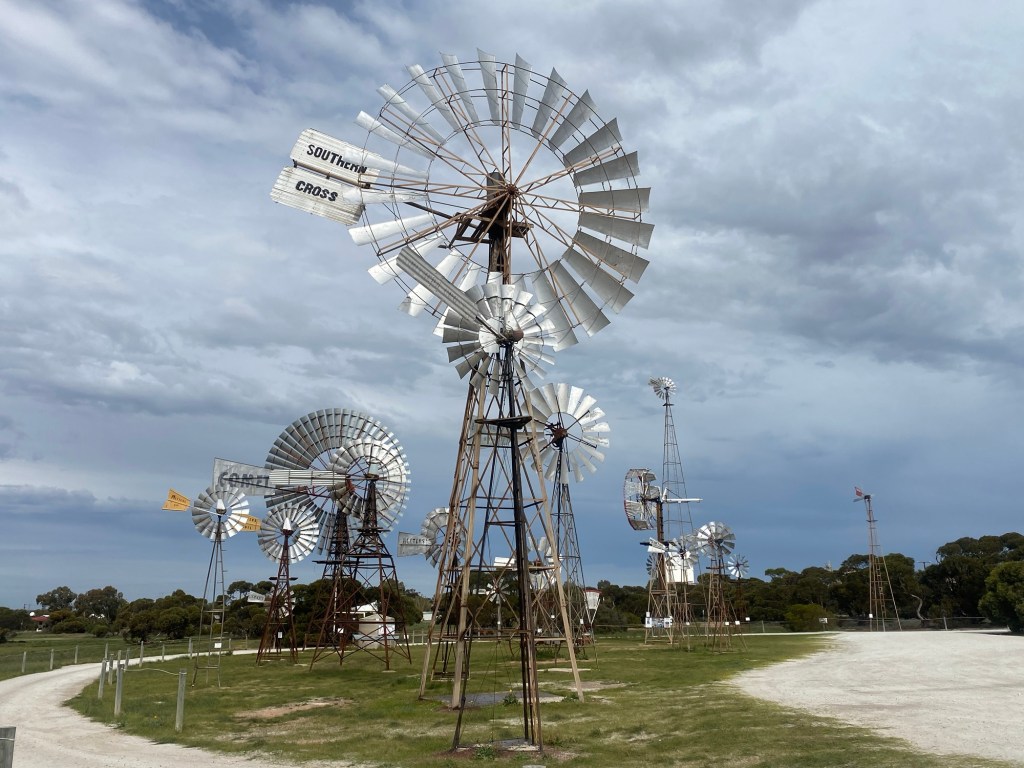
The theme of ‘big’ has come up a few times on this trip and yes there are more big ‘things’. We were in awe of the big galah. We also visited a windmill museum and yes there is one. That museum has the biggest windmill ever built in Australia. Of course being so big it had a name. That windmill is named Bruce. You would have to admit that’s a pretty appropriate name for a windmill.
BruceMid Point Across Australia and a Big BirdWindmill Museum
Fuel prices are a subject of conversation out here. Being so remote the fuel is transported a long way and hence prices can get interesting. Of course when roadhouses are over 100 kms apart there is little competition. It’s not like there is another one around the next corner. That said a quick check online of fuel prices and a drive to the next roadhouse, about 80kms up the road, and I would have saved $30. It is worth checking those fuel apps.
We have arrived at Whyalla, the land of high quality hematite or iron ore. This is the place where the majority of Australia’s rail track is made. It’s also where cuttlefish gather every year to mate and die. Who knew!
Whyalla Iron Ore Wharves
After all this driving we have had our first glitch. We were close to the middle of nowhere, somewhere west of the back of beyond. We were happily driving along when without warning we lost power. The car kept going but it was just going slowly. We were in limp mode with about 120 kms to get to our destination for that day. It was not a good place to break down. Going downhill we had some speed but the slightest incline and we were real slow. Not a happy place when there are roadtrains travelling at 110 kph coming up behind you. There were no towns or friendly mechanics out here.
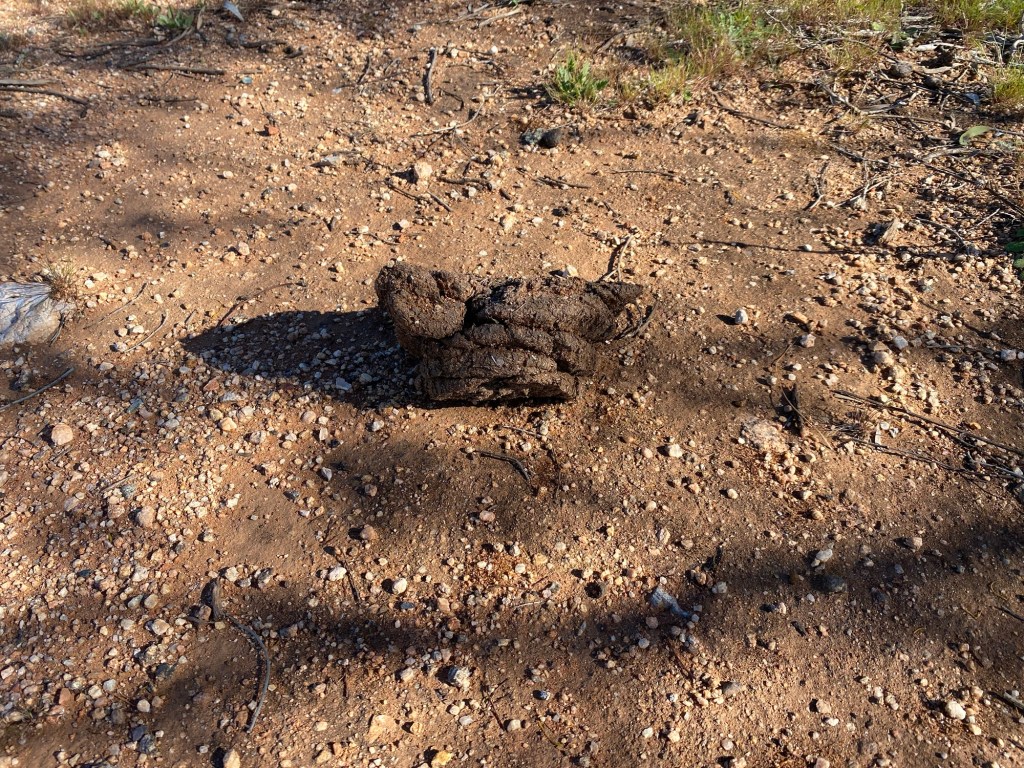
Newman RocksThis piece of construction was made by Bill Castle in 1962. It says so.Evidence of Camels
Without going into all the details we did get to our destination that night but with some stress. The next day the problem was diagnosed as a failed sensor which we hope will be replaced on Tuesday. And so we are enjoying the sites of Whyalla for an extra few days.
I mentioned earlier our worst cup of coffee ever. Yesterday we experienced our best breakfast accompanied by excellent coffee. If you are ever in Port Augusta try breakfast at Archers’ Table.
No Need for the Steering WheelRoadhouses are a little more advanced these days.My car would fit in 20 times.
Next week we leave Whyalla and continue east across South Australia and into Victoria.
We have reached Esperance and are now facing the long journey home. The curiosity and excitement of crossing the Nullarbor has been replaced with the acceptance that to get home we have to cross the Nullarbor (cue a deep sigh). I am guessing it would be like Burke and Wills or Lewis and Clarke, having reached their destination to have to then turn around and go straight back (cue a deep sigh).
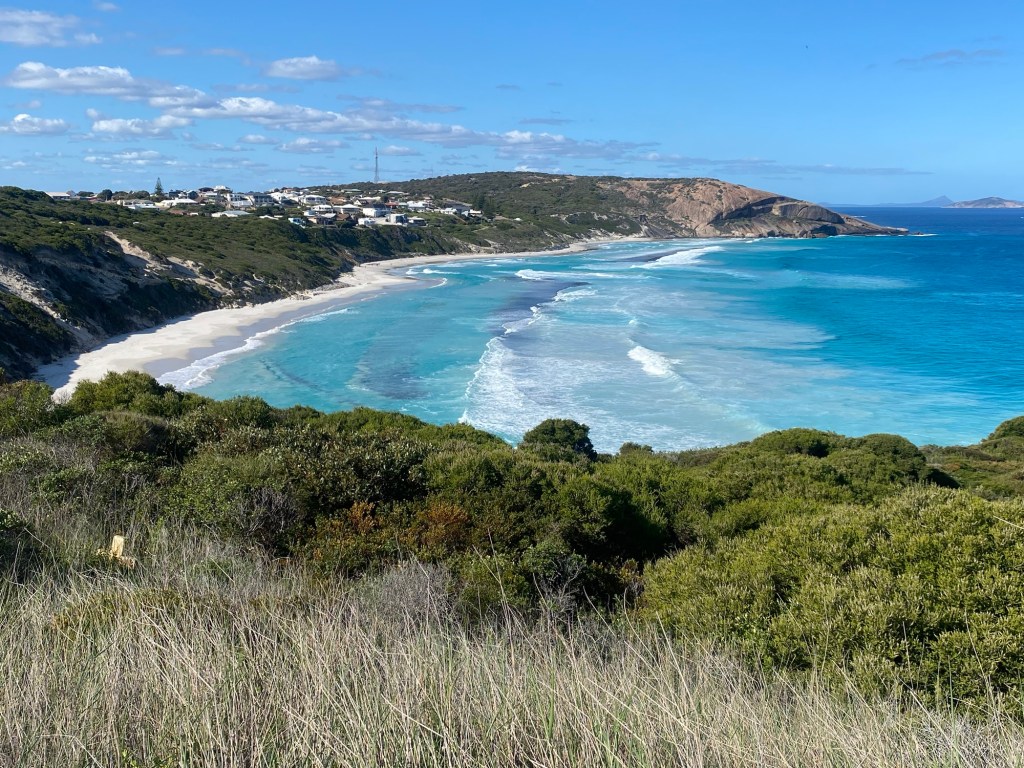
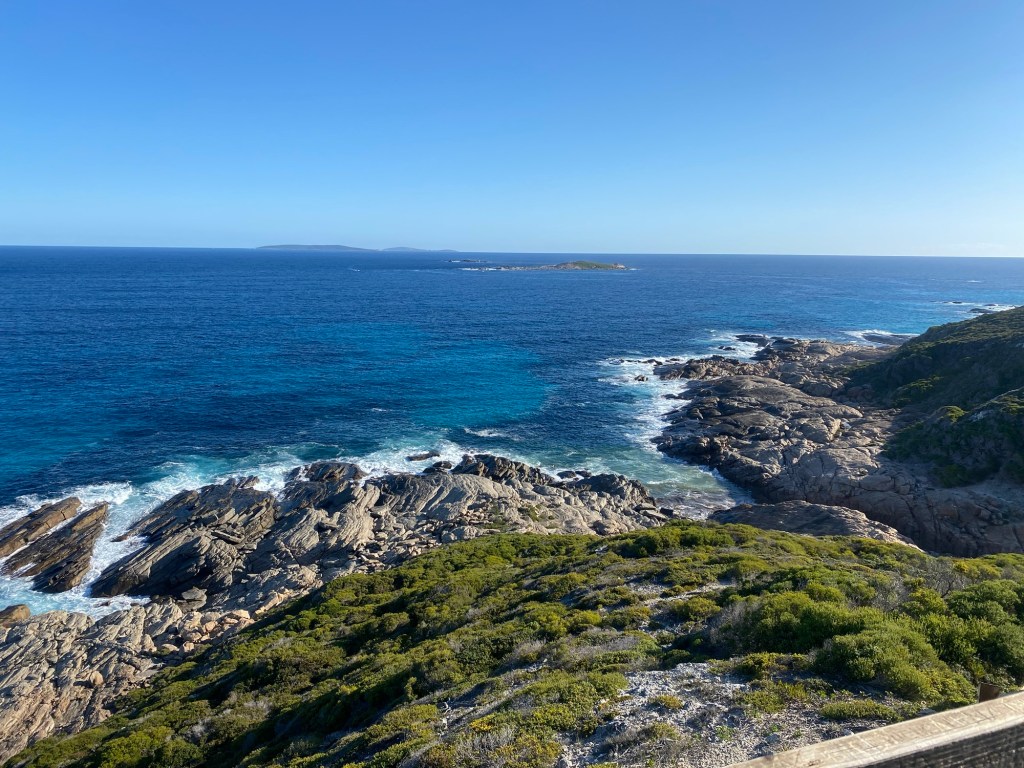
The coastline at Esperance
The impressive sight as you drive the 480kms from Albany to Esperance is the vast golden fields of canola. This country was once the destination for gold prospectors who were chasing minerals underground. The gold that now fills the scene is flowering canola.
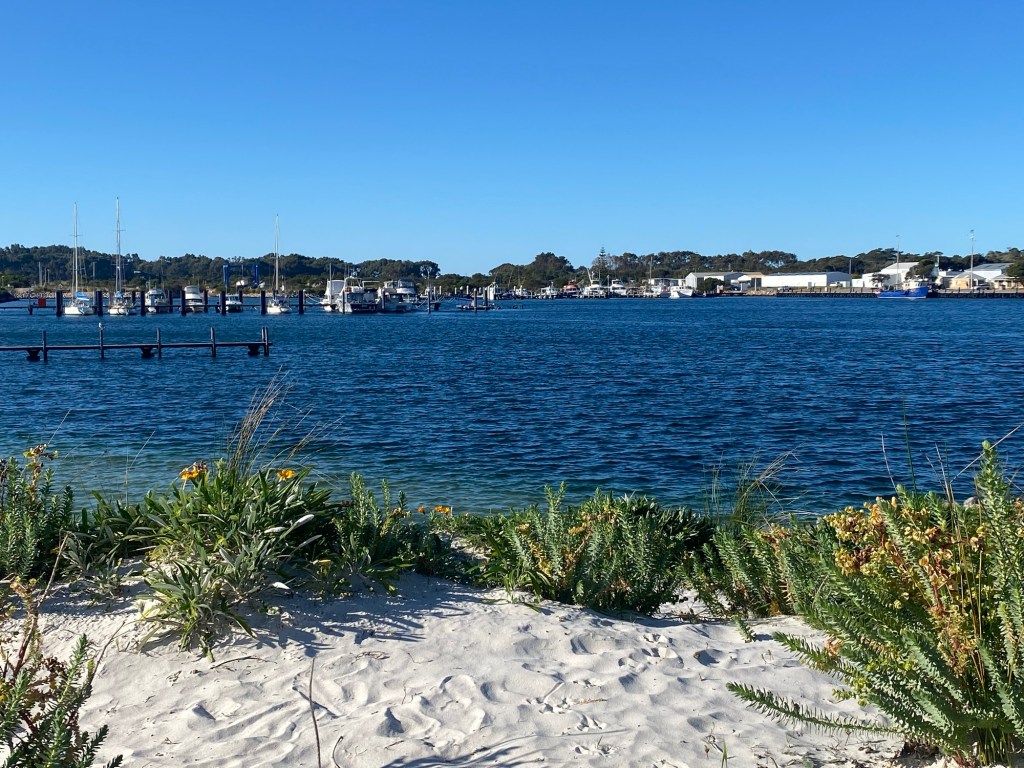
Esperance Beaches and Boat Harbour
I had incorrectly assumed the country between Albany and Esperance would be dry savanna. I was so wrong. This is wheat and canola country with vast areas under cultivation. It turns out WA produces more than a third of the wheat grown in Australia. I think we have seen most of the fields that produce those grains.
More Esperance Coastline and Beaches
Still there are mines in this area namely nickel and lithium. The nickel mines are in ‘care and maintenance’ while the lithium mine is just hanging in there. The Indonesians have swamped the market with cheap nickel and lithium is in worldwide oversupply.
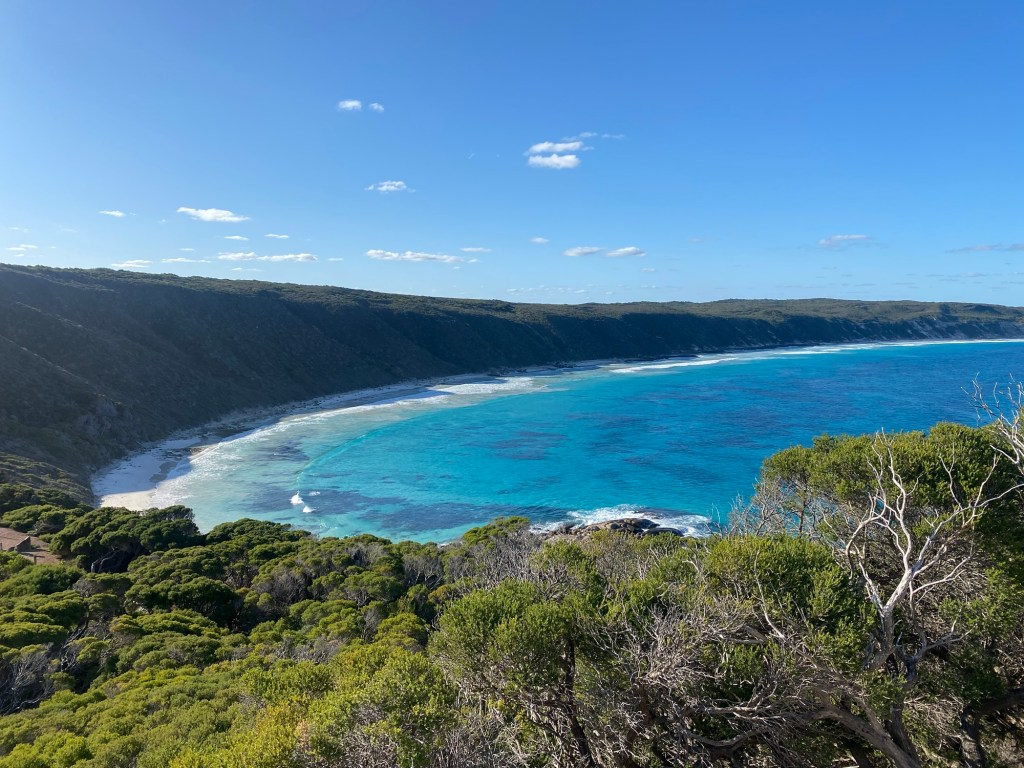
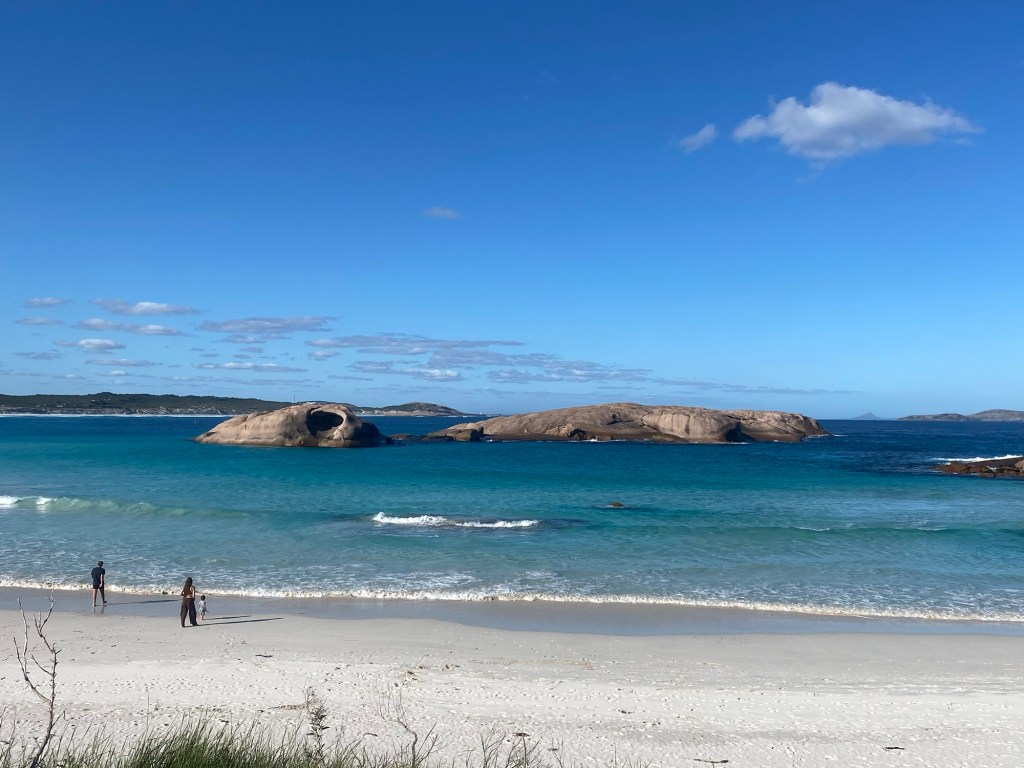
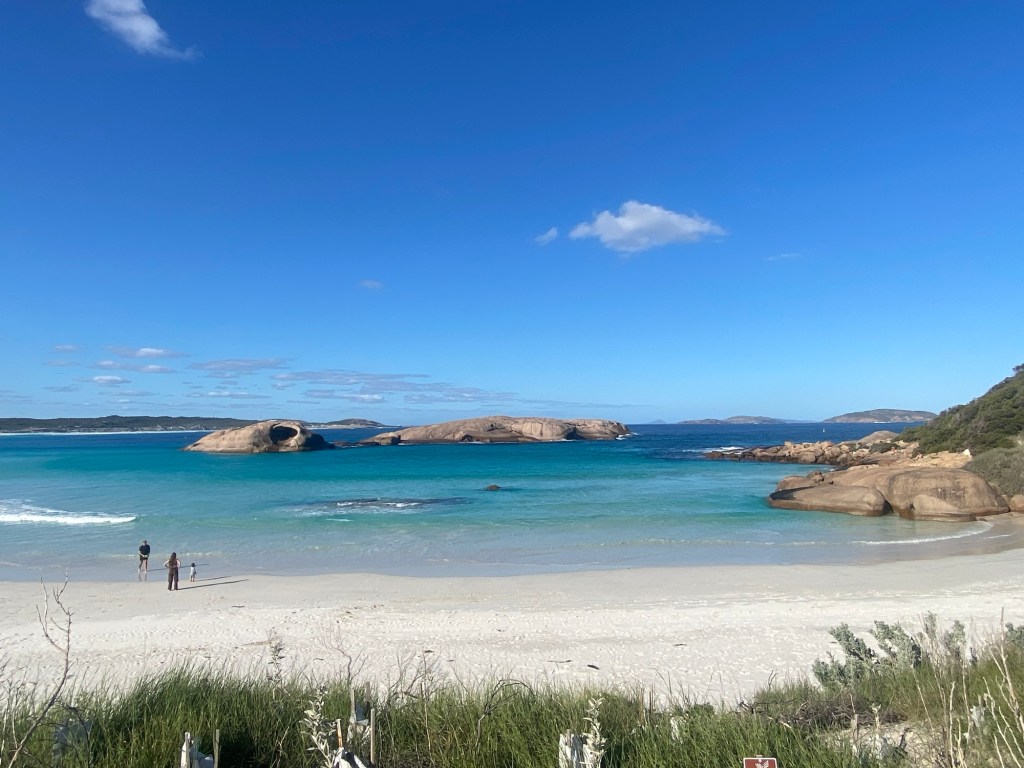
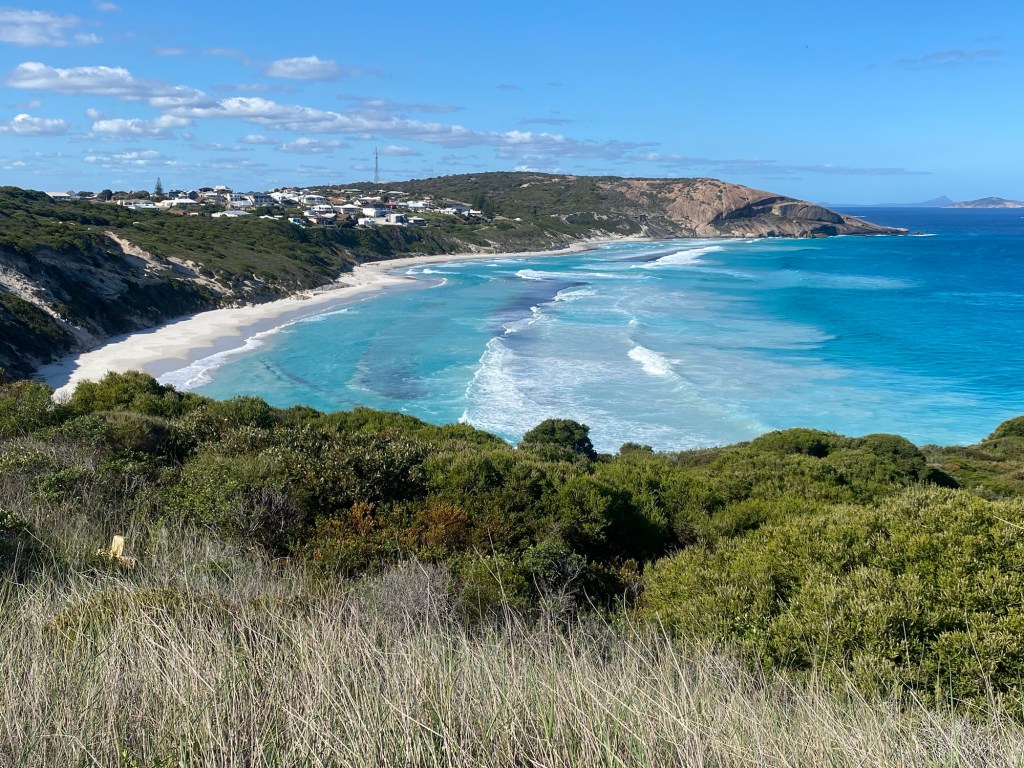
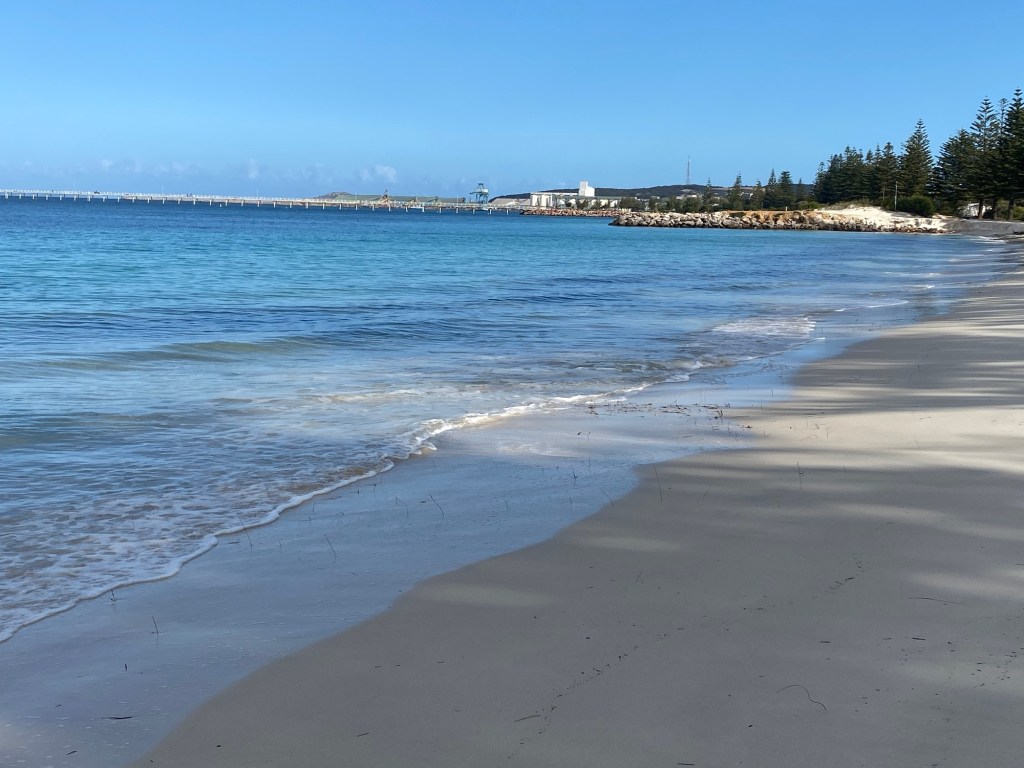
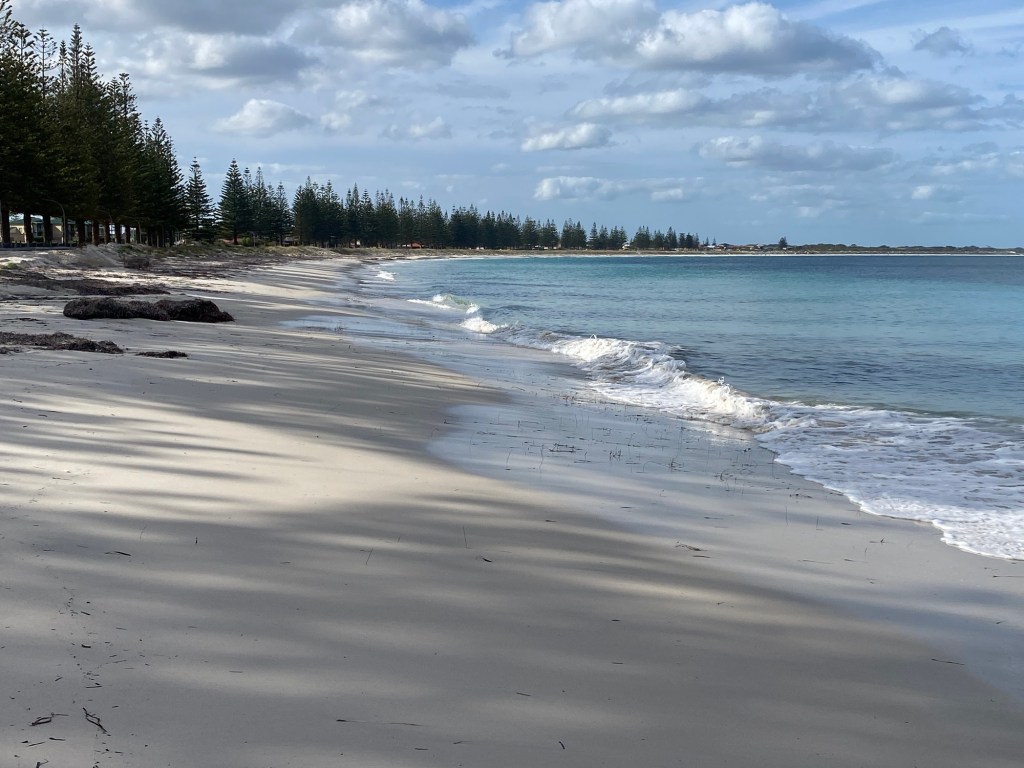
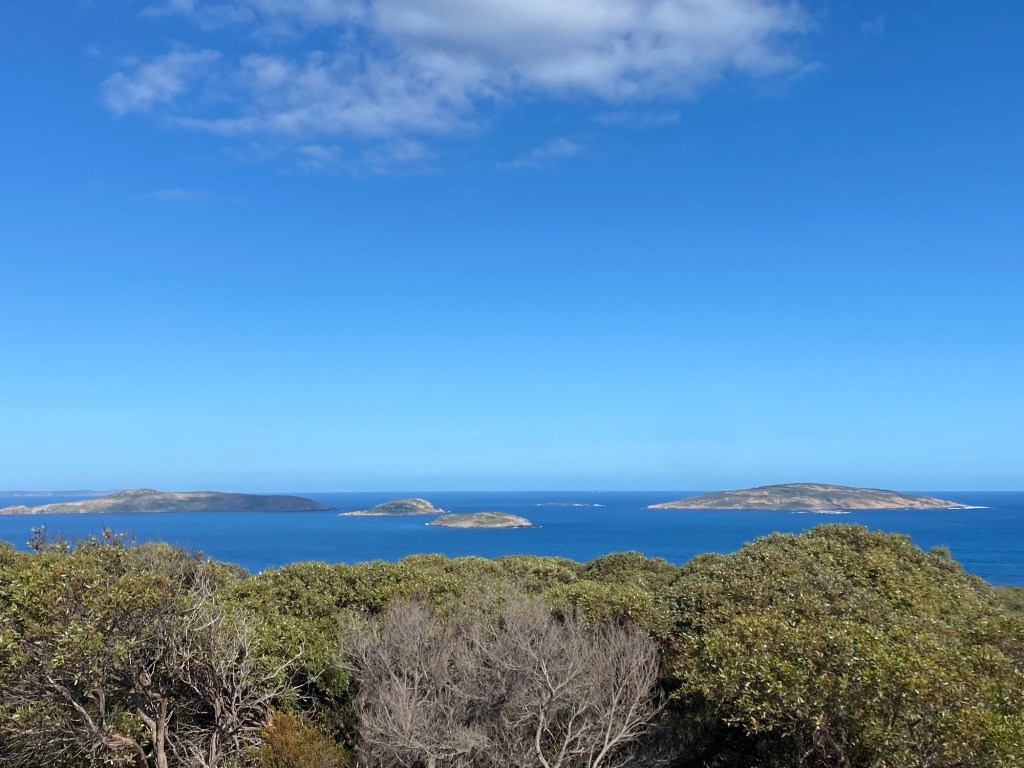
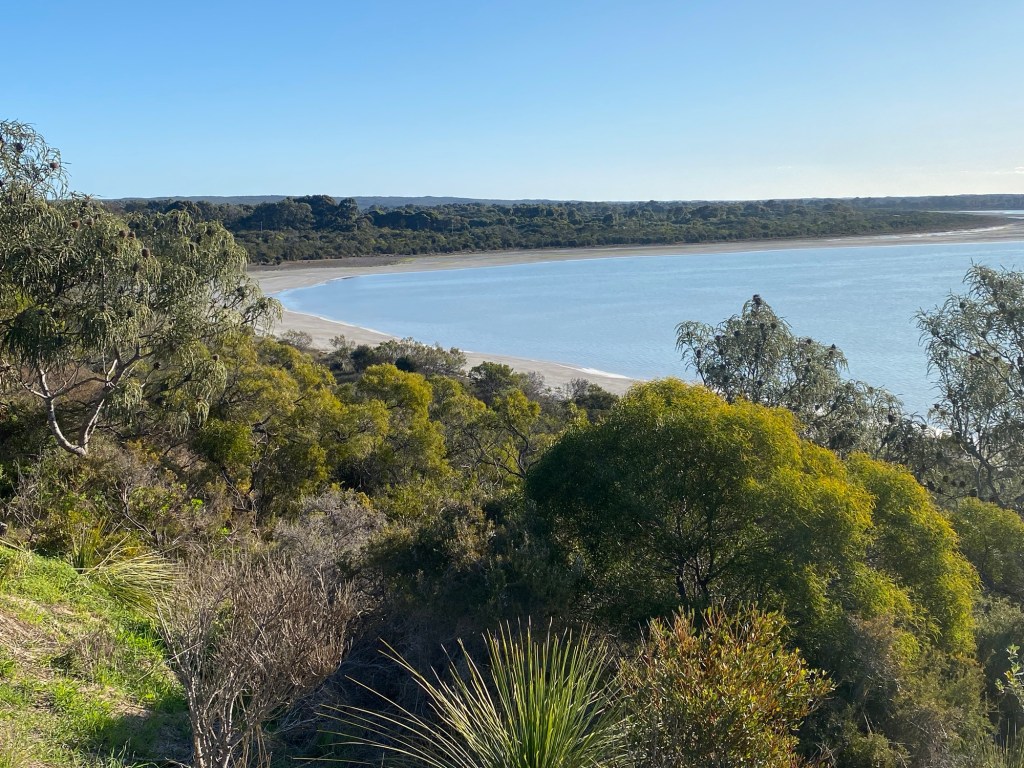
Once you arrive at the coast you are overwhelmed by the shear number of beaches that are largely empty of humanity. The water is a brilliant blue and the beaches pure white. The beaches stretch beyond the horizon in both directions with hardly a human in sight.
Esperance Beaches
In contrast to these magnificent ocean views, we have recently experienced travel destinations that has been slightly oversold by local tourism interests. We’ve all experienced places invariably described as the ‘world’s biggest …’, the ‘worlds last …..’, ‘the world’s longest…’ or even ‘the world’s rarest…’. This trip has not been without such experiences. Whilst the super pit was accurately described as super and wave rock is a pretty big rock there have been other destinations that didn’t quite live up to the hype.
Esperance
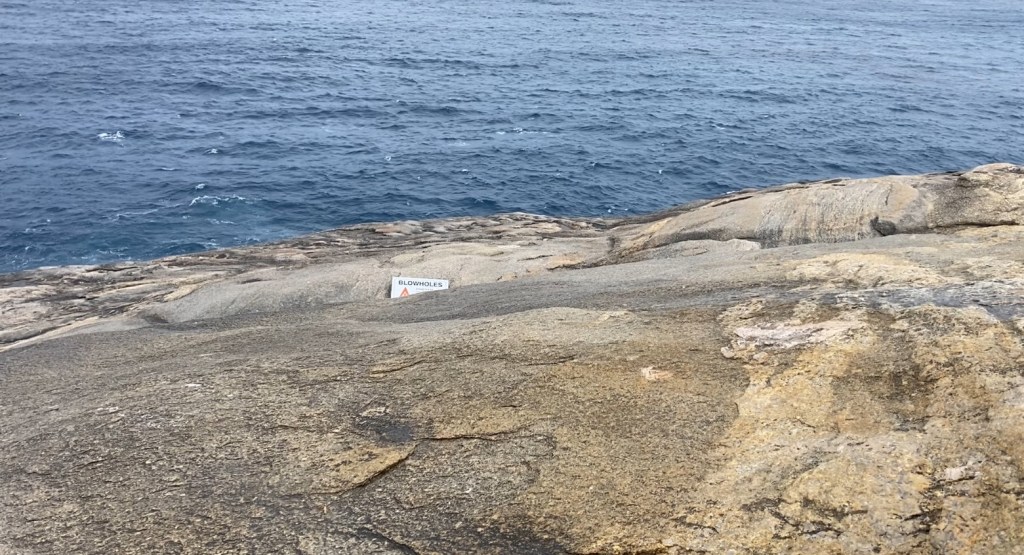
Pink Lake at Esperance for instance is not pink nor has it been pink for many years. The blow holes at Albany would probably be best described as a crack in the rock where sea mist is emitted as the waves break. That said they remain part of the story and the adventure.
The BlowholePink Lake
Tomorrow we pack up and head for the Nullarbor. Unlike the trip west, this time we have planned refuelling points, places to camp and daily distances. I am hoping for a tail wind and no rain.
At the Albany ANZAC memorial we learned some 12,000 Walers were sent to the Middle East as part of our contribution to WW1. These were horses bred in New South Wales hence the name. Many were used in the last great calvary charge in modern warfare. That event was of course the charge of the Light Horse at Beersheba in 1917. Some eight hundred horses were in that charge. Beersheba is not that far from the modern day Gaza Strip. Of the 12,000 horses sent to WW1 only one returned to Australia.
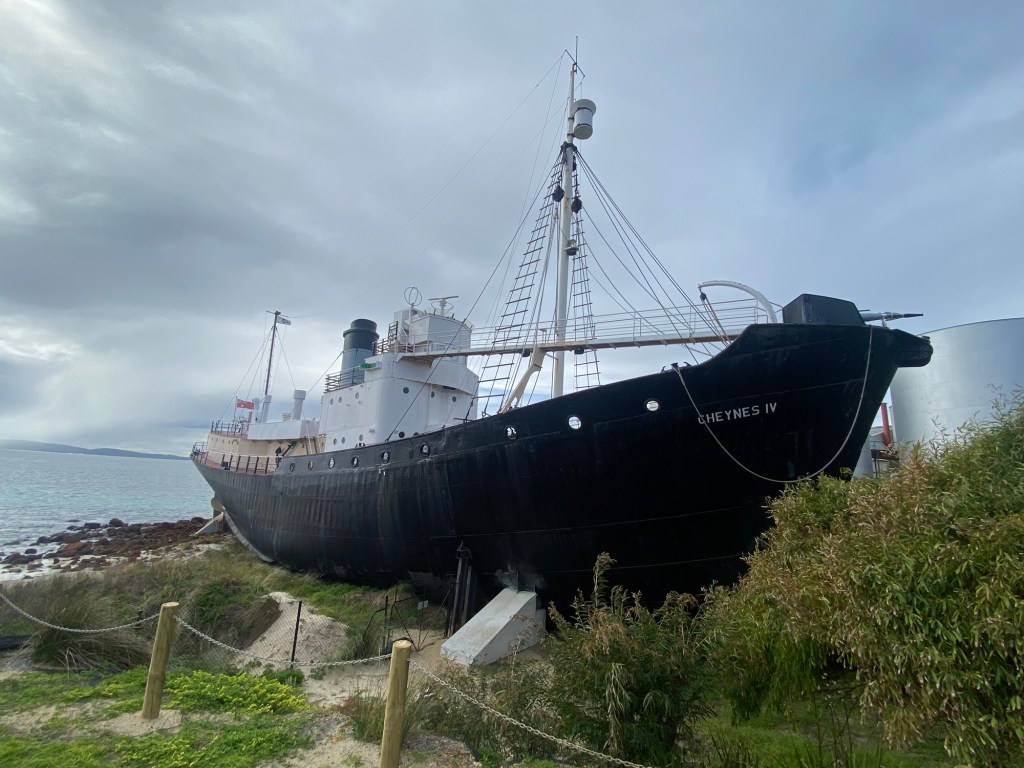
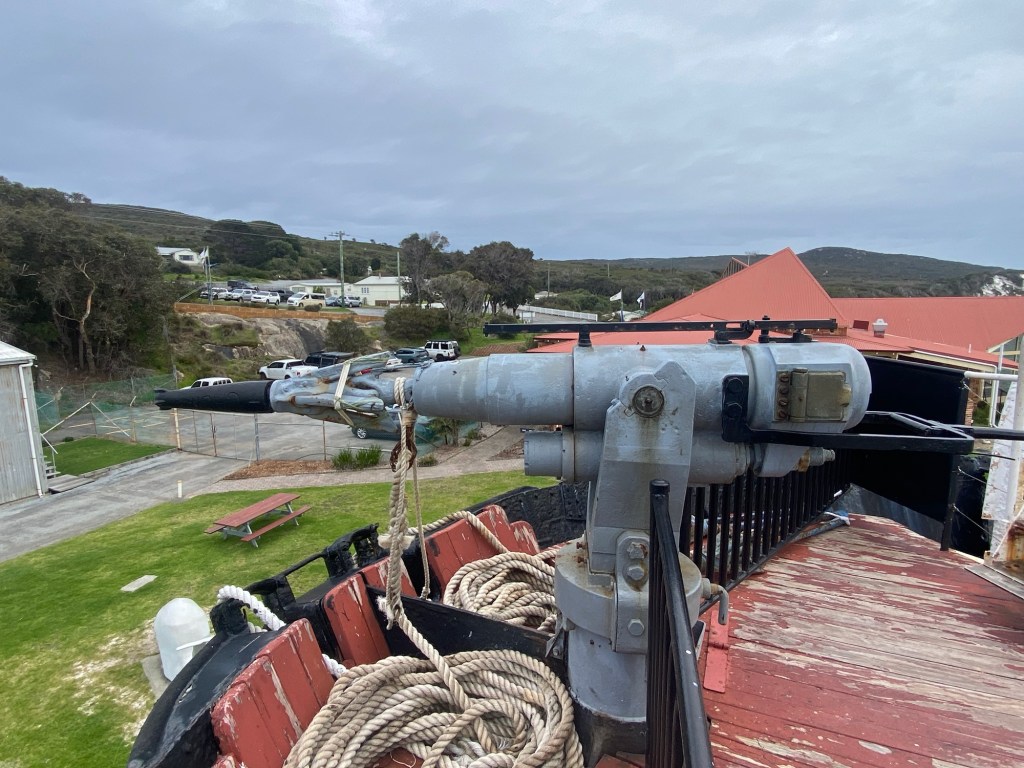
The other group of a Whalers based in Albany and this time spelt with an ‘H’ had nothing to do with horses. These guys hunted whales and between 1952 and 1978 something like 16,000 whales were hunted and processed at the Albany whaling station. This industry only stopped in 1978.
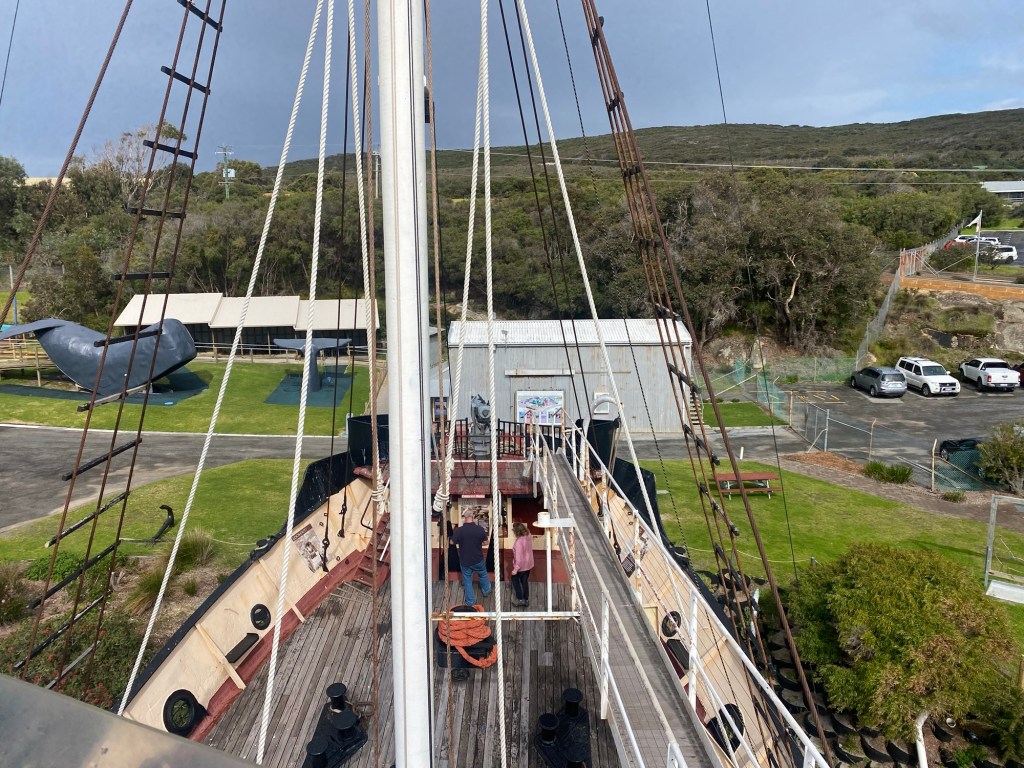
The Last Whale ChaserThe Harpoon
It was a pretty grizzly industry that nearly wiped out the whale population around this coast. An old whaler who now volunteers as a guide described days when over 20 whales were taken by one boat, in one day.
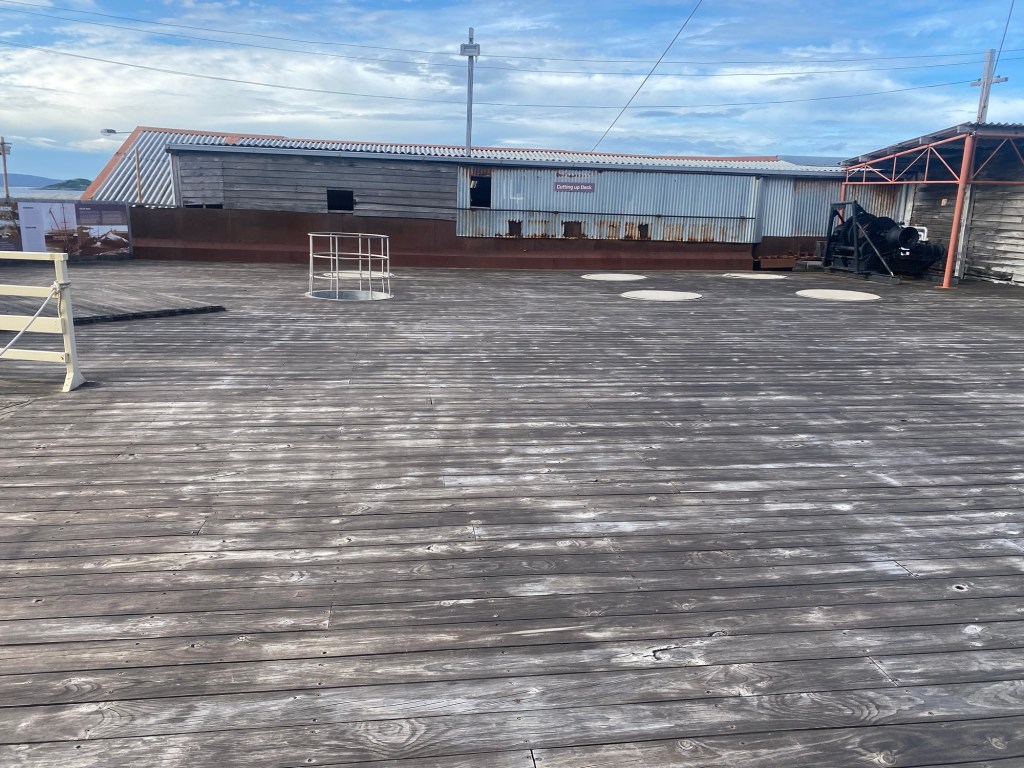
Walking around the old whaling station you can only imagine the smell, the noise and general unpleasantness of the whole scene. The one group that seemed to thrive in this environment were the great white sharks that tore into the whale carcasses that were waiting to be processed.
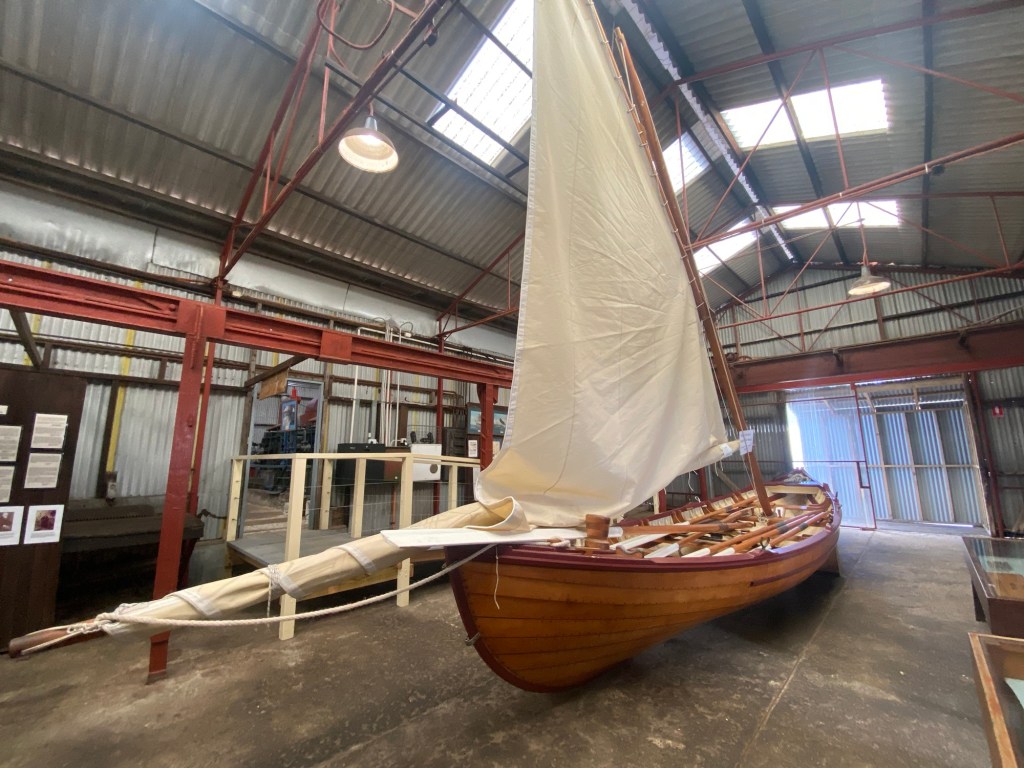
The processing floorAn early whale boatView from the bridge of the whale chaser.
The whalers targeted sperm whales after the hunting of humpback whales was banned. The big attraction was the oil produced from these whales. It has some very unique characteristics namely it doesn’t boil nor does it freeze. Whale oil was used for precision instruments, space travel and even as an additive in automatic transmission oil. I am so glad synthetic alternatives have been developed and there is no longer a commercial need to hunt these amazing animals.
Today we were able to watch whales on their annual migration, breaching just off the cliffs. What a different experience to yesterday.
Jimmy Newells Habour
The lookouts we were enjoying were established on 3.3 billion year old rocks. This was a time when our road trip could have included North America. The age of these rocks did give us confidence that the platform built out over the cliffs and bolted to these rocks was secure.
Map of Gondwana The Gap
My personal insight for today was my amazement or maybe amusement of those who come to see this amazing coastline and yet spend their entire visit photographing themselves. Is this just evidence of modern vanity, self obsession or just plain old narcissism? I don’t get it and the last person I want to photograph is me!
We crossed the Nullarbor Plain which is pretty big. After the Nullarbor we visited the Super Pit which is a big hole with big toys. That was followed by a big rock. Since then we have experienced torrential rain, hail, gale force winds, thunder and lightening. It really was a big storm. We are only exploring a small part of Western Australia which is so big it would encompass Texas four times over or all of Western Europe. So we are completely encapsulated by all things big.
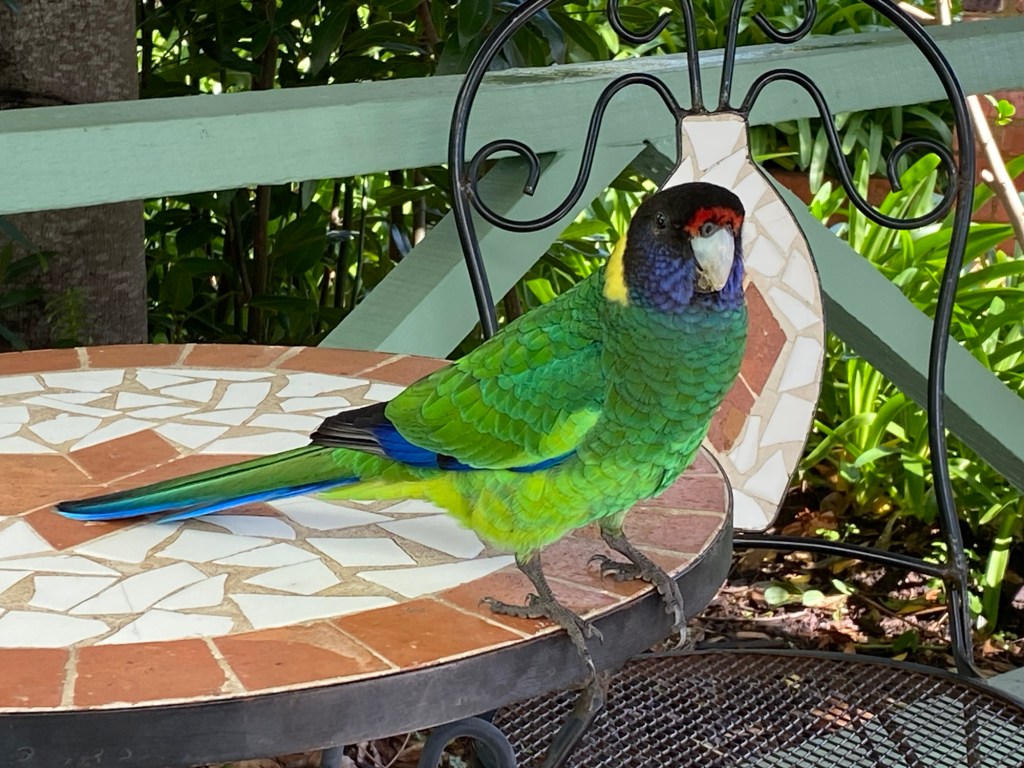
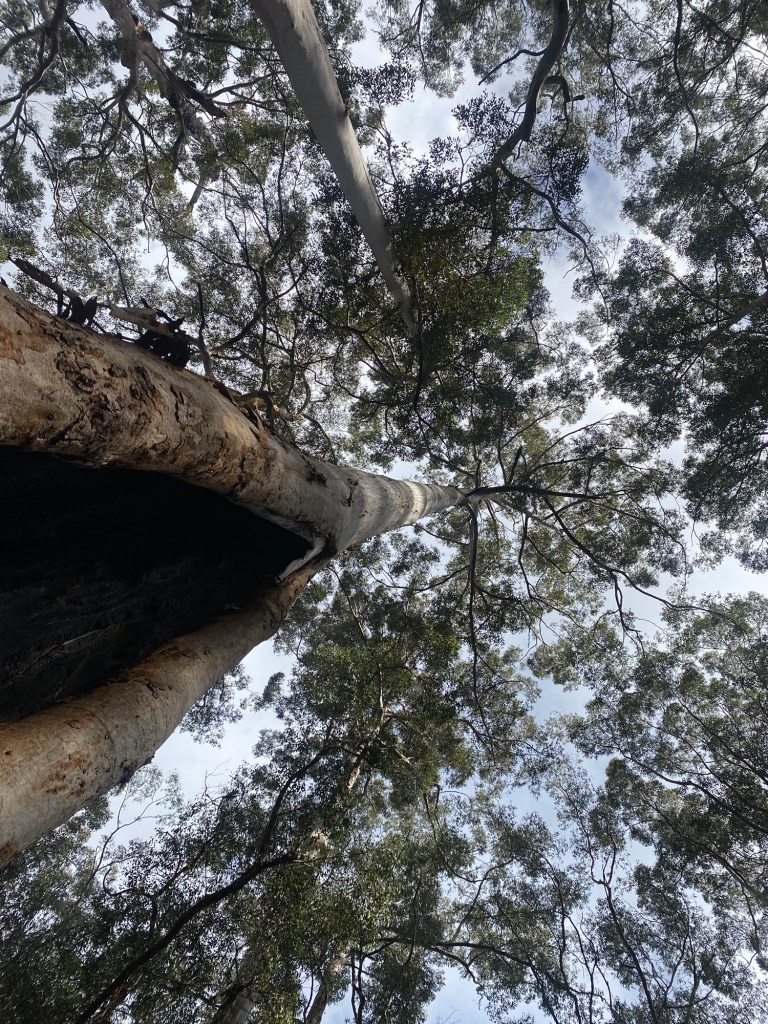
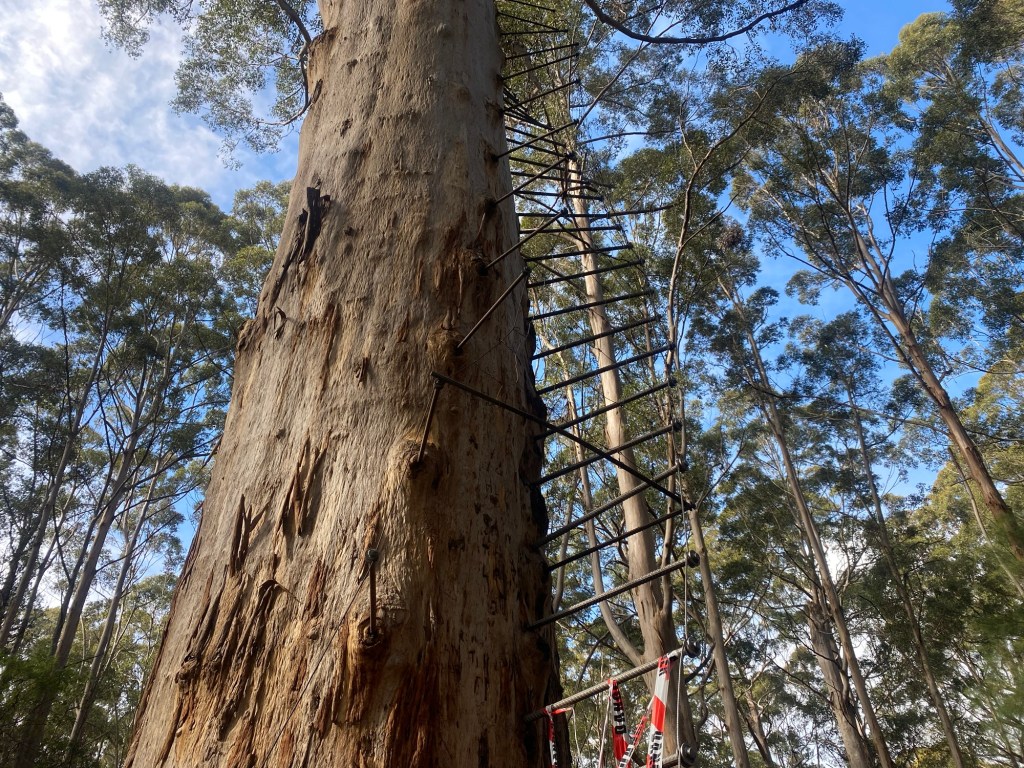
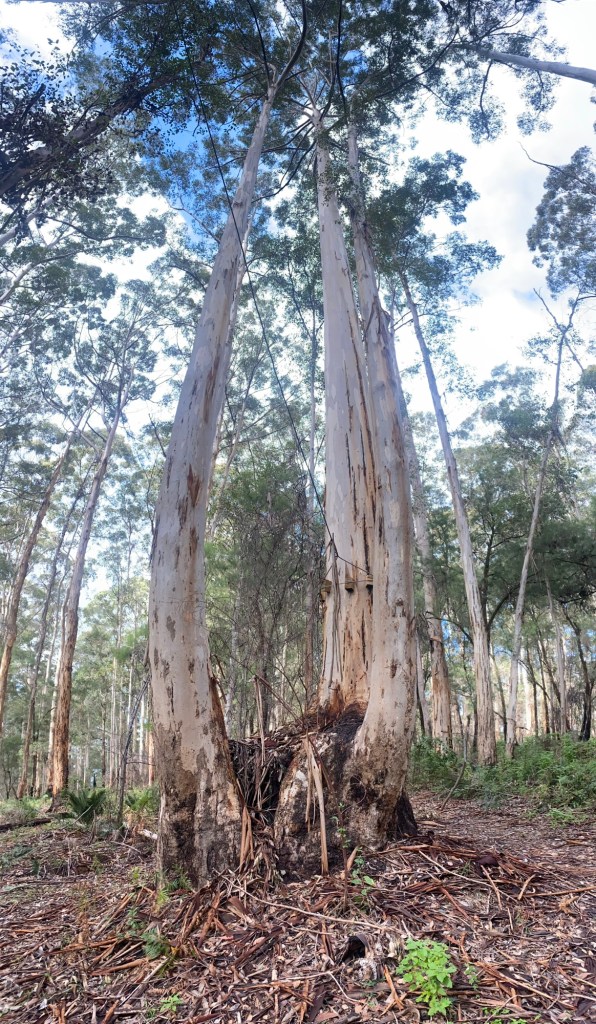
Our coffee companion – an Australian RingneckEven with that fire scar it thrivesA stairway to heaven From one stump three trees
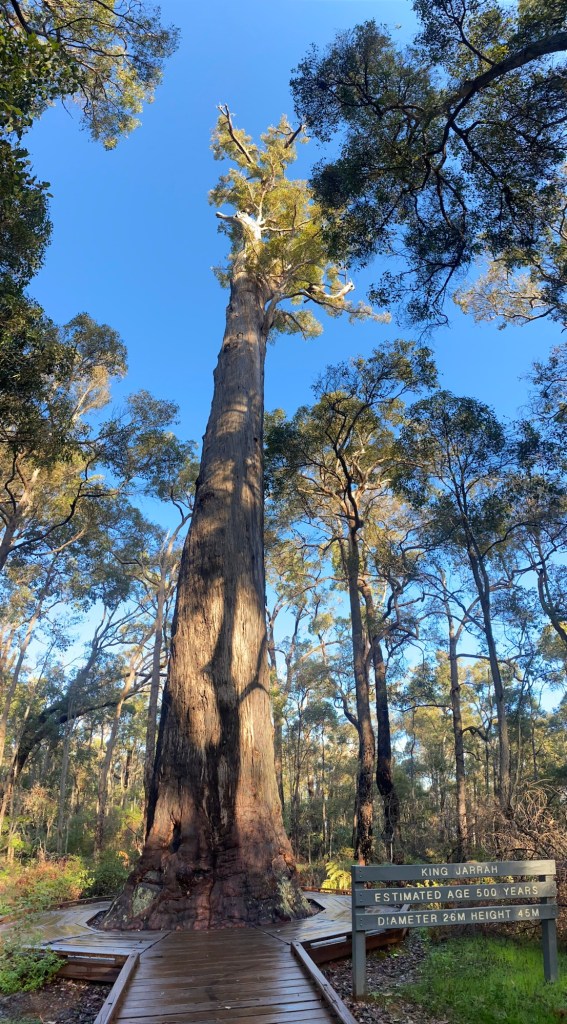
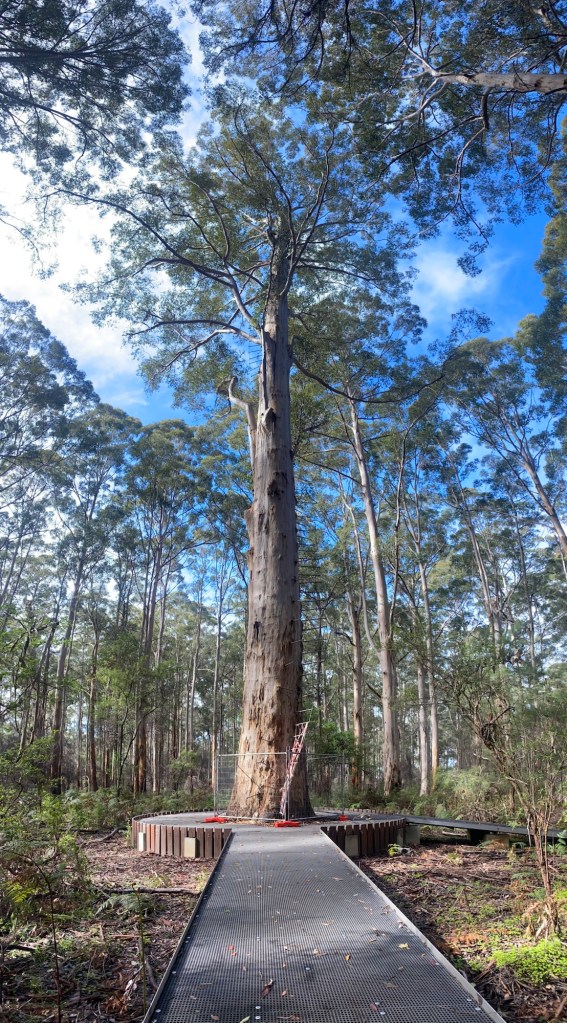
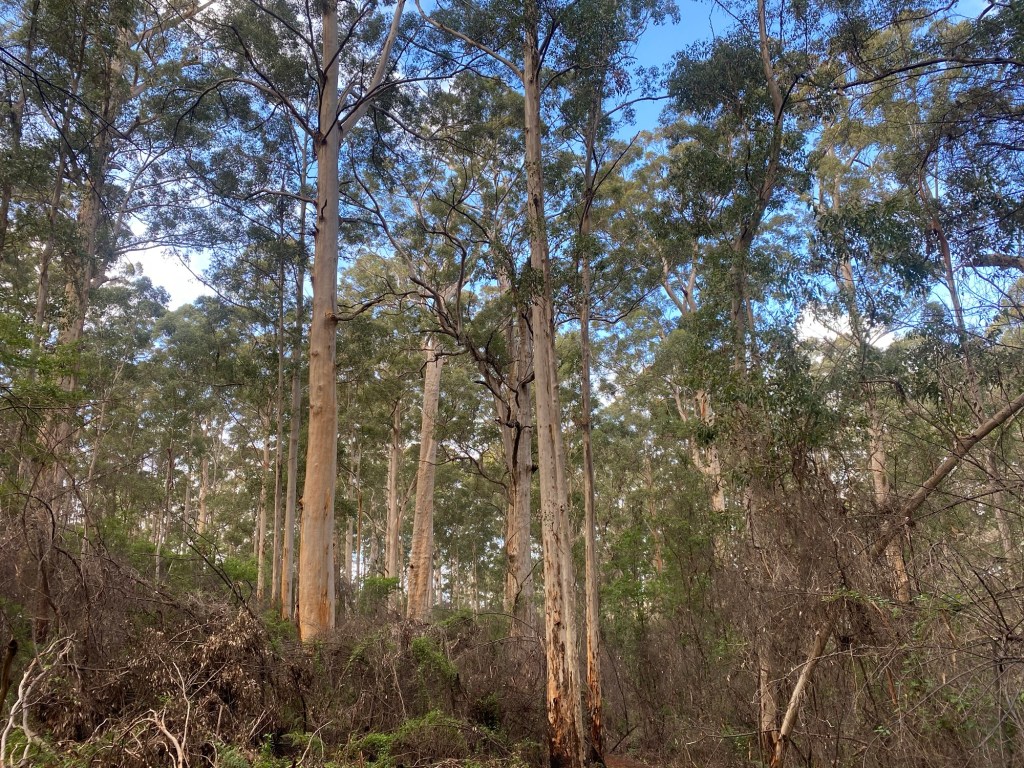
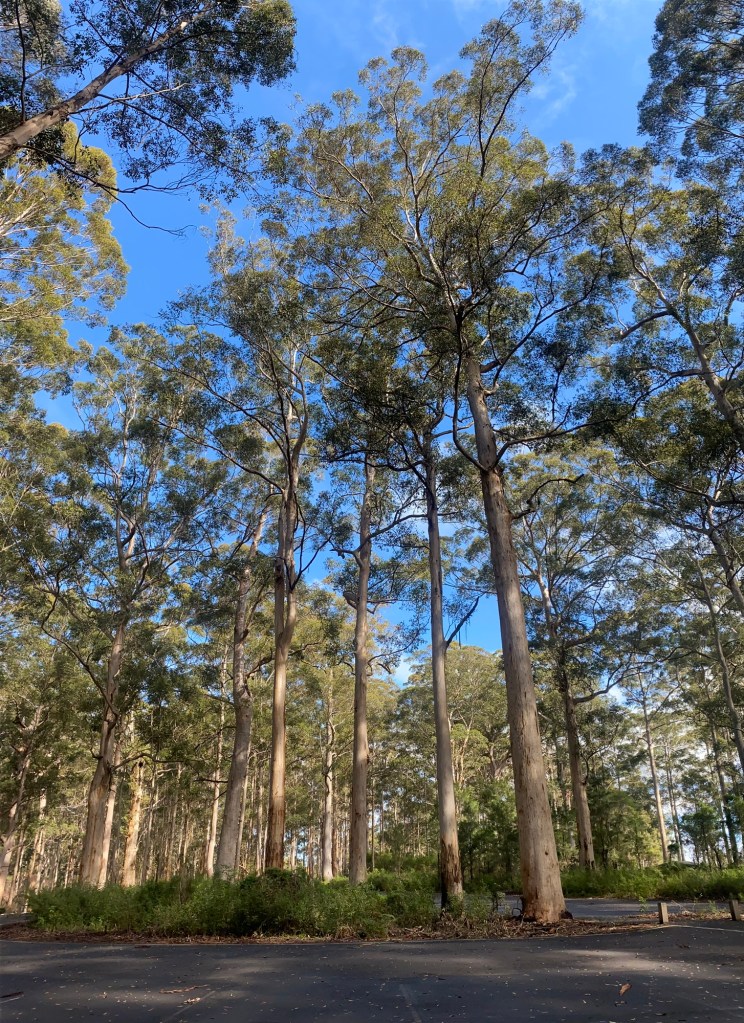
In keeping with this theme we have recently visited the Jarrah and Karri forests. These are big trees and thankfully someone was thoughtful enough to preserve some of the remaining forests before they were all cut down. Many of these trees were used to build railways in India.
Now these might not be the biggest trees in the world and they do not compare to giant sequoias. They are however standout examples around here, especially after the Nullarbor.
One tree in particular was only saved by a forestry official who hopped into his buggy, rode out into the forest and blazed a government mark on the tree the night before it was to be cut down. And so we can all still see King Jarrah.
King JarrahThe Gloucester TreeMore Karri trees
The towns that once relied on the forestry trade now rely on mountain bikers, hikers, canoeists, zip line enthusiasts, and tourists. The felling of these native old growth forests has come to end in time for future generations to be able to arch their necks back into impossible positions in order to see their full height.
More tall trees and a scary stairway to heaven.
Towering over the landscape they made perfect observation platforms for bush fires. However, rather than build a structurally sound staircase, a spiral of steel pegs was driven into the trunks. No safety cage, plenty of fresh air between the pegs and no non-slip surfaces. This was obviously built before work health and safety became a thing. Until recently climbing these trees was a challenge favoured by tourists. They are no longer used to spot bushfires.
A word of advice: New Zealand has the Kauri tree which is huge. Whilst it is pronounced the same as the Western Australian Karri do not ever suggest to a New Zealander they are the same tree. To do so would be verging on fighting words, just saying.
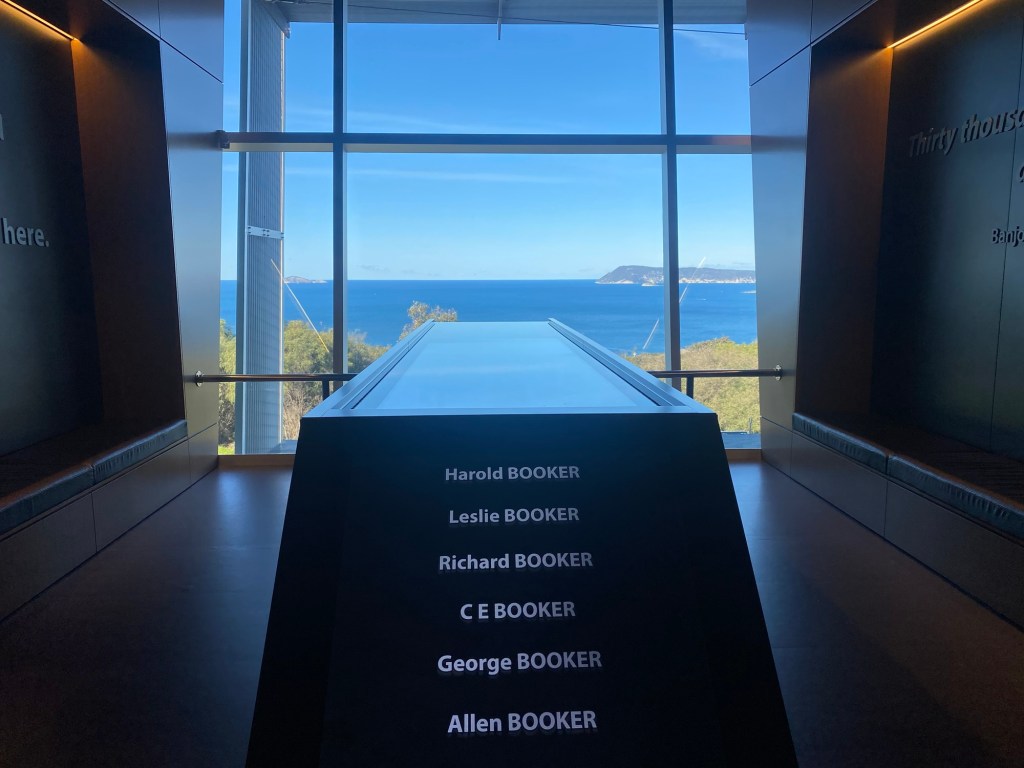
We are now in Albany and today we visited the ANZAC museum. It was from this harbour that Australia and New Zealand sent convoys of ships with a total of 41,000 of their finest young men to WWI. We were fortunate to see the name of our great uncle on the honour roll. He left Australia from this point in November 1914 and died at Gallipoli in May 1915.
The names of the 41,000 slowly scroll through the Pool of Reflection.
The eastward journey is rapidly approaching but we still have some time left in the west.
There comes a time on all long journeys when you realise something has changed. It could be the wind is no longer in your face but now on your back, the hill you are riding up has suddenly flattened out or maybe your sails have shifted. So it was at an intersection on the southern outskirts of Perth. We turned left and suddenly we were no longer heading west. Whilst we weren’t quite heading home that left turn signified we had now started a new phase of our journey.
Busselton Jetty and Busselton
The weather has deteriorated into a constant series of high winds and storms interspersed with brief periods of blue skies. It has been bucketing and blowing a gale which has made towing our caravan somewhat fraught.
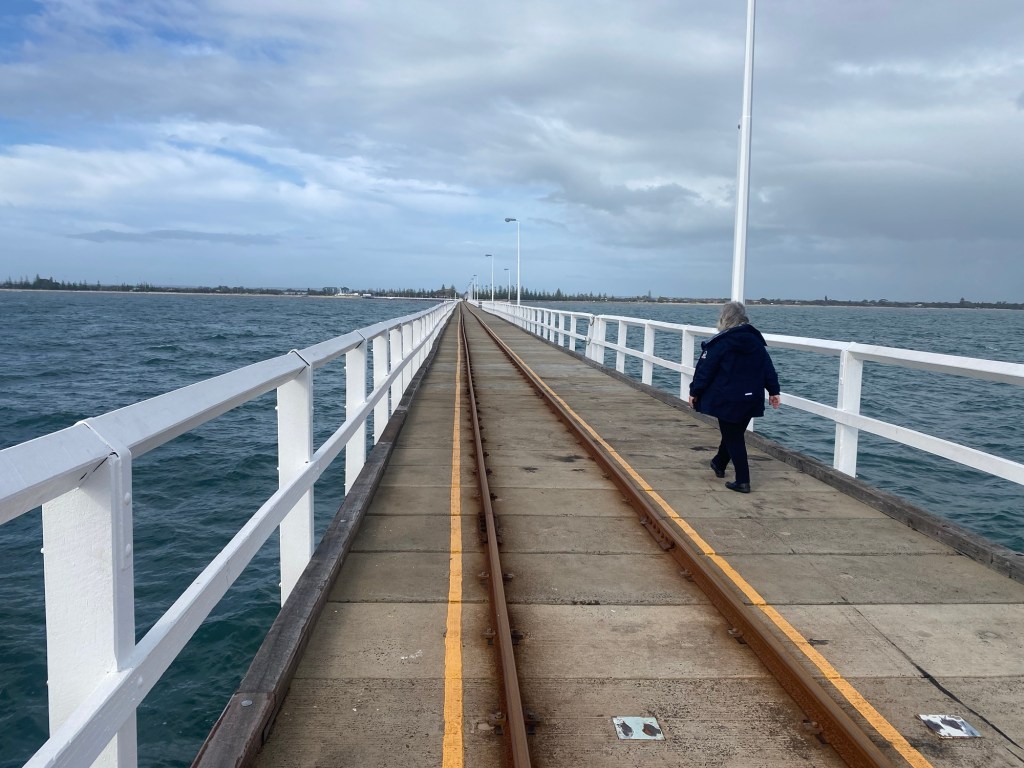
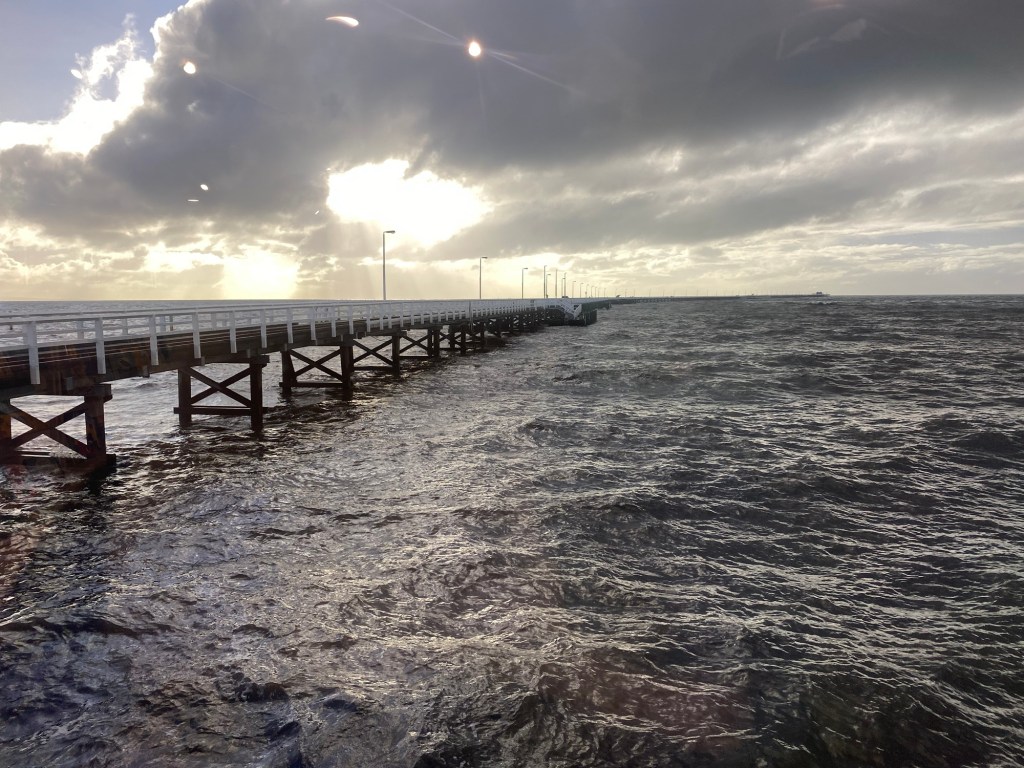
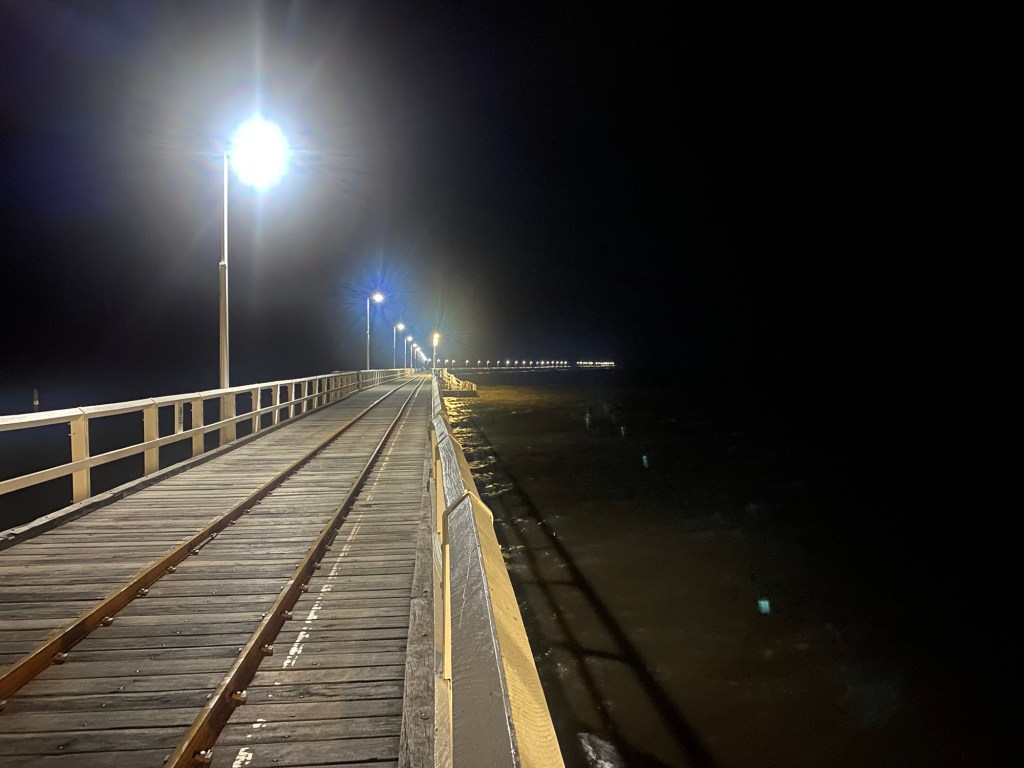
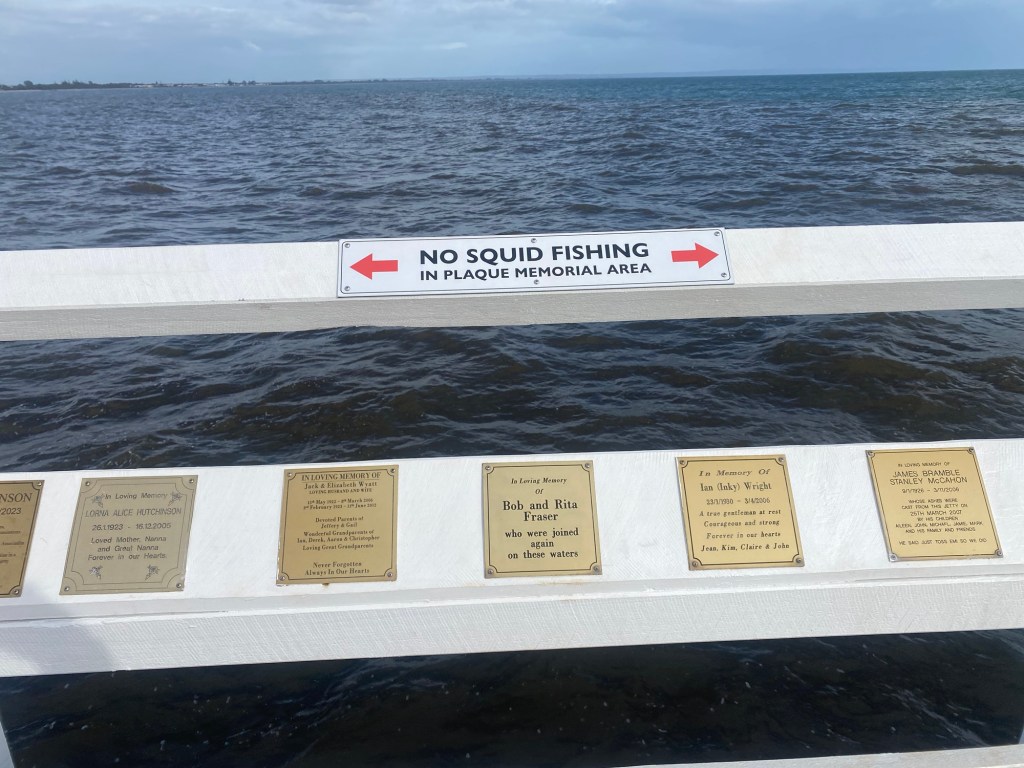
We stayed in Busselton which brags it has the longest wooden jetty in the Southern Hemisphere. It’s a 3.8 km (2.25 miles) return, walk or train ride. Fortunately there is a brewery nearby so you can escape the rain squalls.
The Jetty and a Tasting Paddle
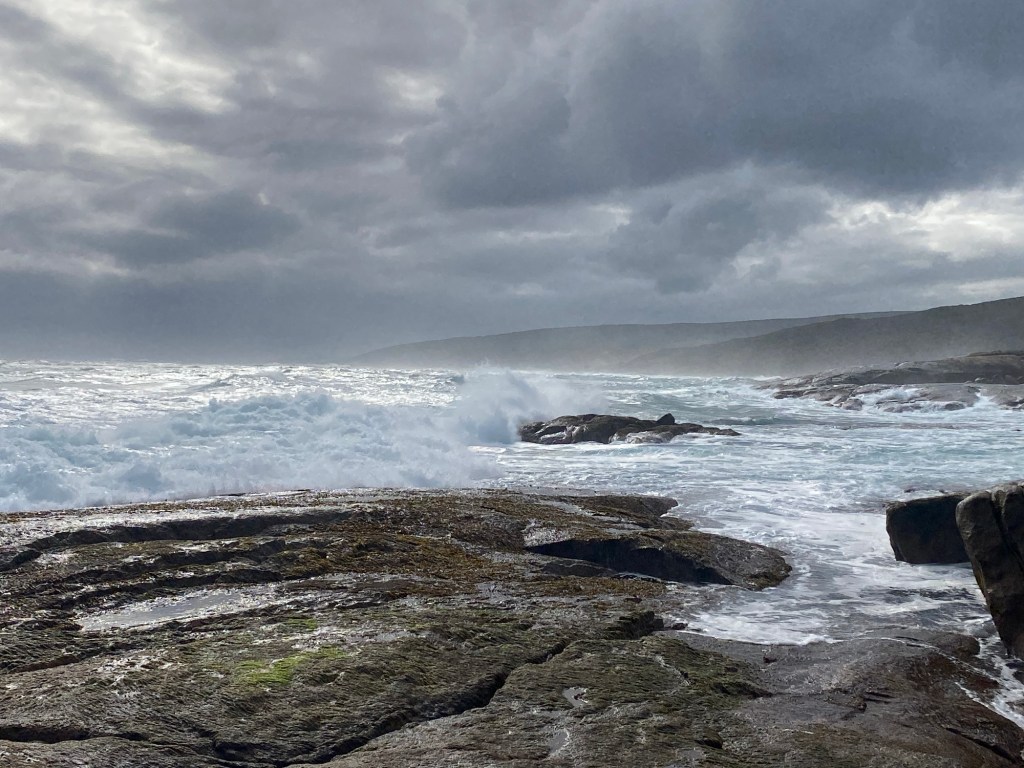
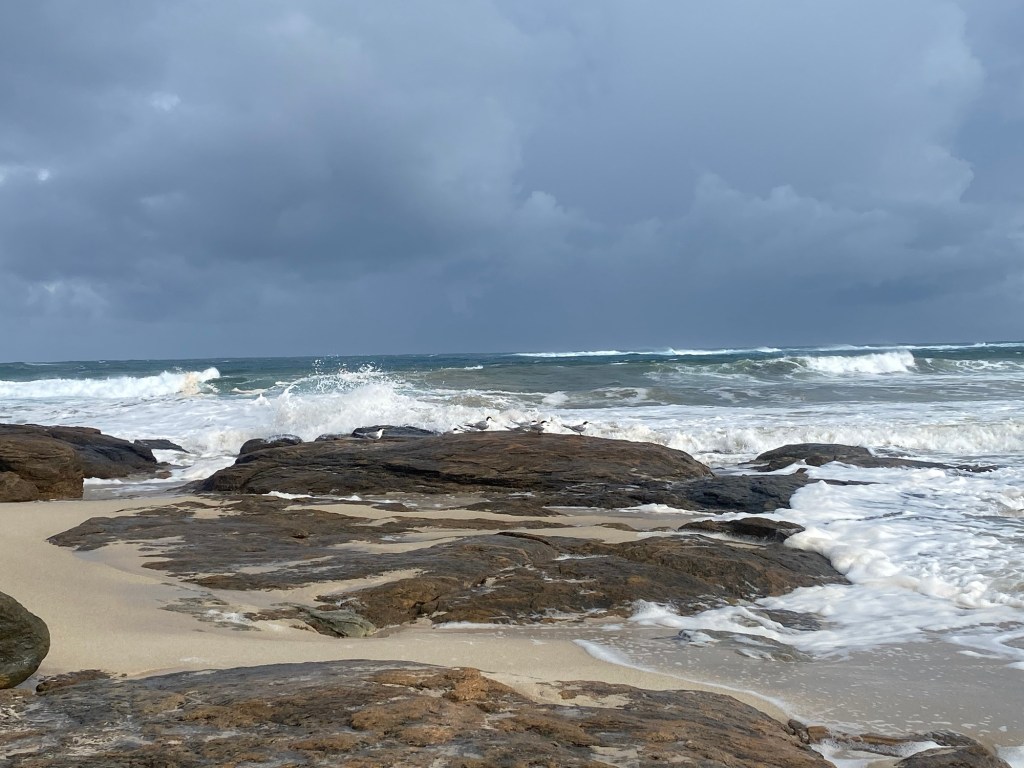
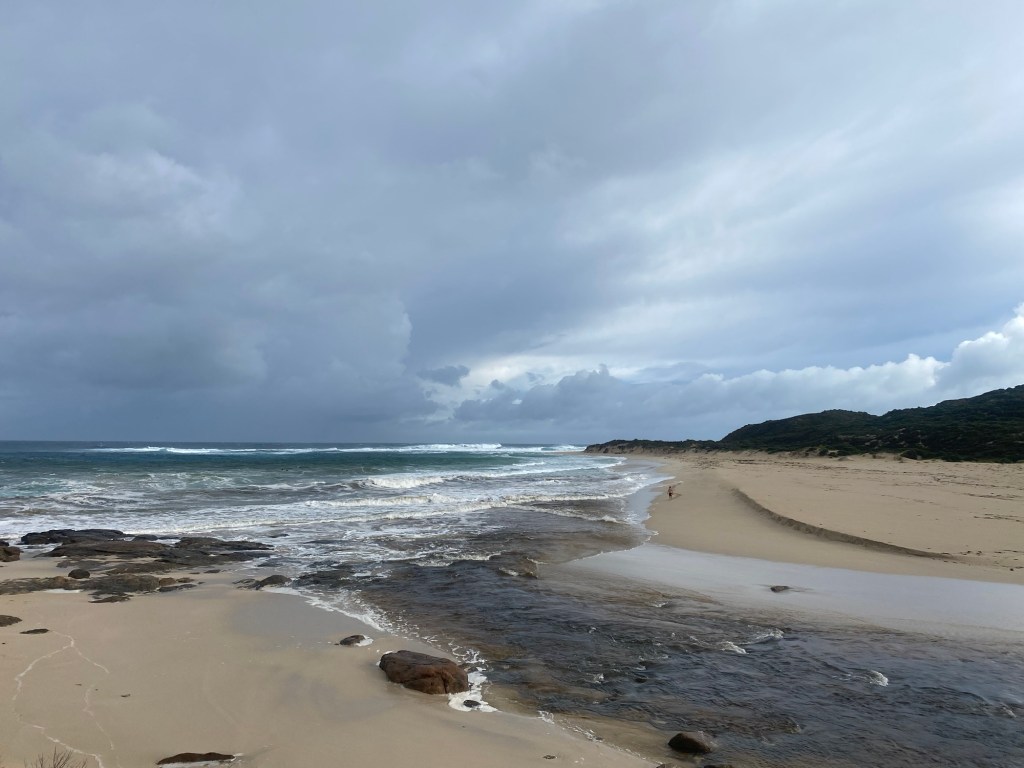
We visited Margaret River which is usually famous for its wine and amazing surf. Again the weather was the major obstacle to enjoying either. That said the weather coming in from the Indian Ocean has created some amazing waves and ocean vistas.
Mouth of the Margaret River
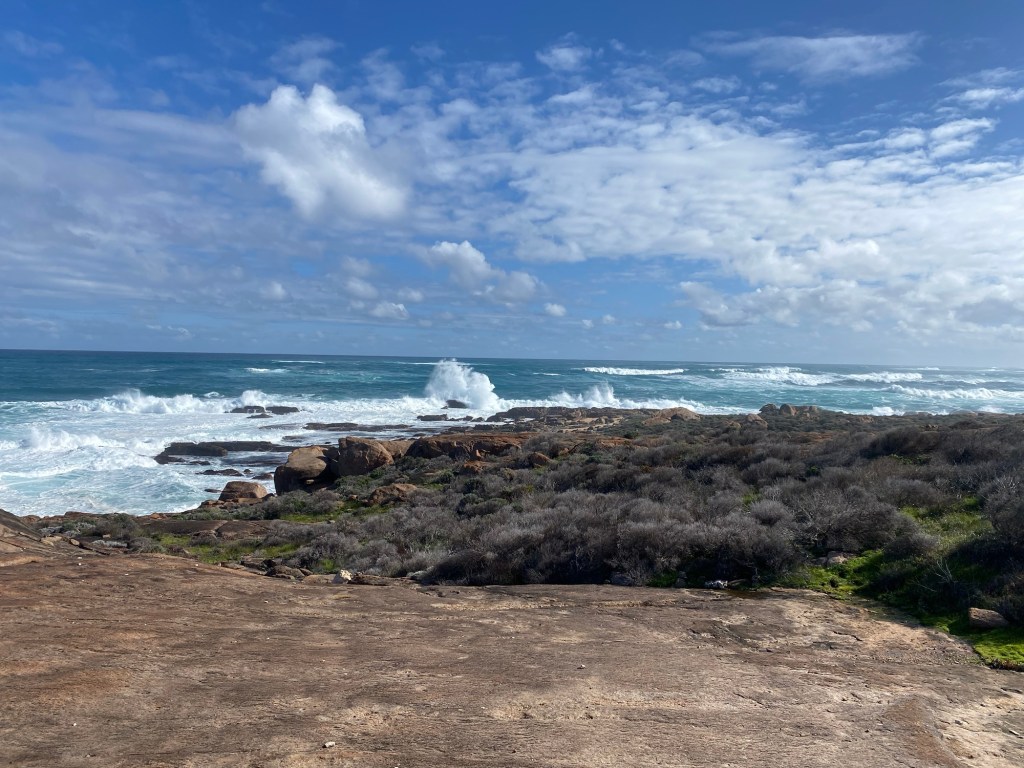
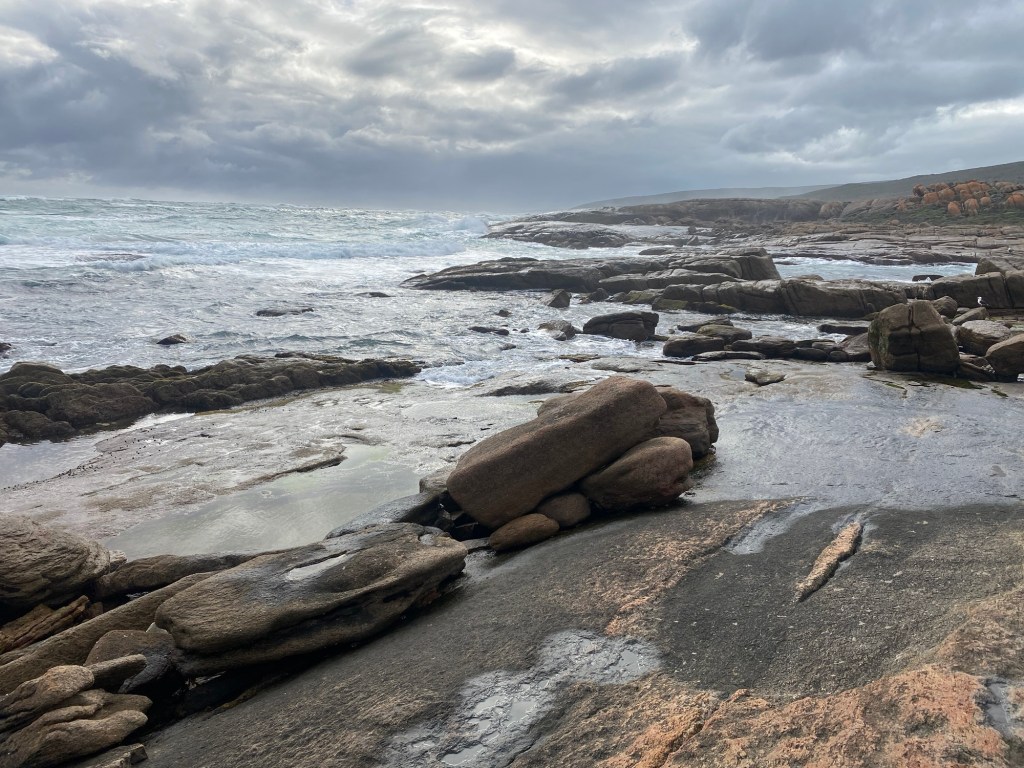
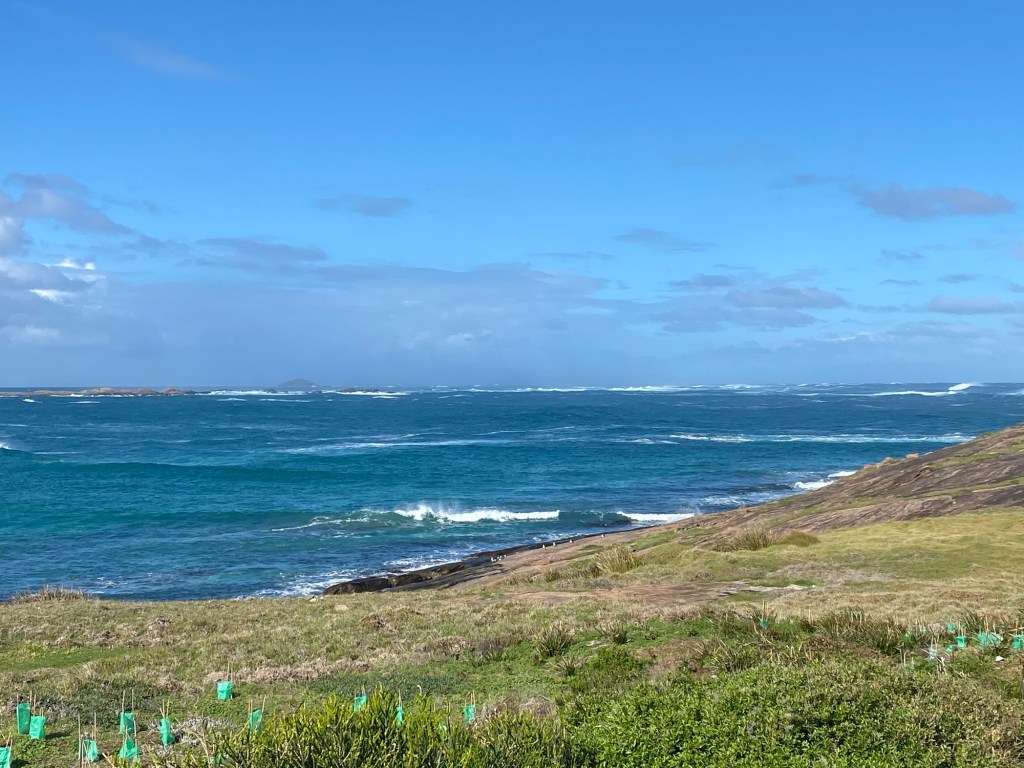
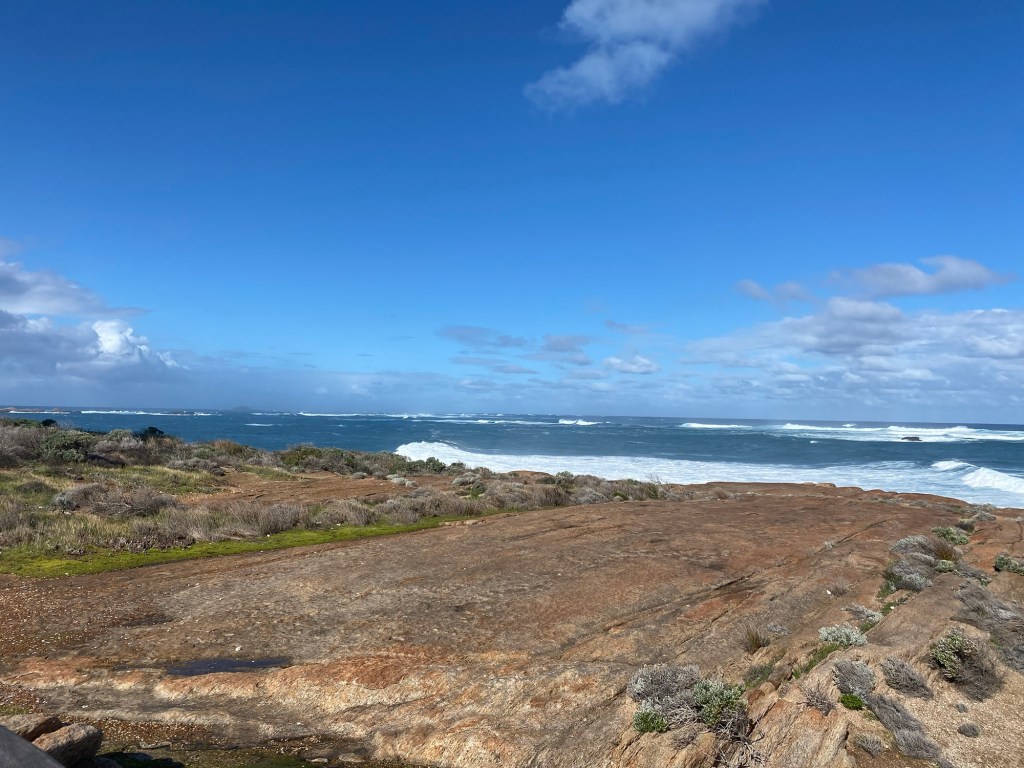
We have reached the bottom, left hand corner of Australia. To the west is Africa and to the south Antartica. This is where oceanographers have decided the Indian Ocean and the Southern Ocean meet. We could not see a dividing line but we accepted the authority of the sign.
We also came across some unusual sights.
Yes, she is feeding a baby whale!You have to appreciate their respect for those who have passed.
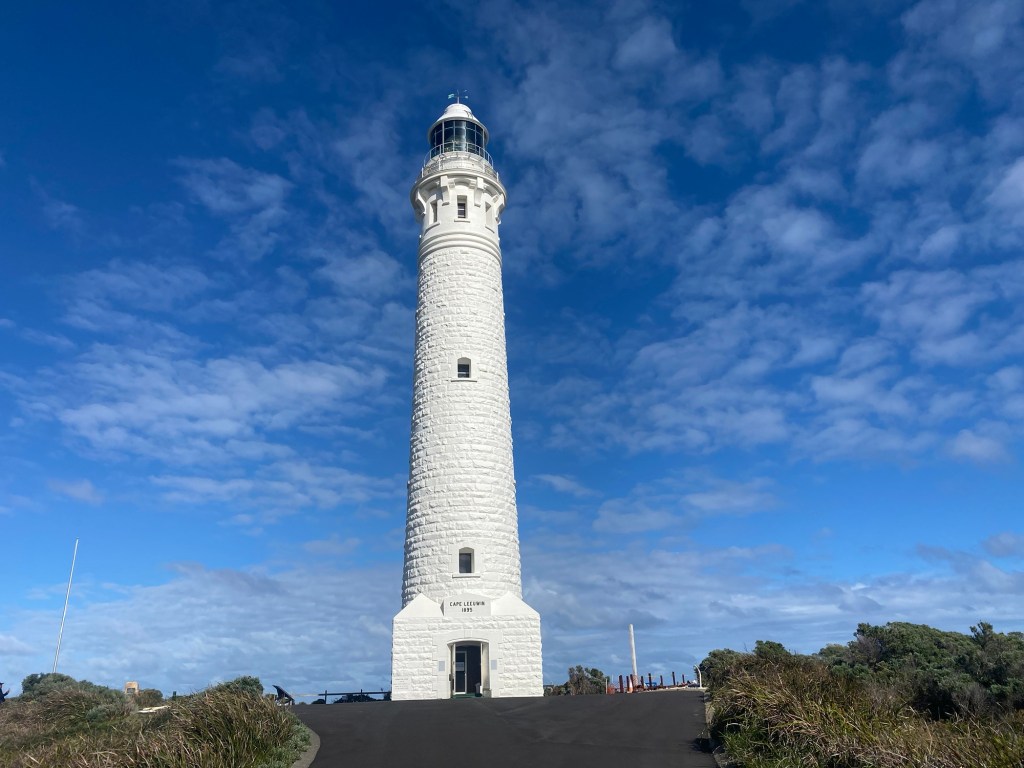
It was thought lighthouses would be a good idea in this part of the world given it is the first rocky bit after sailing west from the Cape of Good Hope. The Cape Leeuwin and Cape Naturaliste lights are still operational after over a hundred years of operation although now fully automated and with LED lights.
Cape LeeuwinCape Naturaliste
I have to chuckle when you read the history of these lights. WA asked the eastern colonies for a financial contribution to their construction. The logic being ships sailing to Melbourne or Sydney would rely on these navigation beacons. The eastern colonies refused the offer. To this day WA has neither forgiven nor forgotten this slight and so the east west rivalry continues. As I am a sure my readers are aware the Australian constitution addressed this anomaly by making all lighthouses a federal responsibility.
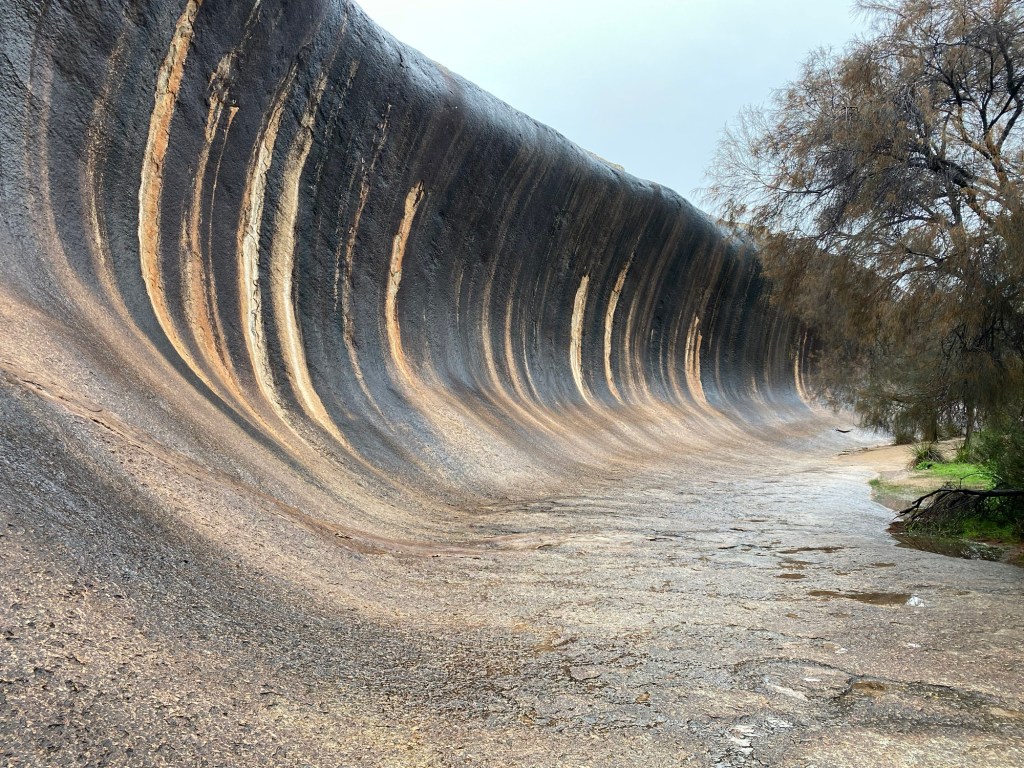
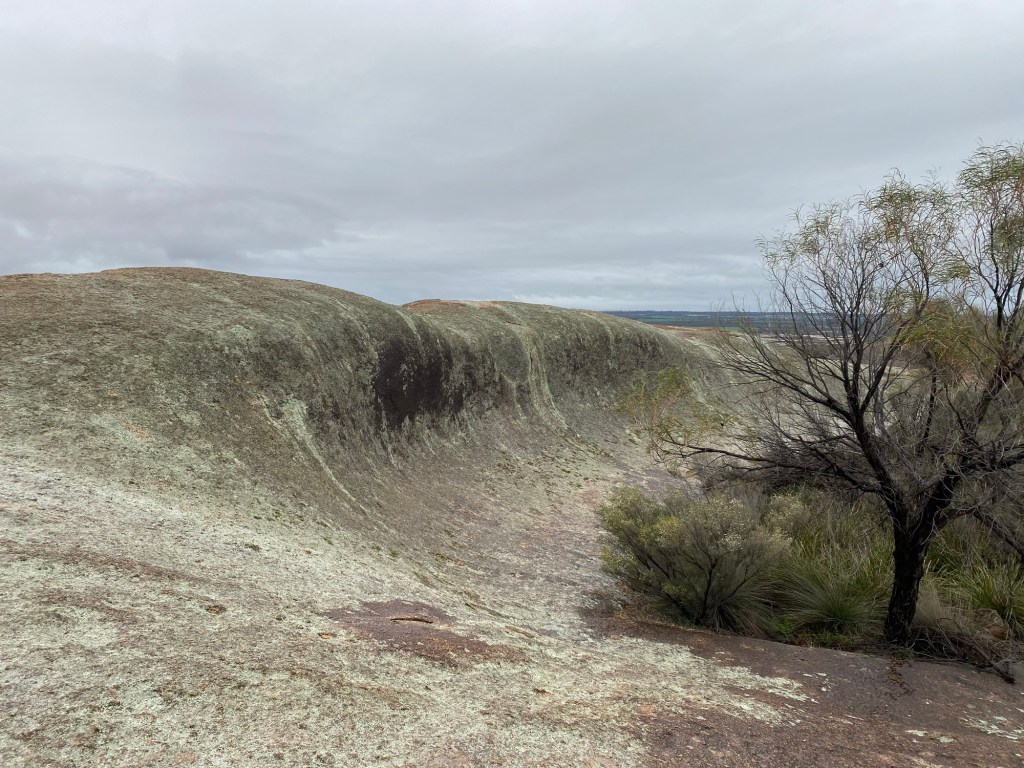
Having left the big hole we are now scrambling over a big rock. It seems everything is Western Australia is big.
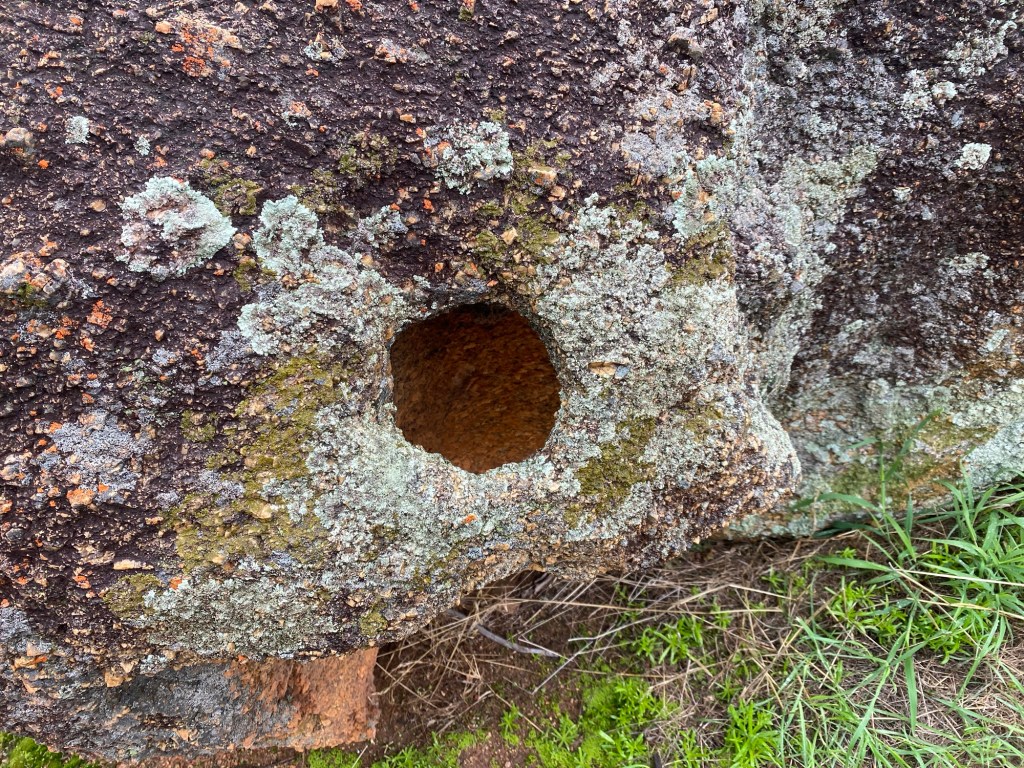
Wave Rock
This rock is not only big but it’s very old at 2.7 billion years old. That’s about 5 times older than Uluṟu, 50 times older than the Himalayas, and 30 times older than the Rocky Mountains. Fortunately it doesn’t contain gold for if it did it would have been blown up and dug up years ago. It would now be just another big hole.
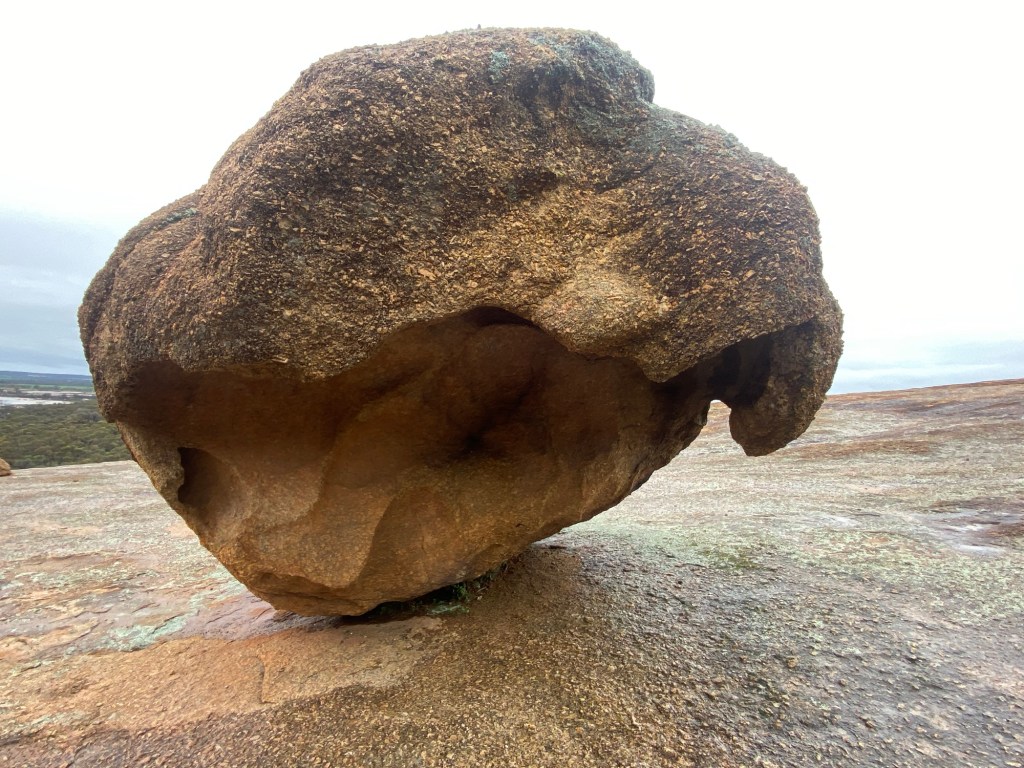
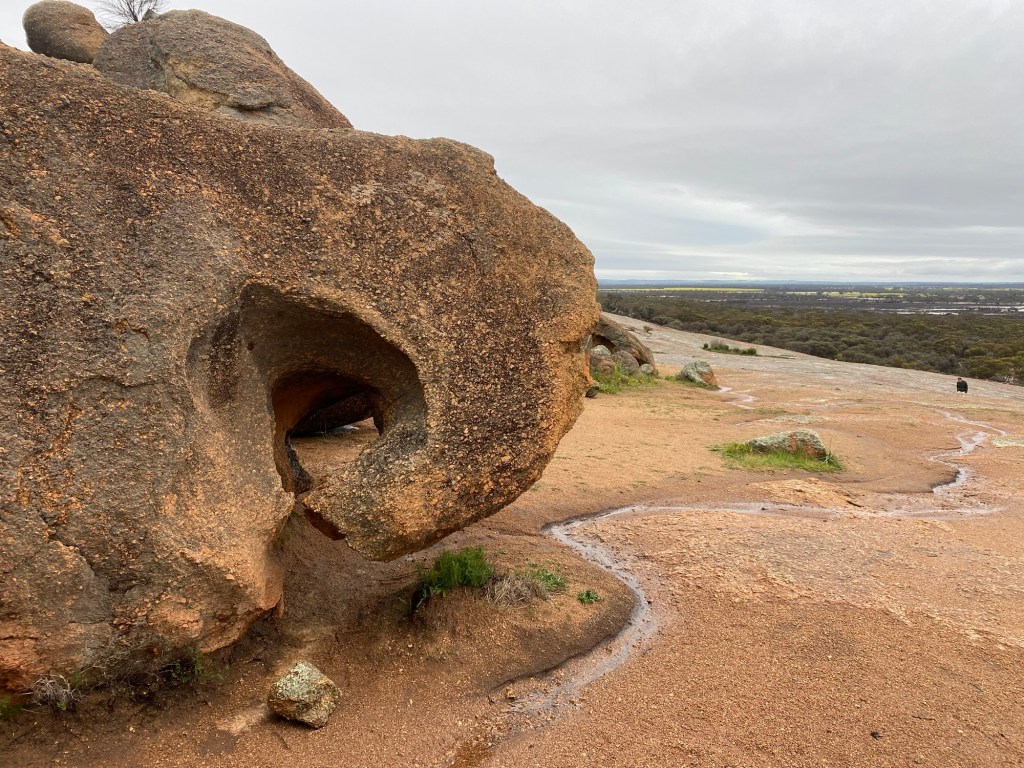
Hippo YawnNot sure how this got there
It turns out some of the oldest rocks in the world are found in WA some over 4 billion years old!
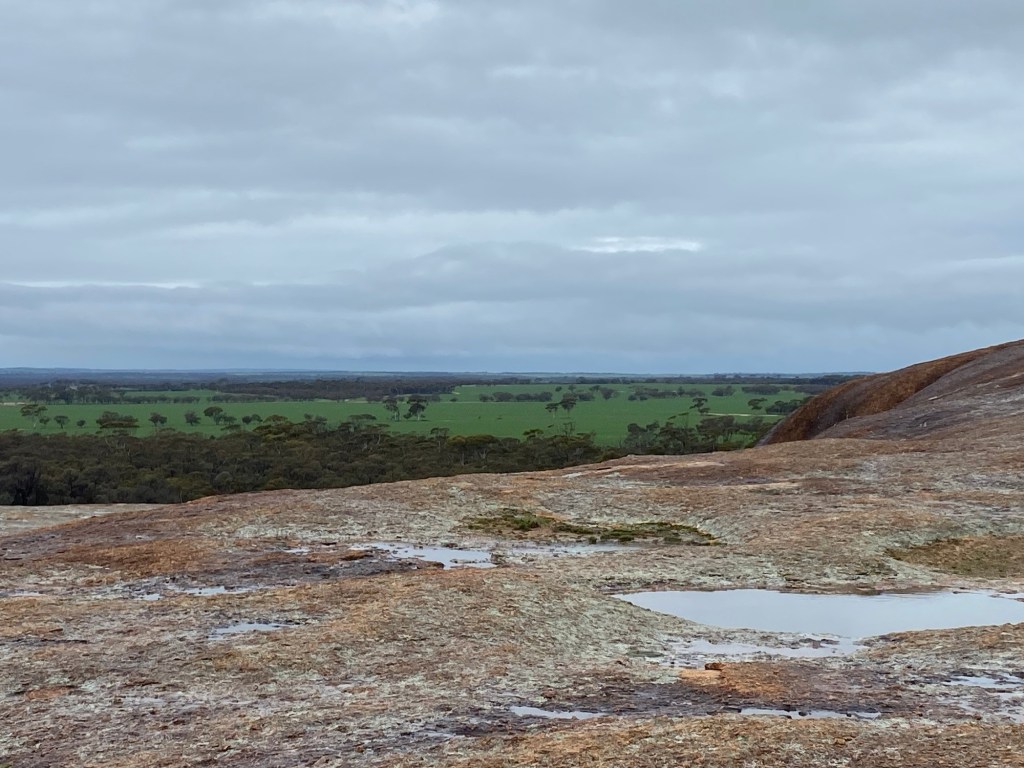
More old rocks
We have been driving through the wheat belt and you guessed it, they grow a lot of wheat here. The country is flat and the farms are big. Again with the big. In fact the farms out here are huge and since we have had so much rain these fields are bright green unlike the Nullarbor Plain.
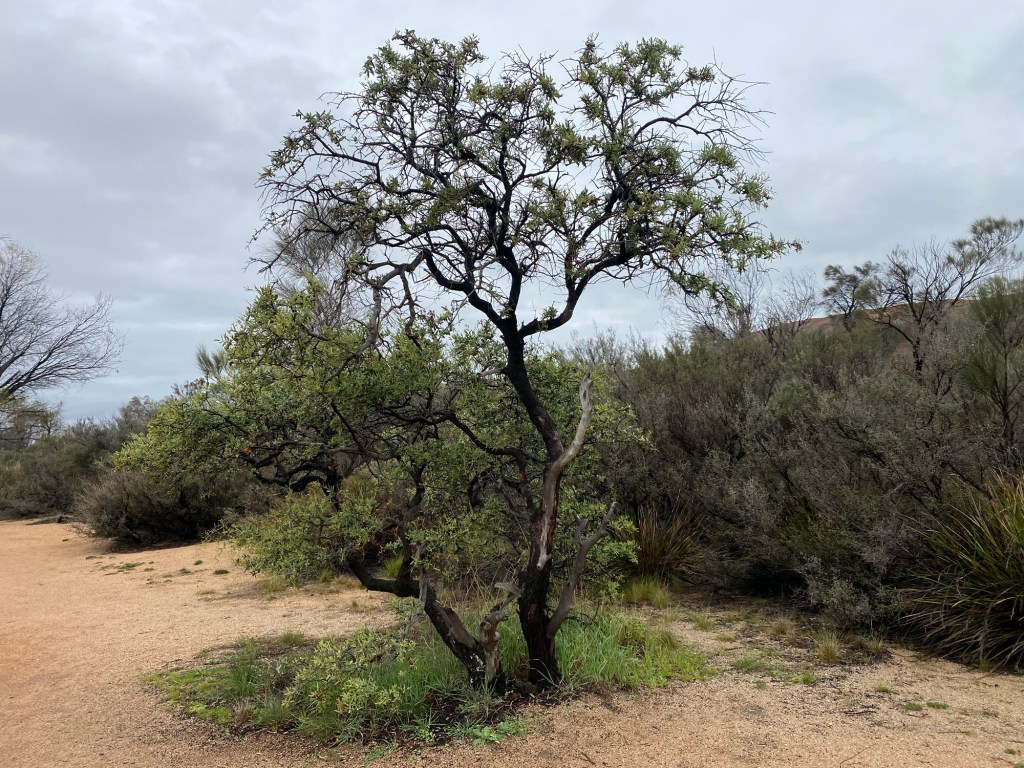
SandalwoodWheat fields in the distanceGrowing on the rock
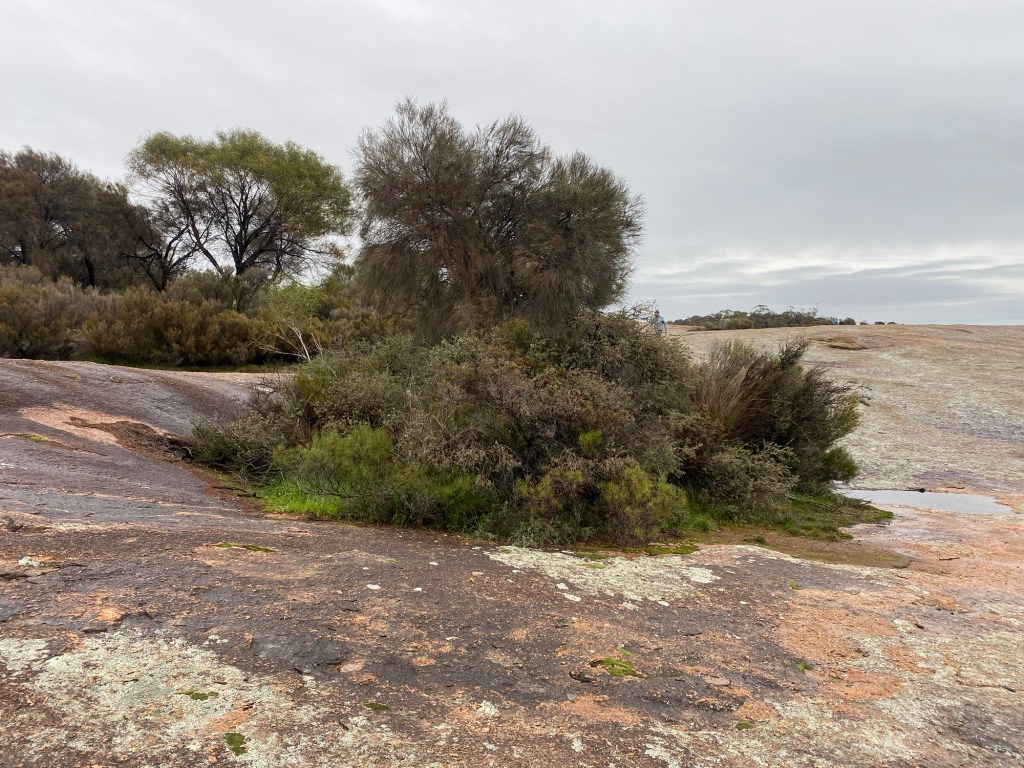
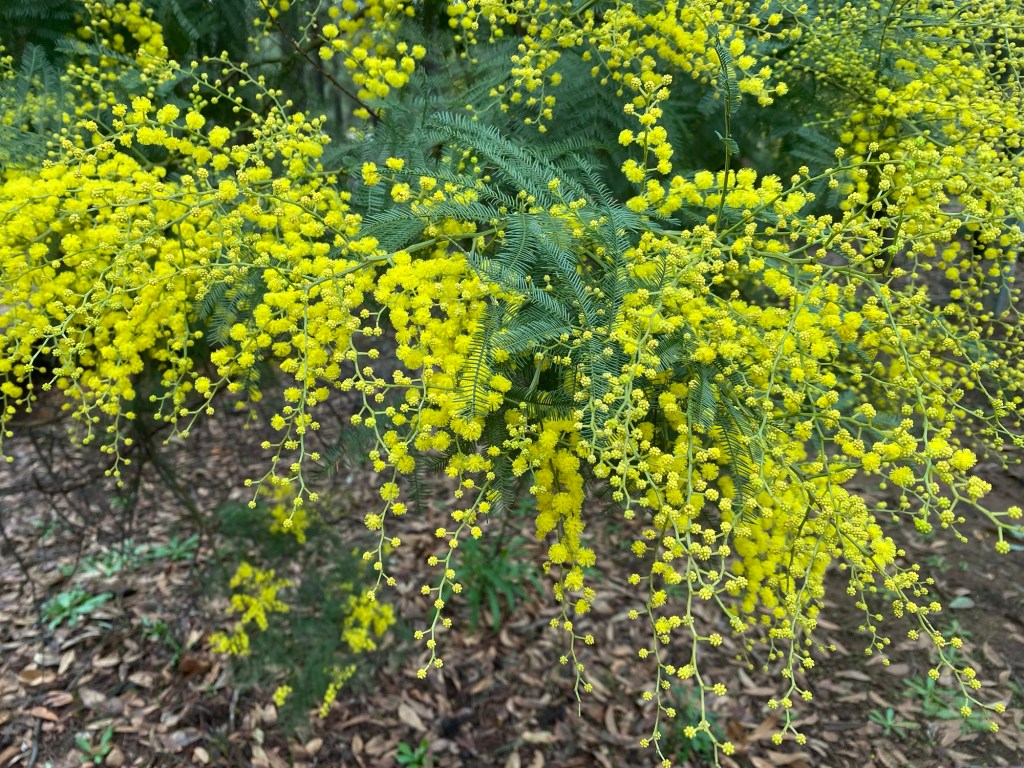
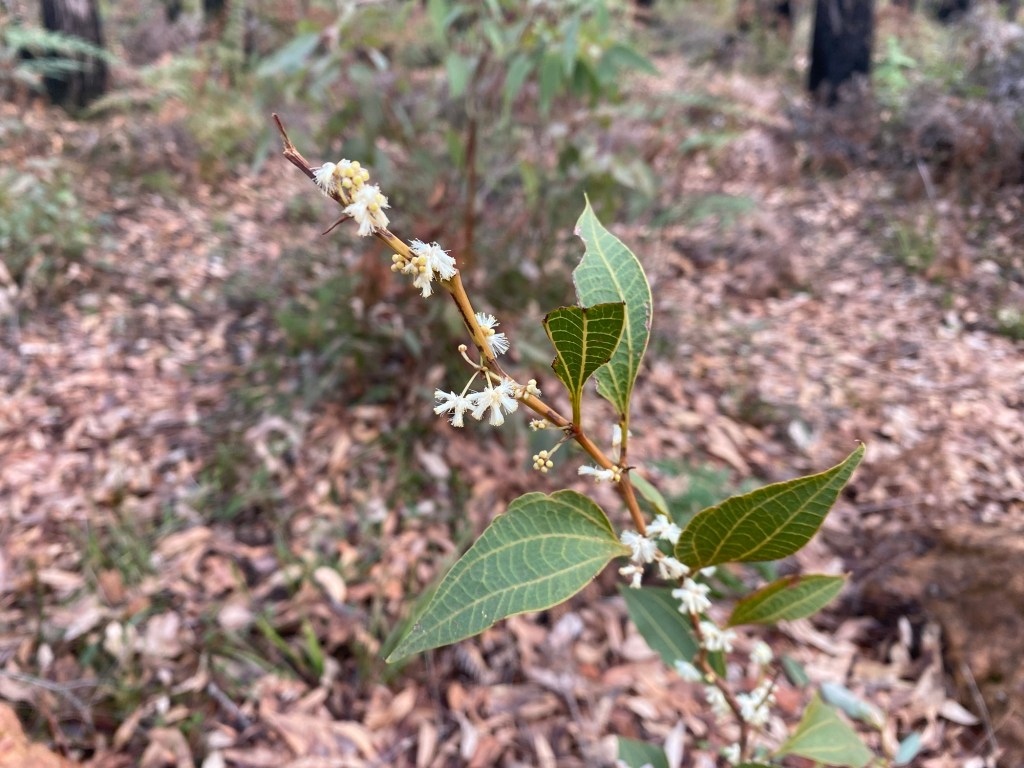
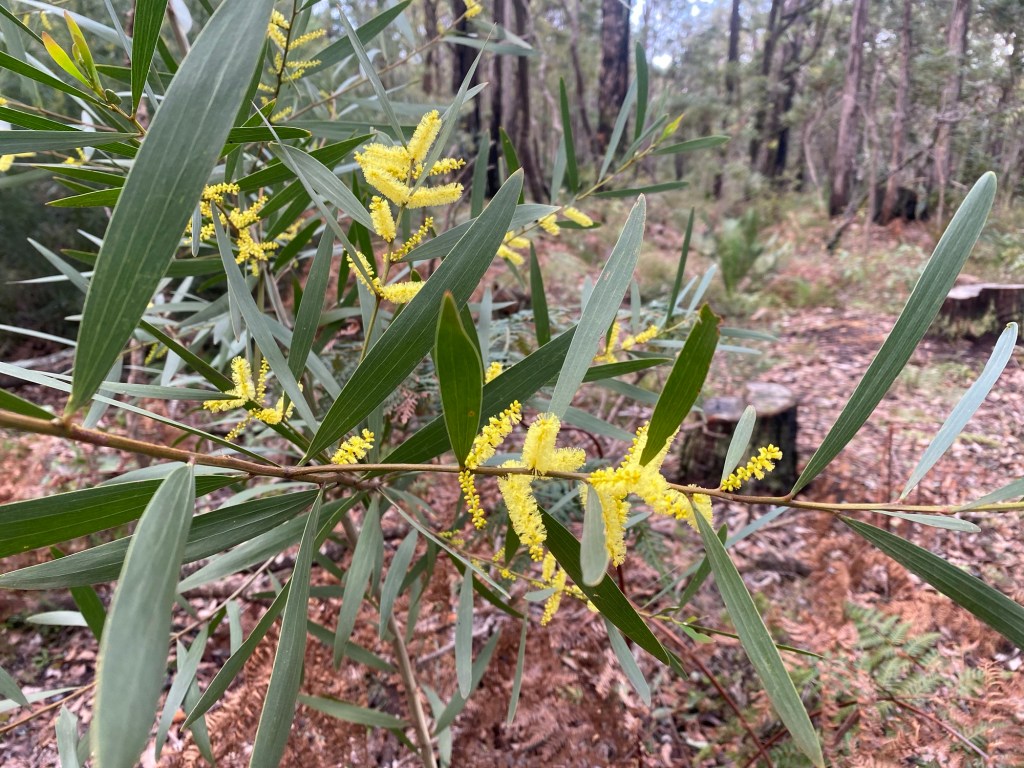
We have turned up a little early in the season. WA is renowned for the display of wildflowers in the spring especially after a wet winter. We are in the wet bit but not the Spring bit. It’s been raining here for the past week and there is more rain coming.
A wattleA white flowerAnother wattle
Today we drove through forests and there were hills. What a change but still lots of mining. We have now travelled through bauxite, gold, lithium and nickel country.
We have nearly reached the coast and the Indian Ocean. That will be a new ocean to paddle our feet in.
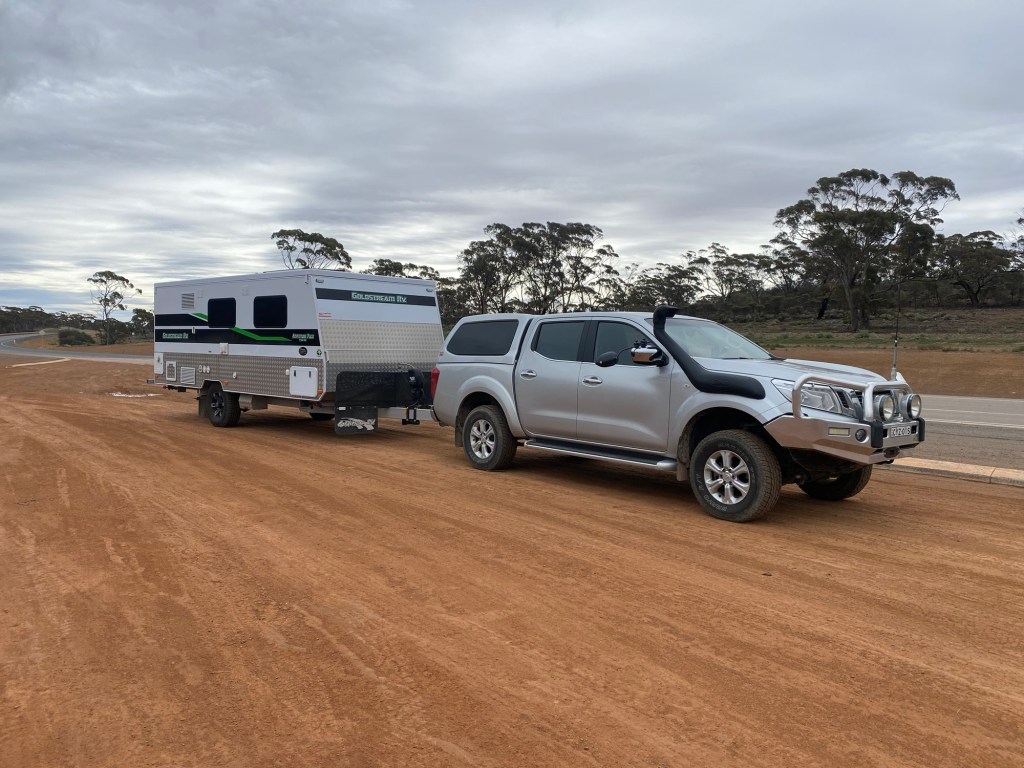
Final comment; it’s obvious who has been travelling the outback recently. Mud caked cars and trucks are everywhere; on the highways, in towns and in the campgrounds. These cars and caravans are completely decorated in thick red mud covering wheels, windows and licence plates. It seems there are two seasons out here, one of mud and the other dust.
It’s been 10 years since I started recording my travel ramblings. These stories have been inspired by locations all over Australia along with more exotic places like India, SE Asia, China, South America and Europe. Hopefully interesting destinations will continue to unfold on future travels.
Our Mode of TravelNorseman
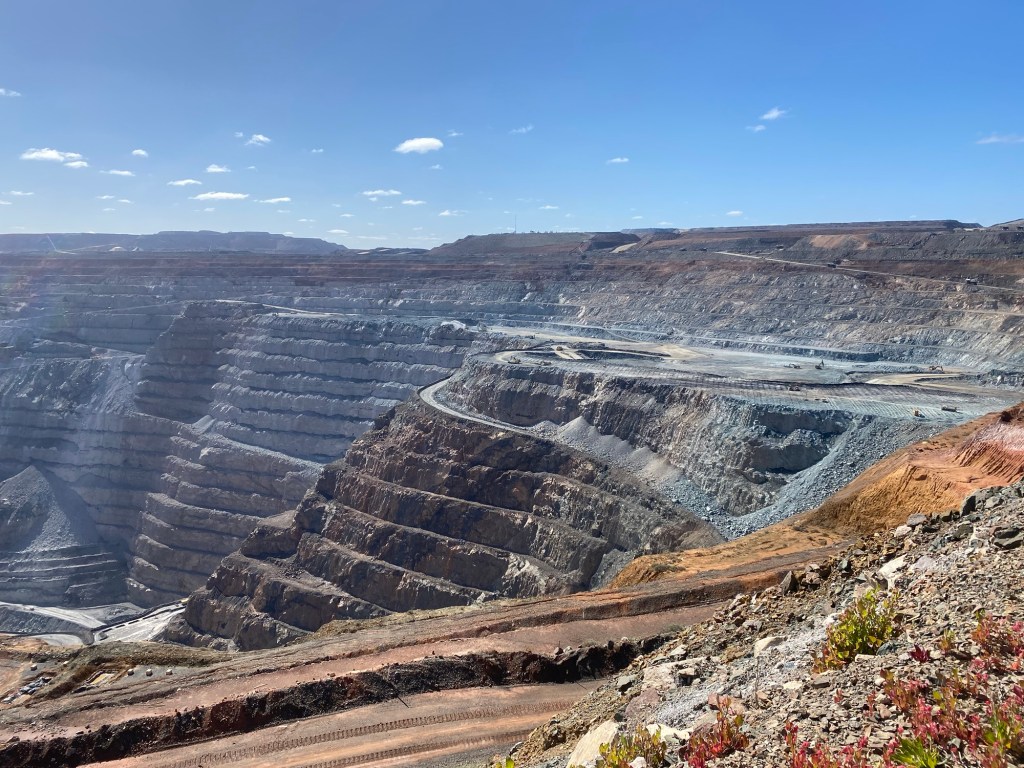
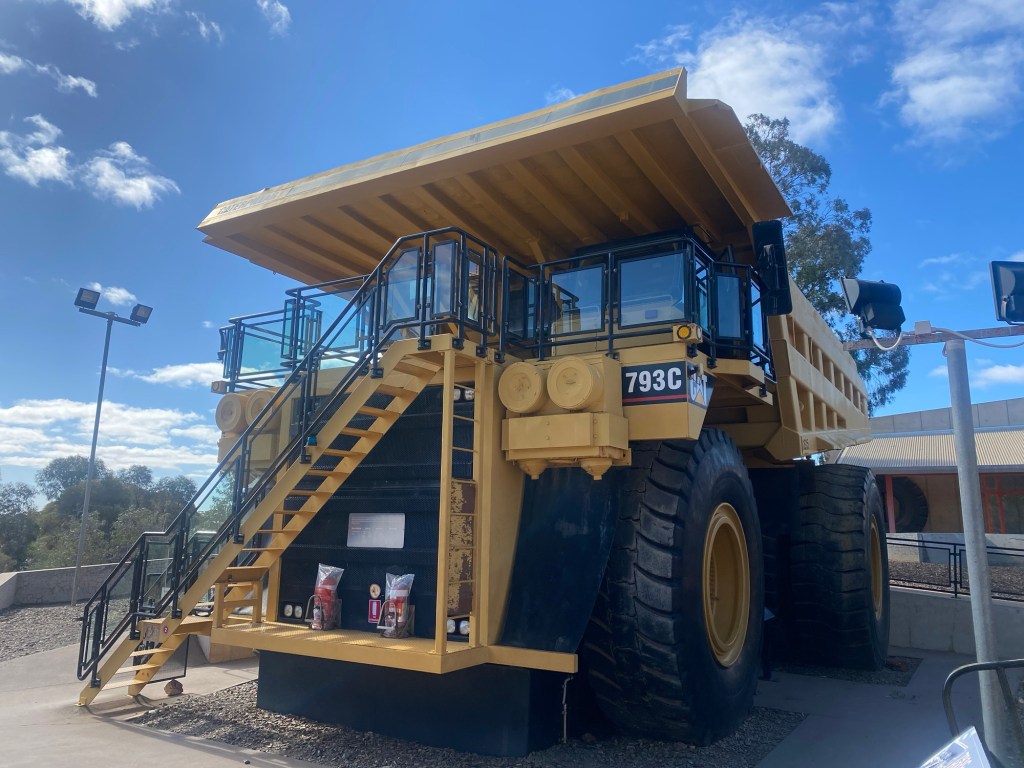
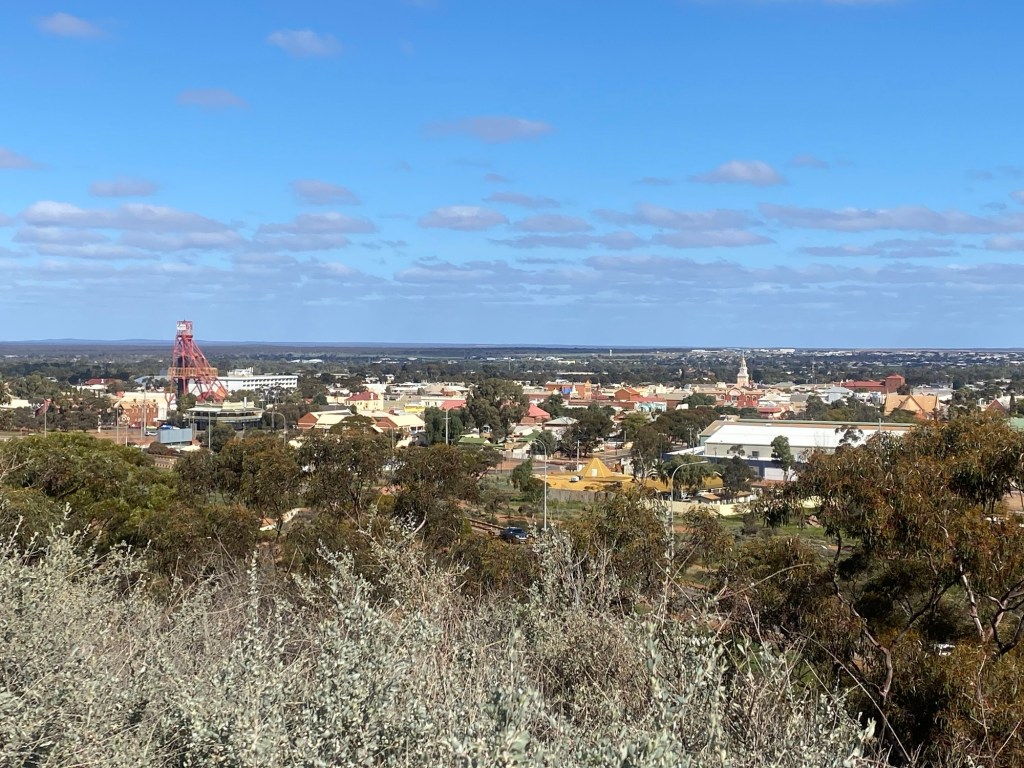
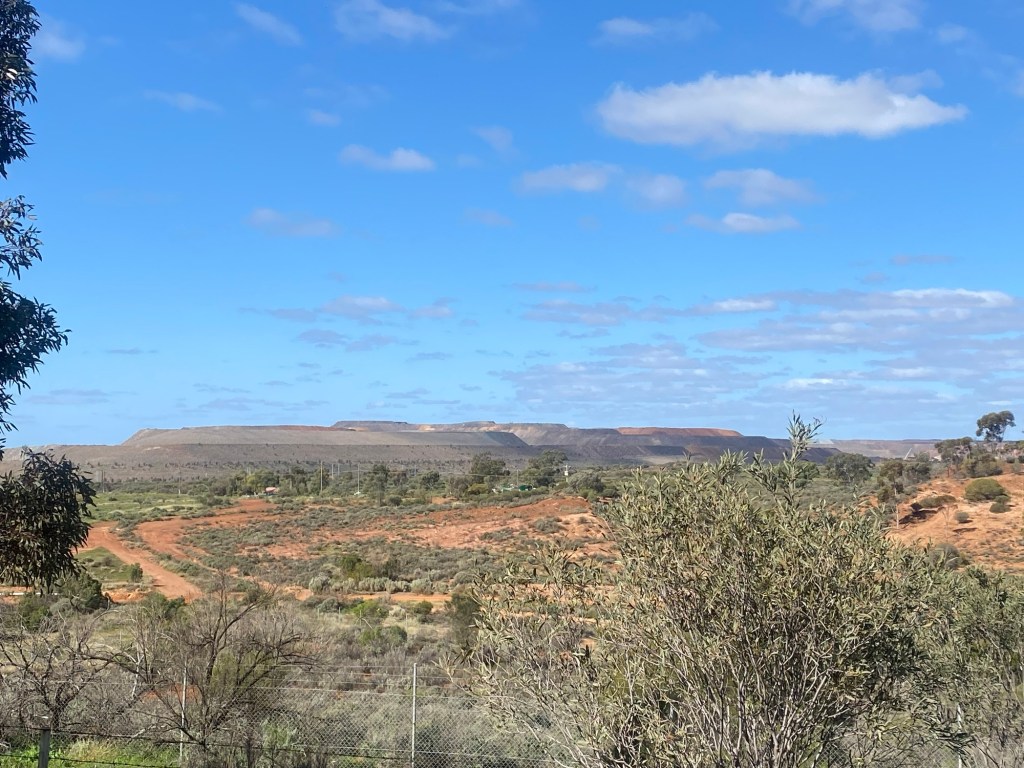
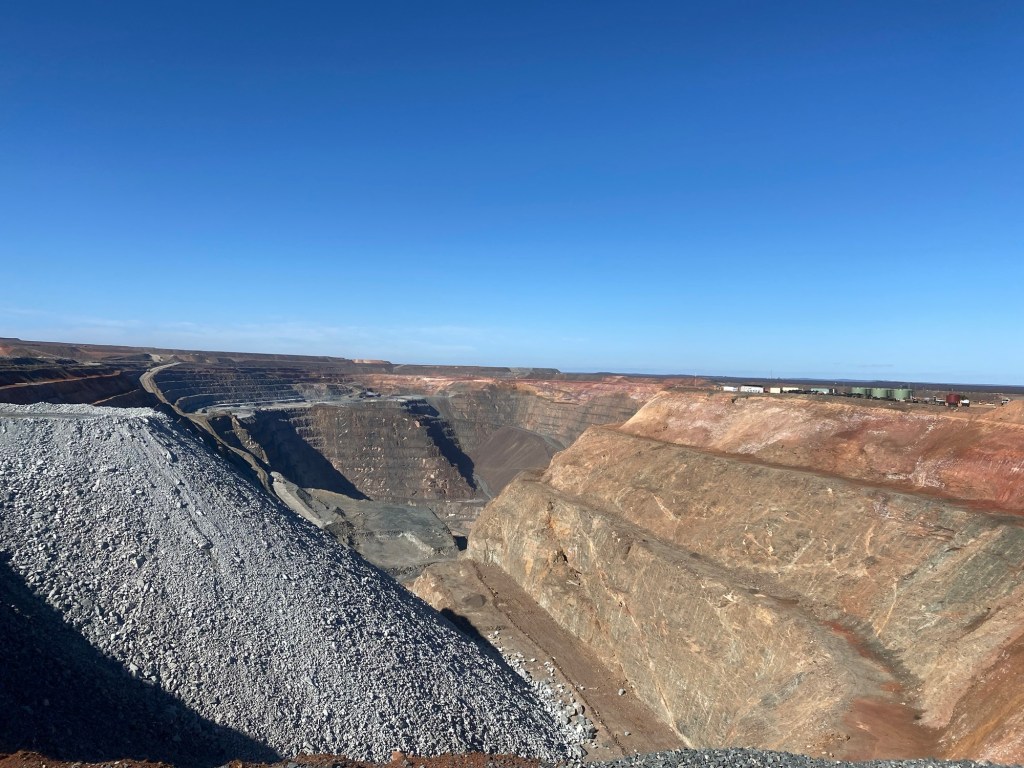
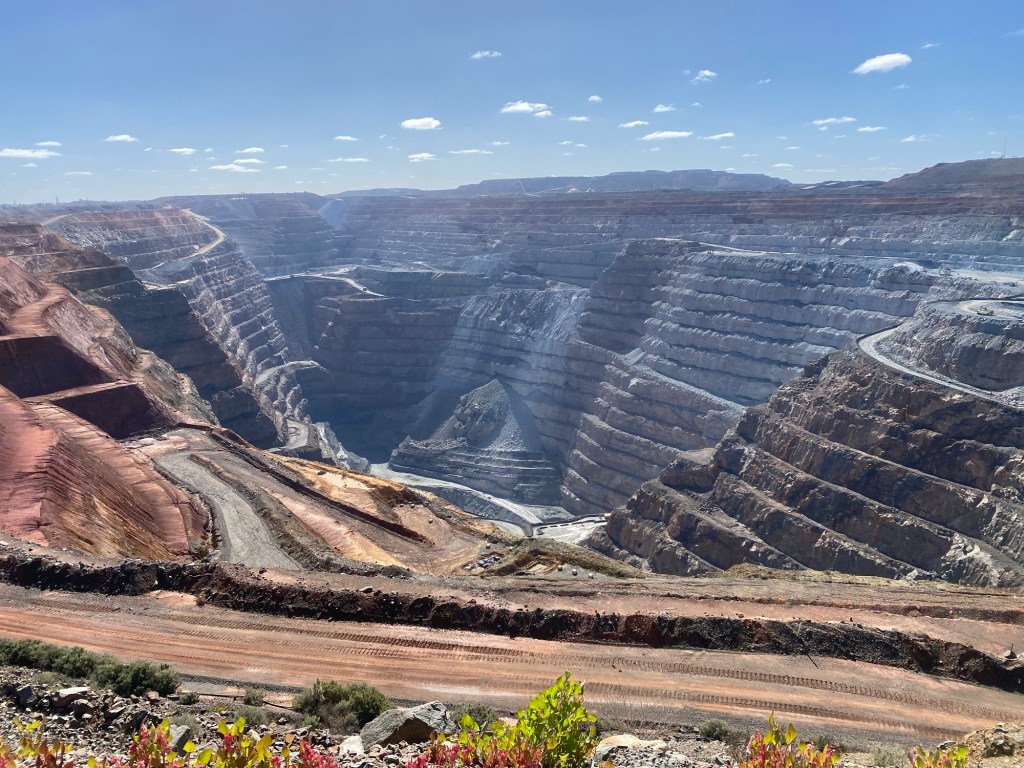
We are now in Kalgoorlie in the West Australian gold fields. Everything here is big, from the size of the hole in the ground, more commonly referred to as the Super Pit, to the size of the trucks hauling the rock out of the hole, through to the amount of gold that is produced from the Super Pit. Even the distances you have to travel to get here are huge.
A Dump TruckAn Excavator Bucket
The huge dump trucks carry a load of about 240 tonnes. That’s the equivalent to 175 4WD utes or light trucks. They use 4500 litres of diesel each day and cost over $1.2 million. The training course to become a driver takes 6 months. The mine has 40 of these trucks in the Super Pit and has just ordered another 40 brand new trucks. It seems there is money to be made in gold.
KalgoorlieNew Mountain Ranges of Waste Rock
What I find most intriguing or maybe it’s just an expression of humankind’s fascination with the yellow stuff is that a large percentage of the gold mined goes back underground, in vaults. That’s after all the effort find it, to dig it up, grind up the rock and to refine it into little blocks. These little bricks are then forever stored away. Gold has little use except for its perceived value or for jewellery. But it sure does keep a lot of people employed from those that build and maintain the trucks through to the geologists, engineers, truck drivers, explosives experts and the list goes on. That’s before we get to those that turn it into jewellery or store it away in banks. Amazing.
The Super Pit
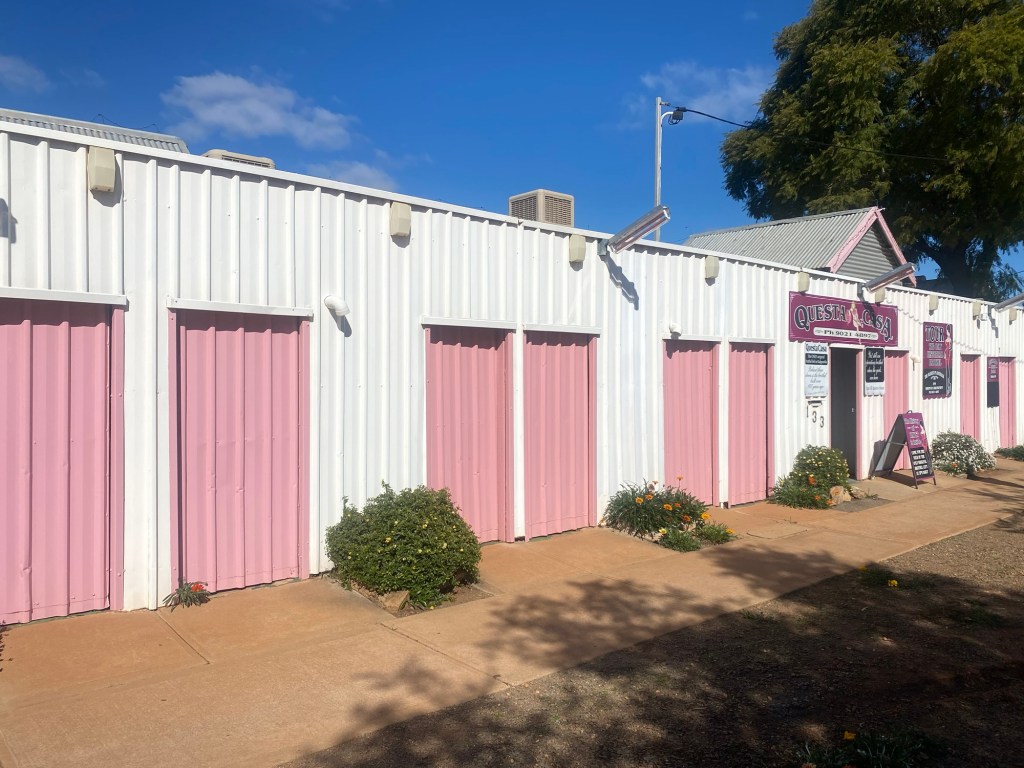
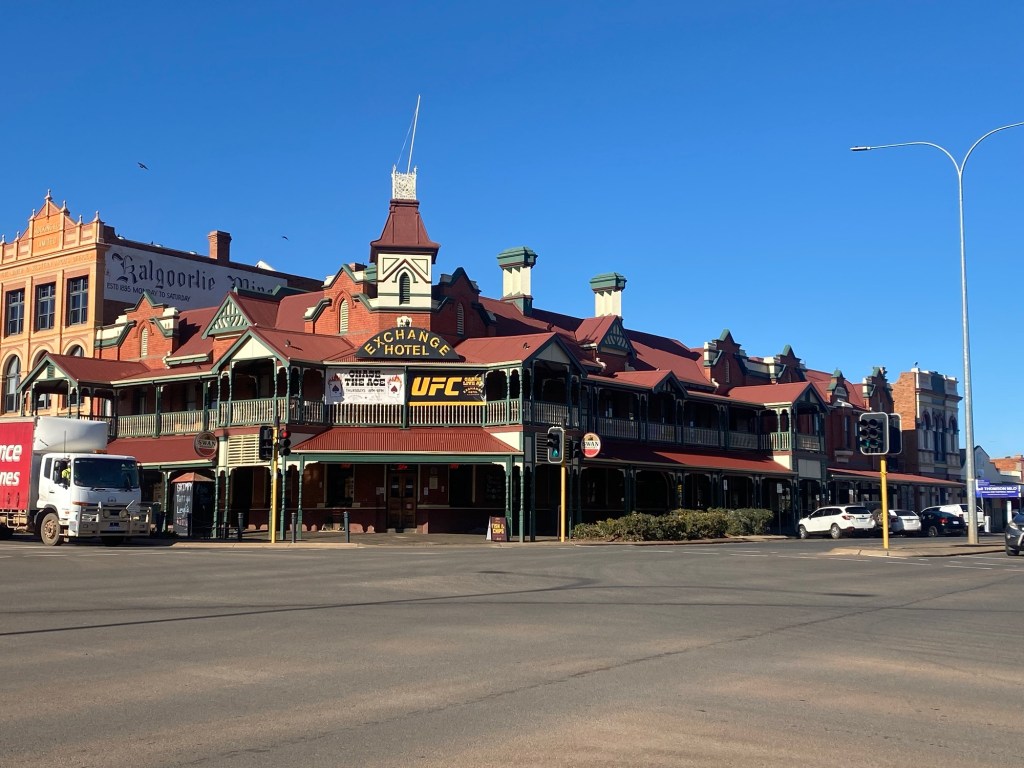
In days gone by the golden mile was mined by a myriad of small companies, via underground mines. This meant a huge population of miners living in Kalgoorlie resulting in a large number of hotels and a street dedicated to brothels. The Super Pit amalgamated all those mines into one massive and highly efficient enterprise. This has meant the end of the brothels and many of the hotels. Kalgoorlie is now a town of families and in contrast to the past, 50% of the mine workforce are women.
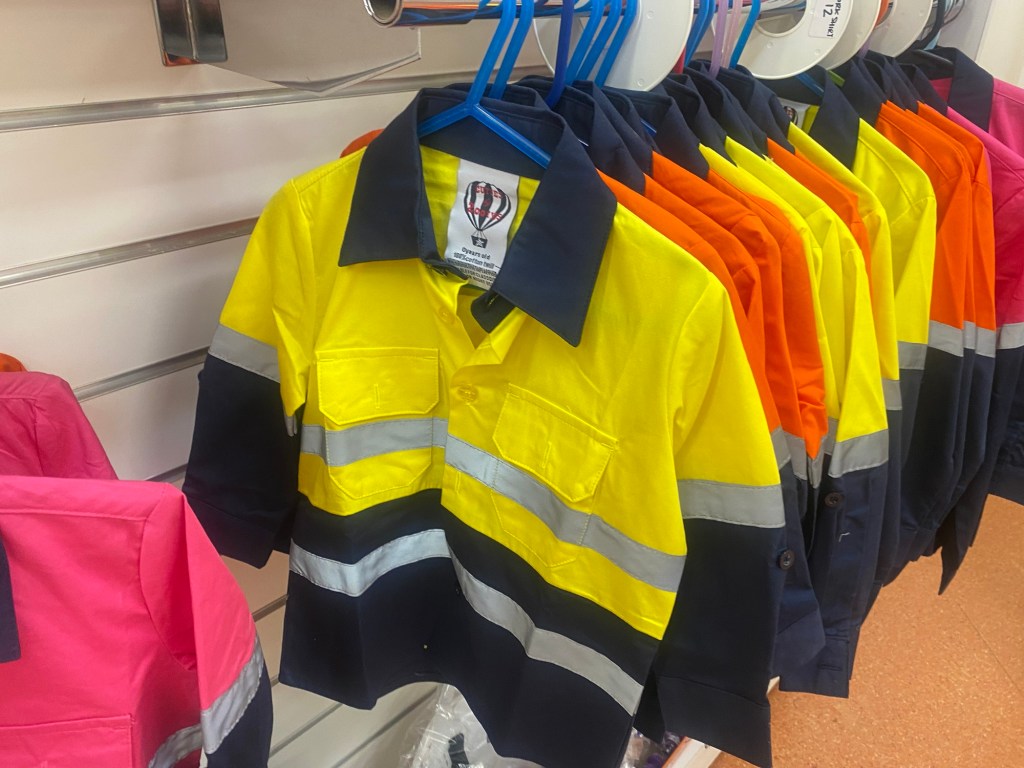
The remaining houses of ill reputeThe Australian PubThe ExchangeHi Vis gear for little kids.
We continue heading west toward the coast and today for the first time in many days we saw green fields.










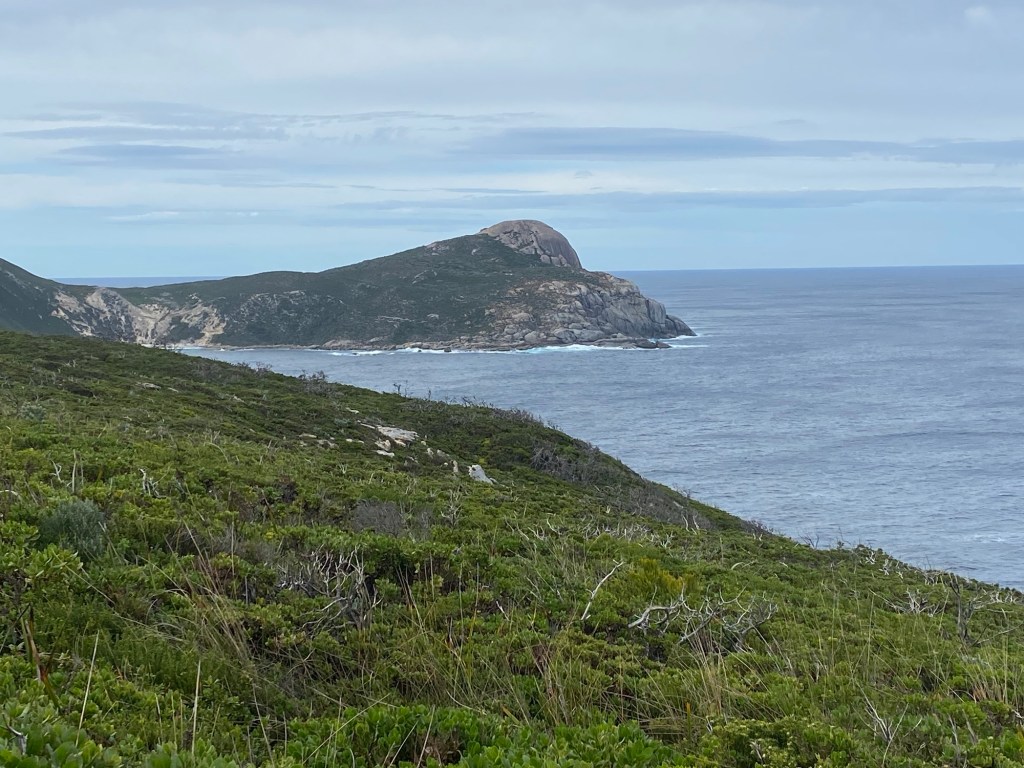

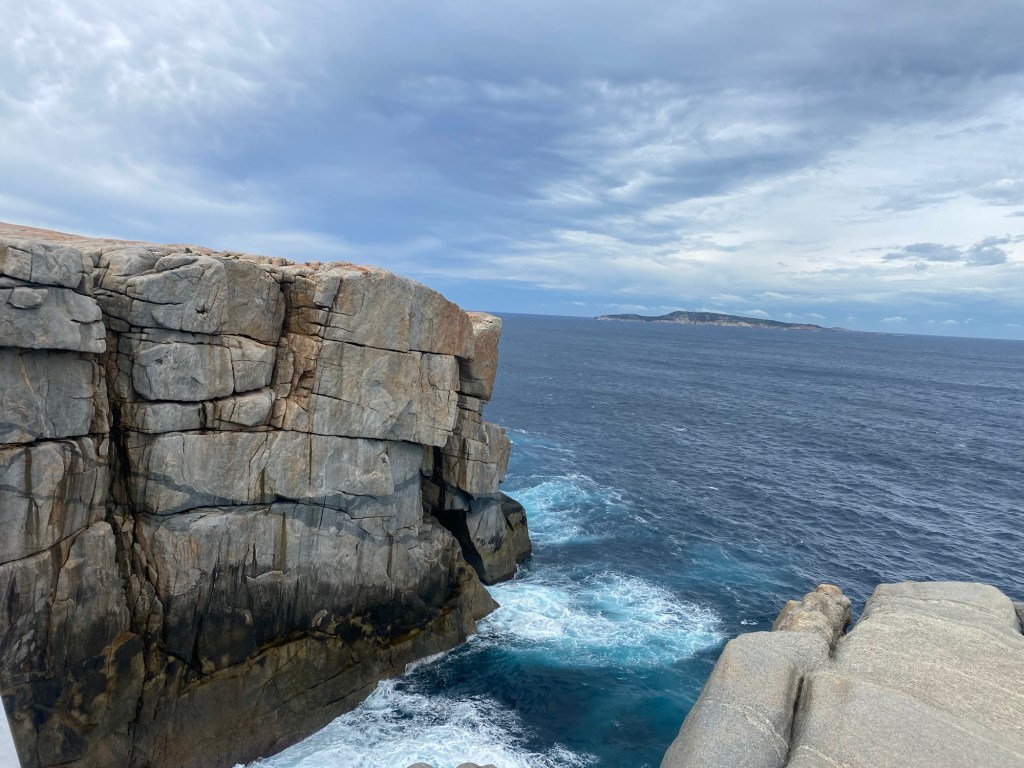
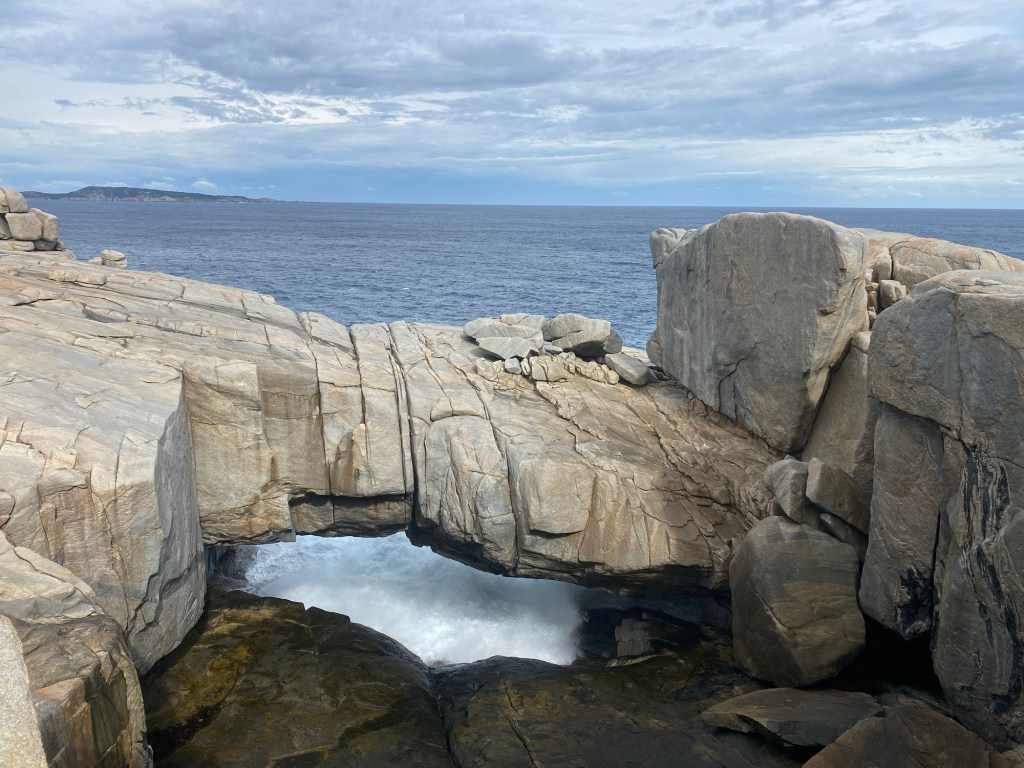
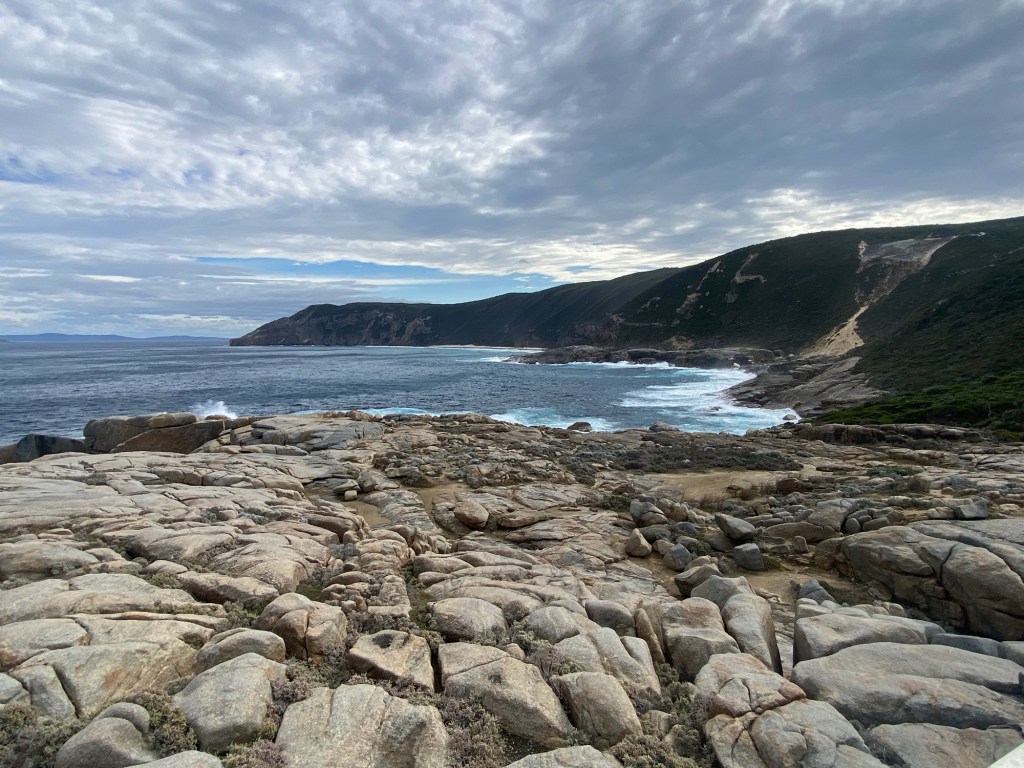













 A Traveller's Tale