Log Eighty – The Daintree and On to Cape York

21 July 2021

This is the tenth Travel Log in this series and it’s the 10th week we have been on the road. We have completed 8725 kms and have now visited the most northerly point of the Australian continent.

During our travels we have also been able to procure our second COVID vaccine shot right on the 12 week mark.

The stories to tell are some many and so varied its impossible to recall them all in these travel logs. Suffice to say that the wide range of characters you meet, from the two homeless guys living in their van or tent and staying in free camps through to the interesting characters managing camp grounds or pubs all add to the richness of this trip. Camping ensures you are never isolated from people and their marvellous curiosities. Being mobile means there is always new people to meet every day.

My observations of recent days:

Museum Visits

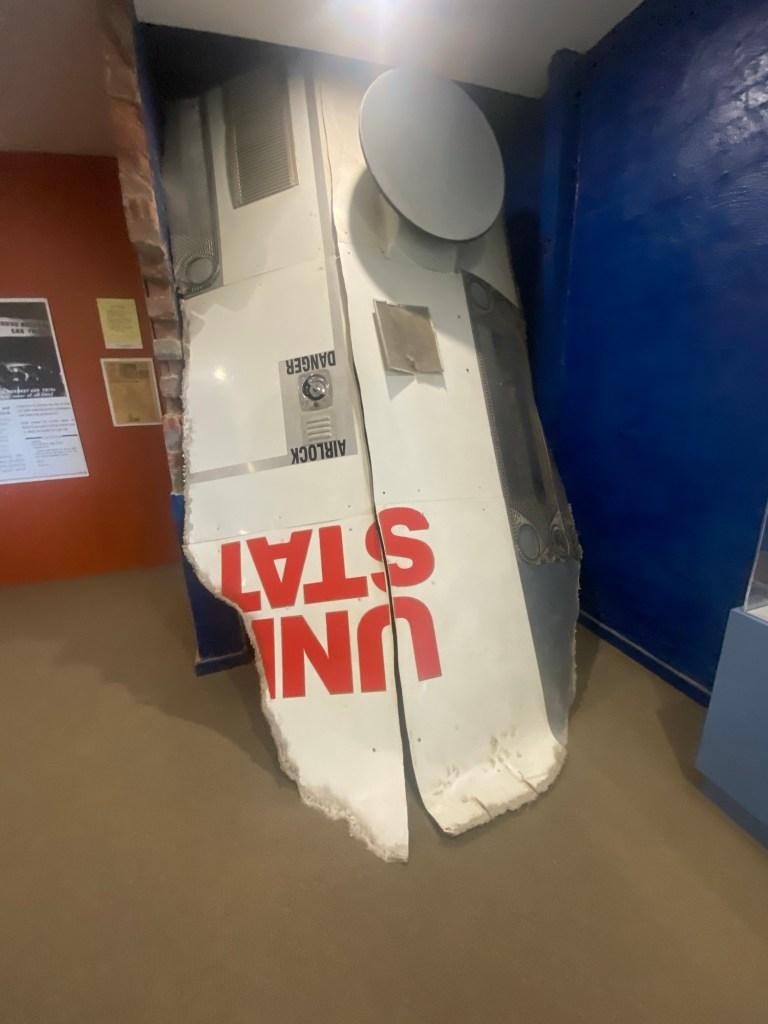
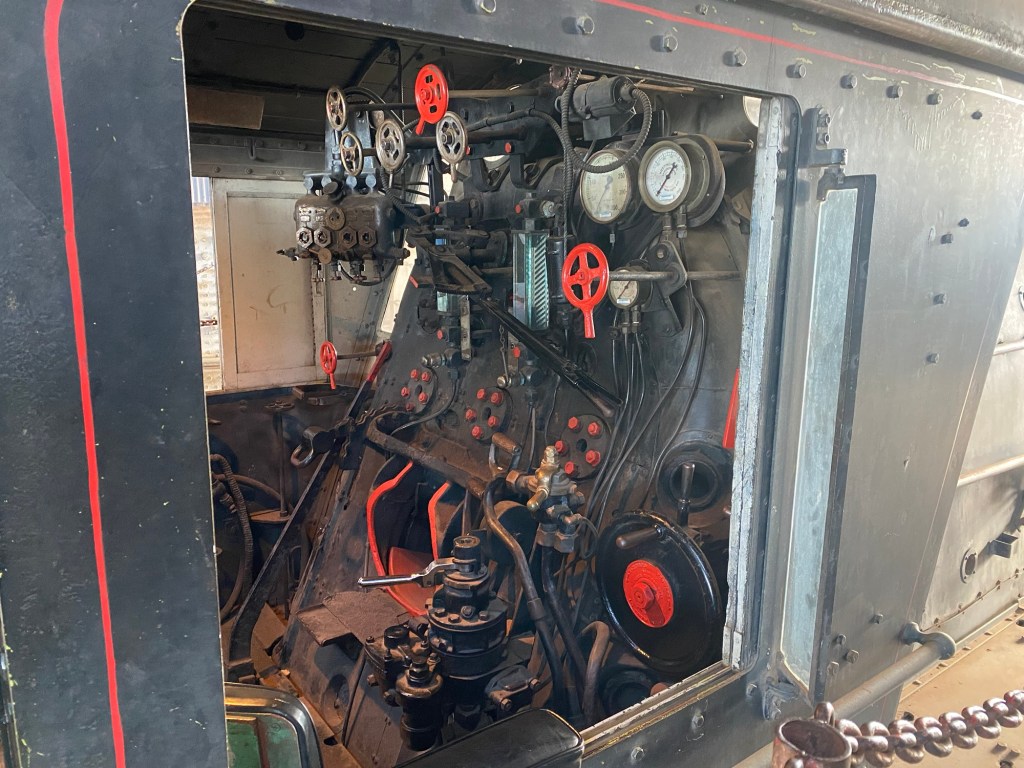
It’s confronting when you are able to explain to a father and son how something in a museum works. You’re old enough to have seen what is on display actually operate and be part of normal life.

Captain Cook

Two hundred and fifty years ago Capt Cook ran into the Great Barrier Reef and put a couple of holes into the hull of the HMB Endeavour. Today he would probably be fined for environmental damage to the reef but in 1770 he saved his ship and crew and became a hero. His efforts are now celebrated in the town named after him, namely Cooktown. We are a creative bunch when it comes to names like Cooktown.

What is also interesting is to examine paintings of the HMB Endeavour when it was being repaired on the bank of the river of the same name. Here is a vivid record of the river when Cook was repairing his ship and the impact of Aboriginal fire management of the landscape. The landscape of the Endeavour river no longer looks like what it did in 1770.

The Daintree Rainforest

This rainforest is reported to be the oldest rainforest in the world, older than the Amazon or the rainforests of Africa. It is recorded as being 180 million years old. This is a little incongruent when you realise it’s on the driest continent on earth, apart from Antartica. It’s also pretty amazing when you realise that this forest was around when dinosaurs roamed the world. Looking at the forest now I would not be surprised if there was the odd dinosaur still roaming that wilderness. Of course there are relatives of the dinosaurs living in the Daintree, namely crocodiles and there are plenty in the rivers, estuaries and coastline of the Daintree.

I met a character who had an altercation with a cassowary which chased him around his car trying to get the man’s food. He expressed the view that on observing the cassowary’s sharp claws he was sure it was a direct descendant of velociraptors. Cassowaries are described as dangerous birds capable of killing which just adds to list of Australian critters that want to do you harm.

French Patisserie

In Cooktown there is a French patisserie of exceptional repute. Unfortunately our movements never aligned with their opening hours however we did get to enjoy their amazing French pastries and cakes. People come from miles away and in fact even from overseas to visit this hidden gem. The locals love it and it seems the owners have no interest in working longer hours just to satisfy the fickle demands of the tourist.

I direct your attention to the names of the medical professionals who provide counsel to these bakers.

Pubs in Obscure Places

Today most of our mining companies rely on a FIFO workforce. For those readers who don’t hail from Australia that’s an acronym for fly in fly out. Fortunately back in the 19th and early 20th century we didn’t have aeroplanes and no FIFO workforce at our mines. This meant that towns were built and people lived where they worked, not thousand of kilometres away from their workplace.

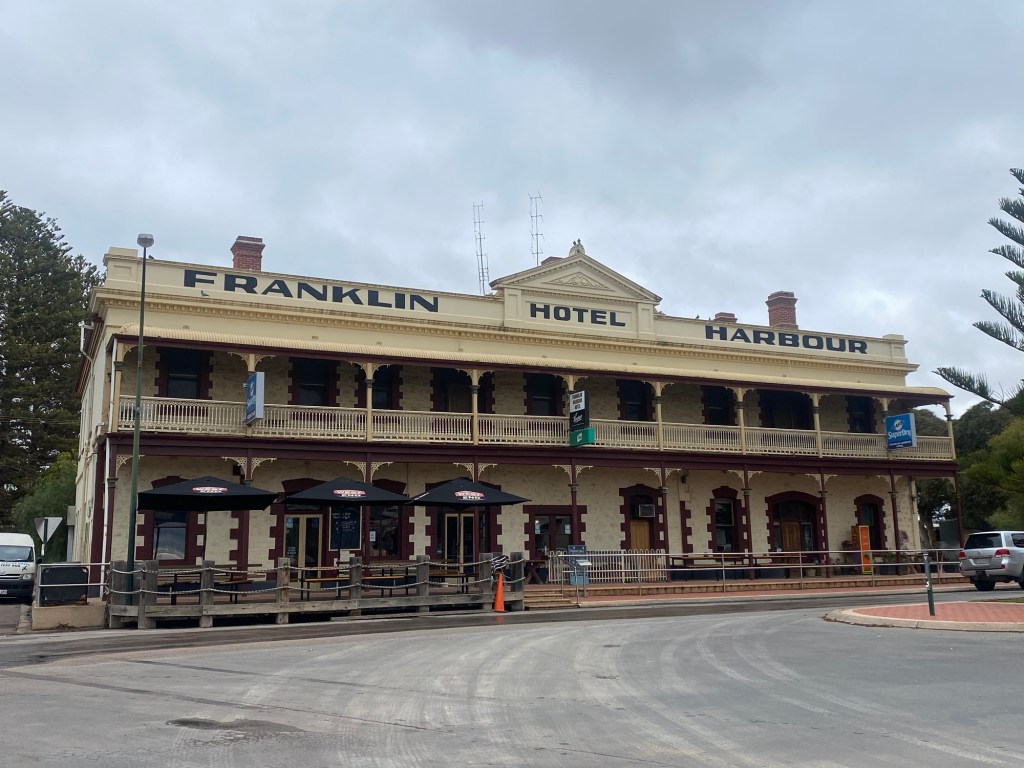
With a large workforce these mining towns required many pubs to service the thirst of the miners. Some of these pubs remain and are now enjoyed by travellers in some very remote locations where now a mere remnant of what was past populations once resided.

The Coastal Mountain Range

Out west in what is best described as the outback we have observed a critical lack of staff across many other industries. It seems the mines and the salaries they offer are like a vacuum sucking up all the available talent.

The situation changes when you cross the Great Dividing Range. Suddenly critical staff shortages are not apparent. There are cooks at the restaurants, two receptionists staffing the counter at the camp grounds, bar staff aplenty and gardeners maintaining the landscapes. I am thinking that not only does the mountain range that runs the length of the Australian east coast acts as a barrier to rainfall it is also a barrier for people to go west. It is clear we Australians really do love the coast, sandy beaches, surf and fishing.
Cape York

The northern most point of Australia, the Tip, is for many Australians our version of Everest. It’s a place you have to go to once in your life.
Few people live there and its largely a wilderness.

So to get to the tip you have three options. You could go by the barge which is a six day return trip from Cairns. You could drive to the Tip which will take about two weeks for the return trip. You will be driving on seriously corrugated roads and you will be sleeping rough. As an aside there is a large wreckers yard at the top of the peninsula full of cars that didn’t make the return trip. Finally you could fly to the Tip leaving in the morning and be back for a gin and tonic in the late afternoon.

You can guess which mode of transport we took. The view of the Great Barrier Reef and the wilderness from 780 metres is quite stunning. We were also able to spot the odd 4WD wreck submerged in the water obviously caught in a rising tide.
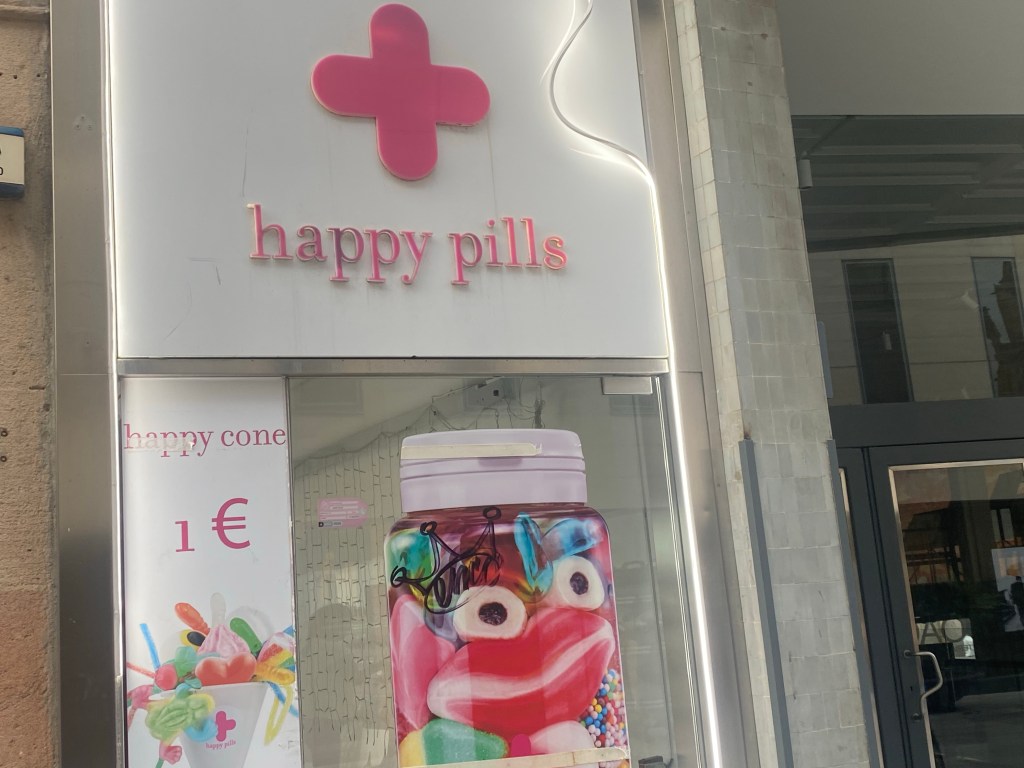
COVID Signs

I’m not sure what they were thinking when they thought we could get a kangaroo or maybe three kolas to stay beside you while strolling through the supermarket.

Log Seventy Nine – Fade to Green

8 July 2021

We have left the dry, flat and open country of western Queensland and have landed on the coast these past few days. The transition is quite confronting, from largely empty country to the hustle and bustle of the east coast tourist city of Cairns.

It’s clear that all those people who might have travelled overseas during winter are now on the road in their newly acquired RV or caravan. No longer cruising down the Danube or the Mediterranean, no tours of South America or the UK. Oh no, now its travel within the Australian landmass. The migration north this year must have some effect of the earth’s tilt. Maybe it will effect global warming?

Up until now we have had no difficultly in finding campsites. That’s all changed. We are now hearing phrases like ‘it’s never been this busy’ and ‘we have never been so full’. This is great for regional economies however it has created lots of vacant job opportunities that foreign backpackers once filled.

We have now been on the road for 9 weeks and have covered over 7,000 kms.

Recent Observations:

Foreign Visitors

There aren’t any.

COVID has meant a complete absence of foreign accents. No French families travelling the outback; no German couples in their rented RV; and no tour groups of Chinese visitors or Chinese families in the camp grounds. No longer do you hear a Belgium accent from the office staff at the camp ground or maybe a UK accent from the young guy pouring a beer at the pub. The baristas are all from here.

Beyond the lack of foreign accents there are no foreign visitors asking for directions or assistance. Everyone is a local and speaks English or at least a variation thereof. This changes the whole travelling experience when you don’t get to explain to an Italian couple that they shouldn’t follow their SatNav down that road, its 4WD only.

Everyone is from here, how boring!

Campground Etiquette

You are packing up your site, ready to move on. A young boy who has been collecting fire wood for his campfire walks past and says hello. You acknowledge his greeting and then notice his gaze.

He is checking out the remains of your campfire and assessing whether you might leave firewood behind on your departure. He is quickly analysing how long it will be before you leave so he knows when to be there as soon as you go. He will be ahead of any of his friends and will score any of your abandoned firewood.

He is not being friendly and polite for the sake of it, he has a plan. You have to smile and appreciate his thinking.

Industrial Archeology

We have visited many old mining and mine processing sites. It is sobering to think of the conditions these people worked in with none of the modern conveniences like air conditioning that we take for granted.

Men and their families walked to the Chillagoe mine pushing wheel barrows with their meagre possessions. Naturally their efforts are now commorated in an annual run from Mareeba to Chillagoe. Relay teams push a wheel barrow in a race of over 140 kilometres. In their day no one thought of fitness or running programs, they were just fit.

Crocodiles

Shooting crocs stopped in the 1970s. That means the crocs of today have been around for at least 40 years and have another 60 to go. The males never stop growing so swimming up here is a sport for the crazy.

We are told Christmas Day is the worse day for croc attacks. No the crocs are not celebrating Christmas. It seems Christmas cheer, alcohol, and hot and humid weather all cause people to want to go for a dip. This alignment of conditions creates the perfect conditions for a croc Christmas lunch.

In winter the crocs are all on the river banks absorbing the sunshine. As soon as the river water warms up they are back into the water and looking for a tasty morsel.

Crocodiles have been around for 200 million years so maybe laying around in the sun with a heart rate of 2-3 beats per minute and not doing much is the smart option.

Tomorrow we head further north to the place where James Cook careened and repaired his ship after running into the Great Barrier Reef. You will surprised to know the town is called Cooktown.

Log Seventy Eight – The March East

25 June 2021

Before I get into my ramblings I just wanted to tell my readers that if you haven’t already done so you can register your interest in this site and receive an email every time I publish a new article. This service is all part of my subscription so please avail yourself of the service. To do so look for the Follow dialogue box at the bottom right of the planetrowe.com screen.

We have now completed more than 6500 kms and have been on the road for 7 weeks.

We have left Normanton and are heading east towards the coast. Our minds are now focussed on avoiding anything that looks like a congregation of people, traffic lights, traffic in general and anything that might hint of civilisation.

Recent Observations

Fellow Travellers and their Rigs

The people on the road represent all sectors of the Australian community. Everybody is out here. There are retired couples, young families doing ‘the lap’ around Australia, single men and single women, groups travelling in convoys and those making their own way. There are those moving on to their next job and those for whom paid employment is a fading memory and something they did so long ago.

There are the planners who know where they will be each night. The wanderers who make it up each day and never know where they will be one day to the next. There are the homesteaders who travel to the same town and campsite every year and then there are those who keep moving, some quickly because time is limited, some slowly because there are no deadlines.

The rigs range from a small tent through to an apartment on wheels. There are people with their pets and people without. There are boats, motor bikes, bicycles. There are off road campers, caravans, and RVs of all sizes. There is the experienced and the not so.

There are those comfortable with driving on dirt and gravel roads and those that ‘don’t do dirt’.

Regardless of their circumstances everyone has a story. A recent conversation was with a retired diesel mechanic who worked in some of the most remote locations this country has to offer. He had worked on mining equipment through to the bulldozer broken down on some distant part of a massive cattle property. Every story is a precious gem in its own right.

Jobs in the Outback

They are everywhere.

Politicians Australia wide claim their focus is on job creation. Having travelled through these outback towns the problem is not jobs. Work offers are everywhere. The problem is the lack of people for these jobs.

In the past Australia got away with relying on the humble international backpacker. These guys were young and cheap. They were willing to work all day and to curl up in the back of their van or join many others in dormitory style accommodation for the night. Funnily enough most Australian workers aren’t satisfied with these conditions and certainly not for the long haul. And now with COVID there are no backpackers cleaning the motels, making those flat whites, serving at the pubs, cooking in the cafes or restaurants or managing the office at the van park.

The jobs on offer have included patrolling large cattle properties ensuring the cattle have water, coffee baristas, cleaners, caravan park managers, cooks, bar staff, bus drivers, tour guides and so it goes on.

One woman I spoke to said it had taken her 5 years to find a house to buy in the town where she was working! In her opinion access to housing was the greatest impediment to getting people out here.

A Haircut

Let me start with the fact that barbers out here are hard to find if not non existent.

So my story begins with a walk back from the Croydon hotel after an afternoon beer. Suddenly I am in a conversation with a barber from Carlton, Victoria. This is one of the trendier parts of Melbourne where barbers could demand top dollar for their services. For me the opportunity for one of these hair professionals to have their way with my locks was too good to refuse.

His fee was $20, no waiting, no reading out of date magazines and importantly no trying to work out who in the shop was ahead of you and who was after you. It was only about me.

There was also a conversation with a somewhat pushy young lady who wanted foils done. I don’t know what that is and ‘my’ barber had no interest in taking on such a project in the late afternoon. The conversation between the two in a shady camp ground, in the afternoon heat was most memorable.

This was one of the best and cheapest trims I have had since an afternoon spent in a barbers in Wellsville, New York, pre COVID.

I would add the haircut was enjoyable after the beer and the purchase of a new shirt in the local supermarket come coffee shop. A perfect afternoon.

Clothes Line Culture

Everybody knows there are two types who use clothes lines; those who leave the pegs on the line and those who remove the pegs. The ‘leave them on’ argue process efficiency, the ‘take them off’ argue aesthetics.

In our travels I have discovered the clothes line culture is far more complex. Of course everyone removes their pegs and takes them back to their camp. However now we have the neat hangers and every piece gets two pegs through to the minimalist who may not even use pegs. Gasp, shock horror.

Now I’m not drawing conclusions about which demographic is represented by which technique however the young, single male might have a preferred methodology for hanging their washing.

It’s all about the complexity of modern Australia.

Onward to the east and the tropical coast of Far North Queensland or FNQ to the locals.

Log Seventy Seven – A Tyre, a Tyre, My Kingdom for a Tyre

21 June 2021

As I sit in Normanton waiting on whether I will get my tyre fixed today or maybe tomorrow or whether it is even in town I reflect on a comment a friend once made about the Northern Territory (NT). His advice was NT stood for Not Today, Not Tomorrow, Next Time. With this advice in mind I have decided that I must relax and adopt FNQ time, that’s Far North Queensland and to go with the flow. As the venerable King Canute was at pains to point out, some forces of nature just cannot be challenged by mere man.

Over the past five days we have visited all the sites Normanton has to offer. Included in our exploration of Normanton was a visit to the rugby games played between six local teams.

The games started at 1.00pm and didn’t finish until after 9.00pm. To describe these teams as local is to rely on the local interpretation of what constitutes ‘local’. One team was from Normanton, another flew in from the Mornington Island, there was one from Doomadgee on the Gulf, a six hour drive and another from further north up the Cape a mere 12 hours away.

It was a great day with lots of cheering from the fans on the side lines. After the games there was a local band performing what from a distance sounded like country music. These teams get together four times a year and when they do it’s a weekend of entertainment.

Breaking News: The tyre has arrived and I should be down to get it fitted in a half hour. Yay.

Some sites of Normanton:

Log Seventy Six – The Migration North Continues…

18 June 2021

It’s been a while since I last wrote. This lapse is largely due to the remoteness of this country and the lack of or very slow internet access. We are however now in Normanton and reconnected with the rest of the world.

Since my last post we have travelled to Mount Isa and then north to Adels Grove and on to the Gulf country of crocodiles, tiger prawns and barramundi.

Mount Isa

It’s a serious jolt when you leave the wide open, empty country with the odd small town of a few hundred people and to suddenly arrive in a place with traffic lights, intersections, people and a choice of shops. Mount Isa is the biggest inland city in Queensland, anything else of any size is on the coast. It’s an underground mine that places this city where it is.

The mine produces lead, silver, zinc and copper. It’s huge. The mine is 2,300 metres deep and the underground roads big enough for huge trucks cover some 1500 kms.

Mount Isa was a great place to resupply before we get into even more remote country so a day was spent shopping and another washing clothes.

The Cashless Society

You pull up to the only fuel point for 100s of kilometres, you need to top up as you have another 200kms to go before you might get fuel. “Sure we have fuel, do you have cash? The internet is down.” It might be called a town but it’s more an intersection than a town. There is a pub and a tin shack that is the coffee shop, there is no ATM here. It’s the pub that sells diesel. A quick search of our wallets and yes we have cash! A salient reminder to always have some of the folding stuff and not to rely on technology out here.

Easter Eggs

I know its mid June but you can still buy Easter Eggs in the supermarket at Normanton. Just thought you needed to know.

Some Signs from Out Here

Wedge Tail Eagles

Can any bird lovers please explain why wedgies always turn to fly in front of the oncoming vehicle. They might be feeding on a road kill kangaroo and facing the side of the road and the bush. When they see the oncoming vehicle they turn and fly across your path. So far we have missed all offending eagles but one just cleared our UHF aerial.

Change and New Owners

Some years ago we visited Adels Grove. It was a very popular camp with a restaurant, large deck area and lots of tours on offer. Since that time the restaurant burned down, the original owners sold the business and now after one other owner the place is falling behind. No longer is it the remote camping resort it once was. Maybe the new owners will save the day, lets hope. The staff certainly want it to succeed.

Sometimes it’s not smart to go back, remember and celebrate what was and don’t let the what is get you down.

Selecting a Camp Site

I have said before reversing a caravan is a spectator sport, not one for the faint hearted. On this trip we have observed a traveller that took camper placement to a whole new level.

It seems the two factors that can impact on the ability of some people to locate their camp are choice and judgement.

You check in and are told you can put your camp anywhere you like; now you have choice! A simple, you’re on site 21 is easy, there is no choice. Now you have to drive around and around to find the best location for your camp. Good enough won’t do, it’s got to be the best site because it’s your choice.

Judgement comes into play if you are travelling with others who you fear will judge you on your choice of site.

You are now in a world of hurt which was amply displayed by our neighbour who spent at least an hour before he settled on the same site he selected at beginning of his quest. He drove around the 5 acres of the Grove four times before he selected a place next to us. I would add the Grove was 70% empty when he started his quest but next to us was where he had to go.

He then proceeded to reverse onto his chosen spot many, many times. On several occasions jack knifing the camper. In frustration he would pull away do another circuit of the campground and start all over again, trying to place his small camper on that same piece of ground. The patience of his partner or wife was truely laudable. Never did she utter a raised voice or a profanity that we might expect from 99% of people in the same situation.

The driver and guide were communicating via UHF radio which might have allowed some people to listen in on their conversation. You have to understand entertainment up here is pretty scarce.

This poor guy was given choice and then his family was going to catch up with them the next day. A disaster waiting to happen. His family of course camped nowhere near him but close to an area filled with a large camping tour group. With such a wide open and empty country why do people need to camp on top of each other!!

In deference to Einstein and based on my observations of this poor man’s effort I have developed the following formula on time taken to settle on a site. Where:

T is the Time taken to settle on a site

C represents Choice which is based on the size of the camp ground and the number of sites available

J represents Judgment and the likelihood you will be judged by others who have some influence over you.

My Formula:

T = CJ2

And so we can see if you have no choice and C=0 or there is no judgement and J=0 then you will have your camper settled in no time at all.

Maintenance and Life on the Road

The road out of Adels Grove carries road trains and campers of various assortments. The road is about 80km of dirt and gravel some of which was very good and some was deeply pitted with sharp potholes excavated by Roadtrains. That’s the background to my next story.

I heard a subtle change in the road noise from my tyres. I stopped and checked. All ok, car and van tyres looking good. I continued another 200 metres and then it happened, the rapid expulsion of air from a tyre, I had a puncture.

I pulled off the road on to a flattish spot knowing a jack was about to be deployed. After some frustration and the use of the torch on my iPhone I was able to get the spare on the ground. The wheel nuts on the stuffed tyre were loosened.

Suddenly ‘Phil’ pulls up and offers assistance. Something about having problems in this country, everyone stops to offer assistance. Phil got straight out of his ute and came over to assist. Four hands and two heads made all the difference.

In no time the broken tyre was removed and spare fitted. Yes, the tyre pressure in the spare was checked. The stuffed tyre has a large split across the tread. There are no pictures as I was not in a place where I thought, oh let’s get some photos. Fortunately the stuffed tyre was on the shady side of the car.

Spare fitted and stuffed tyre mounted where spare goes. A rudimentary wash and we were back on the road. After expressing our profound thanks Phil headed off towards Adels Grove, our paths never to cross again.

The question now was where do we get a new tyre. We stopped at Murrays, the best coffee in Gregory Downs and started with the phone calls to tyre retailers within 200 kms. The choice was drive back from where we had come and wait two days or drive on and wait until next Monday. We decided to drive on. We also decided it would be smart to avoid dirt roads until we have a spare. So here we are in Normanton waiting for Monday. We do have another spare tyre on the van but I don’t want to push my luck.

I dropped by the Normanton tyre place just to make sure the tyre was on order. Without prompting the tyre guy anointed me with my nick name from High school days, oh the memories. This is the fun of travel to remote places. He tells me to drop by at 9.00am on Monday and that the tyre should be on the truck from Cairns on Sunday night. Here’s hoping it turns up on Monday, regardless, up here you just go with the flow. Om…..

Now to explore the sites and pubs of Normanton.

The road to Normanton

Log Seventy Five – The Queensland Walkabout Continues …

8 June 2021

We have left Winton and its agricultural show that included pet dogs dressed up as fairies running through tunnels and jumping hurdles. I can only wonder what the working dogs that were being judged on Sunday thought of their contemporaries dressed up with wings. Maybe those hard working dogs that manage flocks of sheep and help with mustering cattle don’t recognise the pet dogs with wings as fair dinkum dogs. Could it be like country folk relating to latte sipping office workers from the cities.

We headed across the empty plains to Hughenden again with more dinosaurs on offer. After a good wet season season the Mitchell grass looks to be at its best. In Hughenden I learned that if they get a small amount of rain it will critically spoil the grass. If it’s going to rain they need 20 mls at least to ensure the grass responds as grass should. I was advised by the local that no rain is the best thing for the country at the moment. The things you learn.

On our way to Hughenden we passed through a spot on the map called Corfield. Although Corfield is really no more than 2 two houses it does host the Corfield races every year and yes there is a Corfield Cup. This is not be confused with the $5 million Caulfield Cup that is run in Melbourne every October.

Excitement on the Road

Running parallel to the highway is a well used railway line. Unlike some of the old lines in the area that no longer operate this line carries huge train loads of lead and silver ore to the port of Townsville. It turns out the biggest underground lead and silver mine in the world is just down the road. This country is not so empty after all, it’s just underground.

As we drove along we were entertained by the railway technology removing old sleepers and forcing the new sleepers under the rails. Trust me this is exciting stuff in this largely empty country.

Food in the Outback

You may not always find the food brands you might enjoy at home, nor might the range of choice mirror what you expect at home. You can however always find what you need, maybe not what you want.

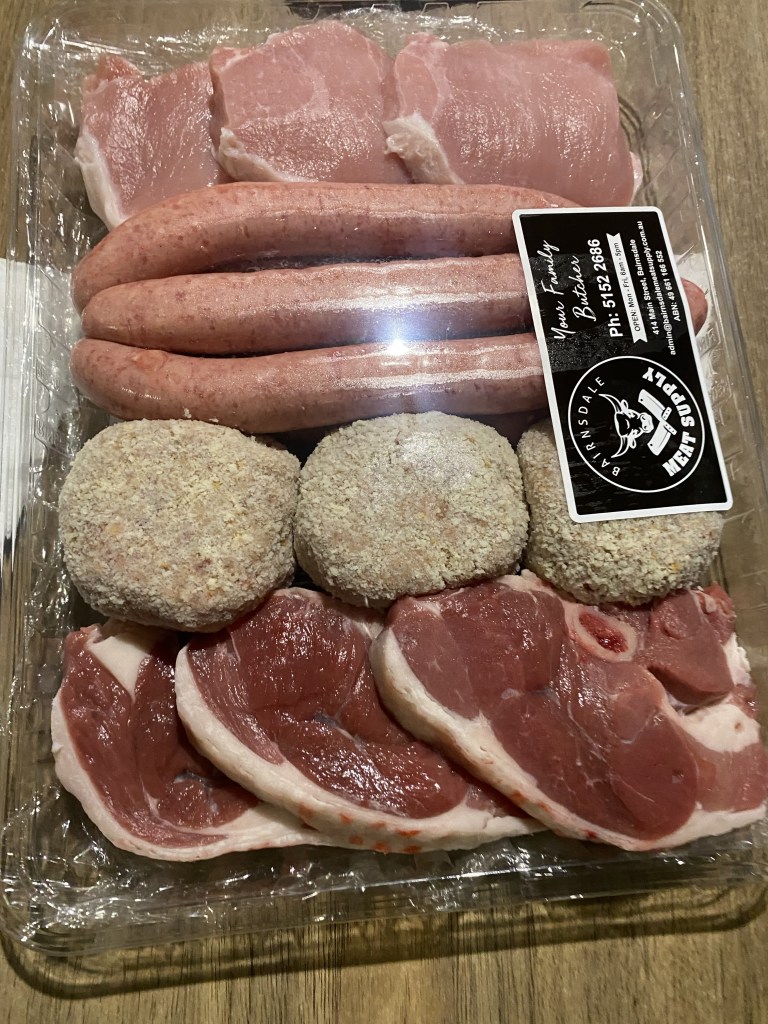
You can be assured however that if you are carnivore your needs will be well met. It seems the further north you go the better the meat. I am regularly informed that the steaks come from a local property and that maybe the bacon is cured by a business just down the road. It’s all very local and it’s all very good.

More on the Rhythms of Life

We have discovered that up here in the warmer parts the cattle stay put during the day. This is probably a behaviour that is about avoiding the heat of the day. During daylight hours cattle can be found laying down in large numbers, ruminating and just chilling out around water holes and dams.

However, come sundown they are up and on the move. Now they don’t move fast like kangaroos but they move in large numbers and unlike kangaroos they might just stay in the middle of the road and stare you down. In the context of no fences a drive at sunset and beyond is not a time to relax.

In contrast to the movement of cattle, the people travelling with their vans and RVs commonly referred to as grey nomads (we are not them) tend to settle down for the evening when the sun sets and get back on the move with sunrise.

Like the cattle, the touring population heads out to all points of the compass. Their primary driving force is to be settled into the next camping spot by early afternoon in time for happy hour and to avoid those roaming cattle.

And so the rhythm of the grey nomads (not us) and the cattle represent the yin and yang of the touring season in outback Australia; cattle at night, caravans during the day.

On to Longreach …

Log Seventy Four – Dinosaurs and Local Agricultural Shows

5 June 2021

We have reached the tropics and have set down in the town of Winton for a few days. It’s always nice to get off the road for a couple of days so you get a chance to explore the local town and what it has to offer. In Winton its dinosaurs and the annual Show.

Dinosaurs

We have discovered that 95 million years ago the place was crawling with huge beasties that were either herbivores or carnivores. The herbivores were enormous and the carnivores were also of a size that would have been terrifying if caught in your headlights on a dark night.

The fossilised bones and trackways left by these giant lizards is something to behold. What’s more the local graziers are kicking up more bones every year. The dinosaur museum has a 40 year backlog for conserving and preparing the bones currently dug up. And still they come!

The scientists tell us that until the mid 1970’s Australia was never thought of as a place to find dinosaurs. This perception has been clearly corrected in recent years. Of course we all know if the scientists had asked any 5 year old they would have told you of course there were dinosaurs in Australia.

The Winton Show

It seems every country town has its own agricultural show. It’s a place for local farmers to have their cattle and sheep judged not to mention chickens and other farm animals. It’s also a place for the local kids to have their cake baking skills judged and displayed. There was also the obligatory reptile show with all sorts of venomous snakes and the petting zoo with baby farm animals for the little kids.

We enjoyed watching the cattle judging and the sheep shearing demonstration. Did you know a shearer earns about $3.25 per sheep and depending on the type of sheep they might shear 200 in a day. My haircuts cost about $30 but I don’t relish the idea of being thrown down between the legs of a shearer and twisted around as I am stripped of my hair even if was to cost less than a cup of coffee.

In Thargomindah a new world record was achieved when a sheep was shorn in less that 30 seconds. I am guessing that’s a speed that could not be maintained all day.

Did you also know that in Italy they shear the sheep in the paddocks, in the open. In the USA they shear straight through an 8 hour day without stops. In Australia they shear in a shearing shed in four, two hour blocks. This is the stuff you learn at the Winton Show.

We didn’t buy any show bags but we did get free handouts from the Queensland Ambulance Service and the Winton Community Support group. I now get excited about a free thumb drive, a flash light and hand sanitiser. Comics, chocolates, liquorice and samples of Heinz products no longer catch my attention.

And so the journey continues…..

Log Seventy Three – The Mitchell Grass Plains and the Art of the Soft Sell

3 June 2021

It seems every little town out here has developed a hook to try to catch the travelling public. The reward might be campers staying at local campsites and spending a few dollars along the way or maybe just a coffee and fuel stop in town. I thought I would report on a few of the more creative ‘hooks’ we have enjoyed.

Cunnamulla

This town boasts a bronze statue of the Cunnamulla Fella who is a character in a Slim Dusty song. No, I didn’t know that either until I arrived in Cunnamulla.

Cunnamulla Fella

Augathella

This town deserves an award for creative effort. All through the town there are references to the 1950’s Australian movie Smiley. So I asked, was the movie filmed here, no was the reply. Oh, so some of the cast came from Augathella, no not even the extras. The movie was written in Augathella, no. So what was the connection? The response was the character Smiley was roughly based on a boy who once lived in Augathella! The wry grin from the local summed it up.

Thargomindah

This town has the oldest, working hydro electricity plant in Queensland, maybe Australia and maybe the world. This is pretty amazing considering it is installed on a flat, featureless, dry plain. The water driving the plant is coming up from an artesian bore under high pressure.

Muttaburrasaurus

Barcaldine

This town is where the beginnings of the Australian Labor party can be traced. The first meeting of striking shearers was under a tree in the main street. The tree that was poisoned some years ago has been immortalised as a sculpture outside the train station.

Tree of Life

Eromanga and Muttaburra

Dinosaurs are everywhere out here and many towns have their own museum or interpretation centre just for ‘their’ dinosaur. Muttaburra even had their dinosaur named after the town, it’s the Muttaburrasaurus!

Aramac

Aramac sports one fuel station, a library, a shop and not much more. You can’t get a coffee in Aramac. It is however the location of the great Harry Redford theft of some 600 head of cattle which were driven from around these parts all the way to Adelaide. Amongst the herd was one imported white bull. Harry got away with the deed.

Harry’s efforts are celebrated throughout Aramac with small white bull statues with names like Shopabull at the shop, Bowlabull at the lawn bowls club, Transpostabull at the trucking sheds and of course Postabull at the Post Office.

Lake Dunn

This is maybe the piece de resistance for soft sell in terms of effort, numbers and geographic spread.

Aramac Ski Club

A local artist has created a sculpture trail that is about 200 km long with some 40 sculptures all made from scrap metal. The sculptures included Wally from Where’s Wally fame along with lots of Australian animals and characters. The trail included about 100 kms of dirt road which added to the whole experience.

Current Maintenance Status

A new deep cycle battery has been purchased and installed. A new, operational battery is a wonderful thing.

The stone guard is with Shorty the local welder for some minor repair. Shorty is the only TIG welder in town and the job should be done by Friday.

Log Seventy Two – Queensland Walkabout and Beyond the Black Stump

27 May 2021

As our travels continue and we settle into the slower pace of life it becomes apparent that there is a rhythm to daily life on the road.

The Rhythm of Life

Packing up camp has become an almost automatic process. Little is said as we work inside and outside the van putting things away, winding things up, folding things, sweeping things and finally hitching to the car. The more times its done the quicker we are.

At the other end of the day comes the unhitching, rolling out, setting up and turning on. This process is followed by the official opening of the beverage.

I have left out the reversing on to your site. This is a fraught process and is best enjoyed as a spectator sport.

Conversations with fellow travellers also follow a rhythm. There are standard questions that must be asked; where are you from; where are you headed; what’s the roads like out there. Answers to these questions then open up a plethora of questions like where did you get fuel; are there many vans down that way; you’re going home why. The more current conversations involve comments that we have had our COVID vaccination and are planning on where we can get our second shot.

Arriving in town also follows a pattern. There is the glance at the SatNav to see how far you have to go that day and then a check on your range. Then it’s the question; do I need fuel or will I make it to the next town; is there a baker and a coffee shop in town; is it time for a coffee. As you might appreciate this is the tough part of the day.

SatNav in the Distant Parts

We have achieved the situation where the SatNav system knows where we are and recognises our destination. It just can’t find the road that joins the two points. I would add we are driving on a perfectly formed, sealed road. It’s gratifying to know the AI doesn’t know everything.

Your friendly message at least once a day is ‘turn around when safe’ and ‘route recalculation’. These messages induce a response by me as I talk to the technology in a raised voice explaining it’s wrong and it doesn’t know what it’s talking about. I worry that the technology is listening and will respond at some undisclosed time in an unhelpful way.

The People Out Here

Everyone it seems has a story to tell and the time to tell it. There was the young man who had scored a job in Normanton. He was driving from Melbourne to Normanton a distance of 2800 kms where he was to meet his new employer for a 1.5 hour drive further on to the property. He was doing this trek on his own but with strict instructions from his mother including that he call her every evening.

There was the truck driver who was in command of a three trailer road train with a Kenworth prime mover. He had started in Longreach and was headed to Roma with 300 head of cattle on board. A seven hour trip which for him was a short day.

The retired crop duster pilot had crashed 8 times in his career. He assured me he wasn’t very high up as crop dusters work close to the ground. Regardless, it seems like a risky business. He had landed a plane on a highway when he ran out fuel and had ferried a plane from Victoria to Kununurra which involved refuelling stops on some remote cattle stations.

There are so many more stories out here.

The Artesian Basin

We continue to enjoy soaking in hot baths, spas and pools, some Olympic in size. These experiences are all compliments of the Great Artesian Basin. It’s very relaxing soaking in a steaming hot pool as you chat with fellow travellers or maybe a local.

Other Challenges

Two weeks ago our one set back was our mirror being blown off by a passing road train. That was easily remedied with a sprint back down the road before someone ran over the mirror. This time however it looks like one of my batteries has given up the ghost. There is a Plan B in place and when we arrive in a bigger town a new deep cycle battery will be installed.

Tomorrow we are off to follow a sculpture trail with a destination at Lake Dunn, that’s north of Aramac for those with a map.

Log Seventy One – Back on the Road Again

Friday 21 May 2021

After a hiatus of nearly a year and a half we are back on the road. Unfortunately COVID has meant our plans for travel to exotic overseas locations have been shelved for the foreseeable future. Our only option is for travel around Australia, staying home after the lock downs of 2020 is not an option.

Our plan is to travel through western Queensland, north to the gulf country and back via the Great Barrier Reef coast.

We started with a short 2 hour drive from home. We needed to get back into the swing of travel and camping. After that night the distances have been longer and the roads more empty. The country also became more remote, empty and generally very flat.

Our observations so far:

Where We are Headed

For those with a geographic bent, we have travelled to southern Queensland and west to the Burke and Wills Dig tree. We are now in Charleville before we start our move north. It seems everyone that might have been travelling down the Danube on a 5 star river cruise is now on the road towing a caravan and stopping wherever there is a bakery and coffee.

Our Stowaway

A Stow Away

On opening one of our camp chairs I discovered a stowaway. A micro bat (essentially a mouse with wings) had thought sleeping through winter in our garage in a camp chair would be a good idea. Unfortunately his plans came unstuck about 1,000 kms from home. A quick call to the local vet and we were informed we could let him go, just don’t handle him and don’t get bitten. After all the COVID stories about bats we were never about to pick him up. We just hope he found other batty friends in his new neighbourhood.

Entertainment on the Road

Out here FM radio stations are a non event so it’s AM. The challenge is most of the radio station advertisers are located a good three days drive away. The services and products they offer are just geographically impossible. The TV stations also include ads for companies in Alice Springs. Getting there would require a serious week of remote 4WD travel. The music is western or straight from the 70s and 80s, perfect. Forget connecting to the internet, there is also no mobile coverage, except in the towns.

Remote Country Towns

Your first priority when you arrive in these small towns is the search for fuel. Fuel stations can be identified by the queue of caravans waiting to fill up or alternatively they might be located in some obscure section in the industrial part of town. There always seems to be a fuel station or two without fuel.

Price is irrelevant, competition is unlikely.

The Country

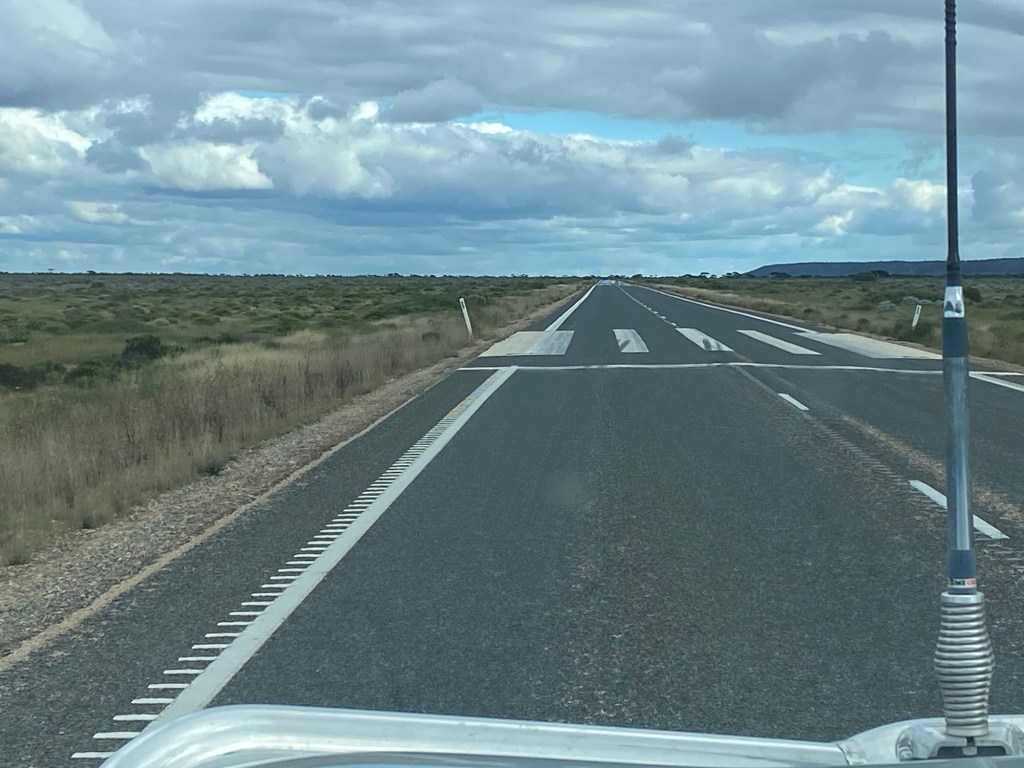
It’s flat, wide open and empty. On some days we have left town and its been three hours before we have seen a building. There is the odd gas refinery and widely dispersed oil wells.

The road and horses

After years of drought the country is green, well relatively. We are not talking the green of England but it is green. The creeks have water and rivers are a series of water holes. Even the swamps are wet.

We have discovered electronic barriers on the roads. Instead of cattle grates between properties they have installed electronic sensors that trigger a high pitched alarm. These are little disconcerting when they first go off and you think something has happened to your vehicle. We are guessing they are designed to stop cattle wandering. There are few fences out here and the properties are vast.

The Locals

Everyone in these remote towns seems to have a story including the lady at the bakery whose 84 year old dad was out the back. He was the baker and was preparing laminations while we were there. We got the sense that when dad falls off his perch the business will fold.

The guy out the front of the super market told us all about shearing in 50c degree temperatures and hauling fuel to Birdsville. That’s a 1200 km return trip and they do it every week.

Everybody told us about the butcher in Quilpie. It seems he is the best butcher in all Queensland and we can attest to the quality of his steaks.

The Roads

The roads have been very good and mostly sealed with the exception of 15kms to the dig tree. The width of the sealed road however varies from two cars wide to just one.

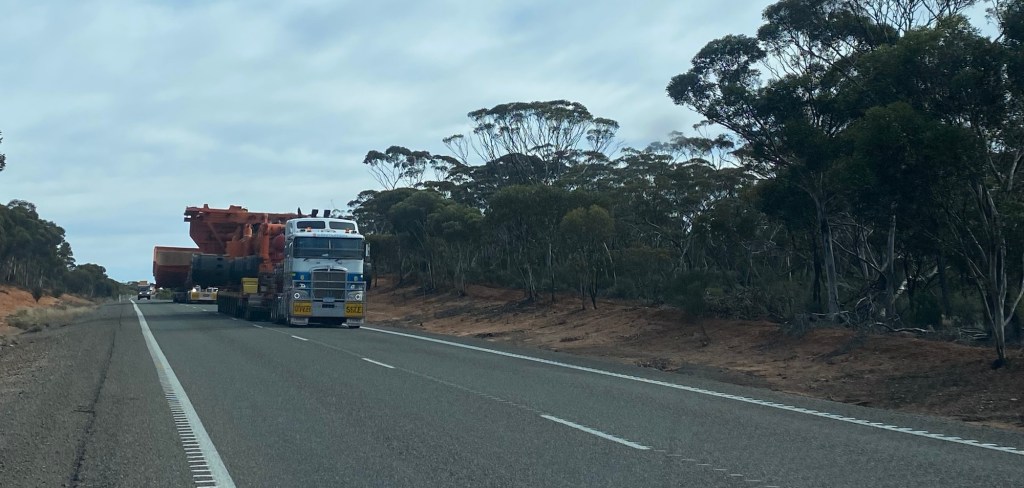
On the narrow sections of road the approved etiquette is to move out of the way of anything bigger than you. Road train avoidance is a must. These three trailer behemoths are to be given respect in all circumstances. Move out of their way and stop if you want to avoid a broken windscreen. Never argue with a road train.

The Great Artesian Basin

Everywhere out here the water supply is from the great artesian basin which covers one fifth of the Australian continent and is the largest underground water resource in the world. Unfortunately some of the artesian bores have been flowing freely for over 100 years and one day this amazing resource will dry up.

The up side of the artesian basin is sitting in an old bath tub filled with steaming hot water at 3.00am looking up at the stars. Ah the serenity.

The downside is your shower comes with a slight hint of sulphur. All part of the experience. Oh, and soap lathers perfectly well.

Wildlife Along the Way

The country is so empty that on some days seeing a cow is a reason for excitement. Goats, wild horses and sheep are also present.

The native wildlife includes emus, kangaroos, brolgas, turtles and wedge tail eagles. In the water holes, creeks and rivers there are blue claw (yabbies) and yellow belly (fish)!

More to come as we continue our travels over the next couple of months….