About

Log One Hundred and Thirty Eight – The Flat Falls

29 June 2026

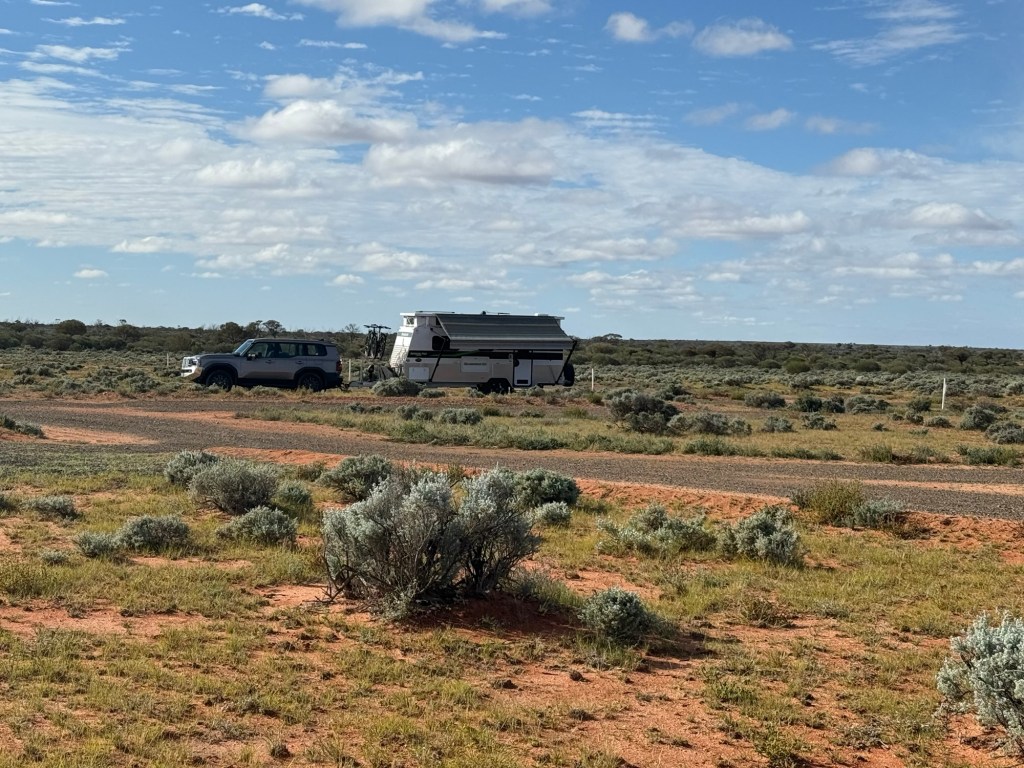
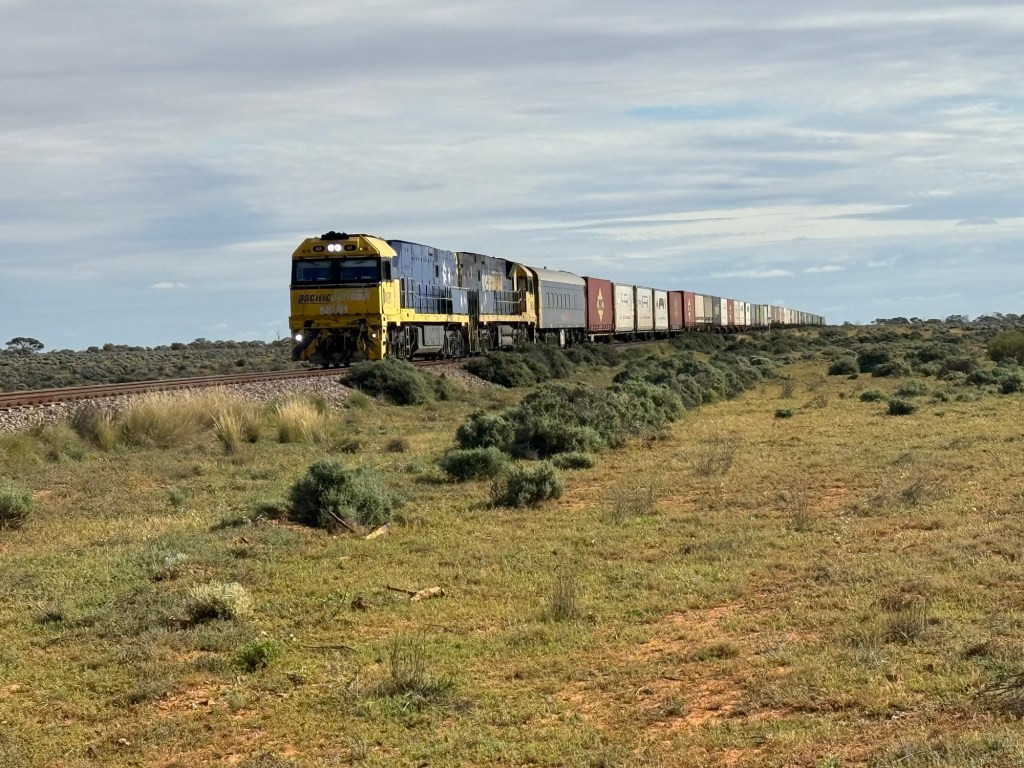
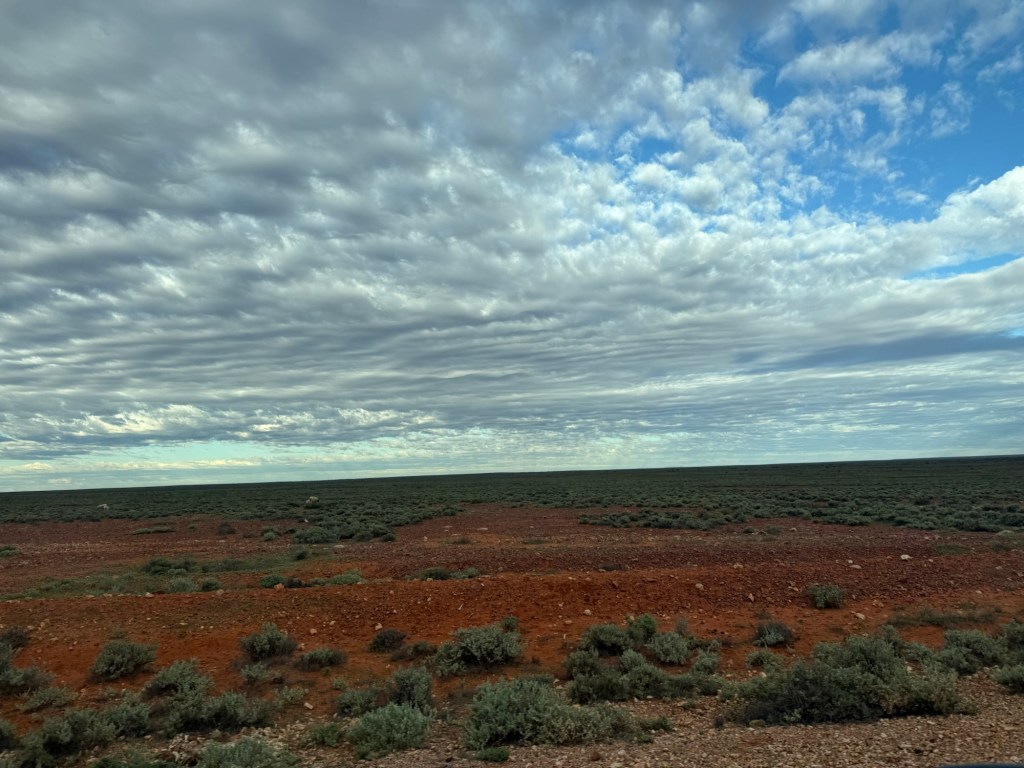
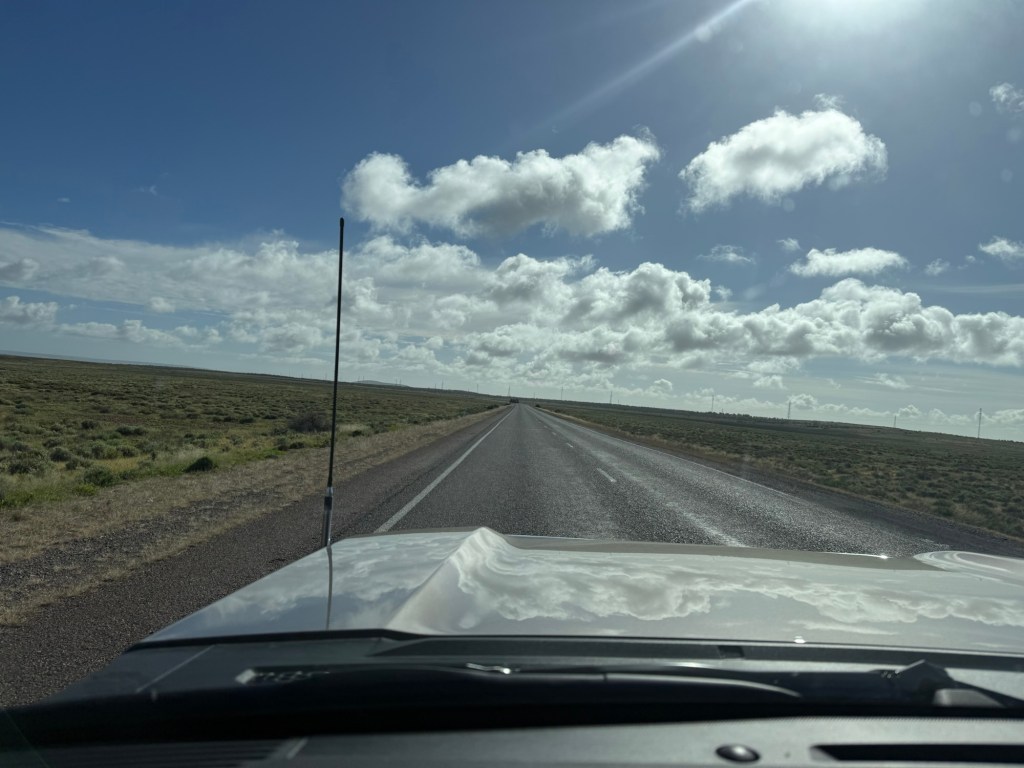
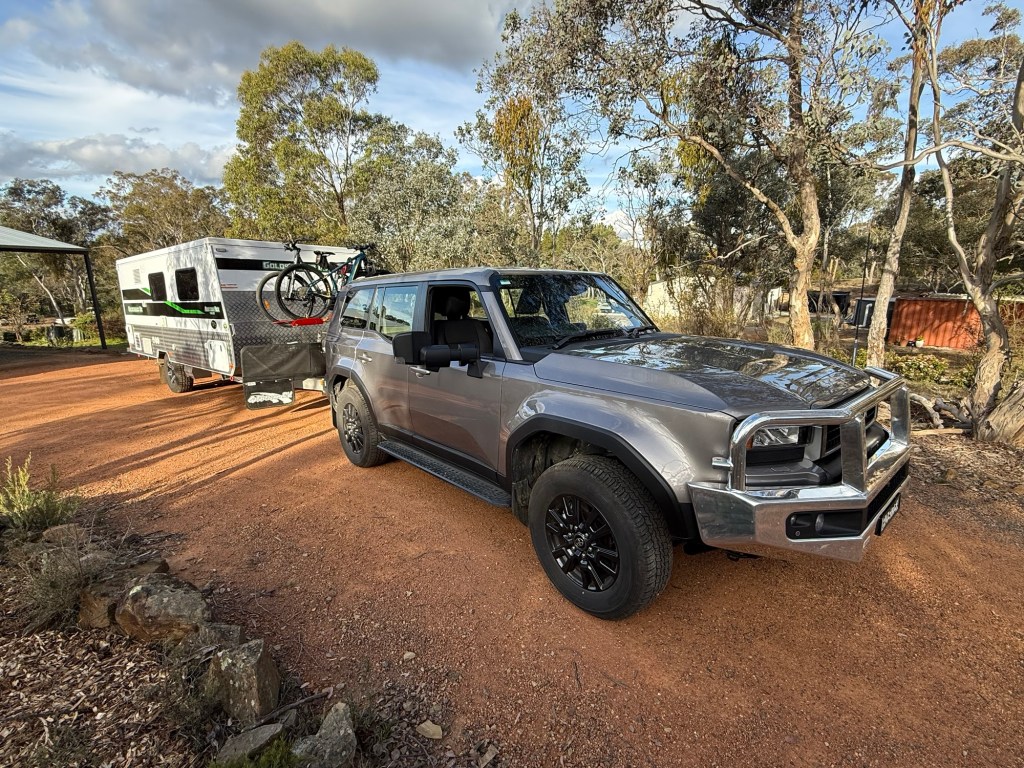
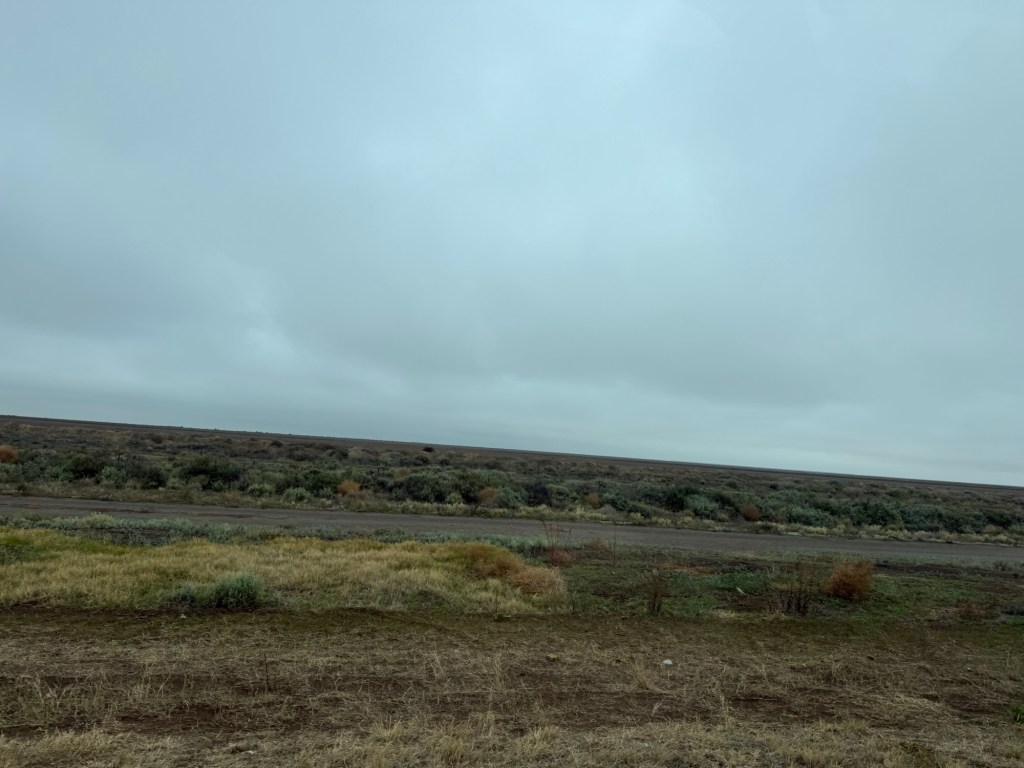
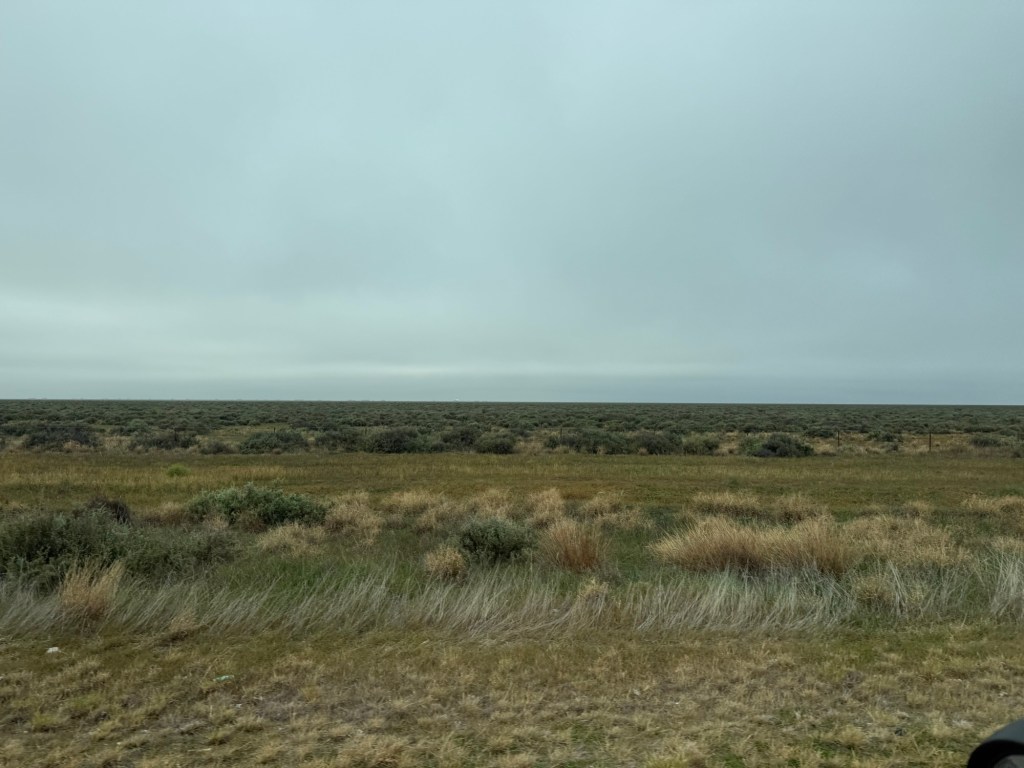
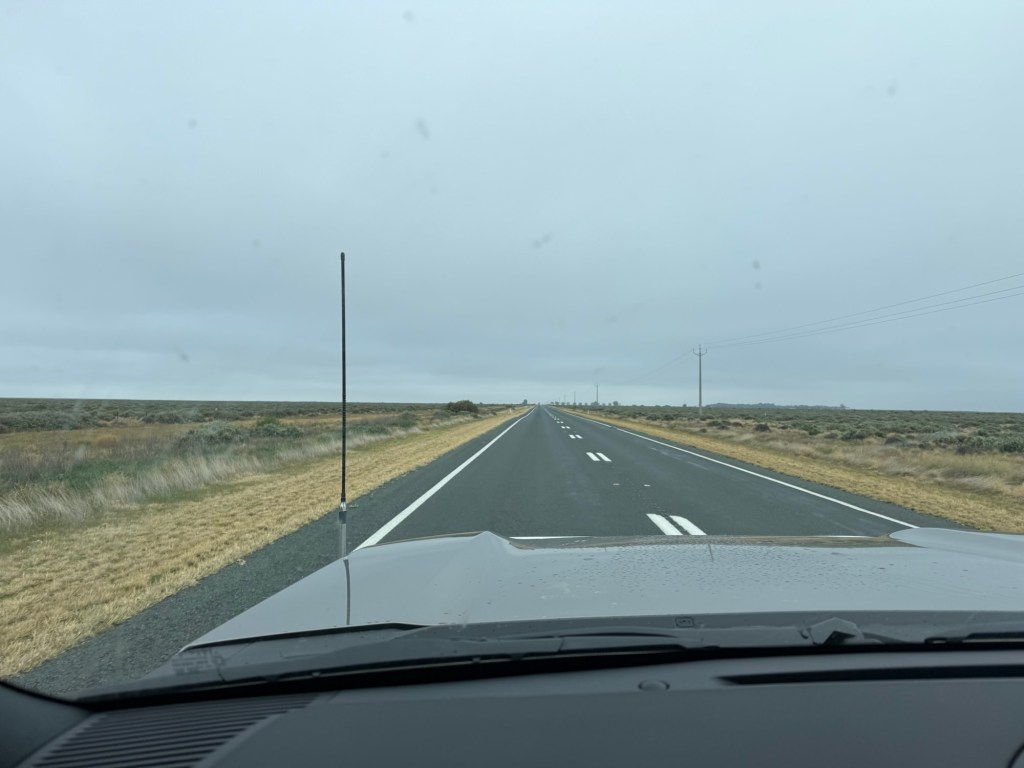
We left Fitzroy Crossing and headed to Broome. This was one of the most empty landscapes we have travelled through on this trip. Not a town, house, shed or even a roadhouse for over 200 kms, and this is Highway 1. Not even a coffee stand! This was the Fitzroy River flood plain so it was flat, flat, flat, nothing to interrupt the view. We could have tried the Gibb River Road but that would have taken more time, more preparation and probably good to have a friend for backup.

Unlike the last four weeks, we had a deadline. We had made a plan and followed through with a commitment. This commitment was further consolidated with the advance payment for the overnight trip to the Horizontal Falls. We were way out of our comfort zone. Some people book this trip a year in advance. We booked our trip 3 weeks ago and lucked out that there were places available.

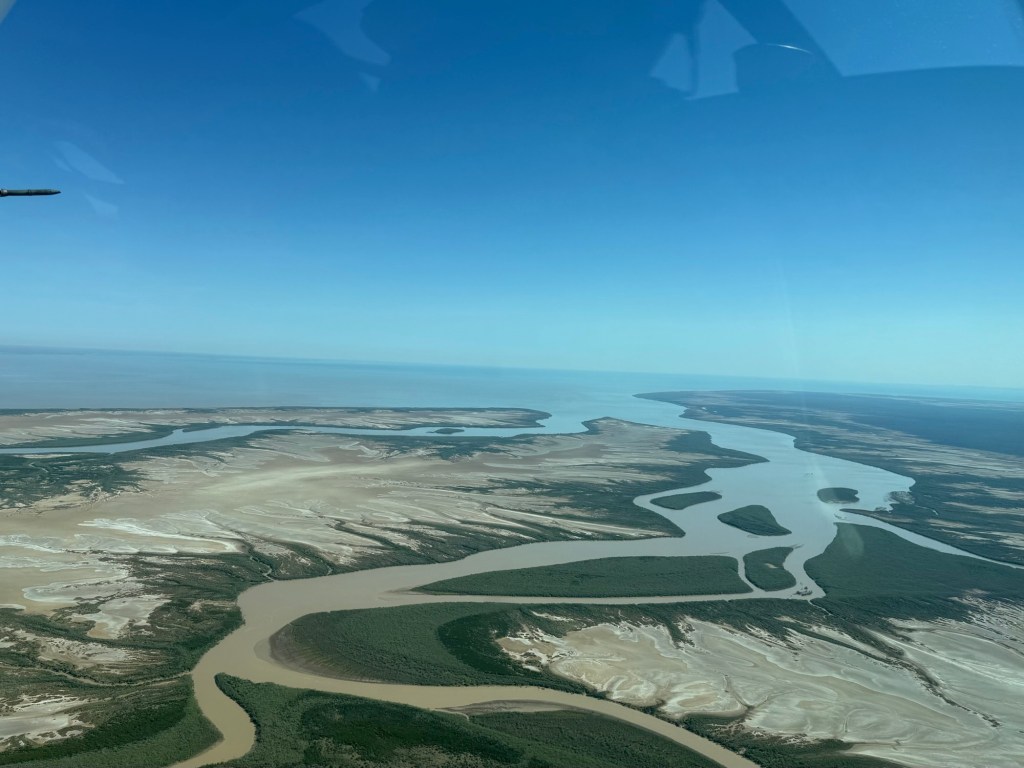
Pick up was at 6:20am from our campground and then a 2 hour trip back to the Derby airport for a flight to the falls. A twenty minute flight took us over the tidal mud flats of King Sound for a landing on Talbot Bay.
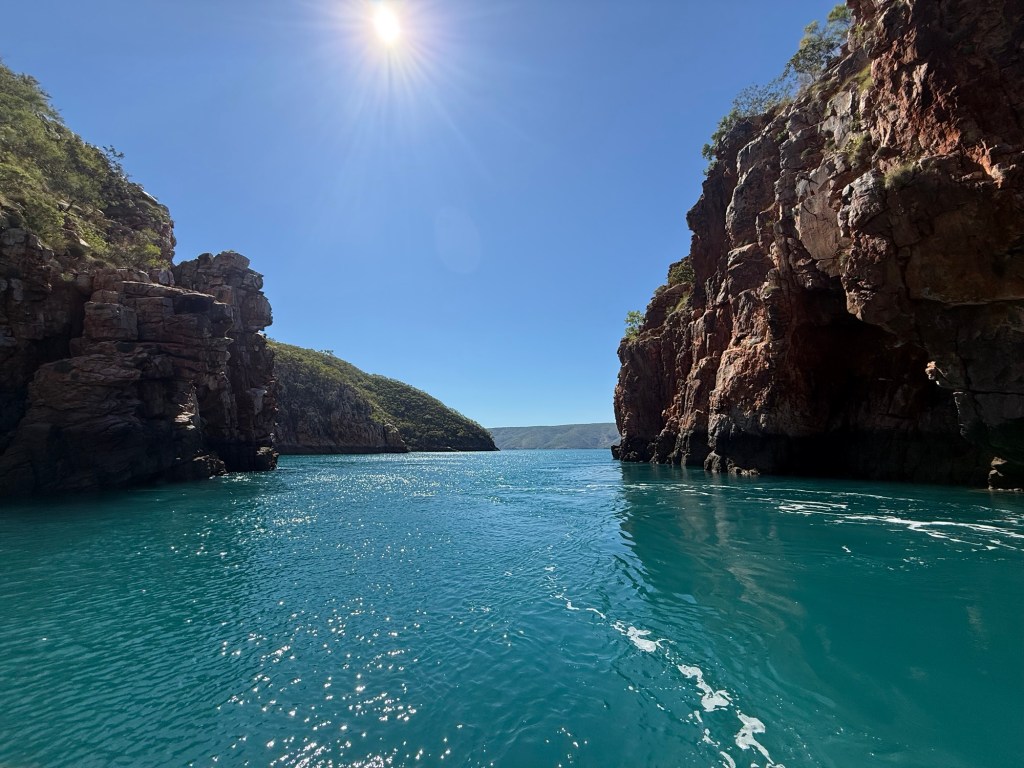
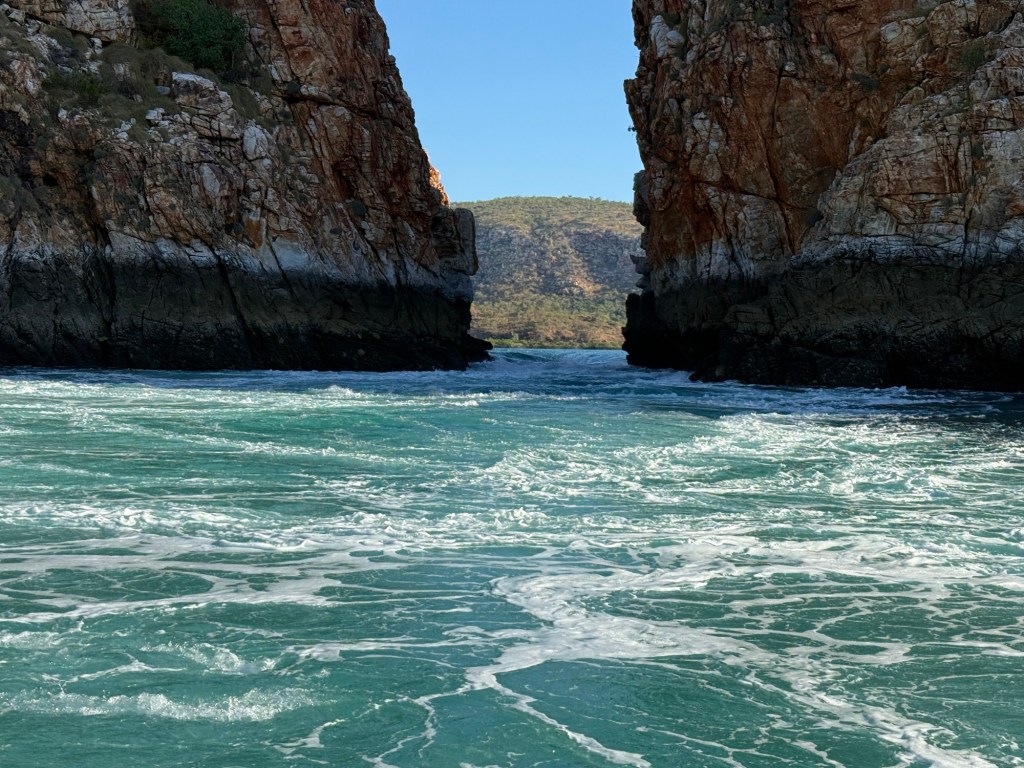
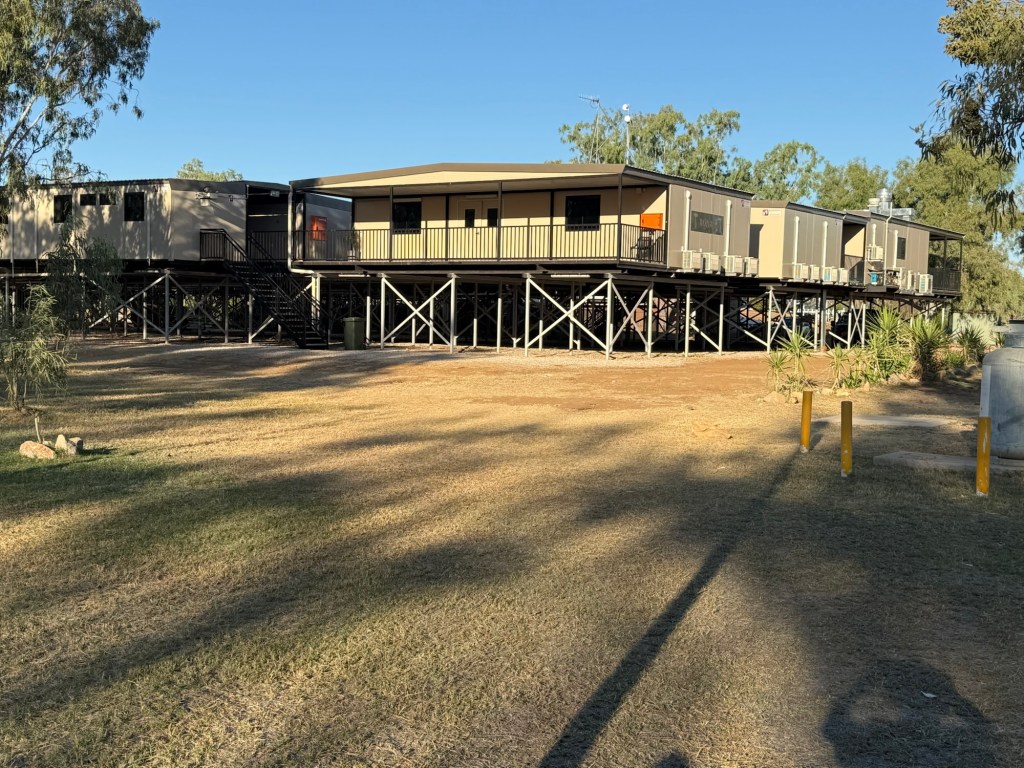
The next 24 hours comprised boat rides through the Horizontal Falls, a fishing adventure, some excellent food and wine and an opportunity to swim with the sharks. The sharks were actually on the other side of a mesh barrier. We also enjoyed the company of a small group of nine that were also staying overnight. Just nine of us provided a more intimate opportunity for conversation and the enjoyment of some fabulous meals and shared experiences.
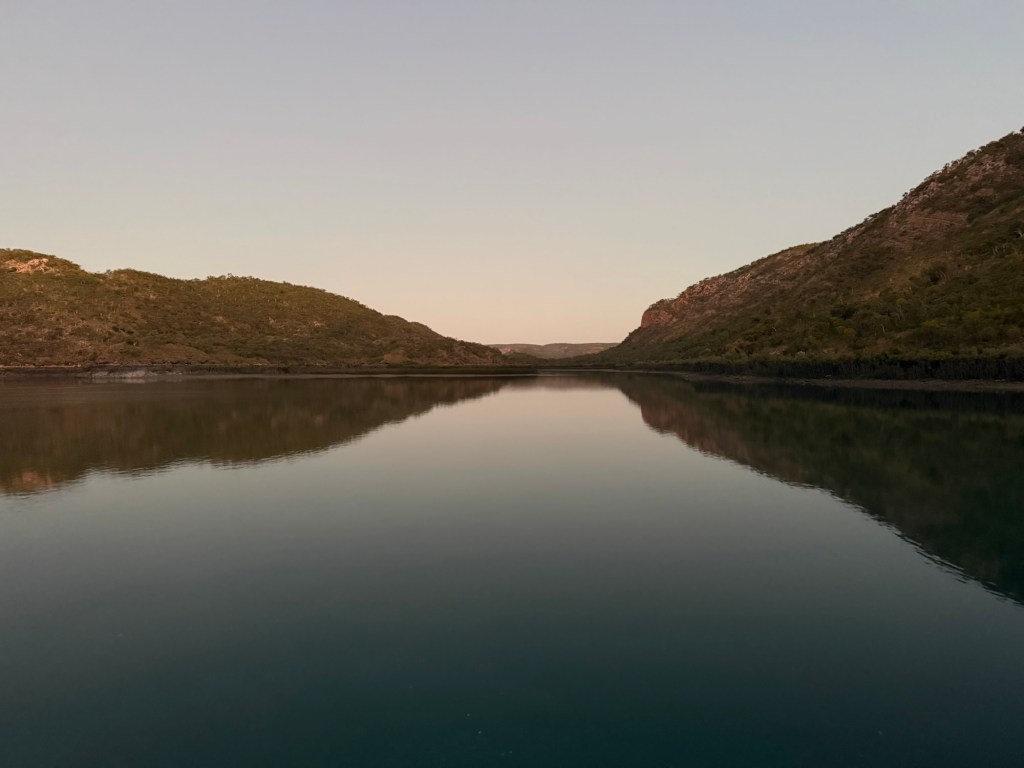
This now famous tourist destination was only ‘discovered’ back in the 1980’s and only became a tourist attraction in the last 15 years or so. The ‘falls’ are the effect of some of the largest tidal ranges in the world with the resulting difference of 4-5 metres between the bays creating ‘horizontal falls’.
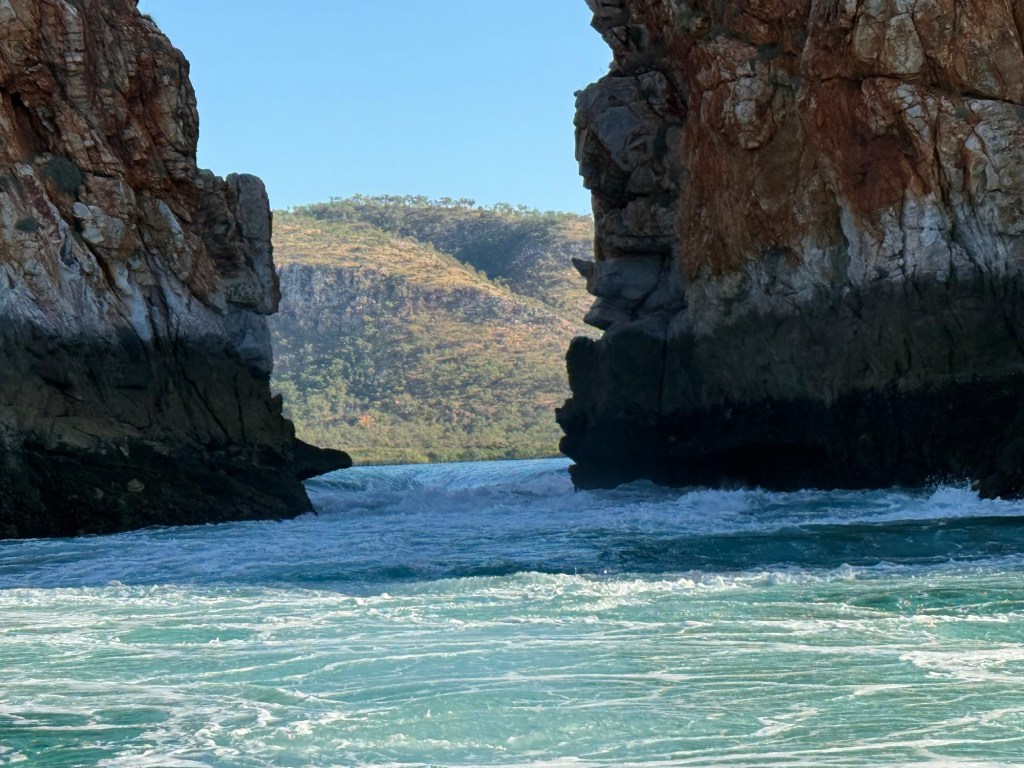
What I truly appreciated was that the numbers of visitors each day is limited to about 200. If this type of natural spectacle was in the northern hemisphere there would be many hundreds of people visiting along with a multitude of aircraft and water vessels powering through the falls. Ya gotta love that it’s so remote.
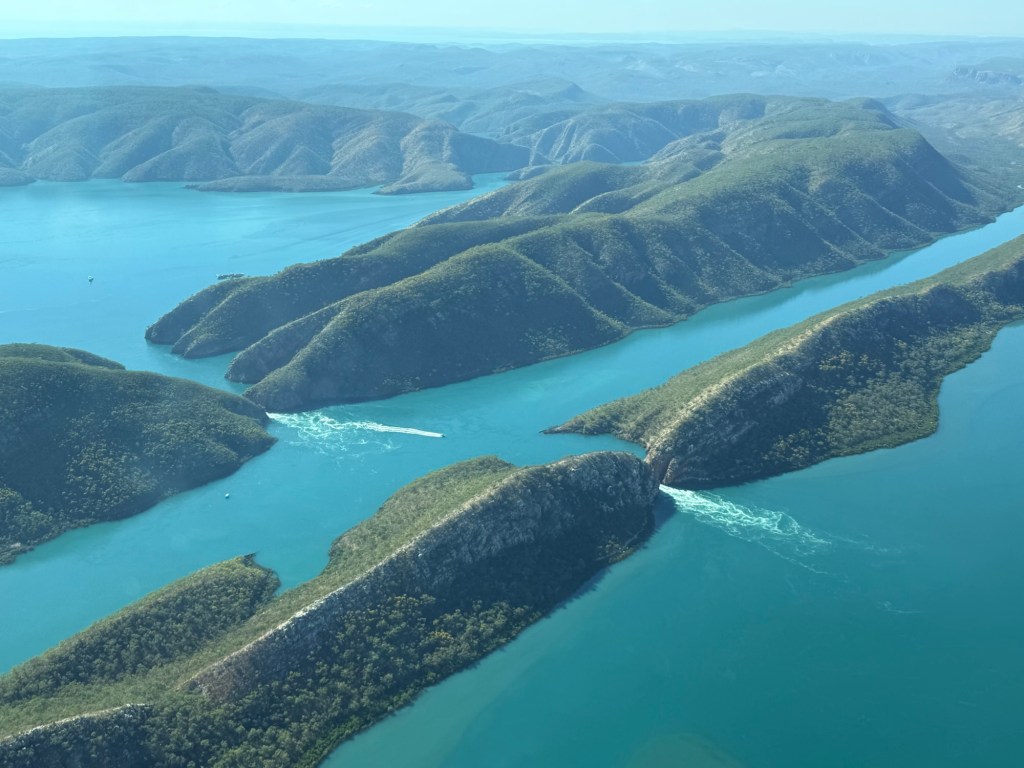
This experience in the Kimberley determined our timetable for the first phase of this trip, its now time to plan where to next.
Log One Hundred and Thirty Seven – There are Campgrounds and Then There are Places to Camp

25 June 2026

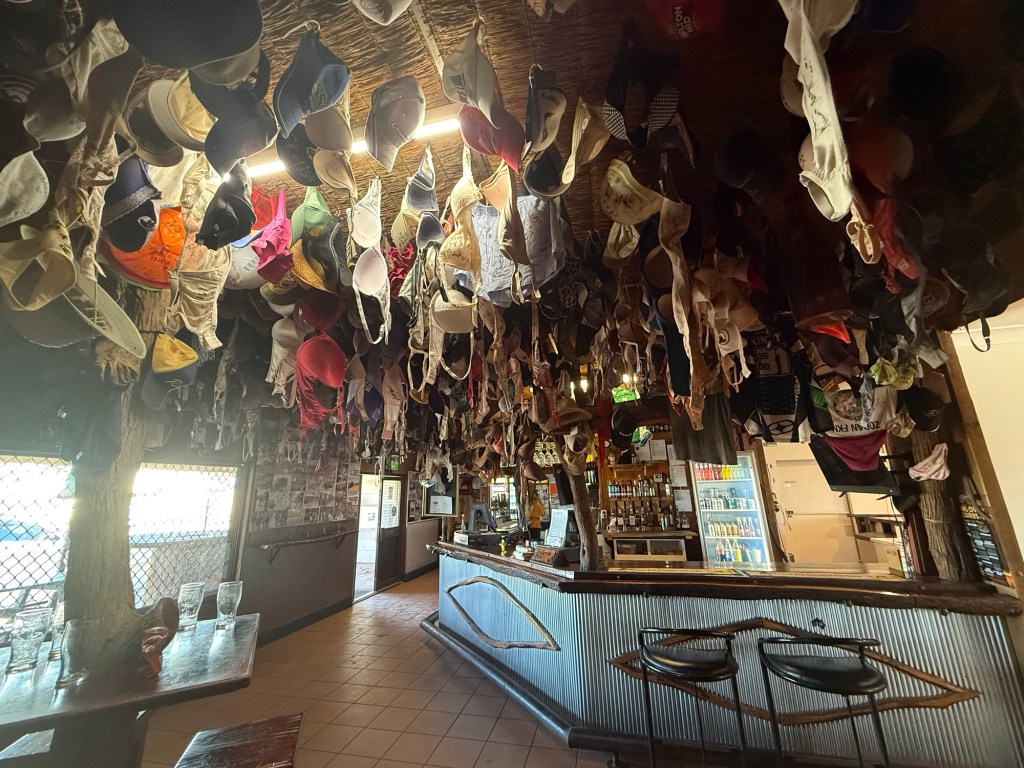
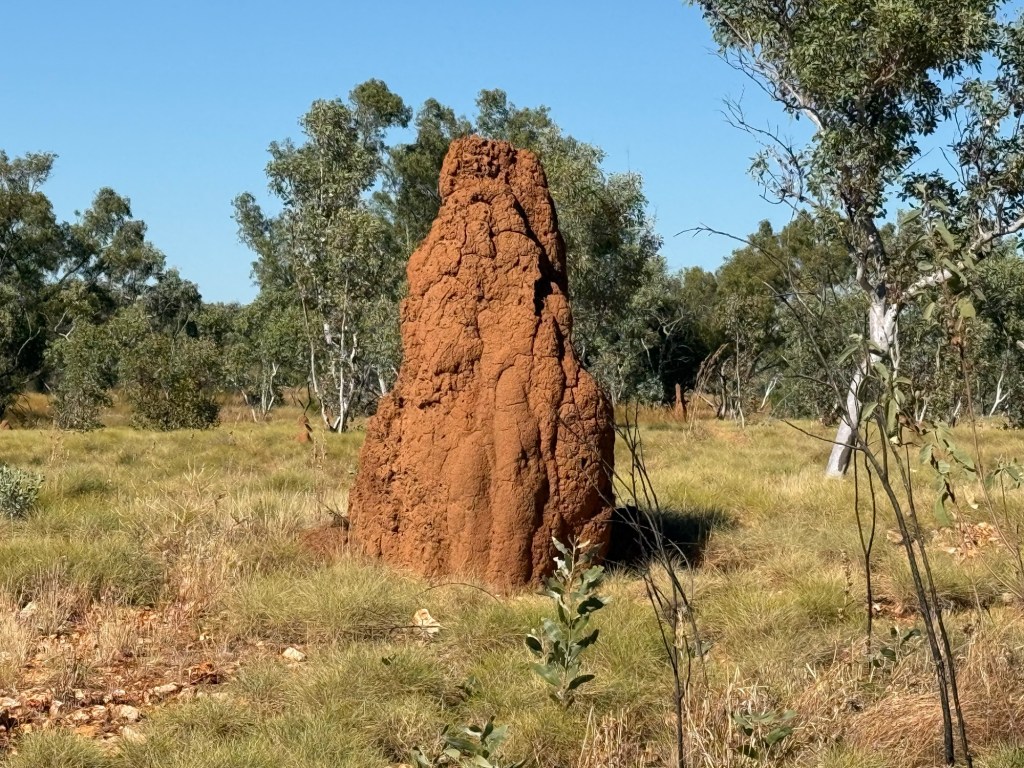
In my last Log I mentioned boundaries. There is one I omitted and that is termite mounds that wear tee shirts. It seems up here it is important for termite mounds to be dressed in a tee shirt, maybe a cap and in some cases a hardhat. Amazing.
We have crossed the technology Rubicon and now enjoy full mobile phone and internet access regardless of how remote we might be. We have a Starlink mini! The tipping point was when I saw NT police vehicles with Starlink on their dash. So here I am writing this epistle in a remote part of Fitzroy Crossing, WA and with fast internet speeds.

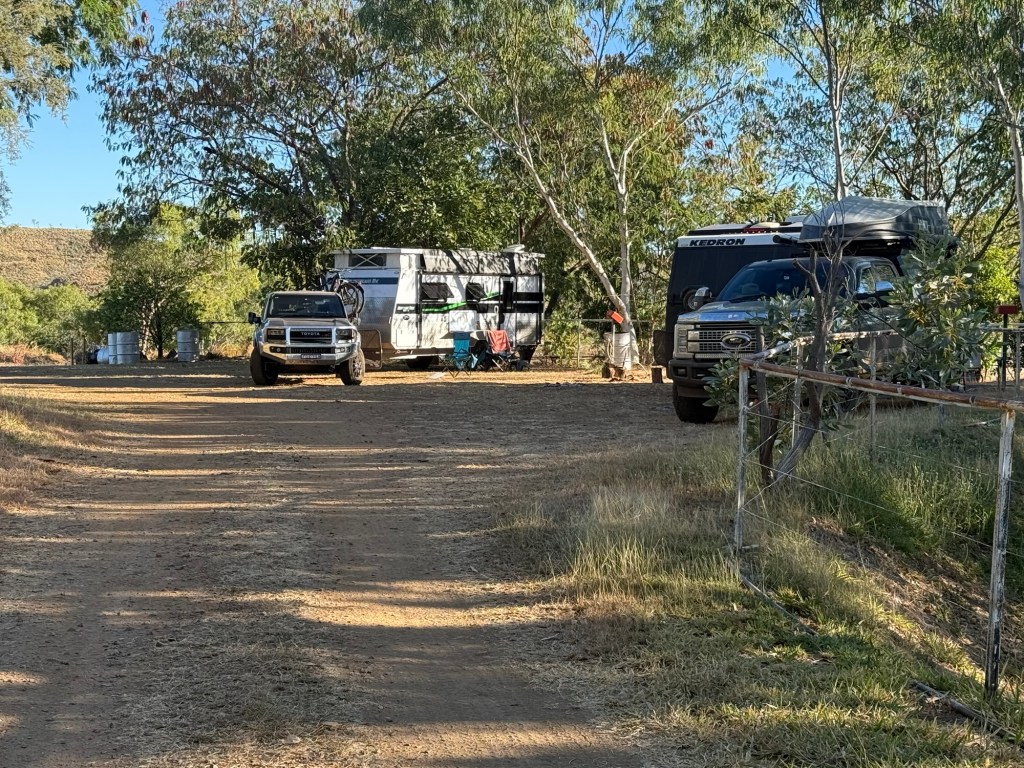
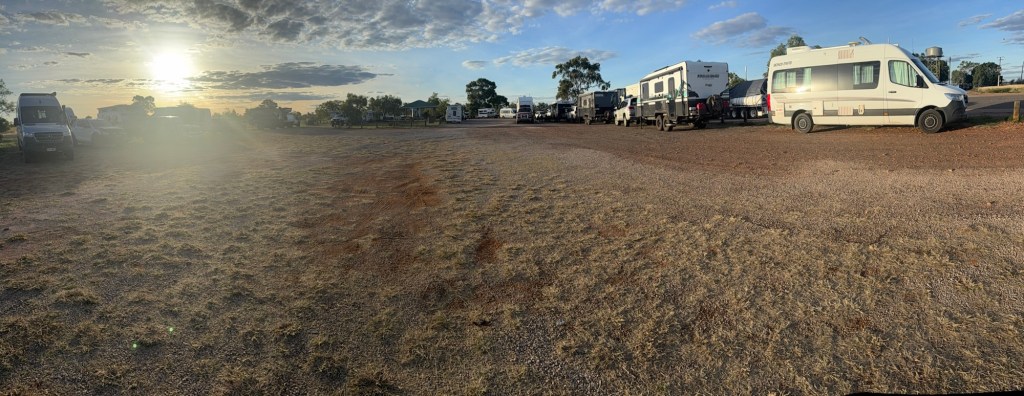
Over the last month we have enjoyed a wide range of camping facilities ranging from no facilities to everything you might need, including an onsite restaurant. Here is my summary of our camping experiences:
  • Free camps – these can be close to highways or down dusty roads, crowded or empty, noisy with generators or quiet. Always safe if there are a few campers. There is never a flat camp site.
  • Basic caravan parks – toilets and hot showers will be available but anything more will depend on the level of refinement of the camp and how desperate you are to find somewhere to stop. The more desperate the more likely your standards will drop. The camp kitchens at these places are always the place to meet interesting fellow travellers.
  • Big name franchise camps – quality and facilities can be pretty much guaranteed. The challenge will be how big or small the sites might be and how crowded the place is.
  • Resort style parks – these come with all the facilities, power, water, dump point etc and probably a swimming pool and bistro. They can be expensive. Great places to get your washing done and to enjoy local fare.

We have enjoyed all variants and at both ends of the spectrum.

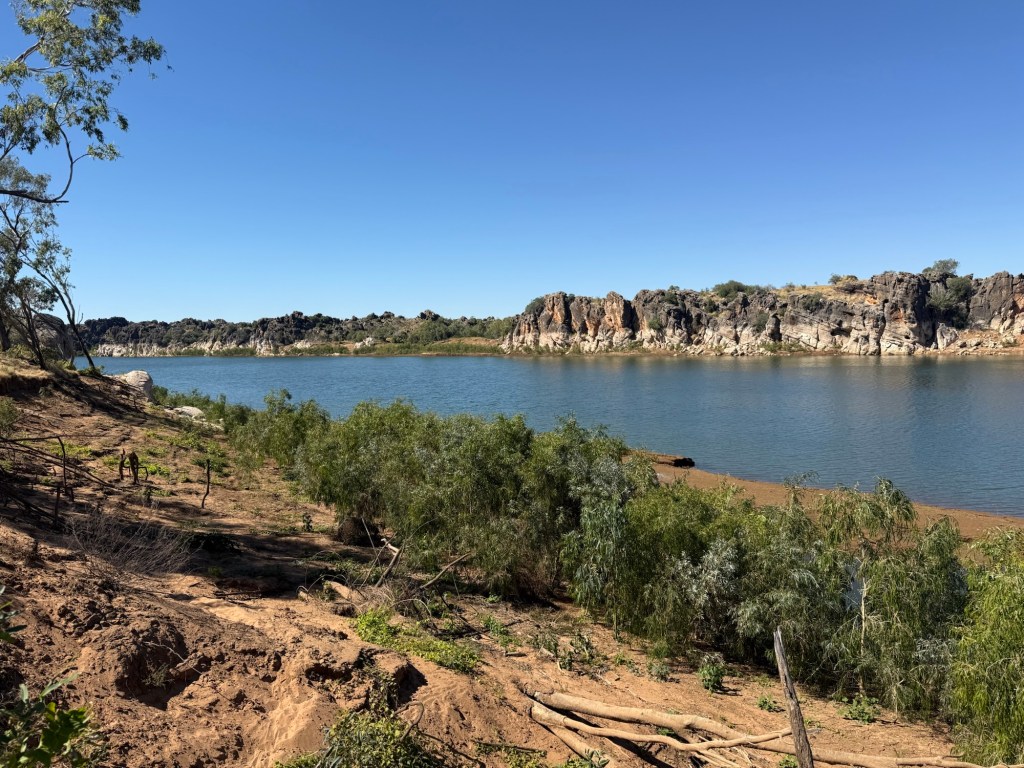
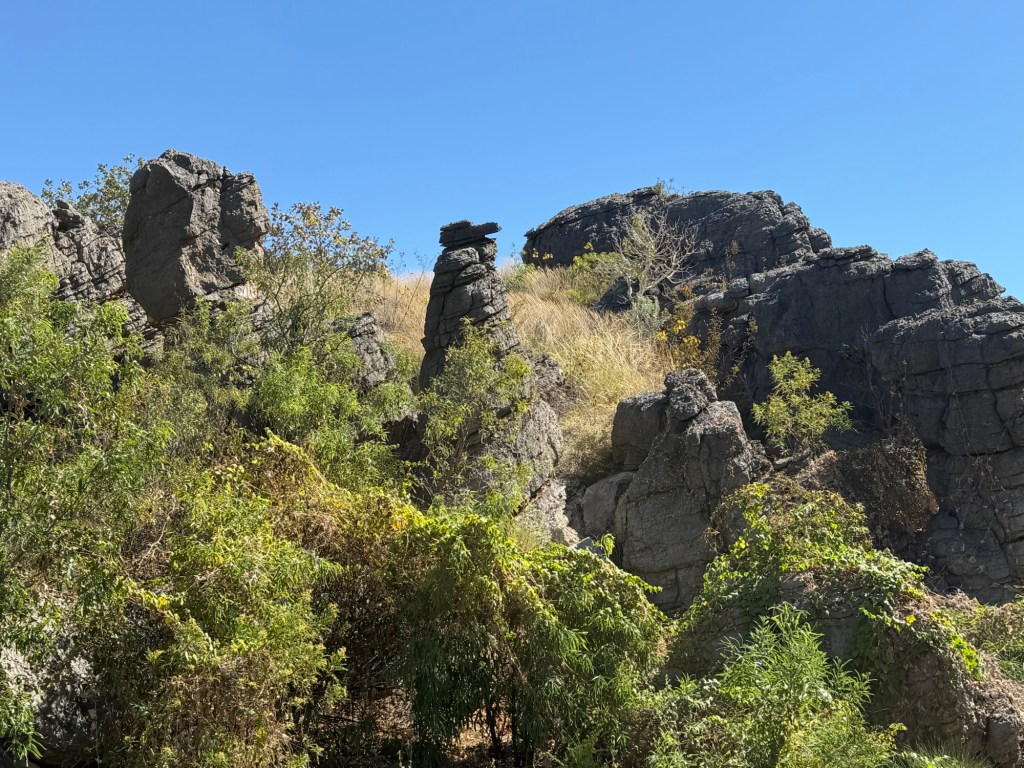
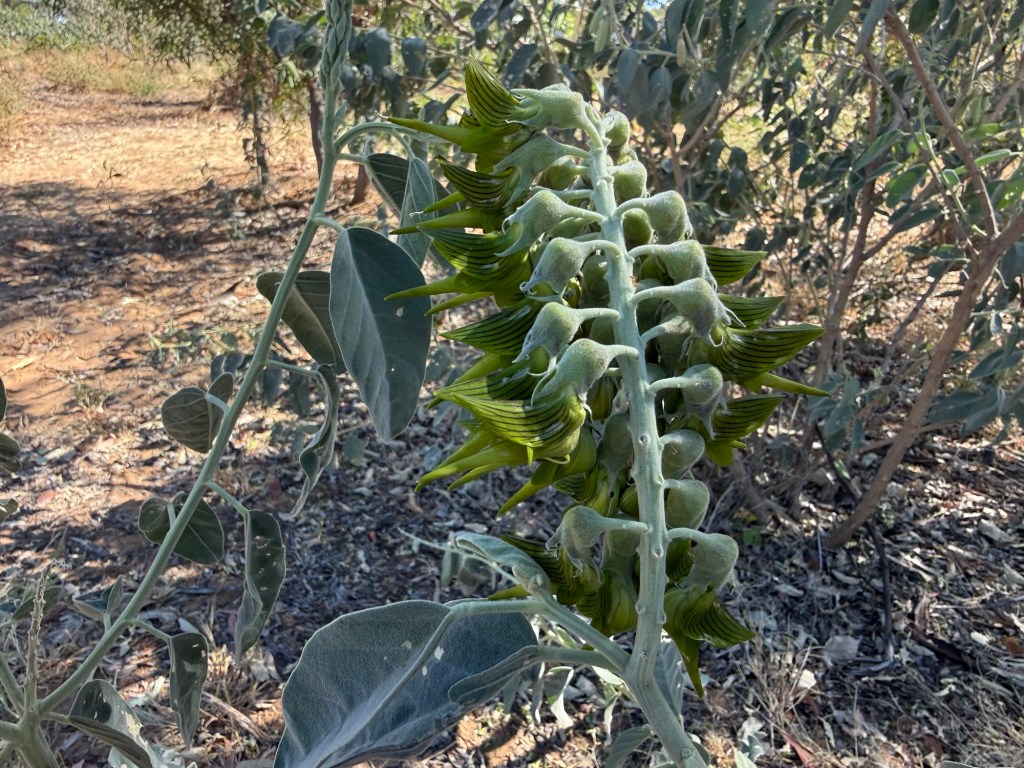
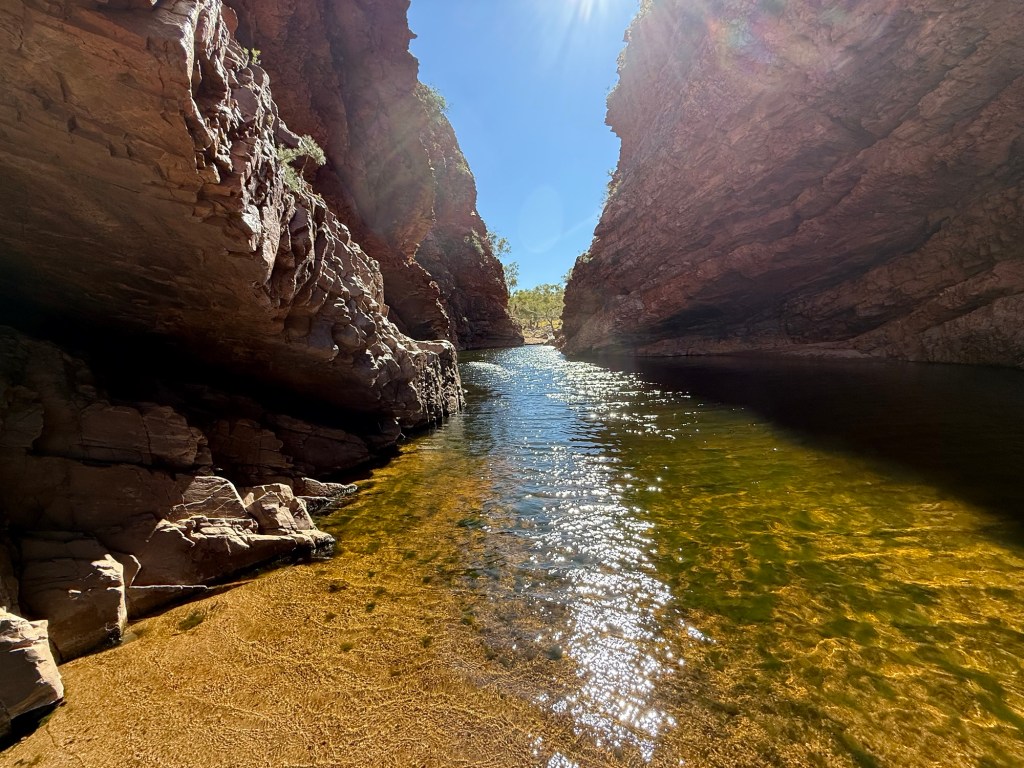
Today we visited Geikie Gorge where we came across a flower that looks just like a bird. In Australia we can be very creative with names of prominent buildings or landscapes. And so we have the Snowy Mountains which are mountains often covered in snow. There is the Harbour Bridge which is a bridge over the harbour. We have Long Plain which is a long plain and of course the Great Barrier Reef which is a very long, some might say great, barrier reef. This flower that looks like a bird grows on the Green Bird Flower Tree.

I have given up on yelling at the car when it thinks I am not paying attention or whether I need to take a break. Resistance is futile.

For my European readers we have now covered a distance similar to travelling from the Mediterranean coast of Syria to the northern most tip of Scotland but with a tiny percentage of the same population.

Fuel here is $2.40 a litre; happy days.

Log One Hundred and Thirty Six – It’s All About Boundaries

22 June 2026

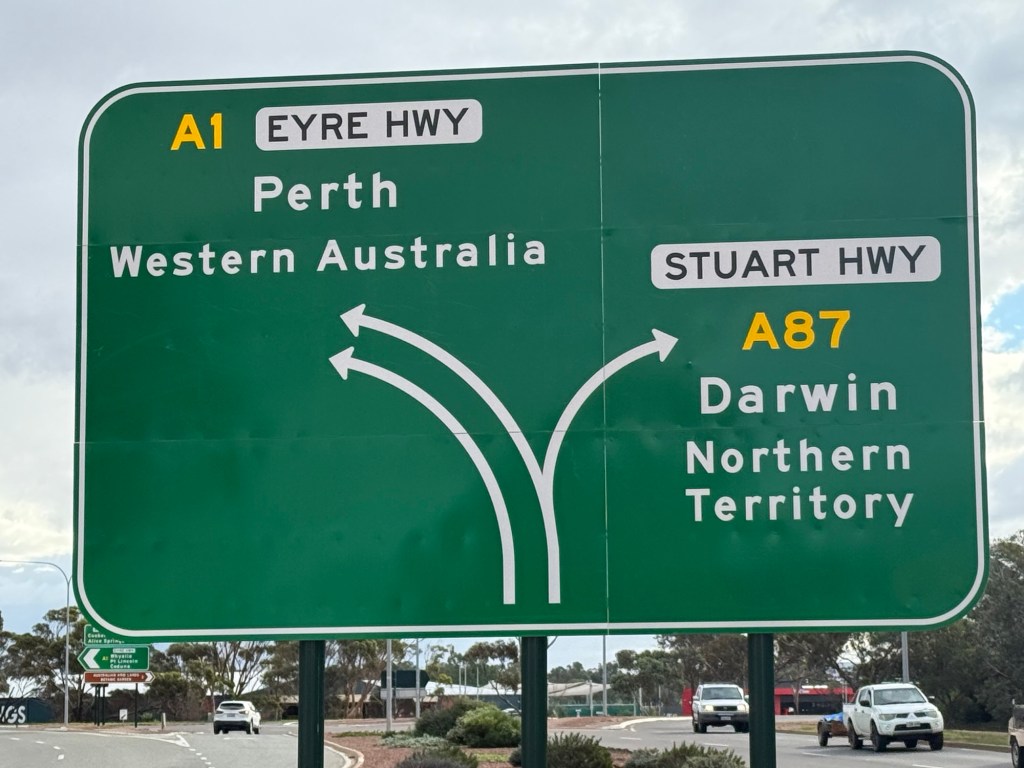
We have reached the Kimberly phase of our travels and the apogee or highest potent of our trip. That was at Katherine where we turned left and on to Western Australia.

As I have mentioned in earlier Logs up here you unknowingly cross a number of boundaries or unwritten lines.

There is the line where there are no more crows or ravens attacking the roadkill, that happens in the south. In the north there is a line whereby it’s suddenly kites and eagles feeding on roadkill and not a crow in sight.

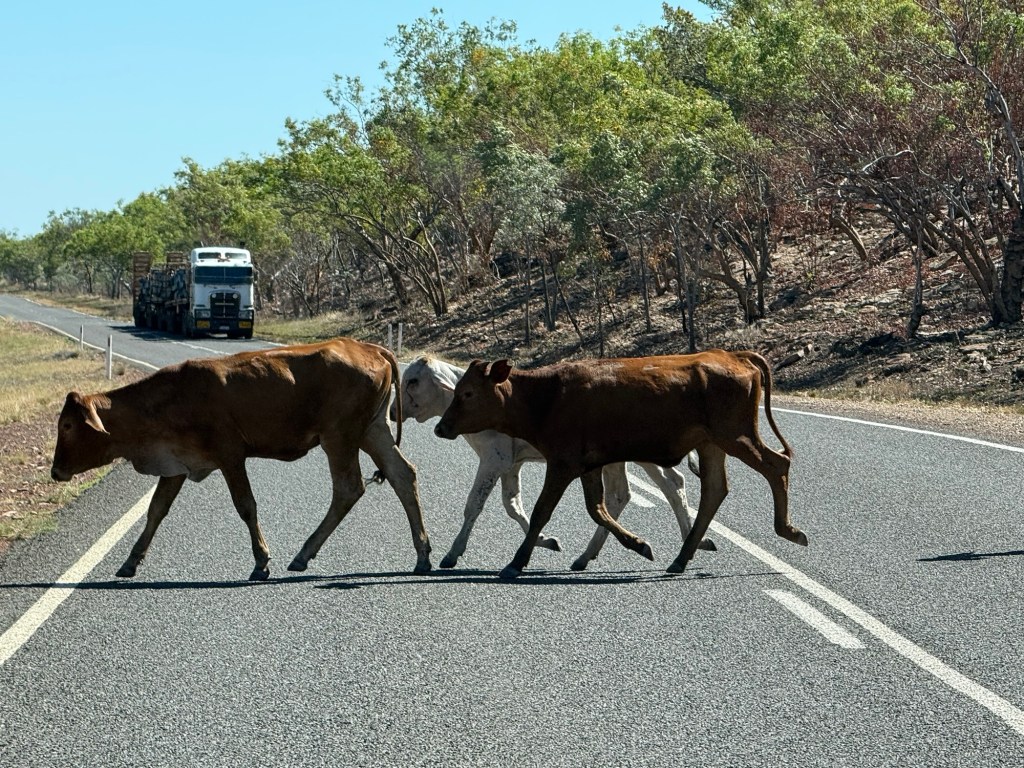
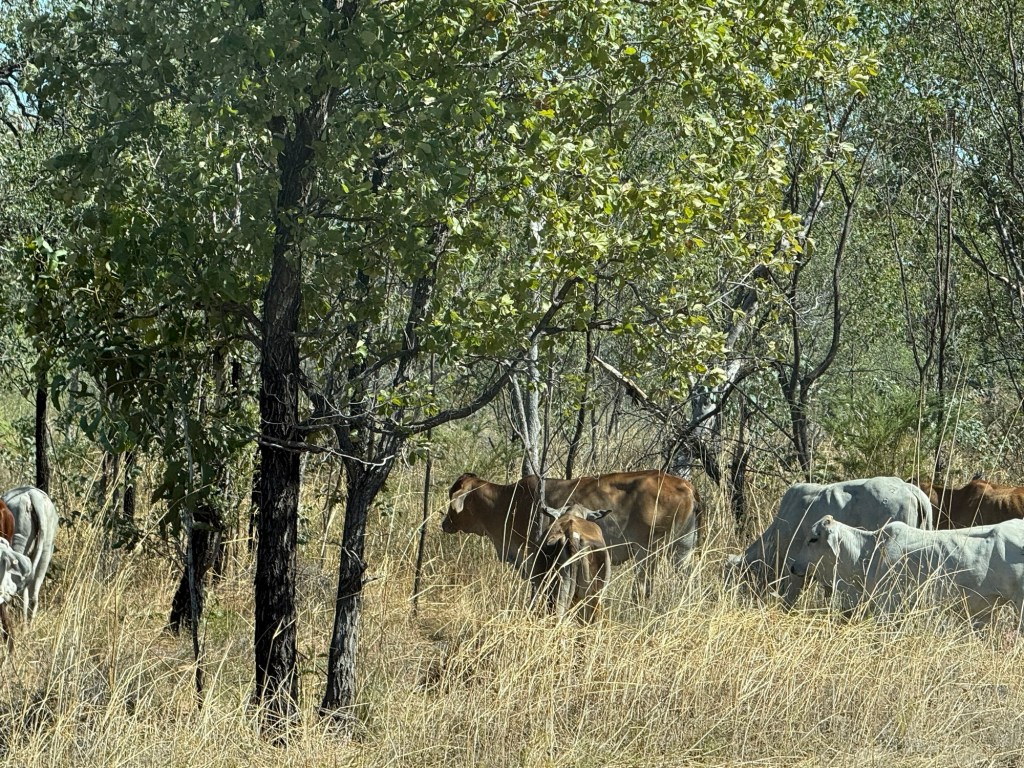
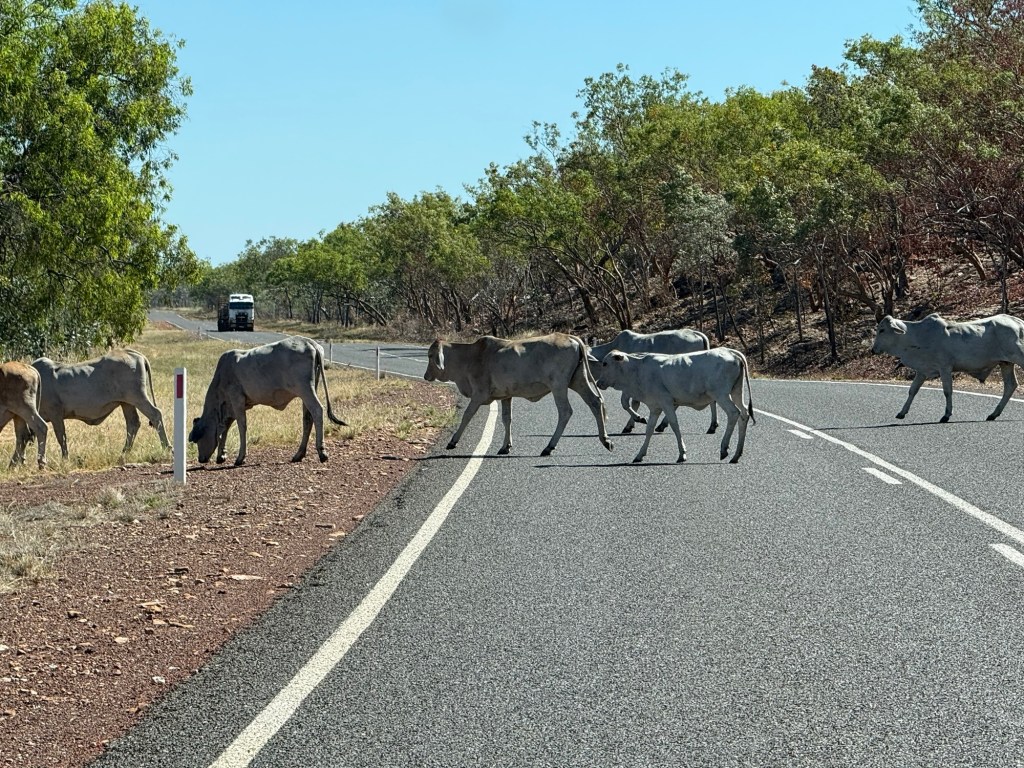
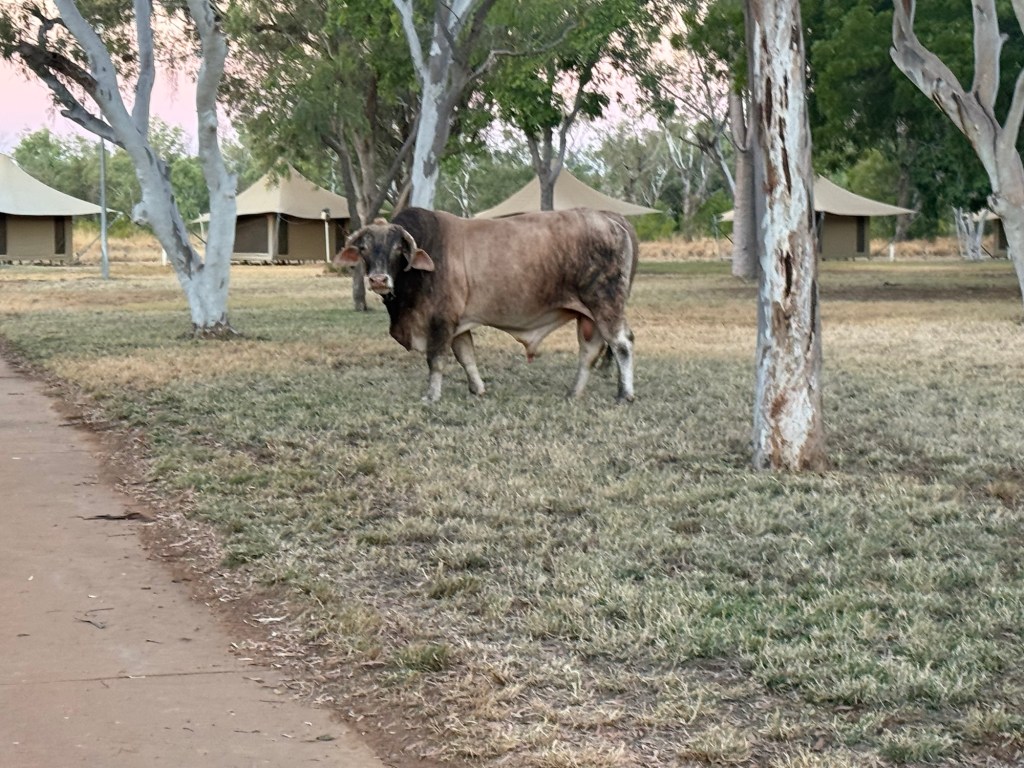
Angus and Hereford cattle have vanished and now it’s brahman cattle. Along with vanishing cattle breeds, fences have also become less frequent and less reliable.

In regard to cattle, it must be mustering season up here. Yesterday about 10 road trains each with three trailers loaded two levels high with cattle drove past us. They were probably on their way to Darwin to join the live cattle trade and that was a lot of fresh meat.

Another unwritten line is the point where you wave to all other oncoming drivers. It’s an acknowledgement that we are all out here in the middle of nowhere.

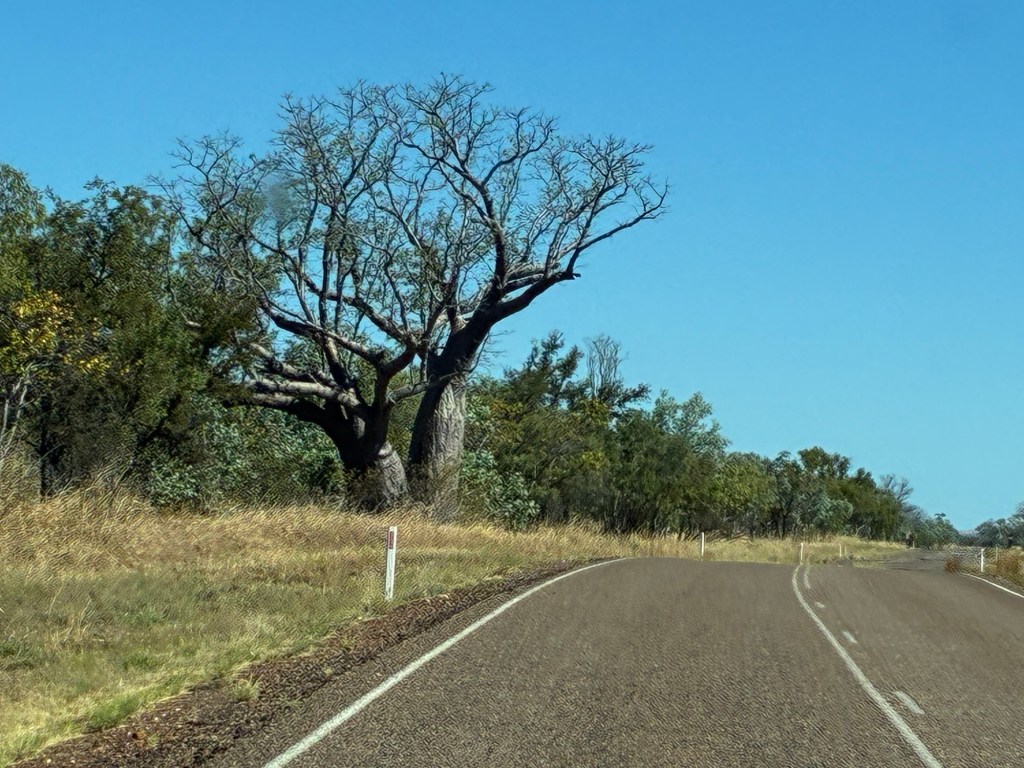
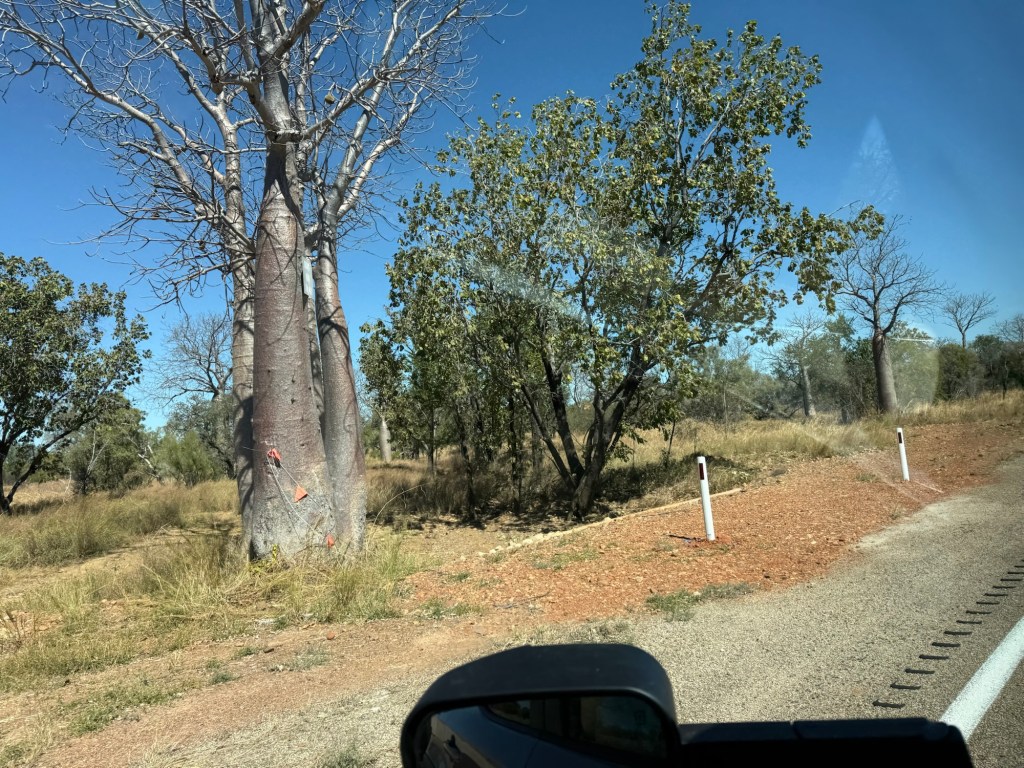
We are now in a place where boab trees are regularly seen. They are of course related to the Baobab trees of Africa and Madagascar so Gondwana makes its presence felt yet again. Along with boab trees this is also crocodile country, both fresh and salties. Swimming up here is a questionable pastime and even standing on the banks of a creek with your toes in the water is frowned upon. As an aside boab tress live for thousands of years!

The another obvious line is the WA border. This line can’t be missed because you are facing a quarantine station and these folk don’t mess about. We had strategically consumed our lemons in various beverages and had finished our fresh fruit and vegetables. Unfortunately we forgot we had just purchased a fresh jar of honey. Bees might buzz across the border but never a jar of honey.

The WA border also means you suddenly improve your day by an hour and a half. You think you won’t get into your next campground until 3.00pm but you are already set up by 1.30pm.

It’s amazing how these lines have such an impact.

The price of diesel has risen and we expect more expensive fuel as we travel through to Halls Creek and Fitzroy Crossing.

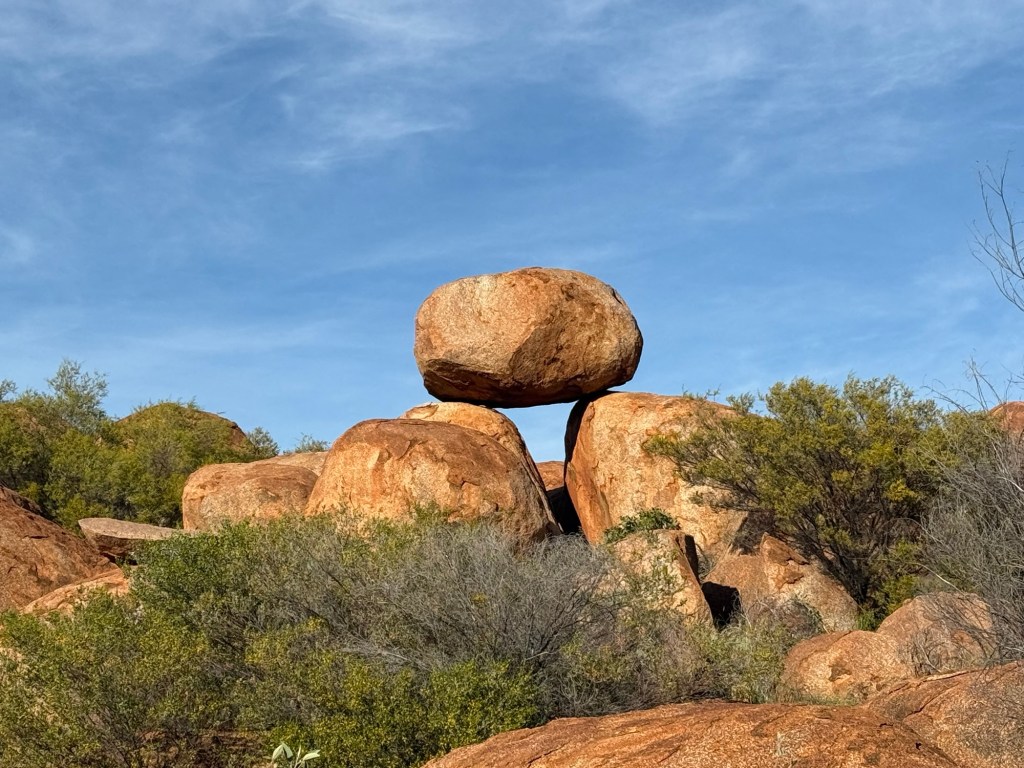
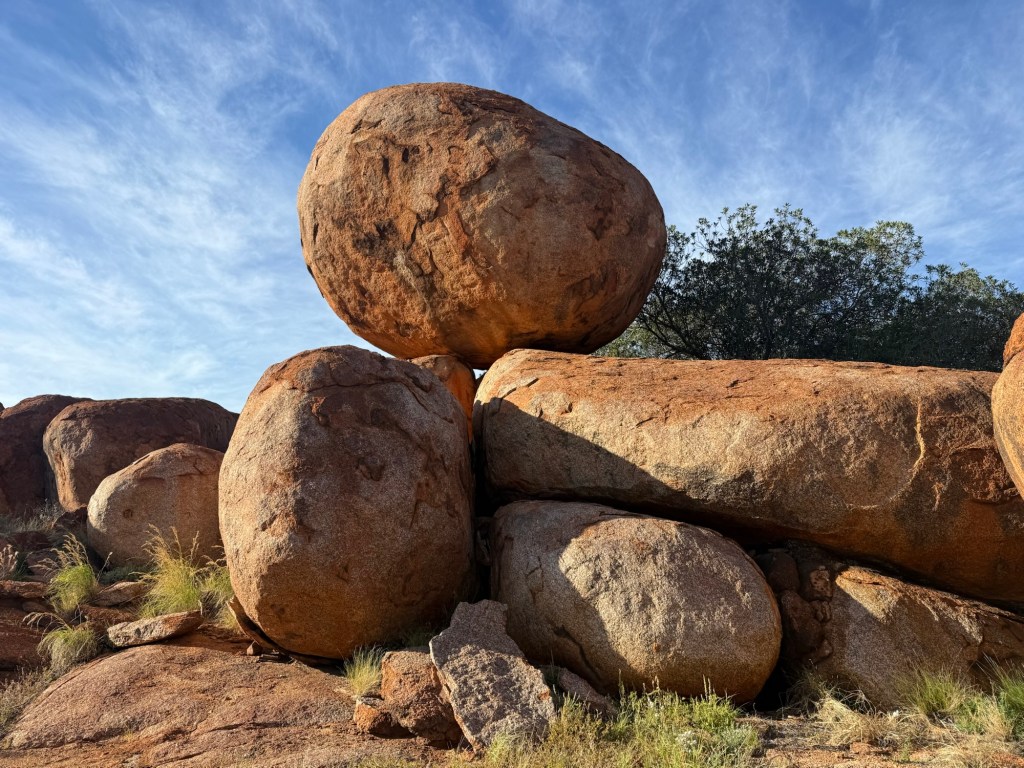
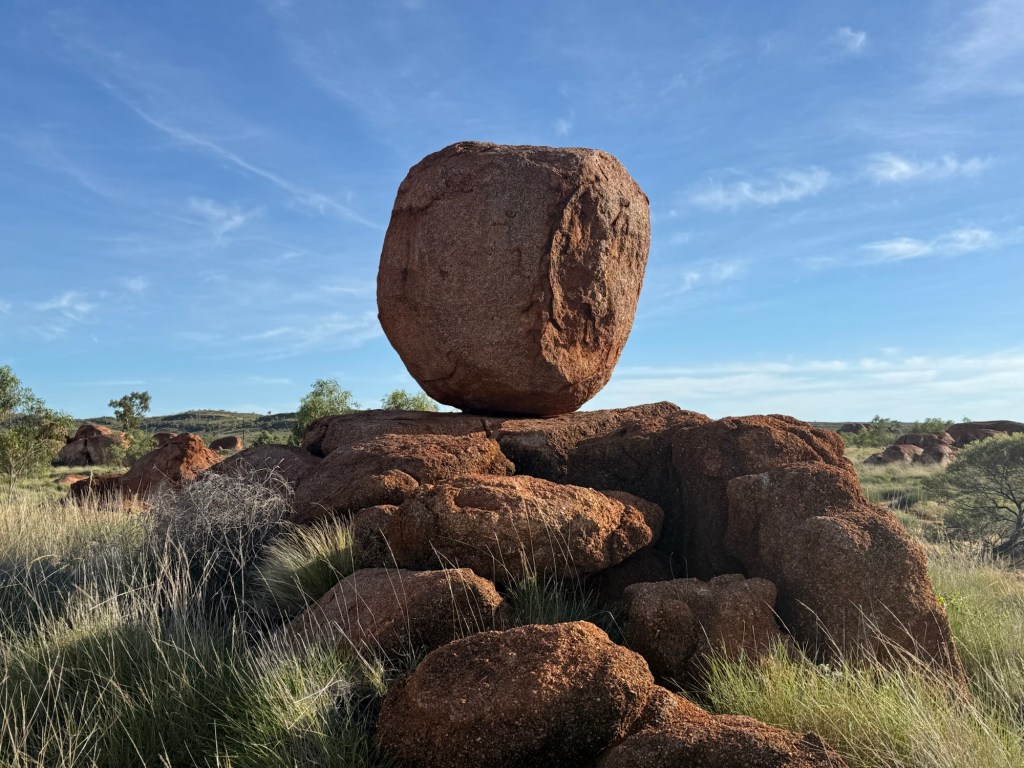
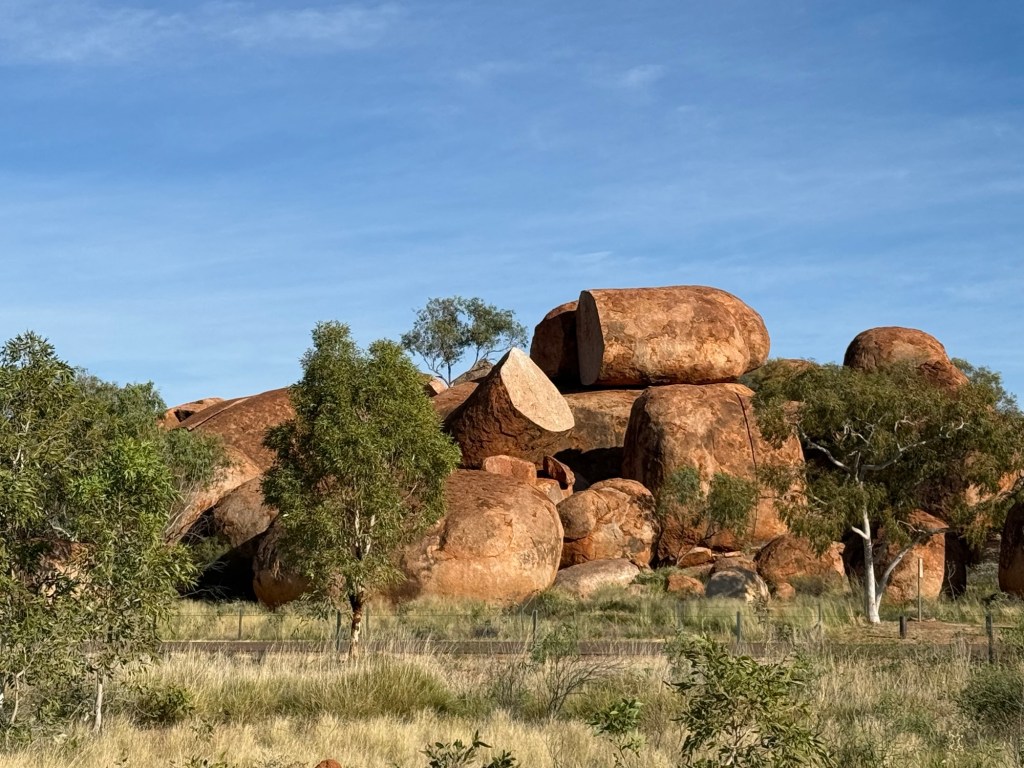
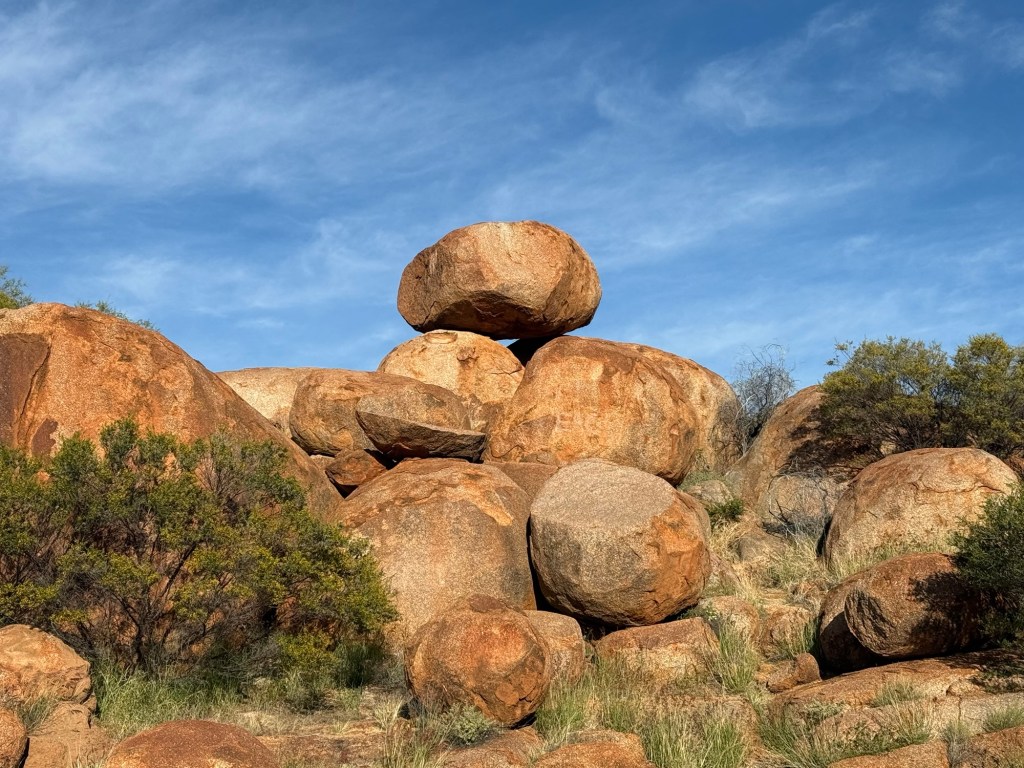
Log One Hundred and Thirty Five – Devils Marbles and Beyond.

17 June 2026

We are now in Katherine NT. We spent a night at the Devils Marbles and continued on to the thermal springs at Mataranka. From there is was a short day to get to Katherine. Soon it will be a left hand turn towards Western Australia and more remote driving.

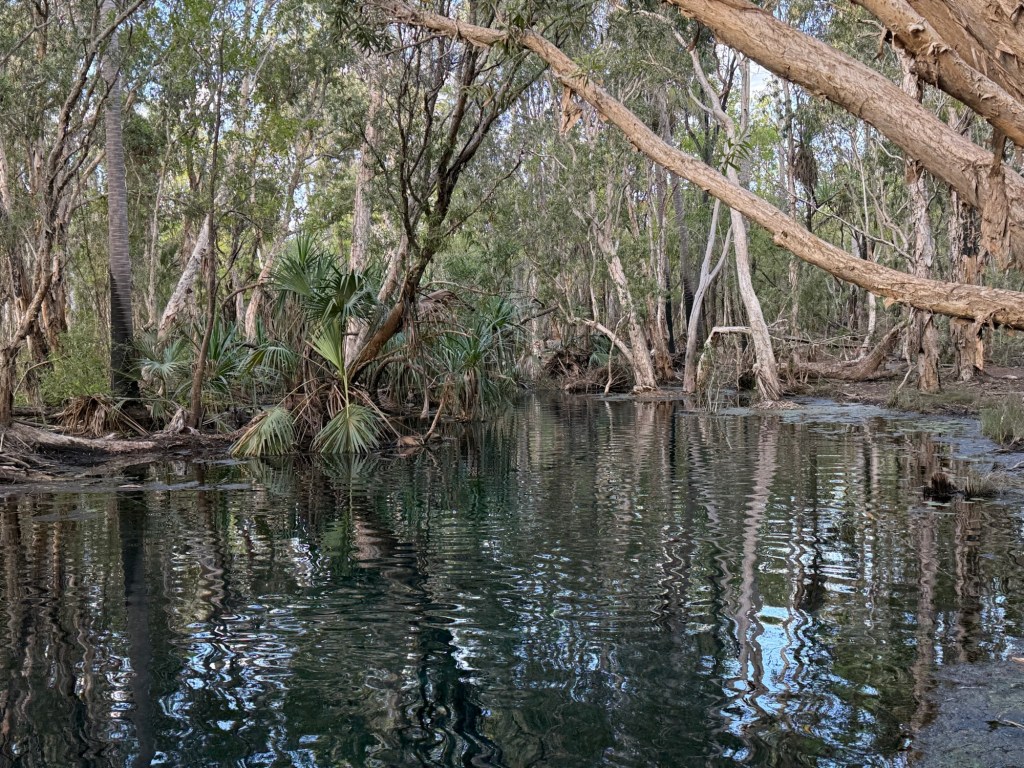
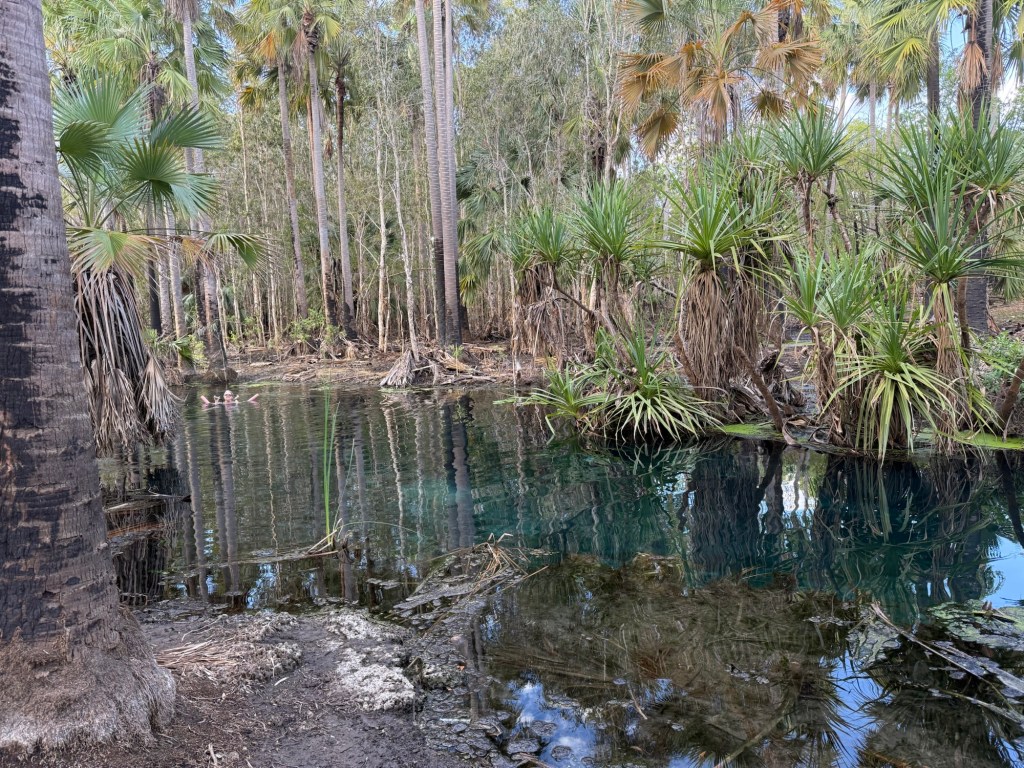
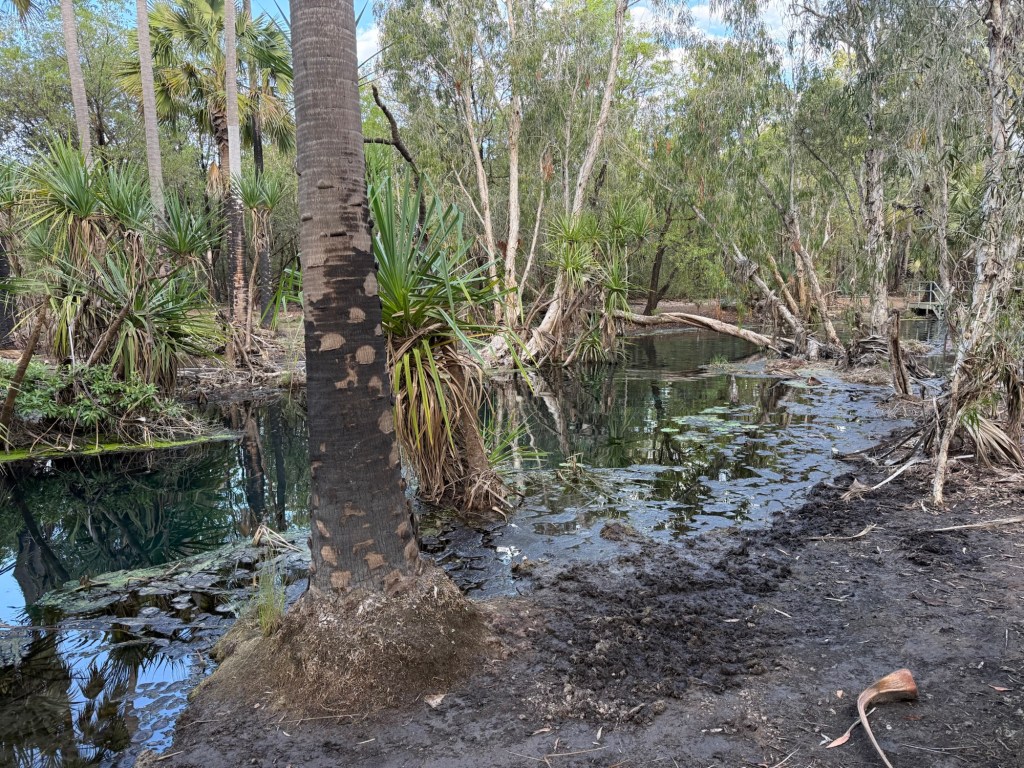
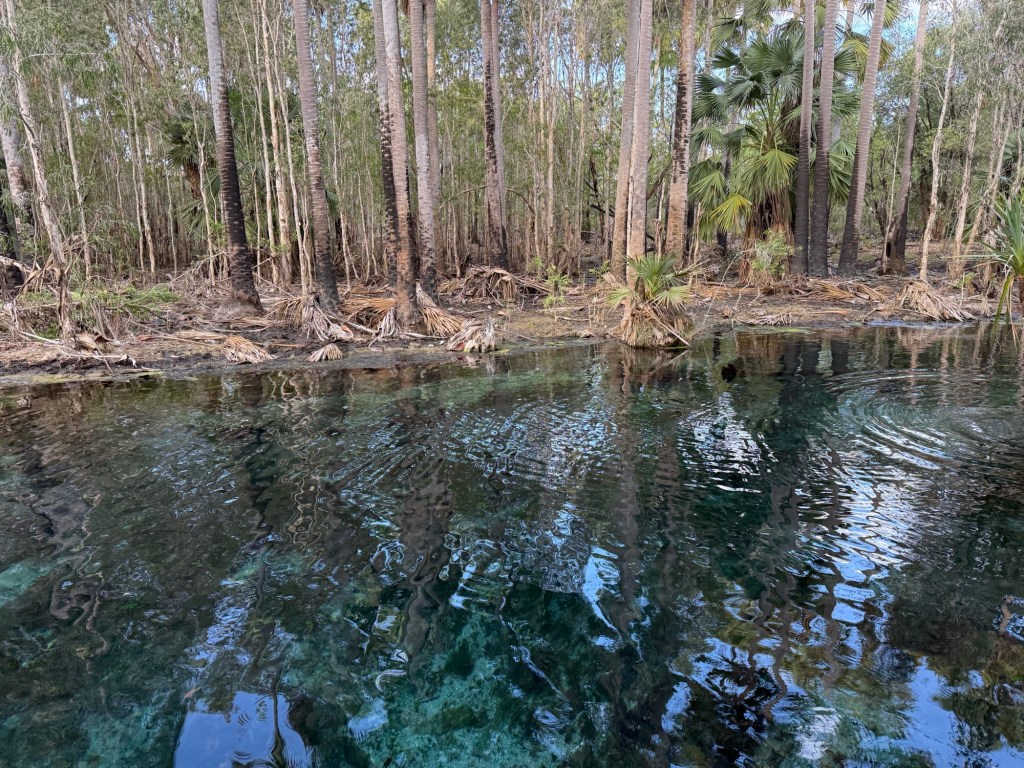
The thermal springs flow through a forest of paperbark trees and pandanus palms. The water is warm and crystal clear. The current is gentle as it sweeps you along the channel for several hundred metres to the steps where you can climb out.

The springs are full of rainbow fish and the odd turtle along with feral pigs on the banks. It’s almost a scene from Jurassic Park. A wonderful way to relax, quietly floating through the forest with your noddle.

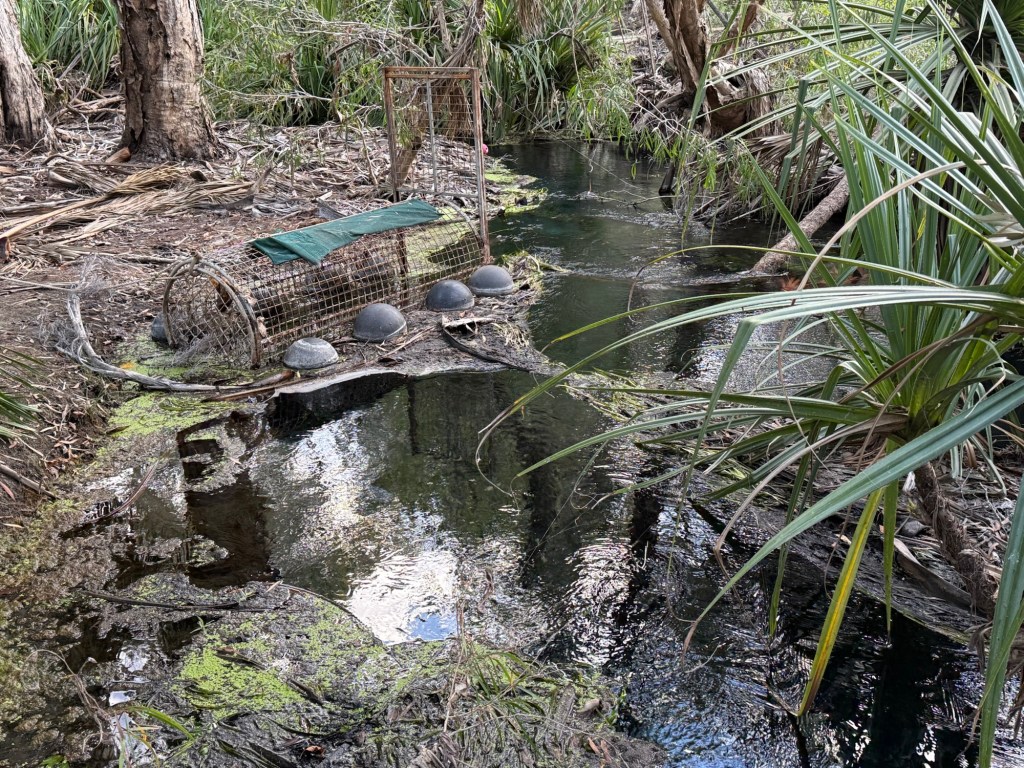
And don’t be alarmed but there is a crocodile trap at the end of the swimming area. As an aside our neighbour at the campground had been fishing for barramundi the day we arrived. His video shows his rod bending and the line going tight. He thought he had a big fish until its tail came out of the water and then its head. It was a 2 metre long fresh water croc. They say they don’t bite but just who are ‘they’ and do the crocs know they don’t bite?

Final comment, we are now in a world where diesel is below $2.00 a litre. That won’t last.

Log One Hundred and Thirty Four – The Tropics is Where to Spend Winter

14 June 2026

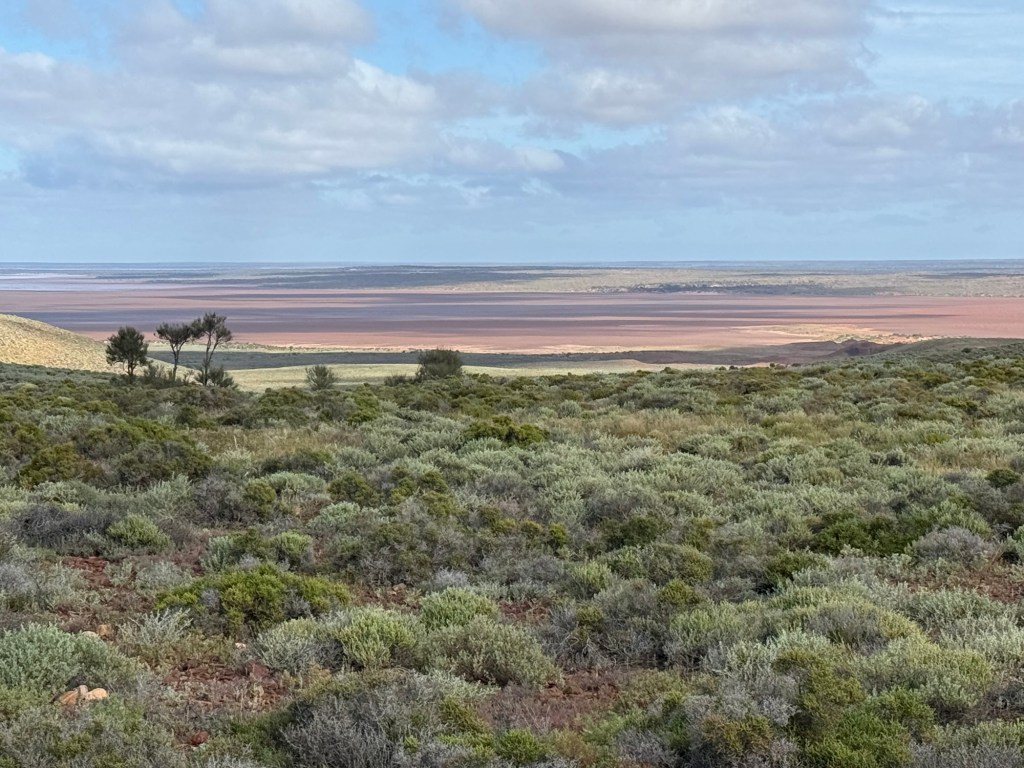
I was reflecting on our passing through outback South Australia and on some of the cattle stations in those parts. We came across so many with names like Mt Eba, Welbourne Hill, Mount Willoughby, and Commonwealth Hill. Be assured these station names are not marking some distinctive geological formation. In fact they reference the merest interruption to what is otherwise flat and vast expanses of marginal agricultural land. Don’t be fooled by their names.

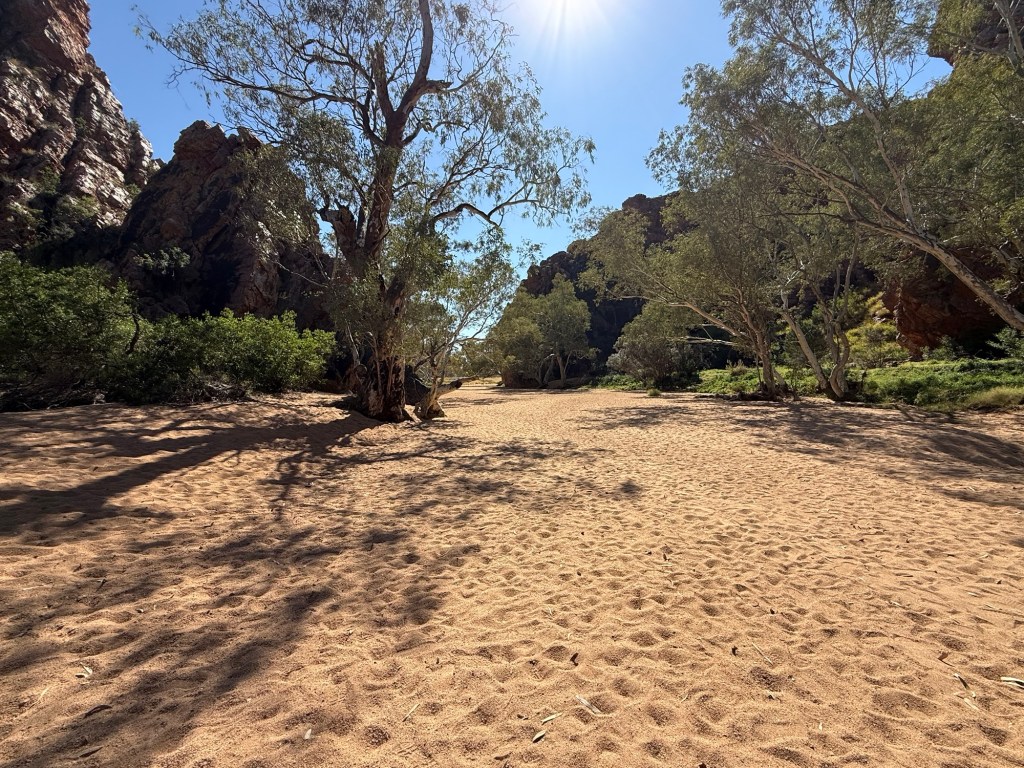
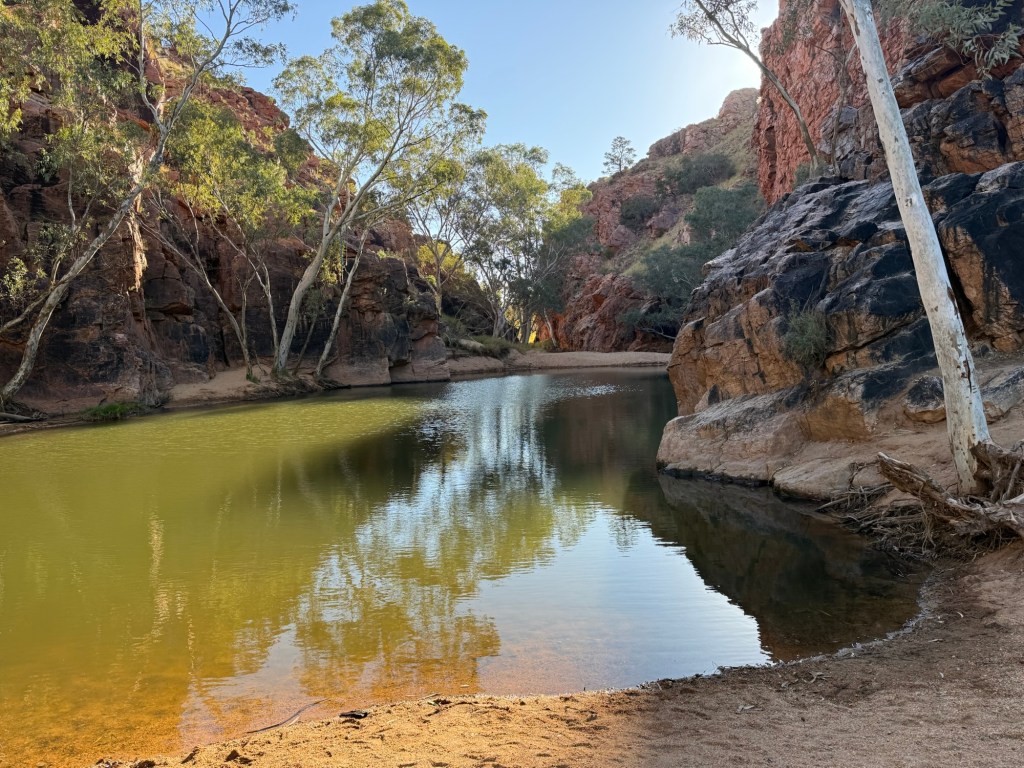
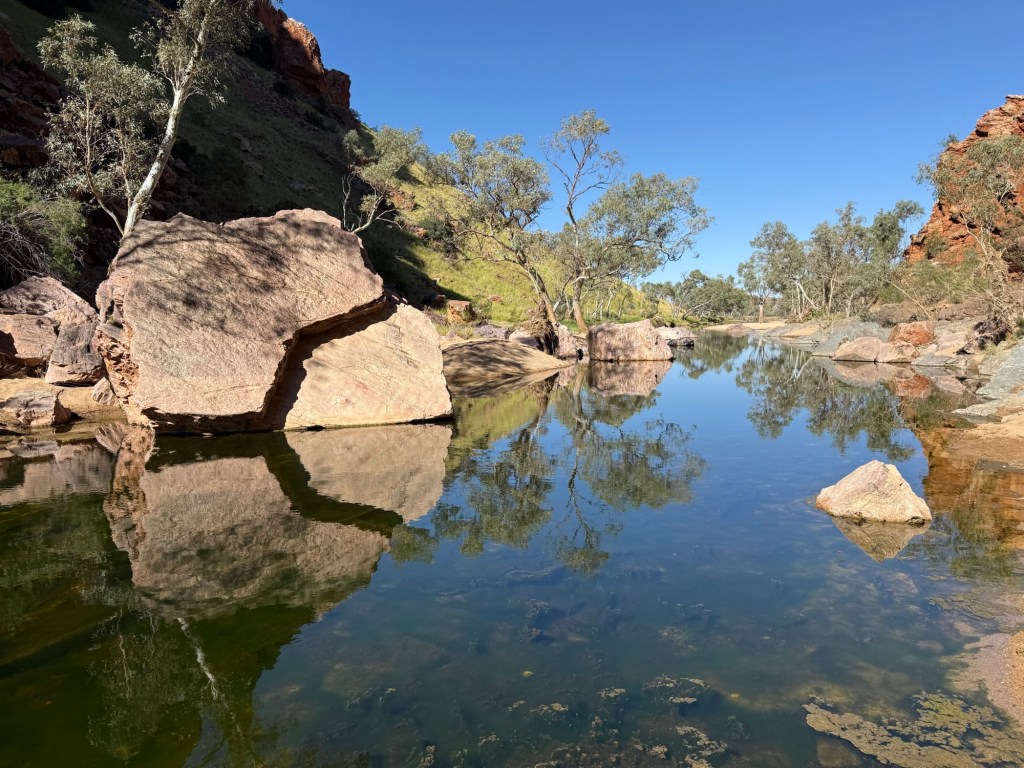
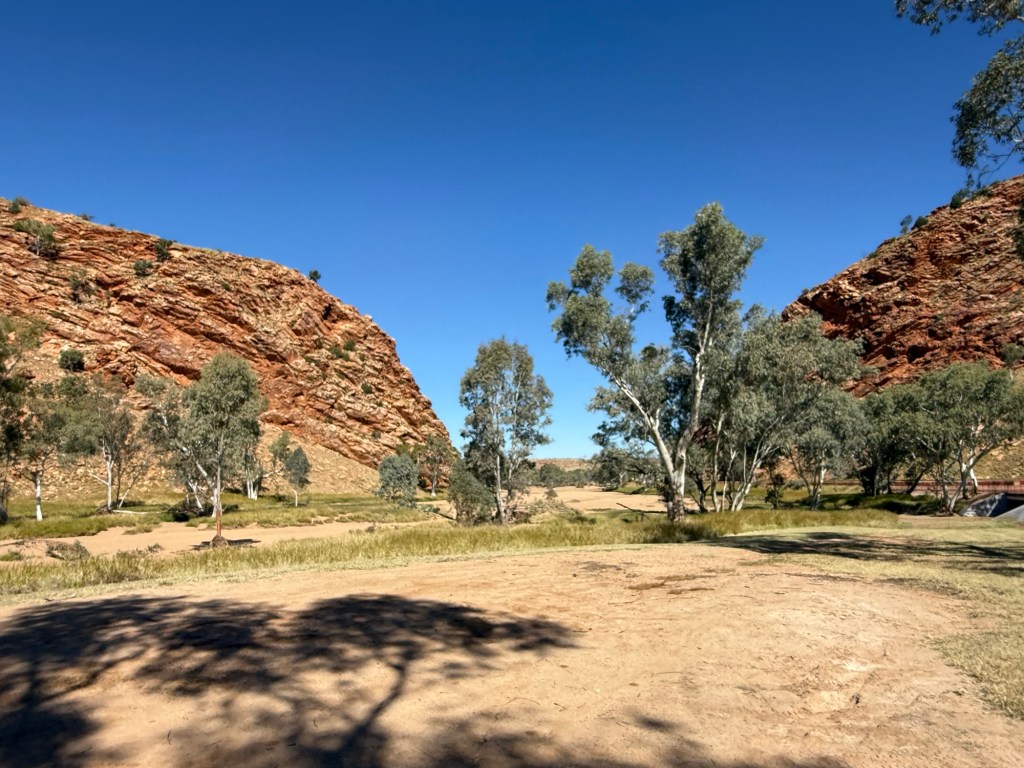
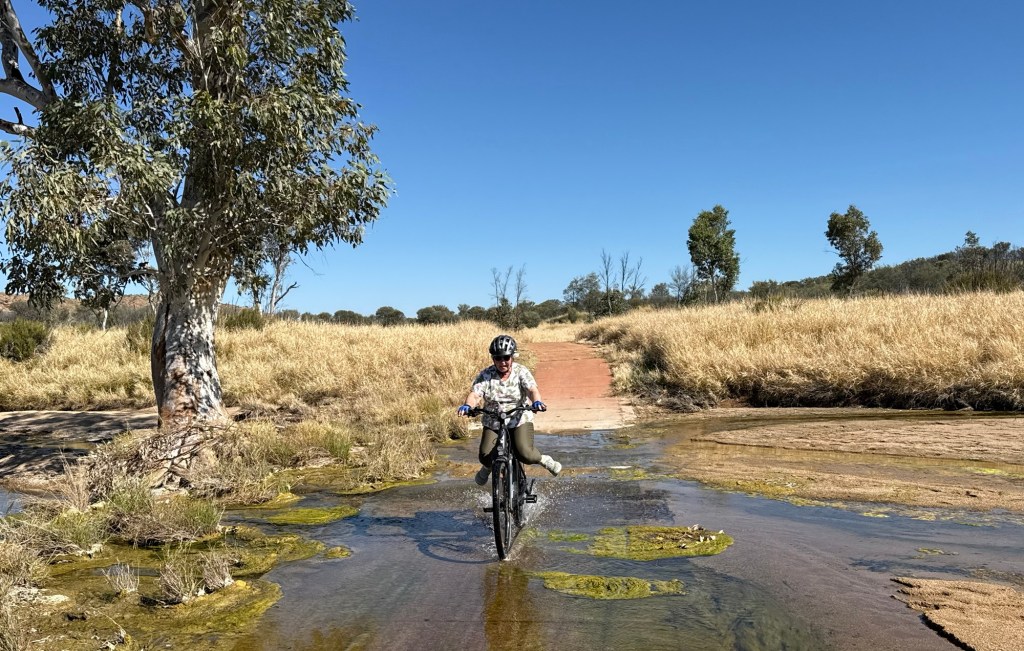
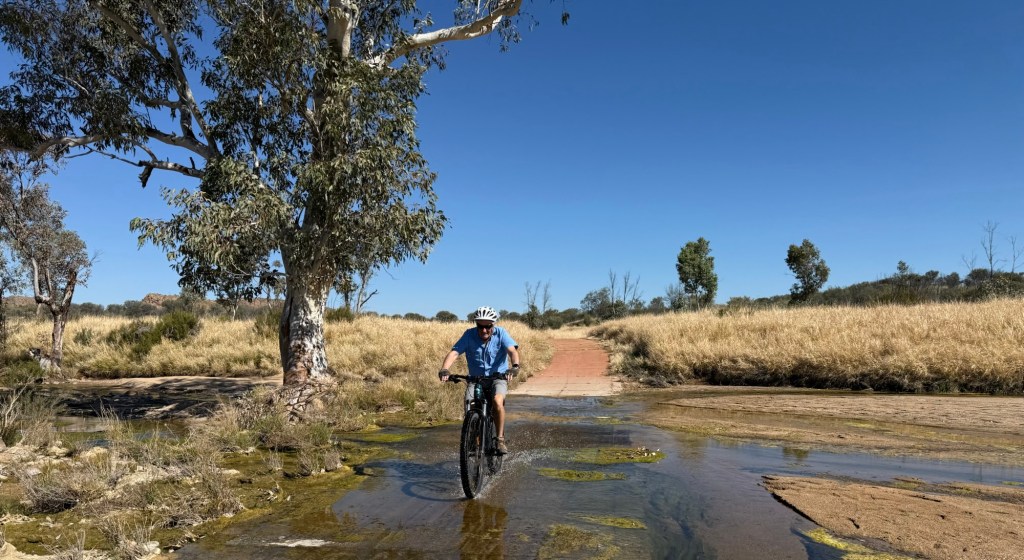
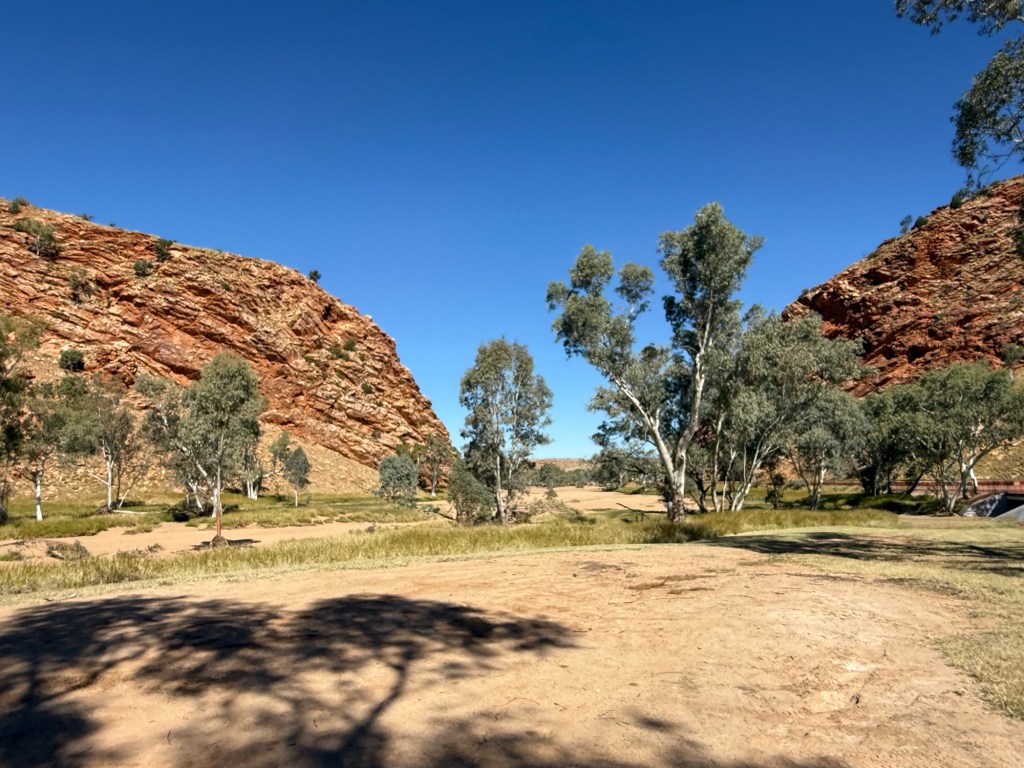
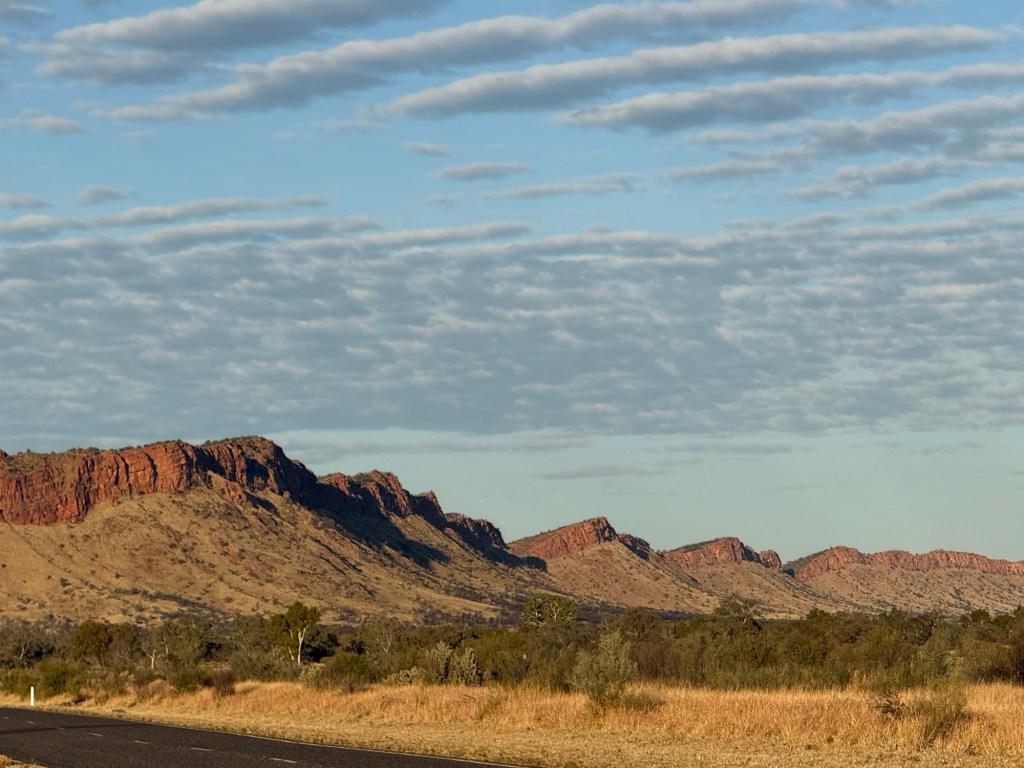
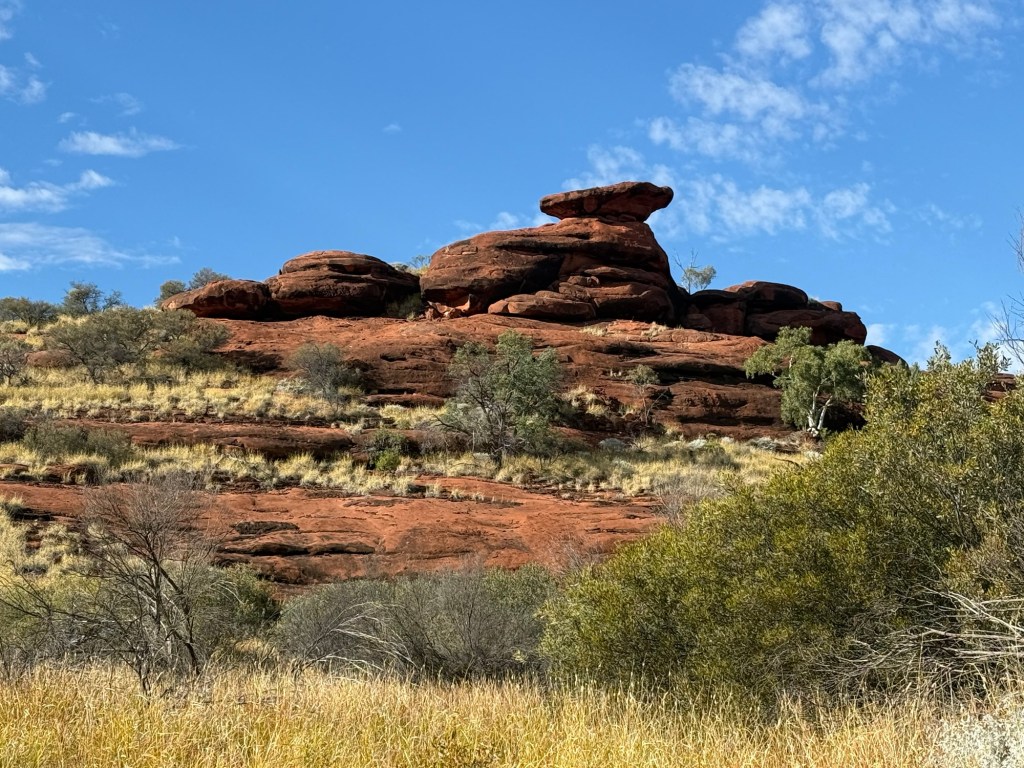
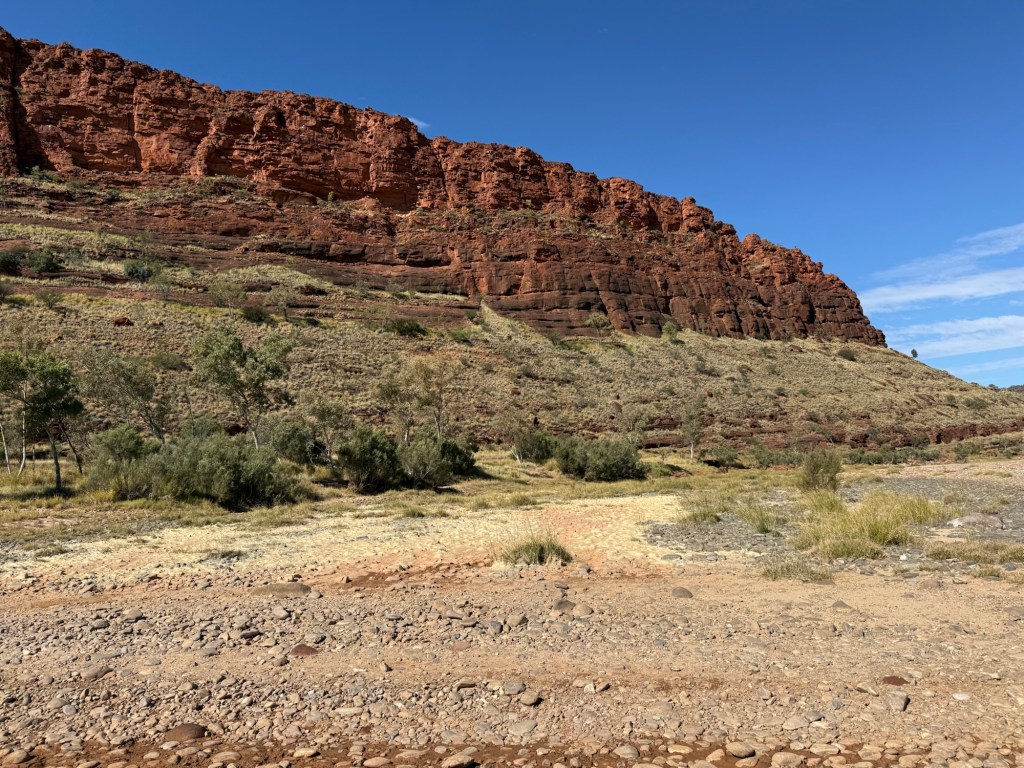
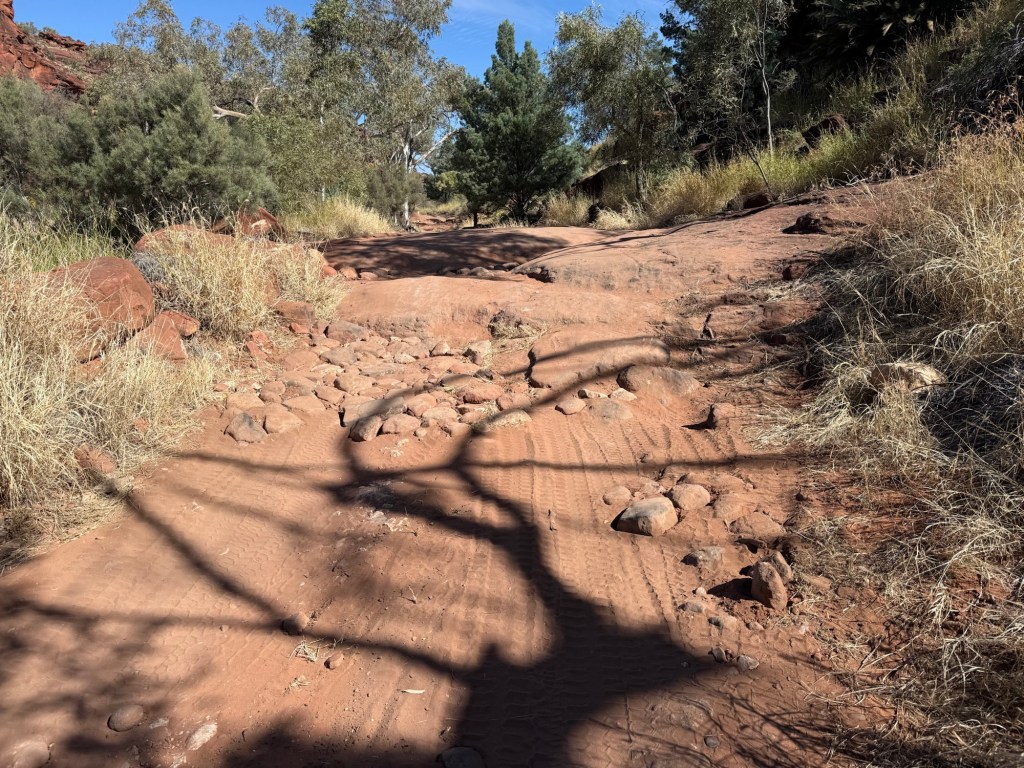
The McDonnell Ranges in Central Australia are in contrast striking landscapes. These ranges are intersected by numerous gaps, chasms and gorges which after a strong wet season have water. Each one is spectacular in its own way. We explored Emily and Jessie Gaps and rode our bikes to Simpson Gap. We also explored Trephina Gorge which I mistakenly recalled as having extensive rock art, mistaken memories from long ago.

We have now crossed the Topic of Capricorn which means our winter wardrobe is evolving to the back of the wardrobe. Coats, beanies, gloves and scarves have become ballast.

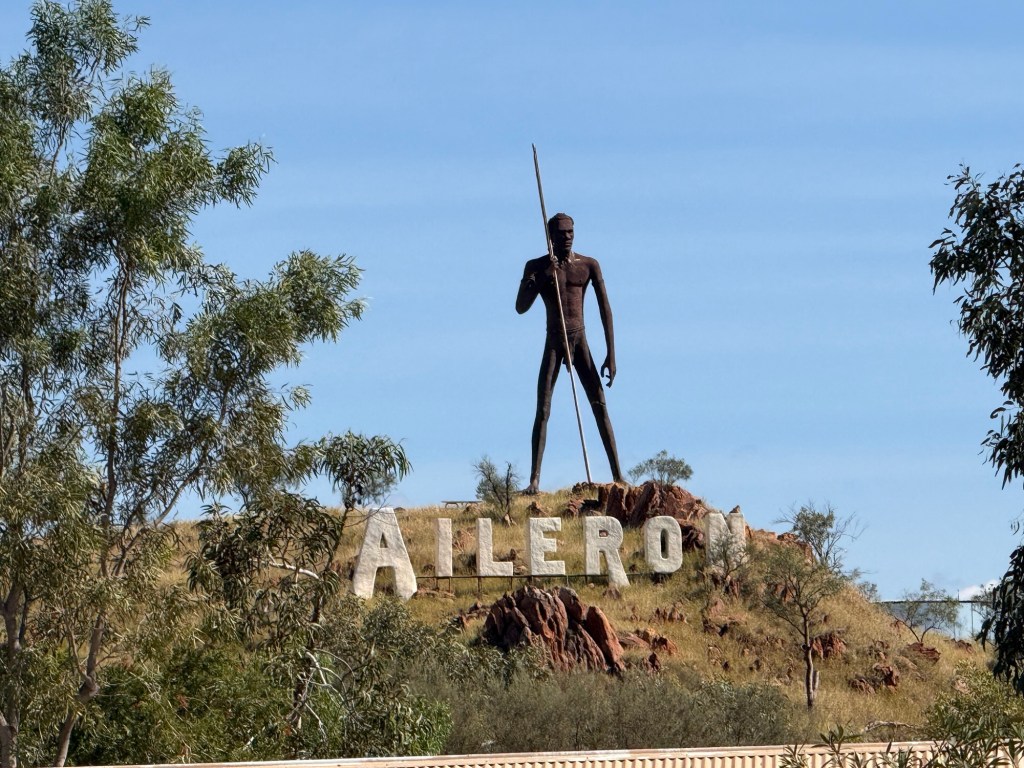
Those of us who have travelled around this country will have come across many ‘big’ things. There is the Big Banana, the Big Trout, the Big Spud, the big sheep, the Big Prawn, the Big Pineapple and the Big Mango. We have now discovered the person who must consume all these big food products, it’s the Big Man. I am going to refer to him as the Big Bloke.

The Big Bloke is mounted on a hill top behind the Aileron Roadhouse in the Northern Territory. He is 17m tall and that is pretty big. As an aside the homemade sausage rolls and pies at the Aileron Roadhouse are some of the best we have ever enjoyed.

In the past the mark of a true remote traveller was a 4WD vehicle fitted with an HF aerial and HF transmitter/receiver. These systems were seen on private 4wd vehicles and NT police cars and emergency vehicles. No longer, HF radio and long distance comms is now delivered by Starlink. The up to date remote vehicle now carries the Starlink system. It appears HF has gone the way of typewriters and the telegraph.

More to come…..

Log One Hundred and Thirty Three – The Centre of the Centre.

11 June 2026

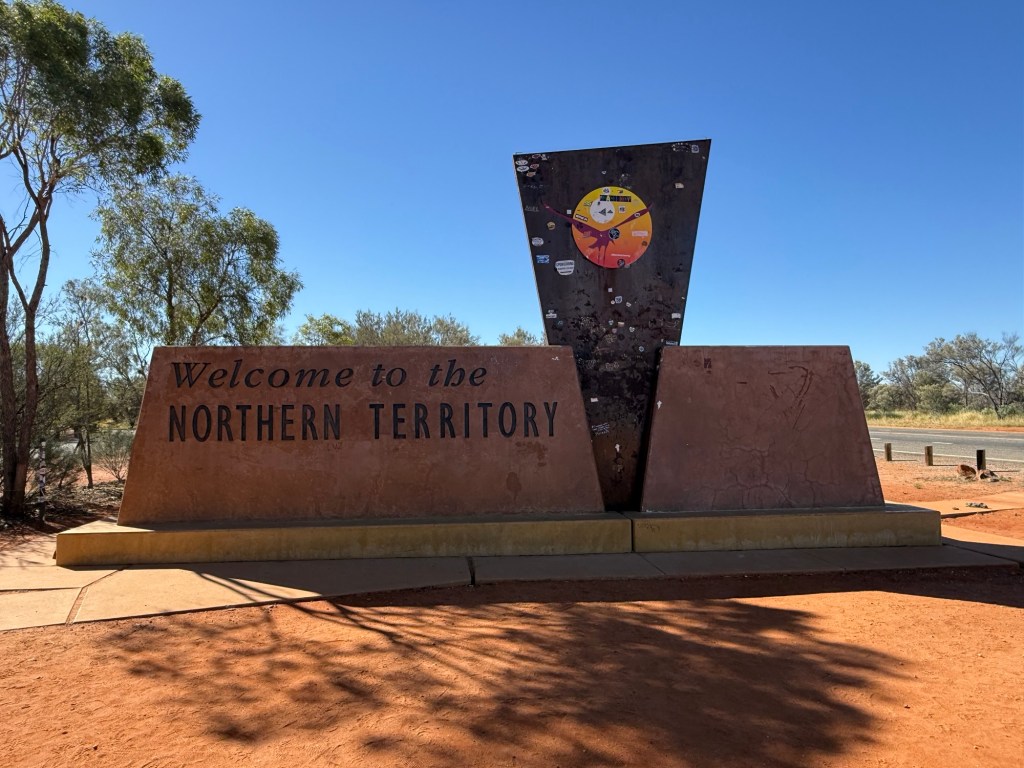
As predicted we are now in the Northern Territory and enjoying the weather of Central Australia, cool nights and sunny days.

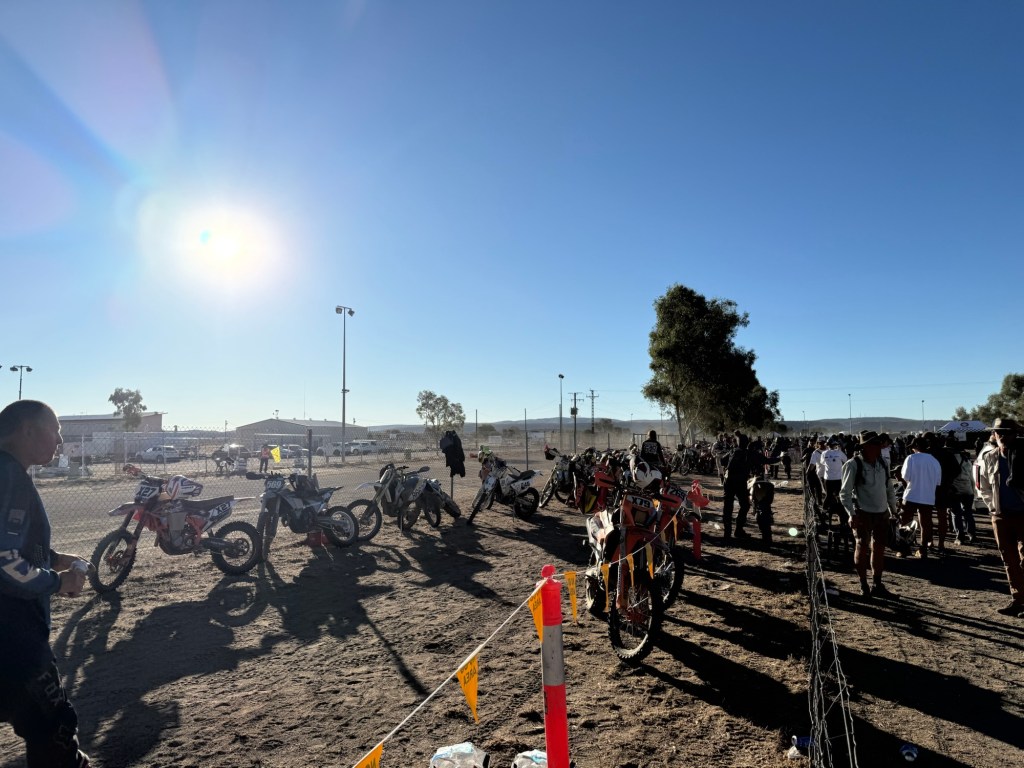
On our way to Uluru (Ayers Rock) we stayed at a free camp at Curtain Springs station. It’s a cattle station of about 1 million acres. We enjoyed dinner with several bike riders who had travelled through some of the more remote and isolated country to get to the Finke River Desert race. An interesting night of conversation sharing stories of remote travel and places to be explored. The conversation was of course enhanced through the imbibing of various refreshments. It’s these experiences that make remote travel so worthwhile. The next morning they packed up their swags and were back on the road seeking out challenging tracks to get them to Alice Springs via the Finke Gorge.

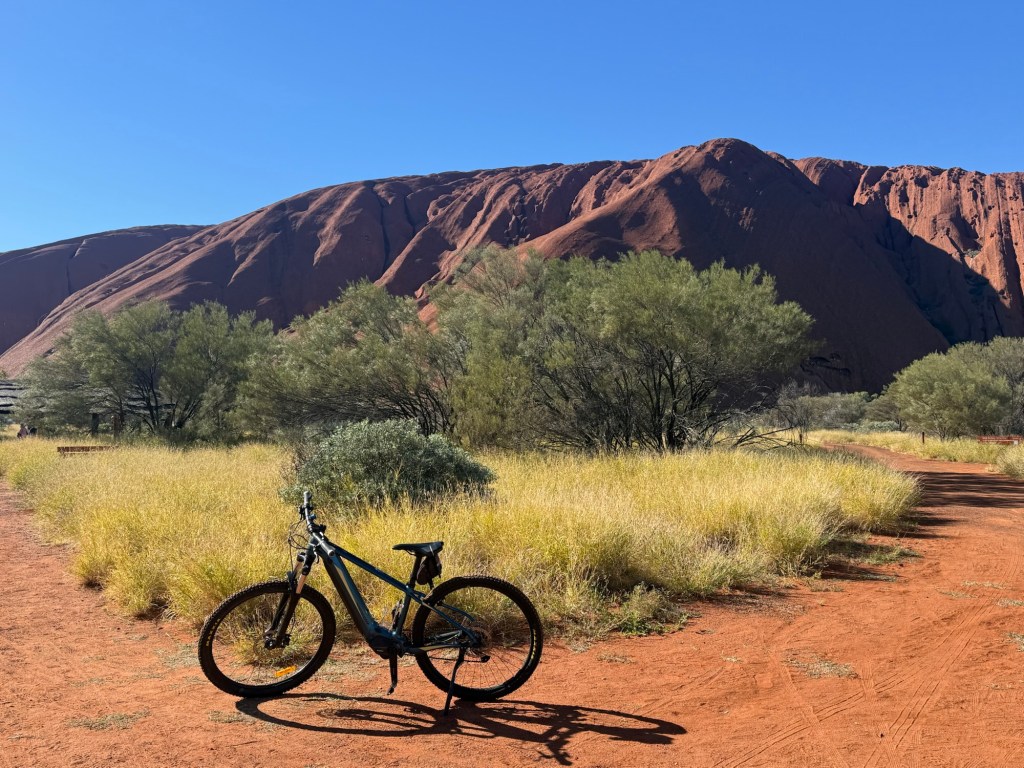
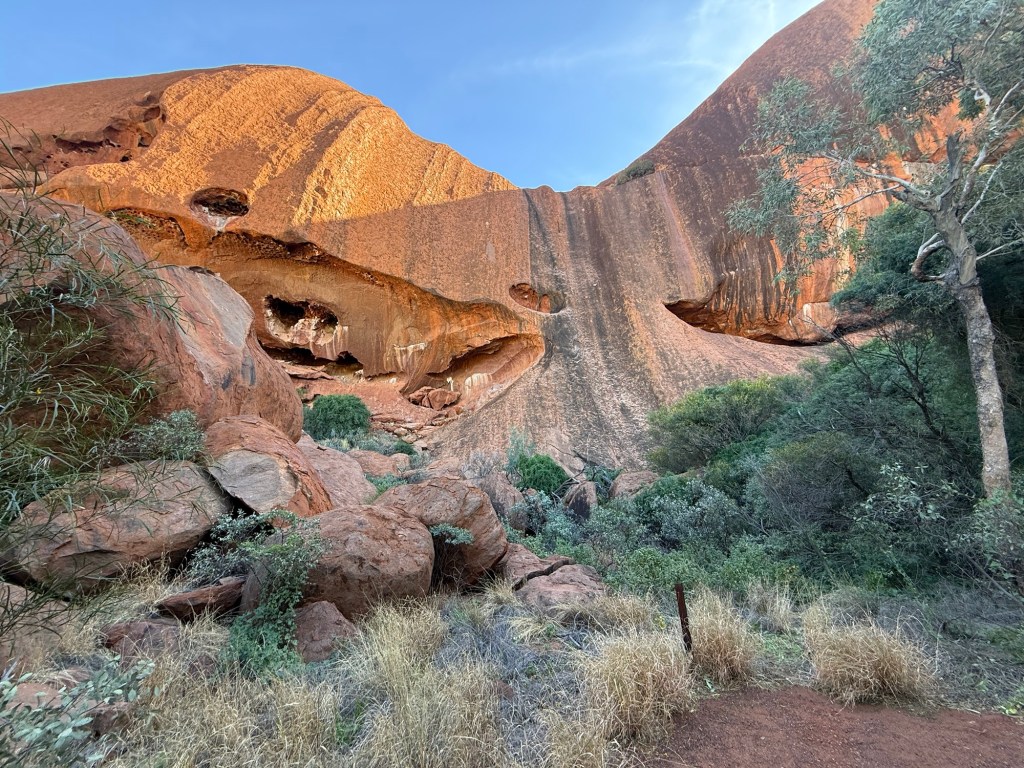
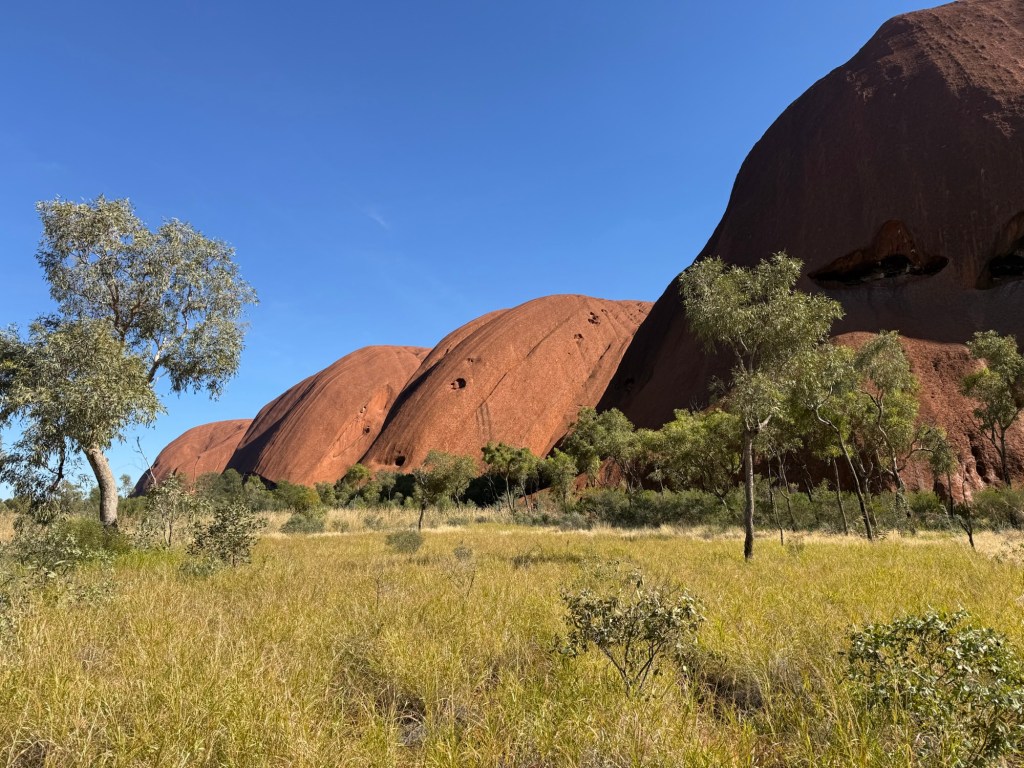
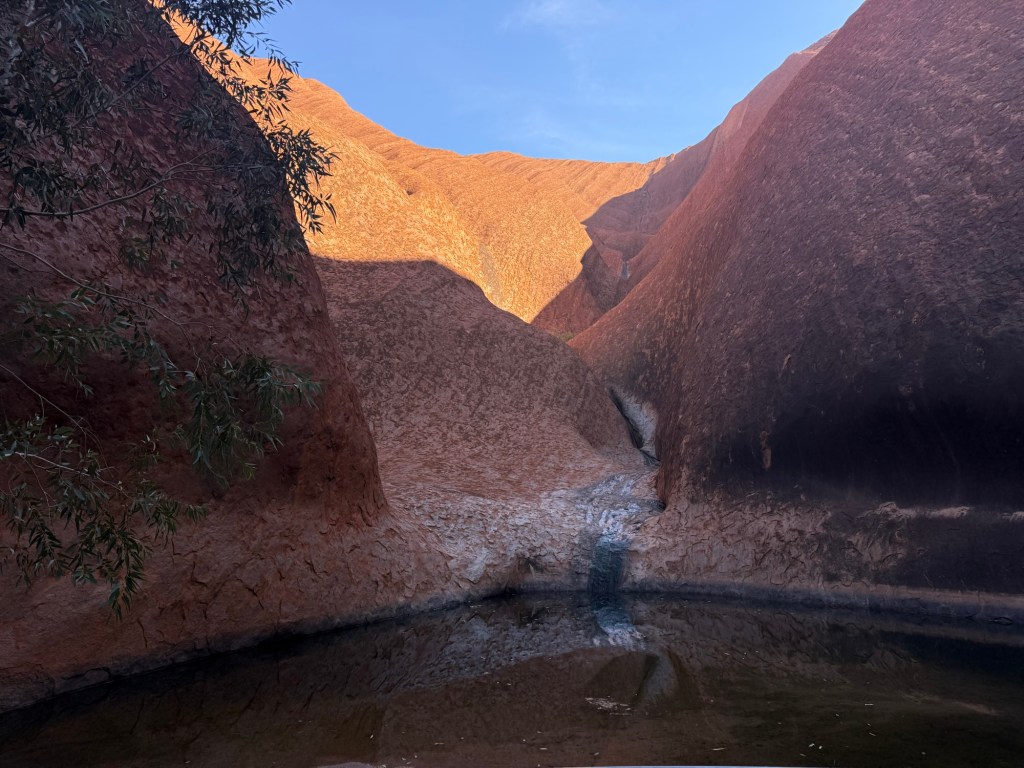
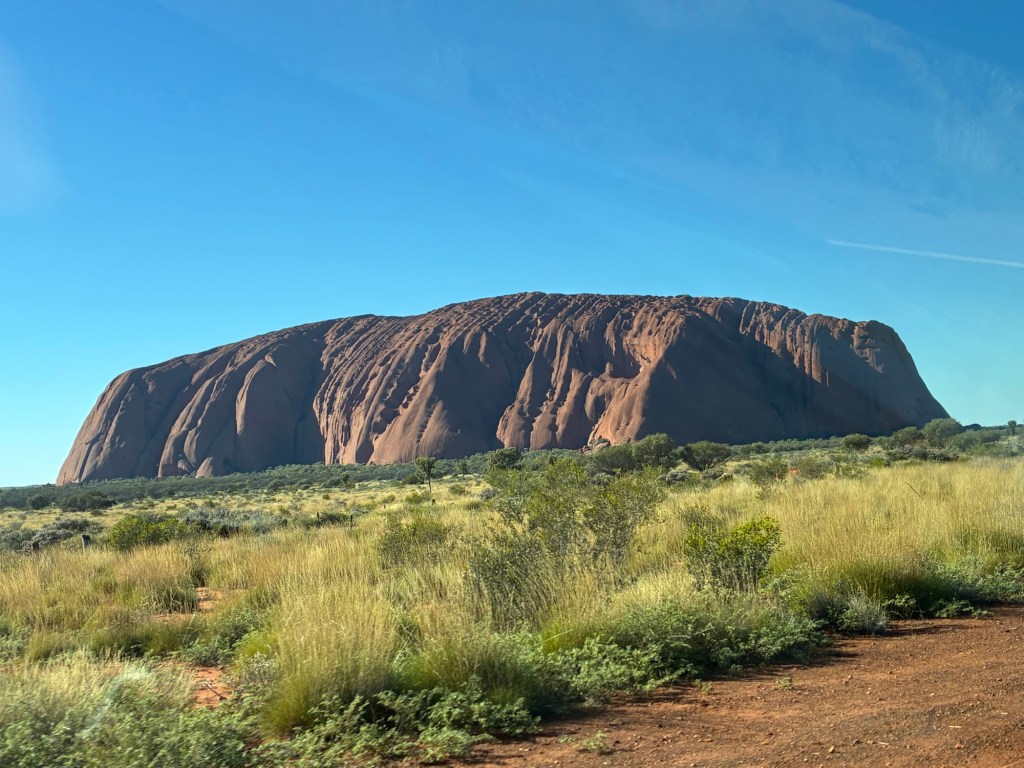
We have previously climbed Uluru (no longer possible), walked around the rock, flown over it and now have ridden our bikes around this massive lump of geology. Similar to natural wonders the world over, photos never do the magnitude of the monolith any justice. It’s huge which is even more awe inspiring since it rises like an island out of a vast empty plain. You have to wonder how did it get there!

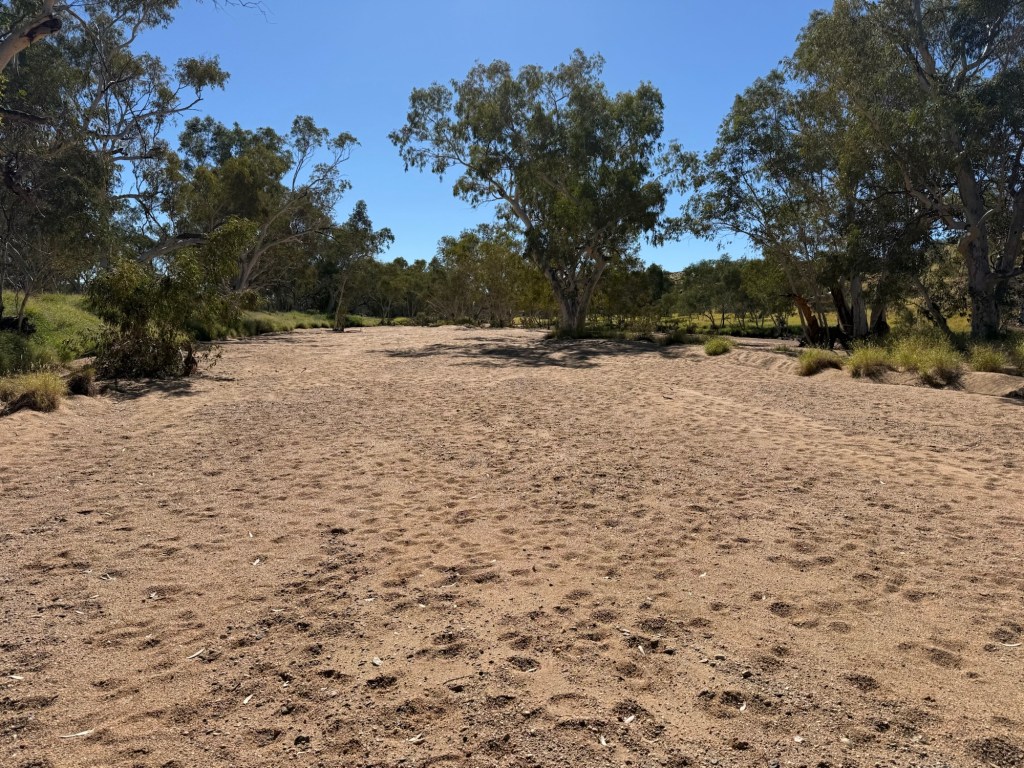
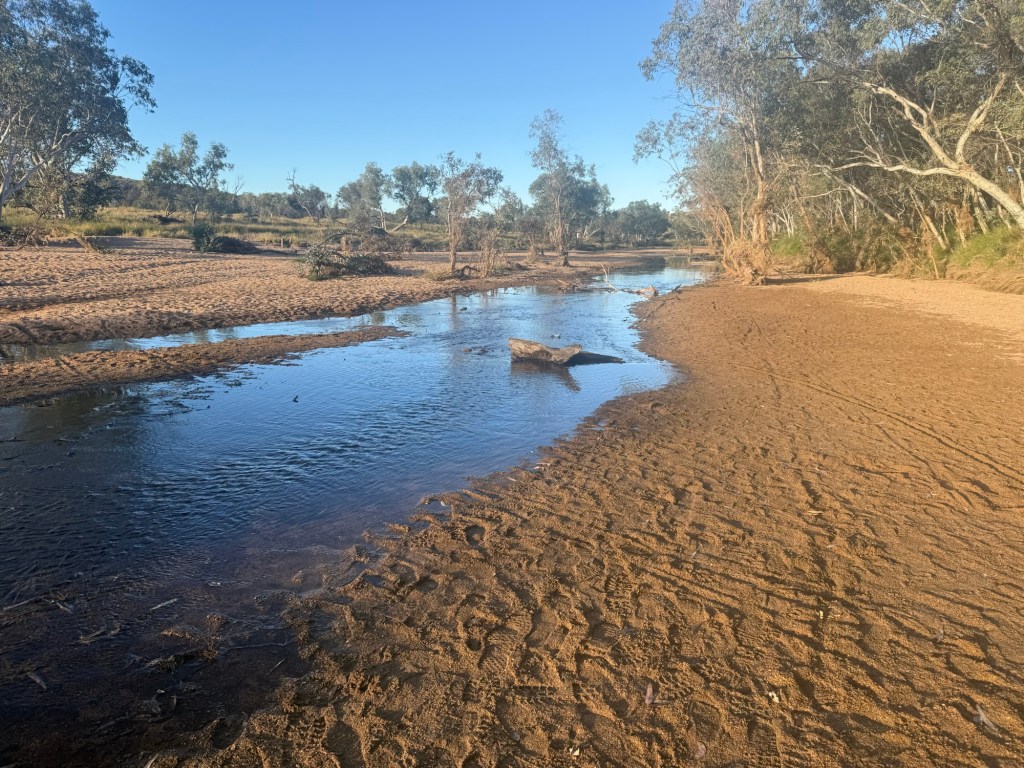
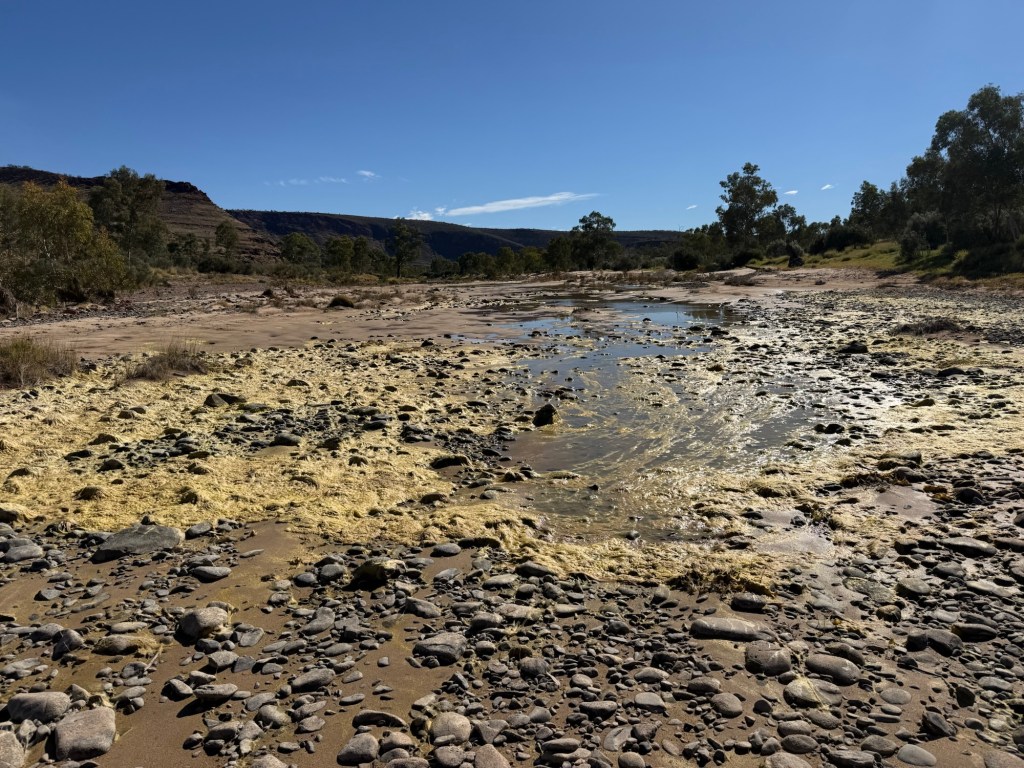
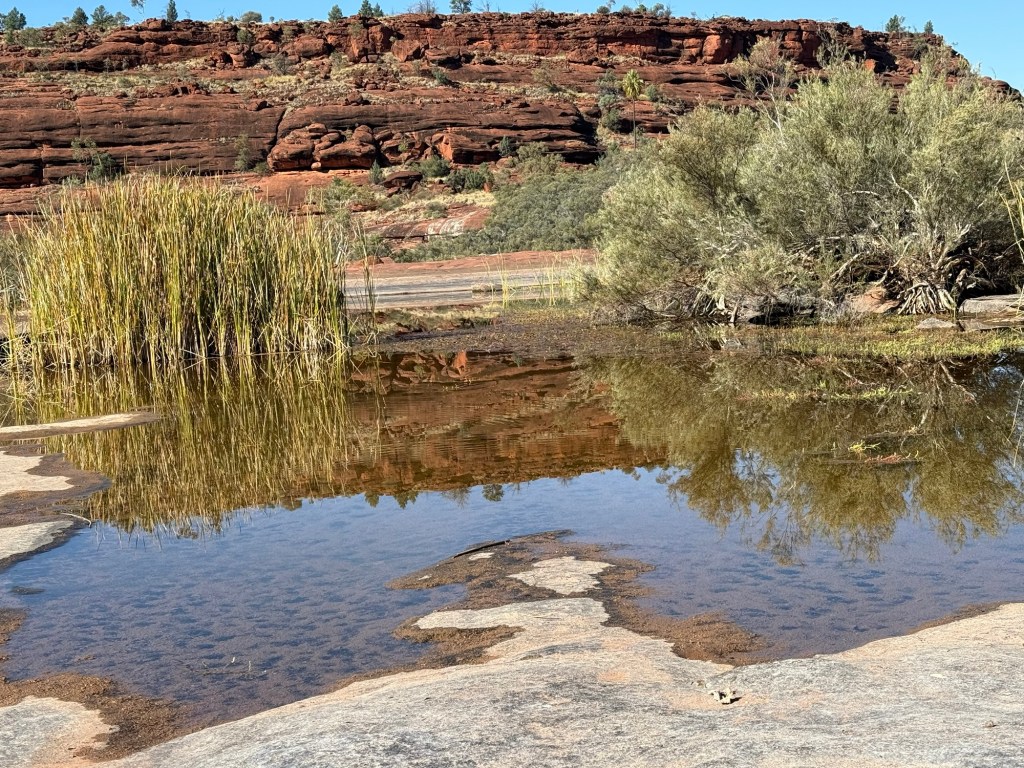
What is normally best described as a desert has enjoyed several wet seasons which means the desert is green and there is water in some of the creeks and rivers. The Finke River which starts and finishes in deserts is between 300 and 400 million years old and this year it has water! It’s one of the oldest rivers in the world but you might think it’s more like than a creek than a river. The Todd River is even flowing.

We are now in the town of Alice Springs which is named after a woman, namely Alice who never lived in the area, and a spring that was actually a water hole and not a spring. So the town is named after someone who was never there and a water feature that doesn’t exist; curious.

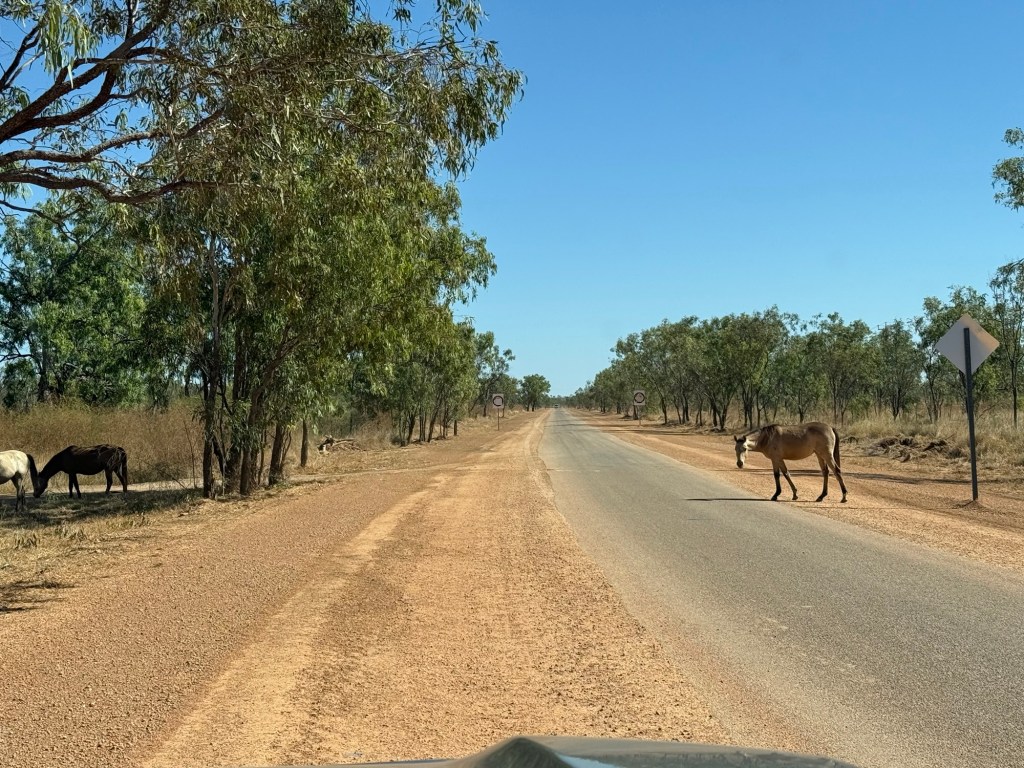
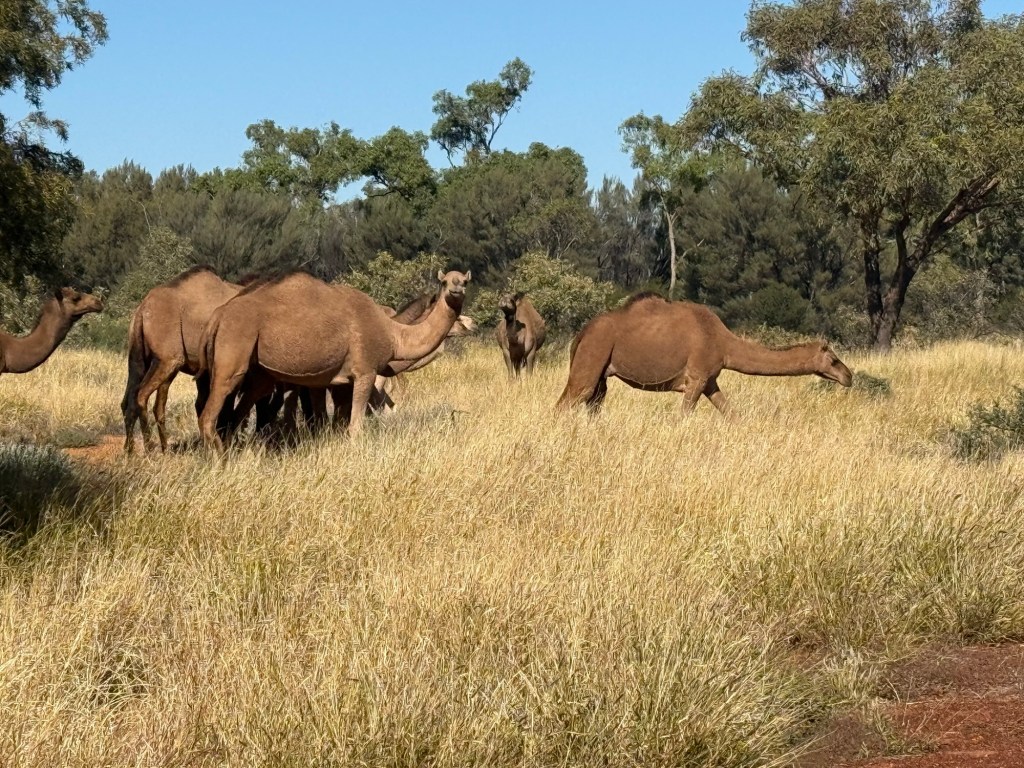
We have done our bit to assist with reducing the number of feral camels in this country. We enjoyed camel burgers for dinner one night. They were very good. There are also lots of feral horses and donkeys up here but I don’t expect to see them on any menu.

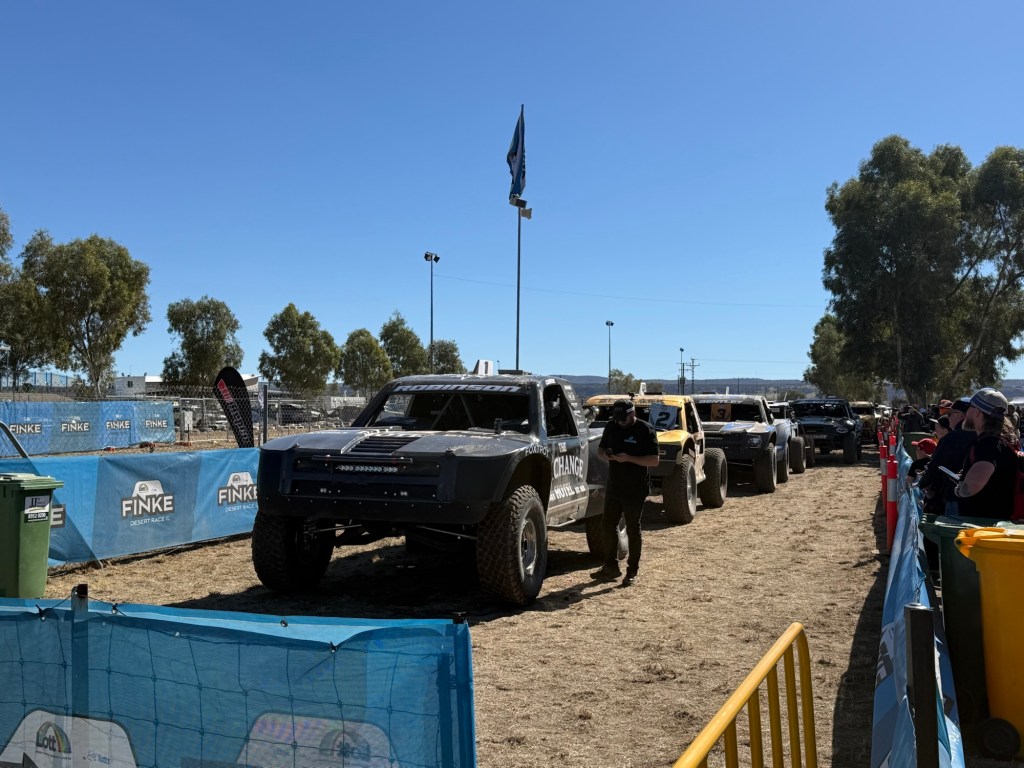
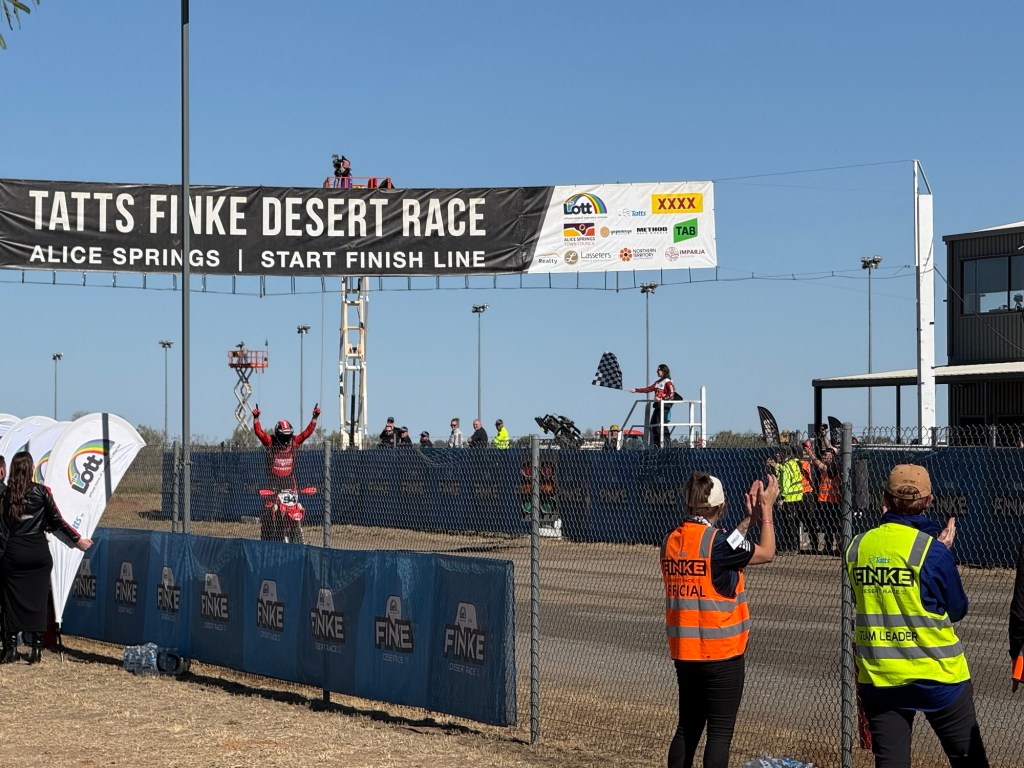
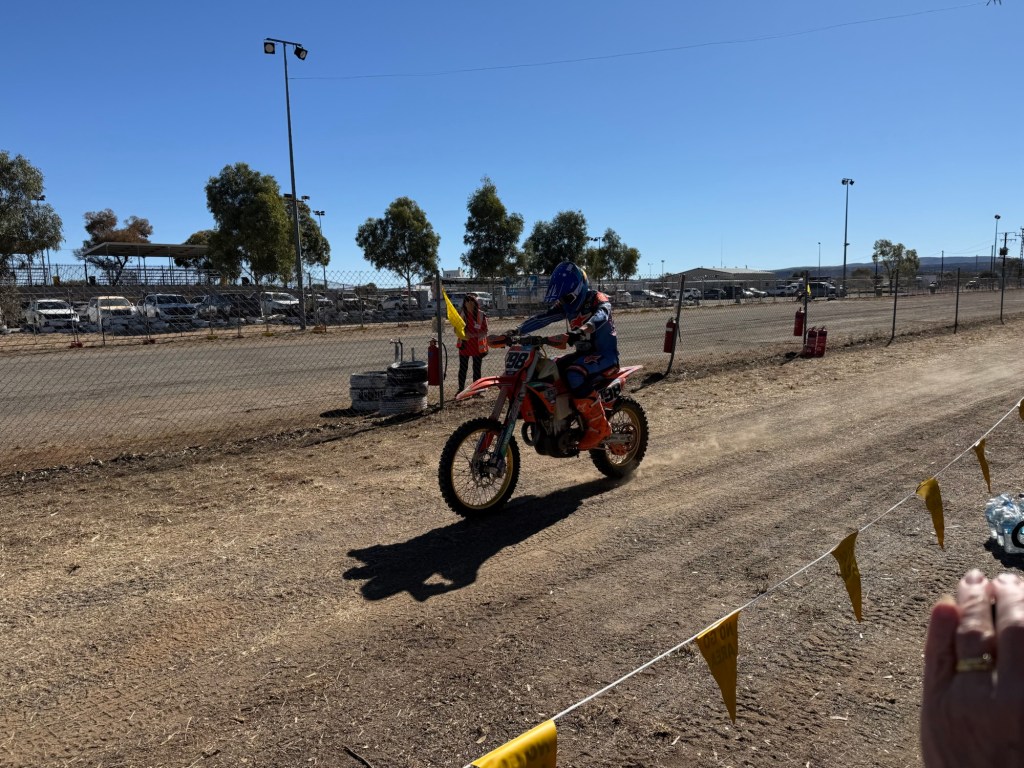
There was a worry about fuel availability in these remote parts but that has not been an issue. However there appeared lines of 4WD vehicles at the diesel bowsers when the town’s population blew out from 30,000 to 45,000 for one weekend. That was the weekend of the Finke Desert Race. This is a competition of about 160 vehicles and over 550 motorbikes racing over two days. Each day was about 200kms of rough dirt track.

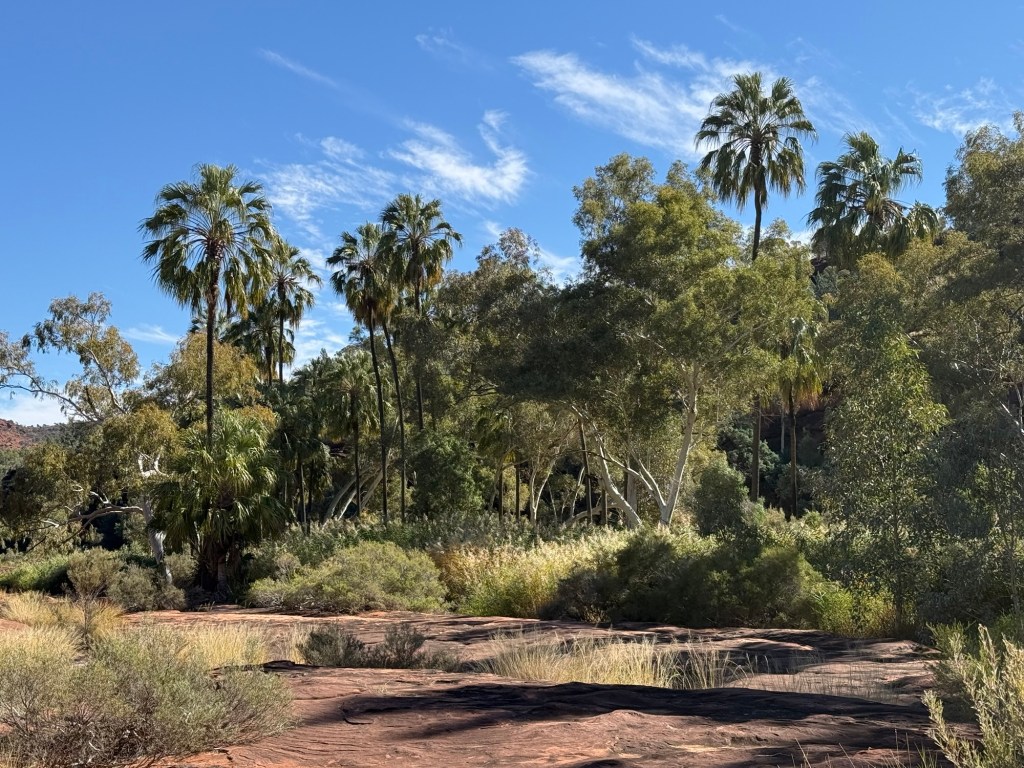
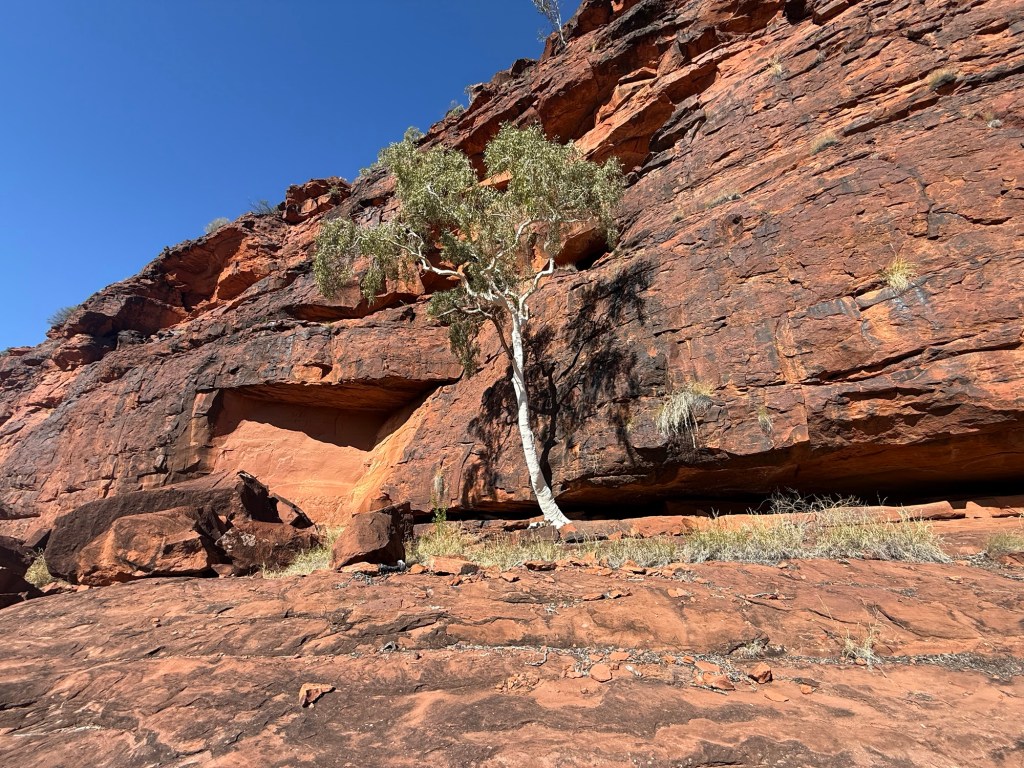
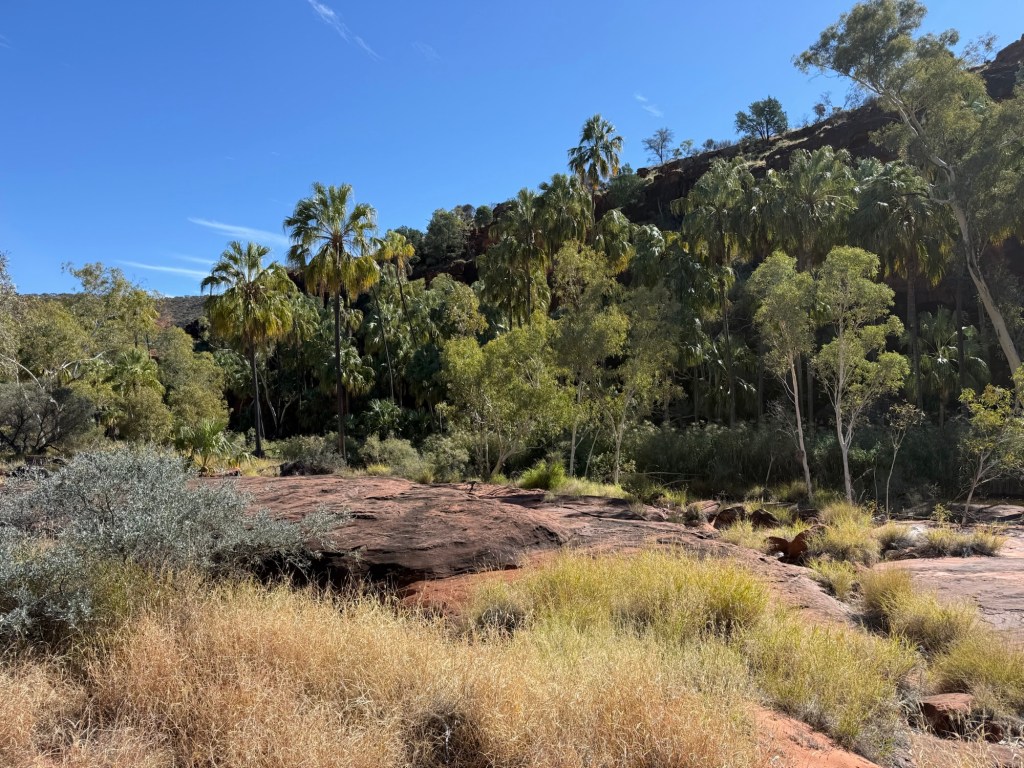
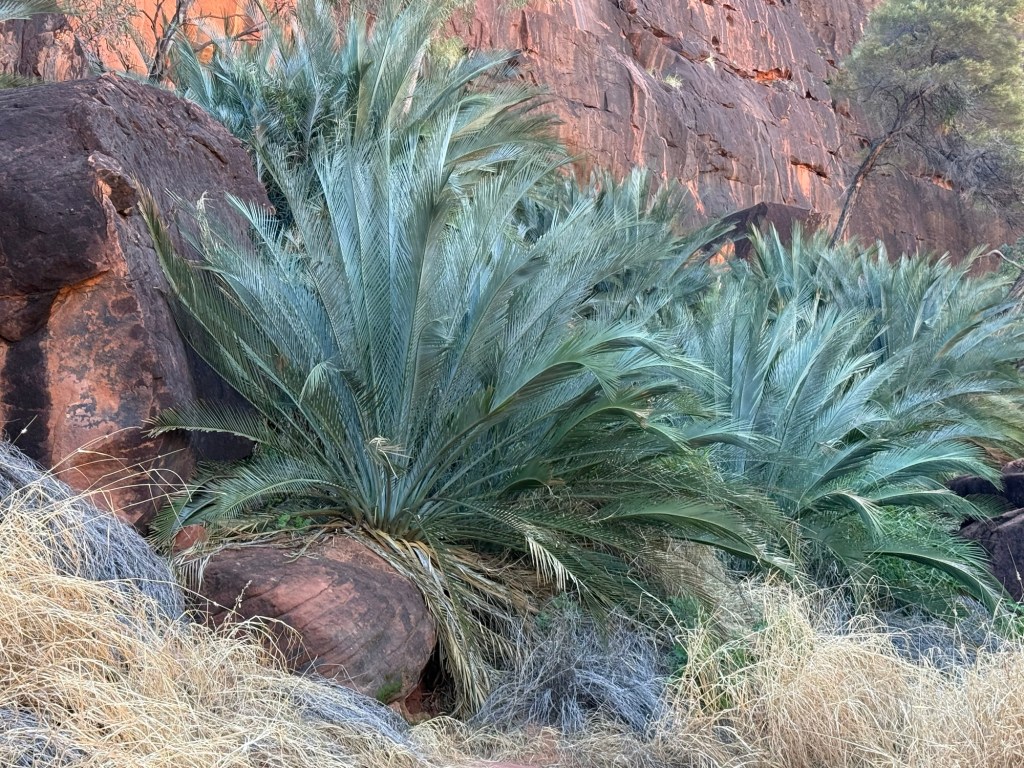
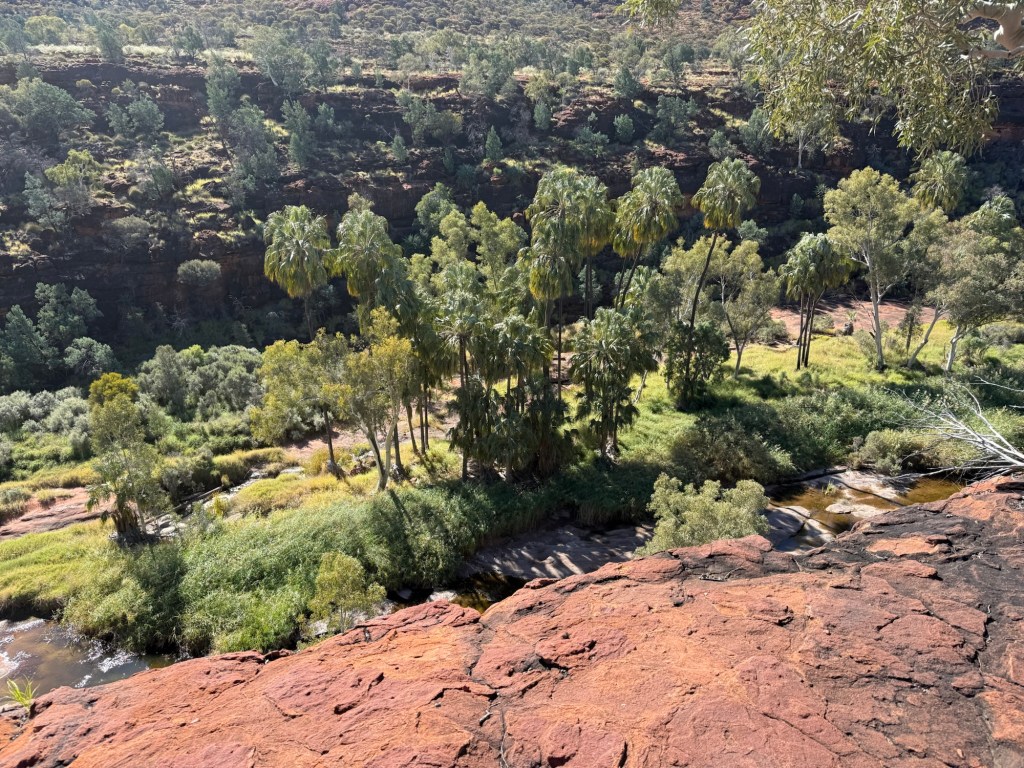
We have visited a gorge with some 3,000 unique palm trees growing in the middle of the MacDonnell Ranges. It seems incongruous to find palm trees in the middle of Australia and in the middle of a desert but they are there. Their nearest relatives are about 1000 kms away, on the coast.

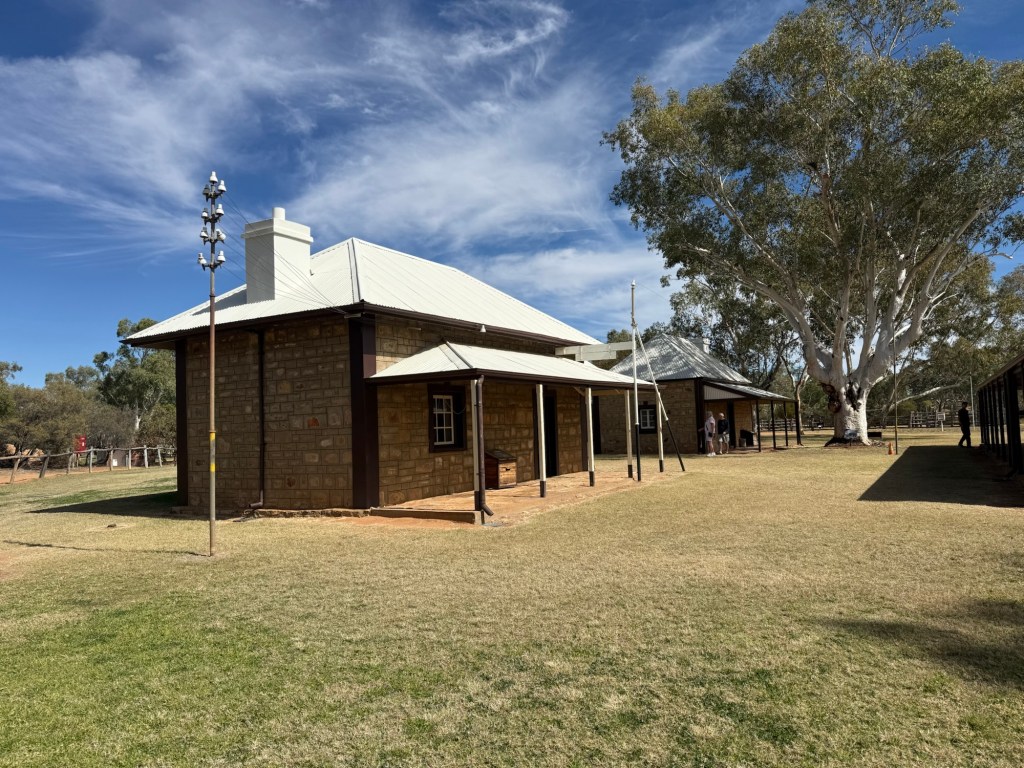
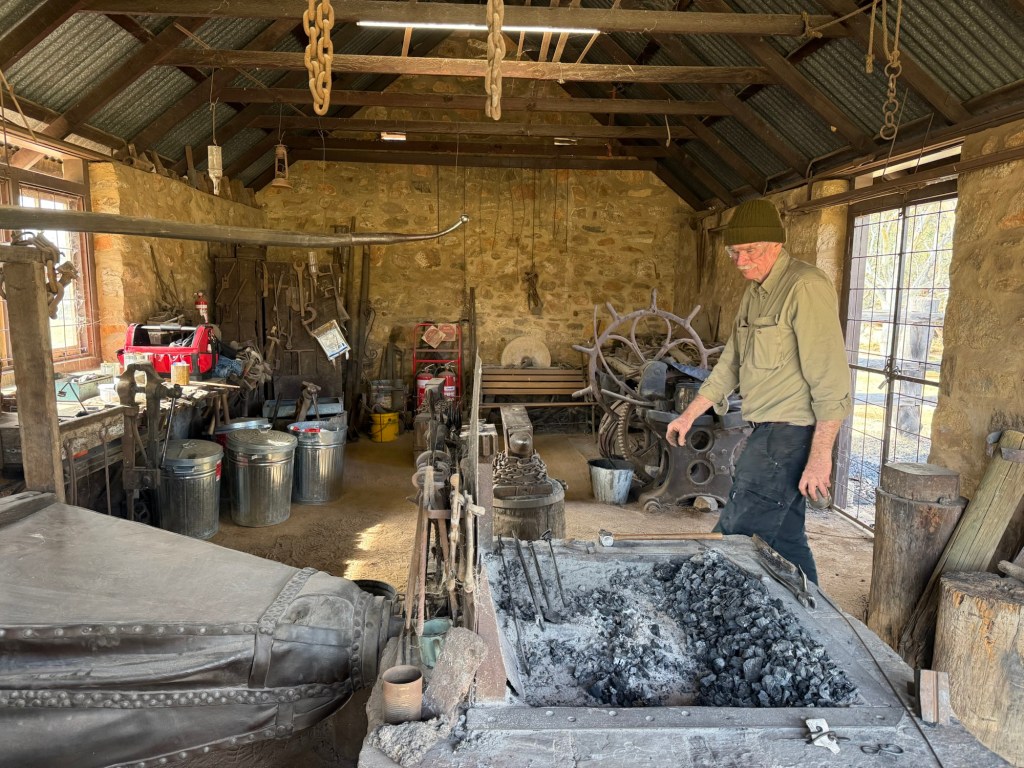
The Alice Springs telegraph station is a fascinating piece of history. After 1872 with cables stretching across the world and under the oceans, a telegram to London took only 5 hours. Before the telegram a letter took three months to get to its addressee and three months for the reply. The telegram was the internet of its day but at 20 cents a word in 1872 it was not available to the common folk and you certainly didn’t sit up all night chatting with friends in far off places.

Soon we will be back on the road heading north and beyond the Tropic of Capricorn. It’s at this point that the winter weather becomes a mere memory.

Log One Hundred and Thirty Two – And They Call the Wind Maria.

1 June 2026

We have left the southern regions of this continent and are now approaching the middle bit, often referred to as the red centre or maybe just the centre.

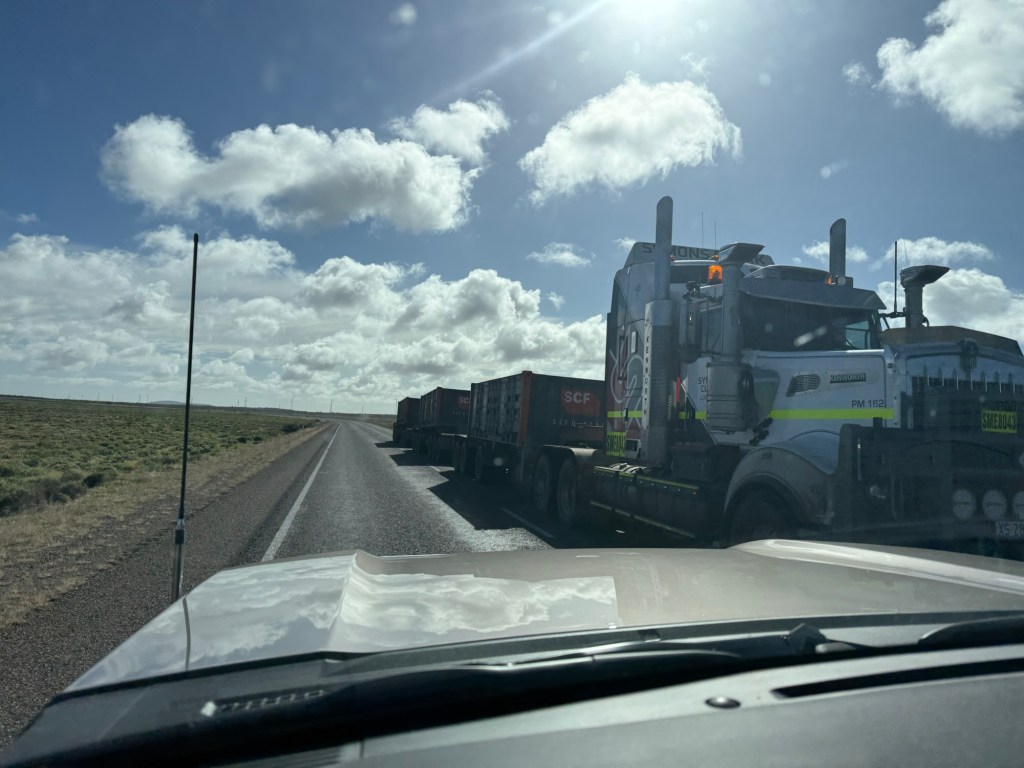
As I write the wind is blowing as it has these last 24 hours. It makes for an interesting day of driving with head winds of 40kph+. It’s most interesting when a road train with four wagons passes you at speed. It has a tail wind and you’re driving into the wind. The aerodynamics between our car and the truck causes the car and caravan to bear away and toward the edge of the road. All this happens in seconds. The heart races as you get the car and caravan back on course whilst maintaining a steady course and no swerving but maybe some swearing.

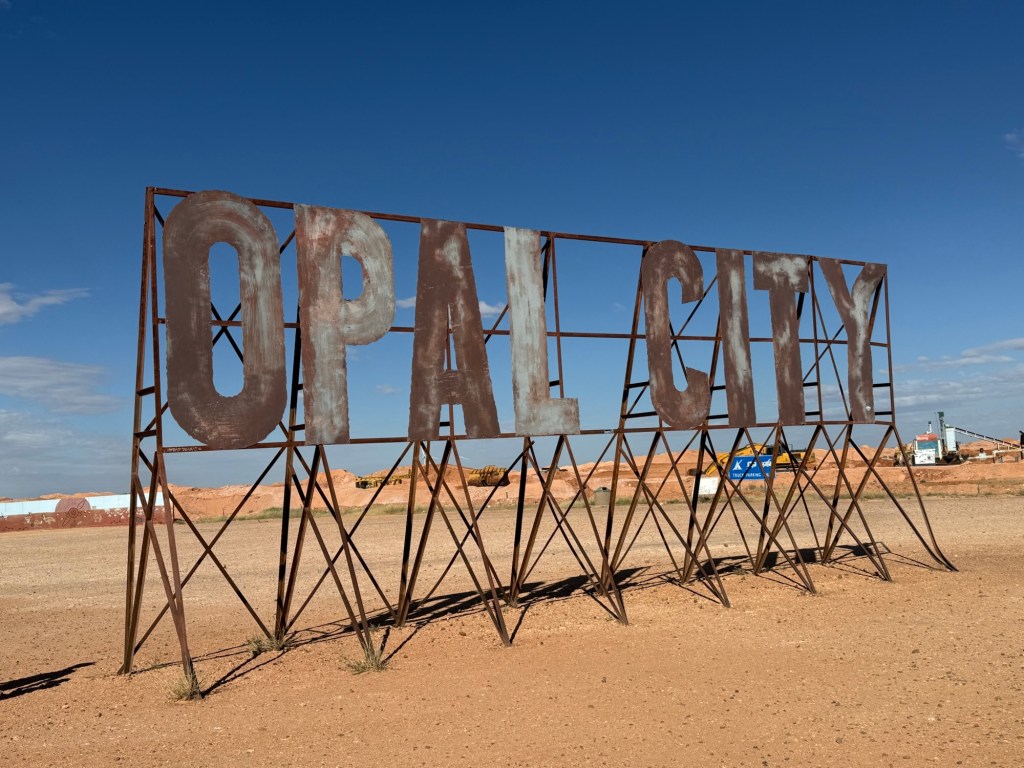
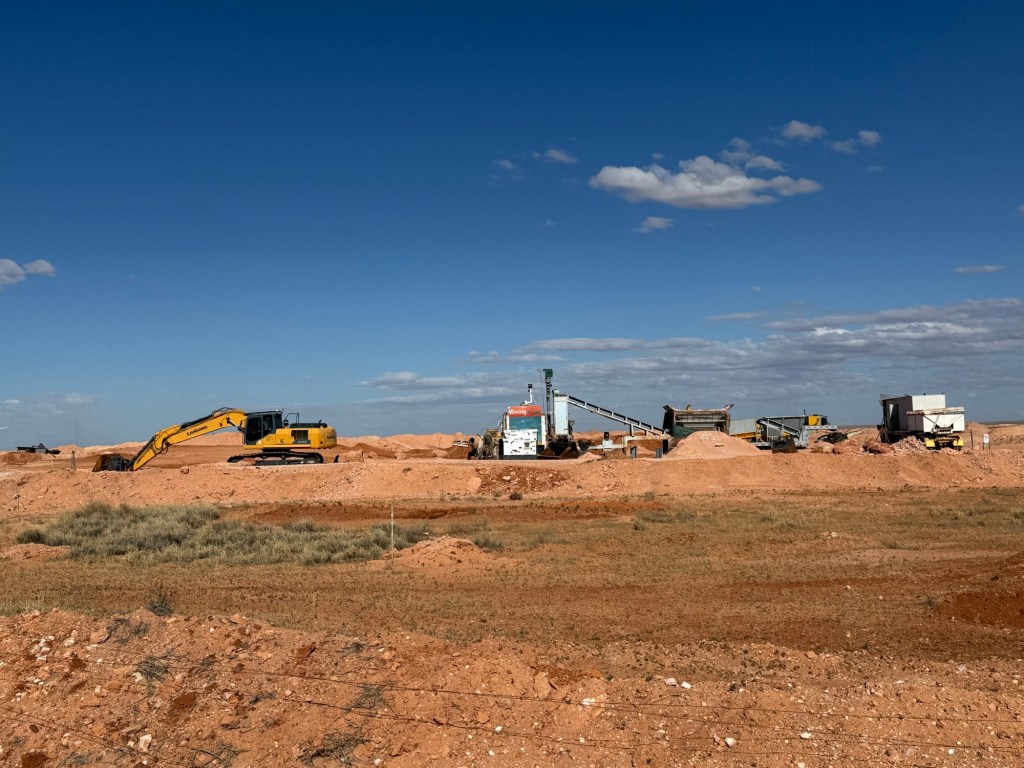
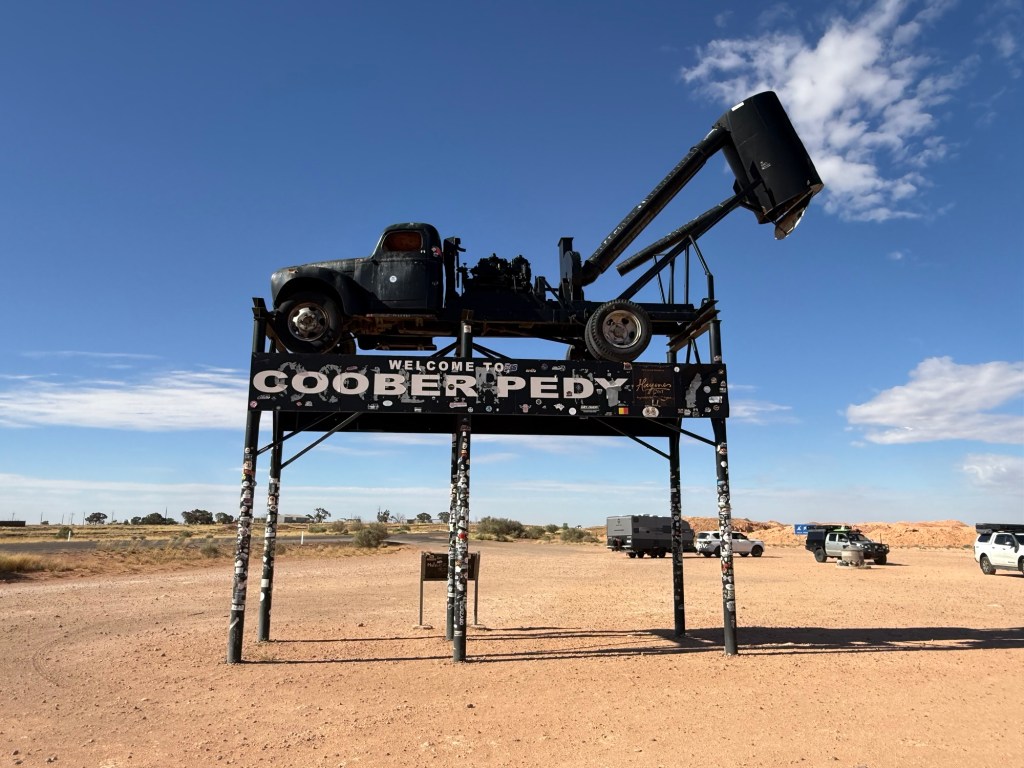
We are now in Coober Pedy, once the capital of the opal mining industry in Australia. The first time we visited Coober Pedy the cashier at the supermarket had a shot gun at the register and all roads leading into town were dirt. It was said there were two police officers in town who only recorded births and deaths. Whatever else happened in town was left to the locals, particularly claim jumping. Now I have 5G connectivity and there is a pizza shop in town not to mention good roads. Water is still closely managed and people still live underground.

Modern vehicles have an annoying habit of tracking your eye movement and displaying error messages like it can’t see your eyes or you should keep your eyes on the road or would you like to take a break. On these roads you need to be watchful for feral goats and wandering cattle. Clearly the Toyota engineers in Japan have little experience with driving in the Australian outback.

Tomorrow we will make it to the Northern Territory.

Log One Hundred and Thirty One – Go West No More

30 May 2026

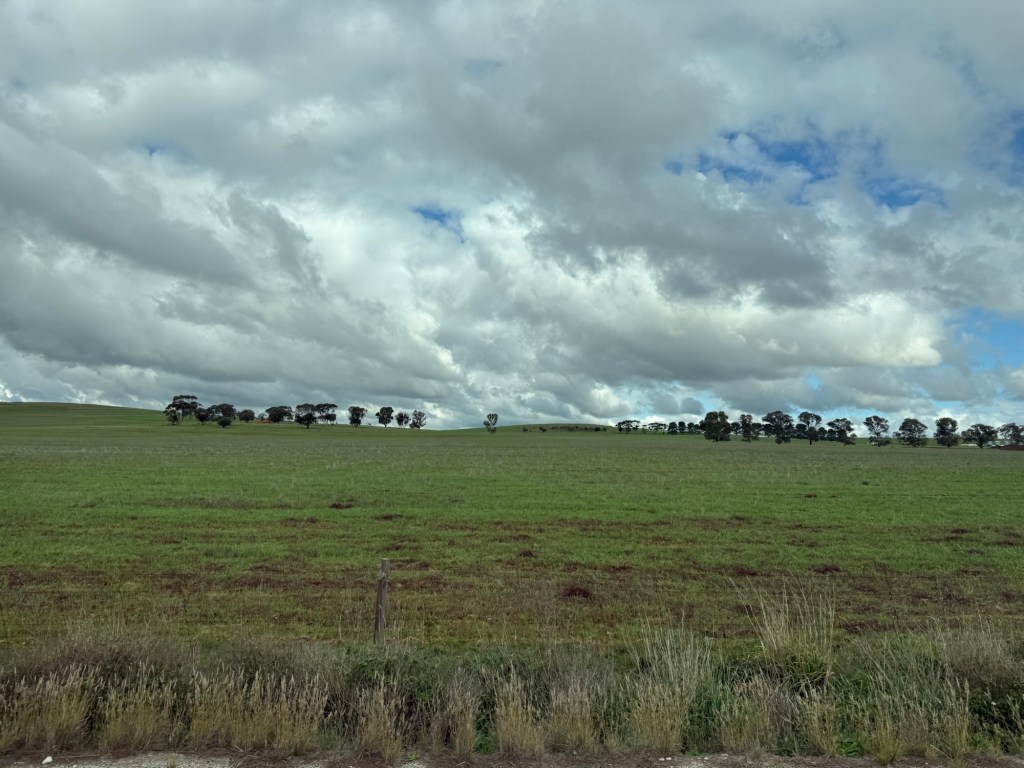
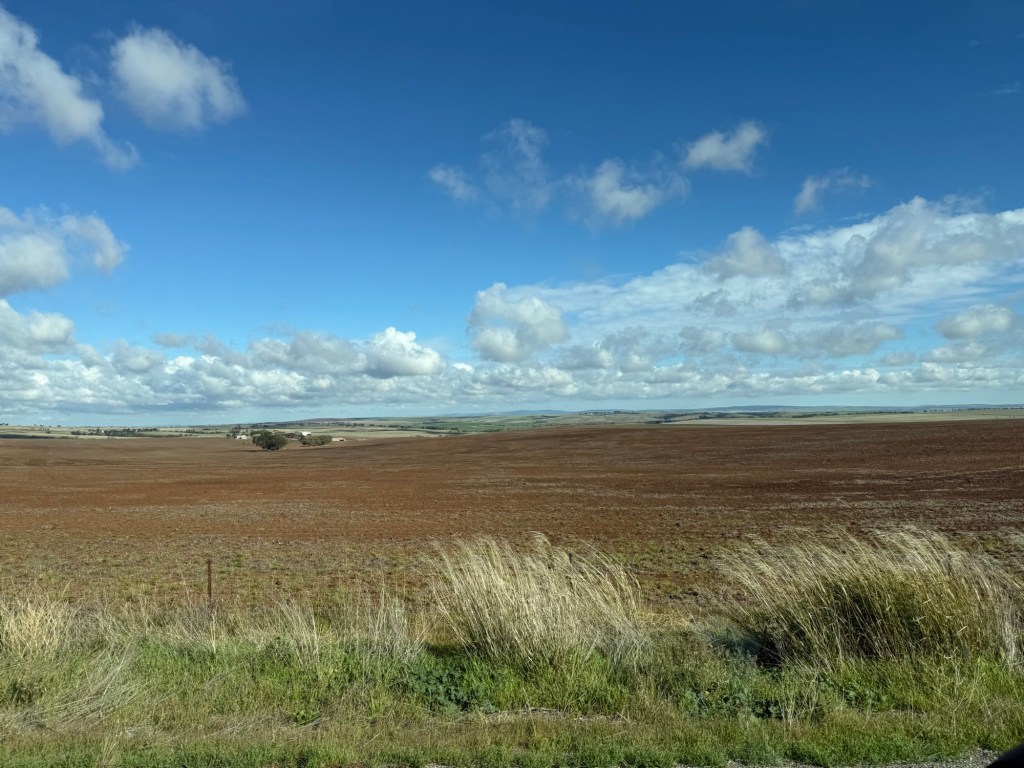
We have left the agricultural land surrounding the Murray River for the salt bush plains. This is sheep country, dry and not suited to much else but sheep.

As we were coming out of the dry country our view of the horizon was interrupted. It was foggy but in the distance you could just make it out. It wasn’t a mirage, it was real. As we got closer it became more apparent with a clearly defined shape. It was a …….. hill!

This was the bottom end of the Flinders Ranges which I’m sure some time ago was a substantial mountain range; not anymore. It turns out the Flinders Ranges are one of the oldest mountain ranges in the world!

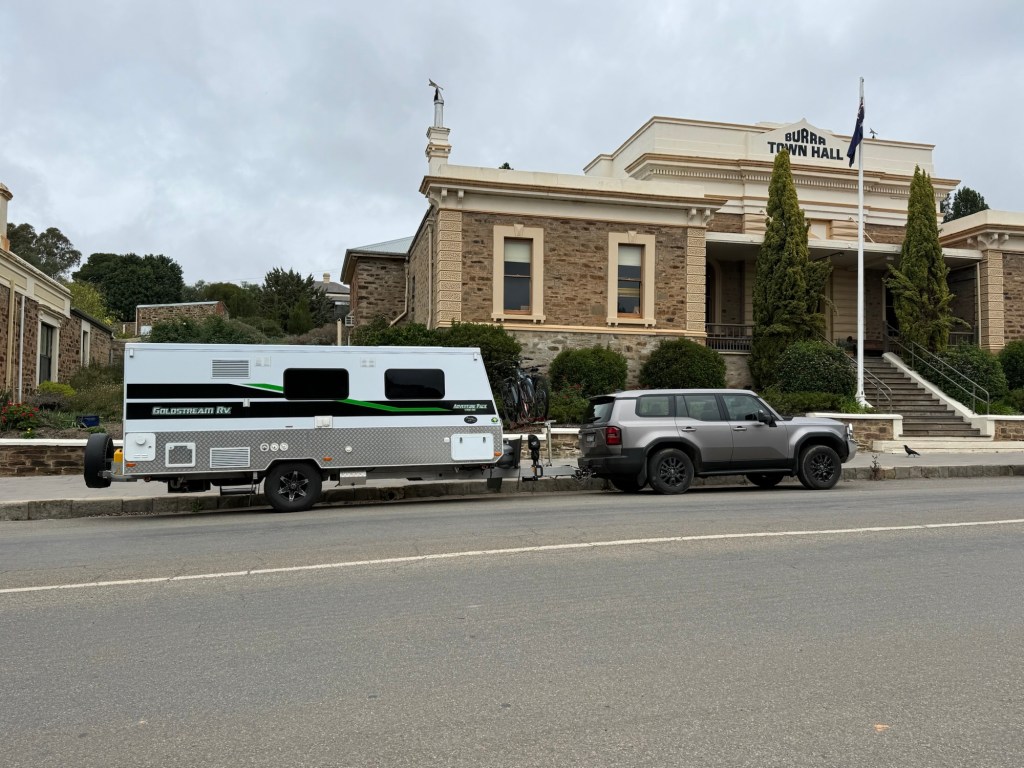
We continued on to Burra for a coffee and snack.

Burra was settled by Cornish miners so in this town you can be confident about two things. All the buildings are built from local stone and the bakery includes Cornish pasties on its menu.

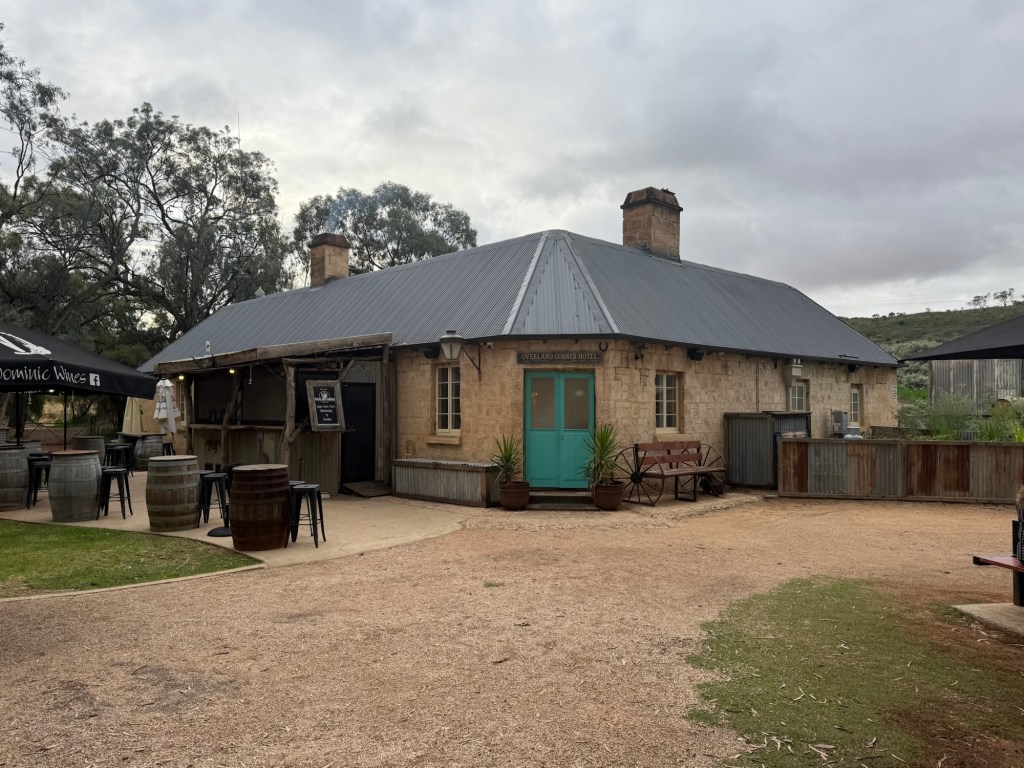
There is something about ruined stone cottages in the vast open fields. I just can’t imagine people in future times waxing lyrical about ruined sheds built from corrugated iron and colourbond.

Port Augusta is home for two nights. This town is full of travellers heading west across the Nullarbor or north to the centre and NT. Either direction involves huge expanses of remote country with distances between fuel stops and food measured in the hundreds of kilometres.

So Port Augusta is the town for last minute purchases of fuel, food and drinks and anything else you think you will need over the next week or two. Time to top up fresh water tanks and empty waste water.

From here maybe no phone or internet coverage for a few days; will we cope?

Log One Hundred and Thirty – We of the Never Never.

28 May 20926

We of the Never Never is a classic Australian novel about life in the remote outback. For us never, never refers to this trip. Life got in the way of our plans in a way that:

We could never never finalise a departure date.

Never never were we able to settle on where we might go due to our departure being so muddied.

Given the war in the Middle East we were never never sure about the cost or availability of fuel in the remote parts of this country and whether such a trip was foolhardy.

Our planned return date was never never going to happen and now we have to be home earlier than preferred.

Regardless of these interruptions we are now on the road with plans to travel through the centre of Australia, back down the WA coast and home via the Nullarbor Plain. It doesn’t sound too far when you say it quickly.

We started out last Monday and after locking up three times we finally got away for a short drive of little over an hour. It was important to just cut the mooring lines and get underway.

We have progressed to South Australia and in these three days we have left the hills and will not see a freeway or divided highway for many weeks. The next hills are the Flinders Ranges, followed by the McDonnell Ranges and then the Kimberley. The rest of the country is pretty flat.

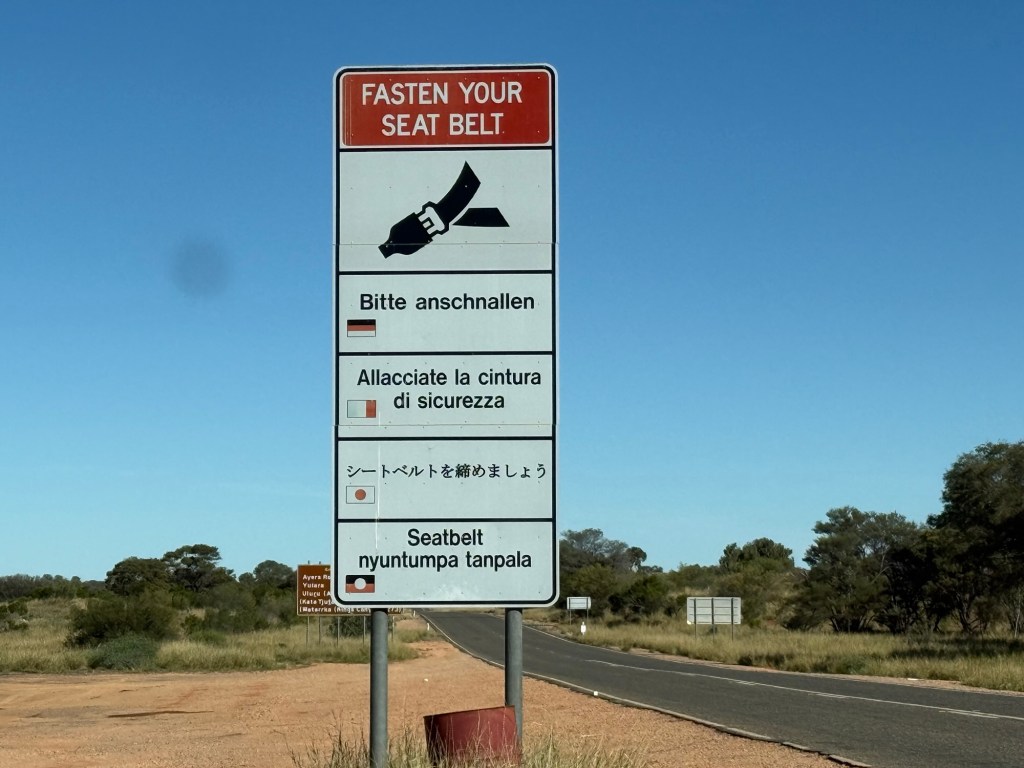
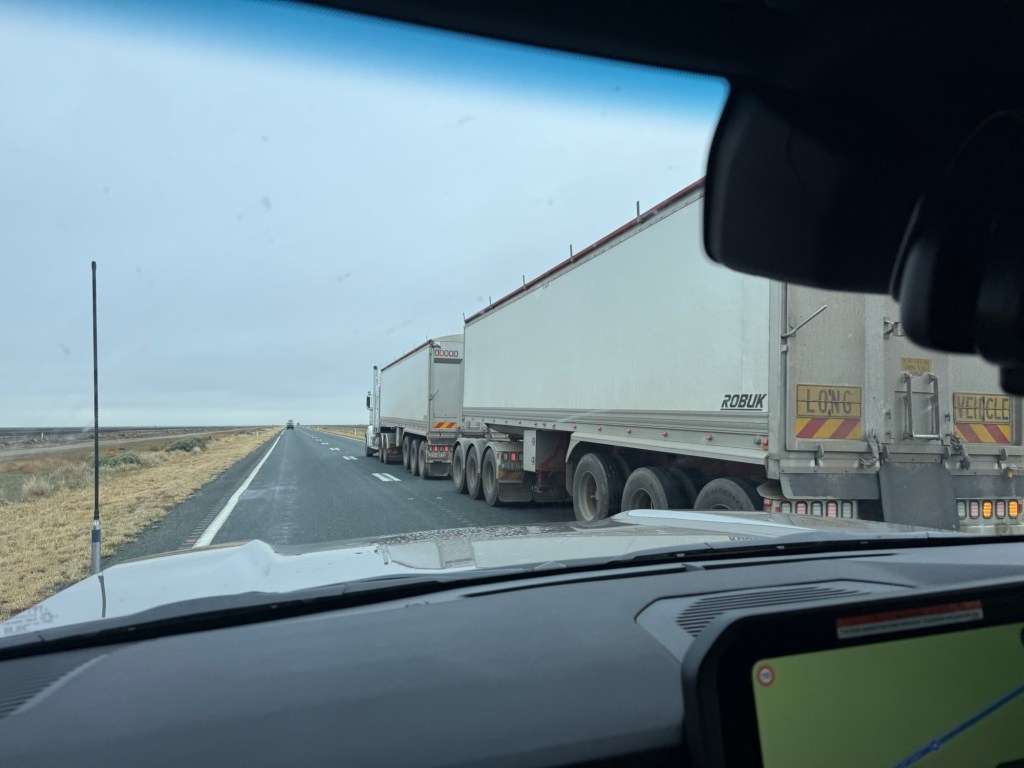
Peak hour traffic with masses of cars filling the roads will not be an issue for this trip. However, Semi trailers (one trailer), B Doubles (two trailers), B Triples (three trailers) and Road Trains (up to four trailers) will be our constant companions, not to mention wide loads with escort vehicles. On rainy days these vehicles each create their own weather systems as they overtake or pass. All good fun. As always a UHF radio for comms with these truck drivers is a must.

Soon we will leave the fertile plains with old growth red gums and lots of vineyards for the dry country of South Australia and the centre.

Log One Hundred and Twenty Nine – The Last Swim

6 March 2026

You know on every trip that includes a pool or the ocean there is that ‘last swim’. And so it was today that we had our last swim. You know it’s the last as you dive into the surf or pool and then grudgingly walk out of the water. It’s your last swim.

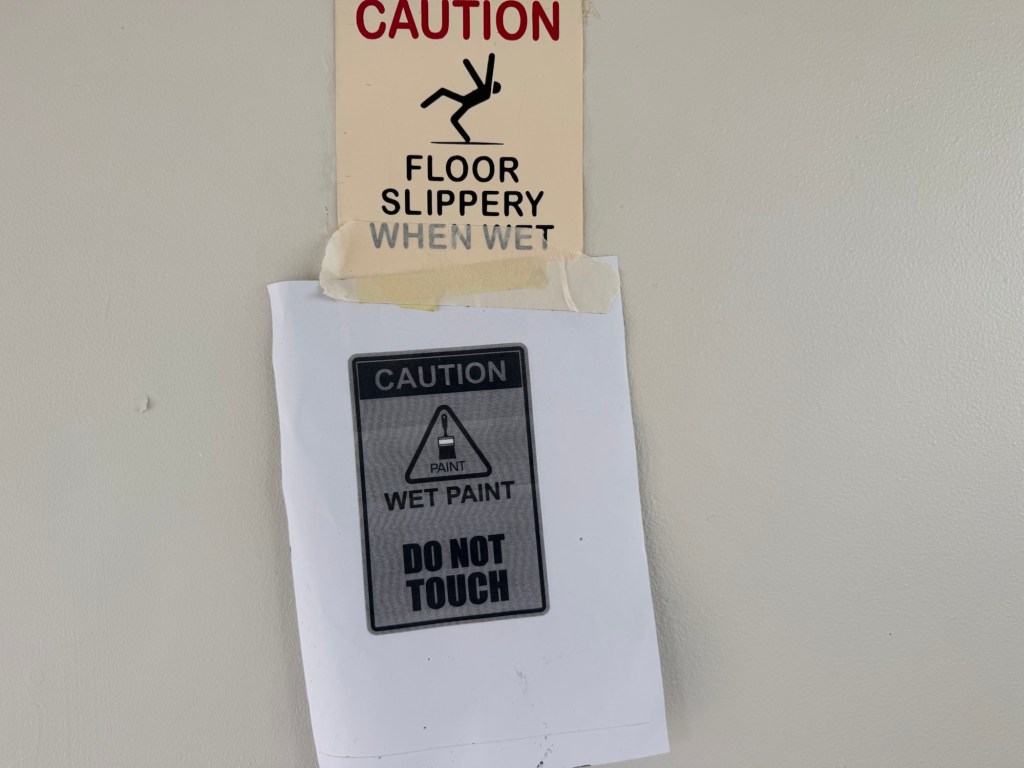
This sign has been up for three days, even the paint works to Fiji time.

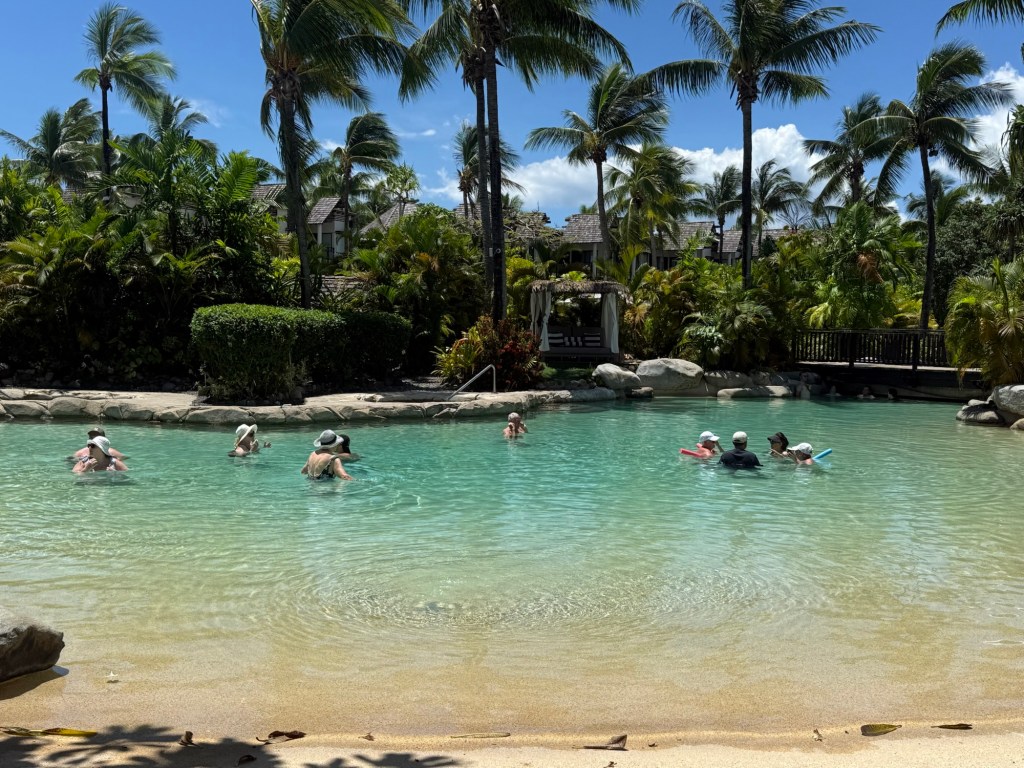
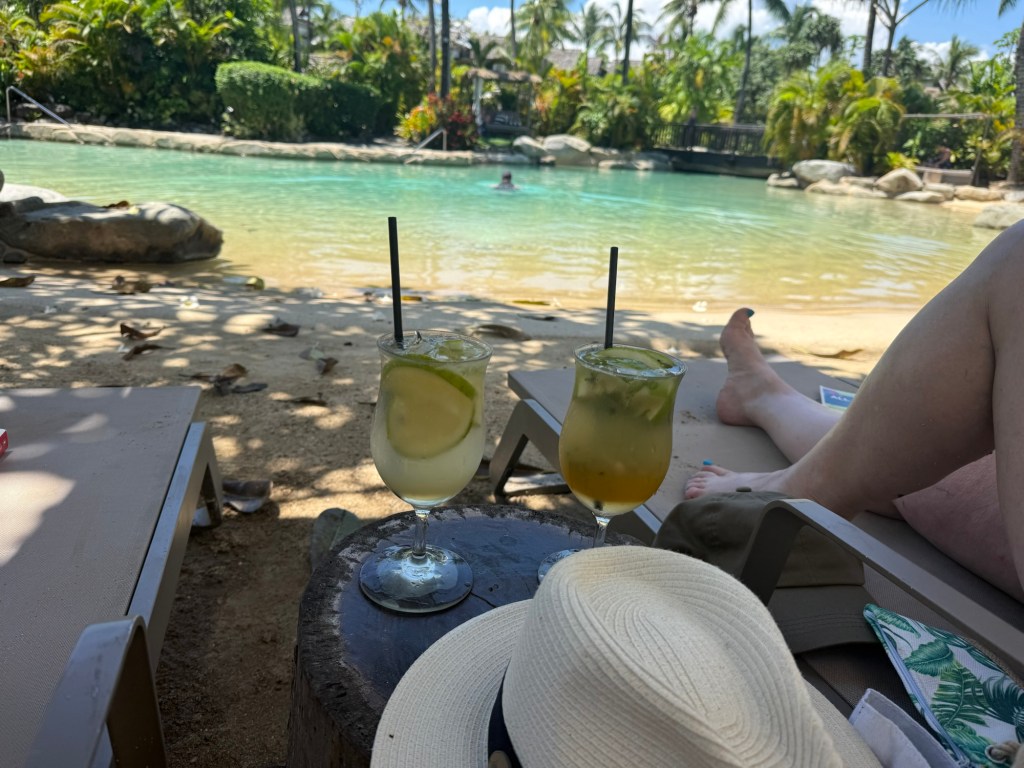
Lounging around the pool we have met a wide range of people. There was the couple from Saskatchewan who are going home to -27c days, madness. People from Brisbane with broad Scottish accents and a couple of philanthropists who are sponsoring kids and adults from Vanuatu and Fiji, inspirational.

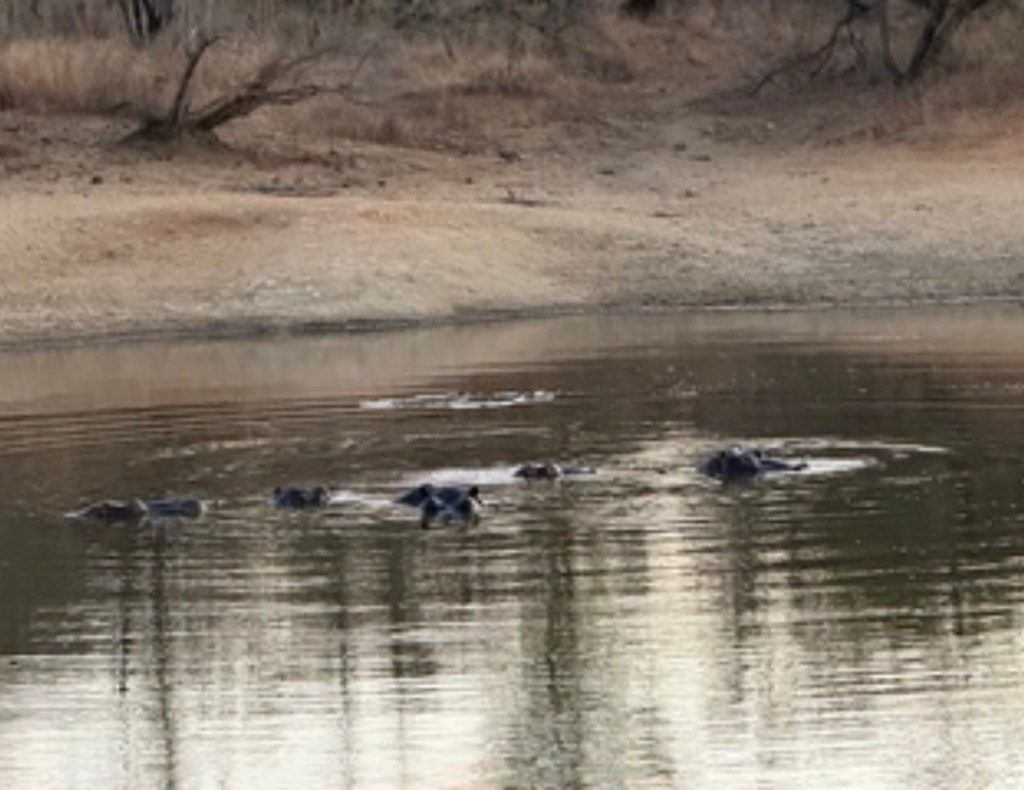
We are told the closest relatives to hippos are whales. I am no longer so sure. We also graze through the night and when the day gets too hot we retire to the pool where we gather in small groups contemplating what delicacy we might enjoy when the sun goes down.

This short sojourn has taught us that if you are ever washed up on a deserted Pacific island the first thing you do is order a cocktail. It will come with so much fresh fruit that scurvy will be avoided.

And so tomorrow starts with an early flight back home. Back to the garden, the gym (oh how I need the gym) bike rides and planning on our big trip through central Australia in May. Maybe the tomatoes have ripened.