11 November 2019
The approach to Machu Picchu is via a train trip of about an hour and a half. The train follows the Urubamba river downstream as it heads towards the Amazon. The train can carry only so many travellers and so it might appear that travel by road might be a more efficient way to get to Machu Picchu. A quick look at the map and in particular the tortuous route the road follows tells you the train is the only way to get there. It would take many hours to travel to Machu Picchu by any other means.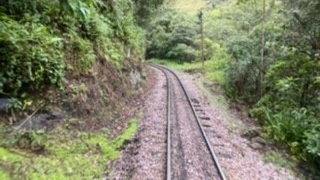
A new definition of remote is when Google Maps says it can’t find a way there. This is the response you get if you look for directions from Ollantaytambo to Machu Picchu. Ollantaytambo is where the train trip to Machu Picchu starts. I thought Google knew everything; it doesn’t and that makes me feel good.
The train ride is followed by half an hour in a mini bus which climbs to a point 400 metres up from the river level. This is the entrance to the archeological site. This is not a road for the faint hearted. It’s one car wide and it twists over several switchback bends. The view is breath taking. The buses have to stop and reverse to let other buses pass. From the bus stop its short walk through the cloud forest and there it is the Machu Picchu ruins!
Visiting Machu Picchu involves lots of walking but it is so worth the effort. The steps are very steep. While Incas were amazing builders they didn’t have standards on how high steps should be. There are no hand rails and at many places the drop off is an unimpeded vertical fall to the river below. No wandering around at night after a few wines.
The views were breath taking as the mist and clouds opened up vistas and just as quickly rolled in and covered the view. On tall peaks you could see narrow paths with visitors were attempting to get to the highest peaks overlooking the Machu Picchu site.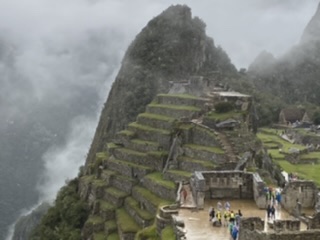
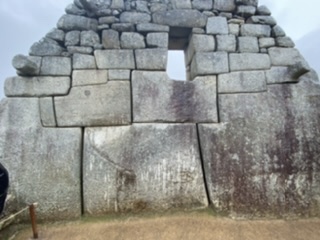 The stone work is just as we have all seen on all those documentaries and National Geographic articles. Even so you can’t help yourself from asking and can only imagine ‘how did they do that’?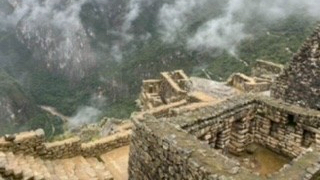
This place was only occupied for about a hundred years and was never completed. The Spanish never found it and when you get there you can see why. It just cannot be seen from the river valleys below.
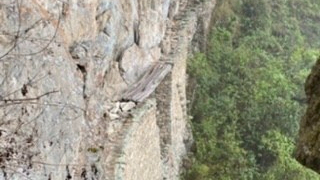 In many places you can still see remnants of the ancient Inca trails. These are narrow pathways often cut into the side of the mountains with no handrails or warning signs that state the obvious like a fall from here might hurt. Thankfully new approaches to the ruins were built for the modern visitor.
The Incas never utilised the wheel for transport and maybe didn’t have a written language as we might expect but they could carve rock and run an empire through some remote and seemingly impenetrable mountains.
 A Traveller's Tale